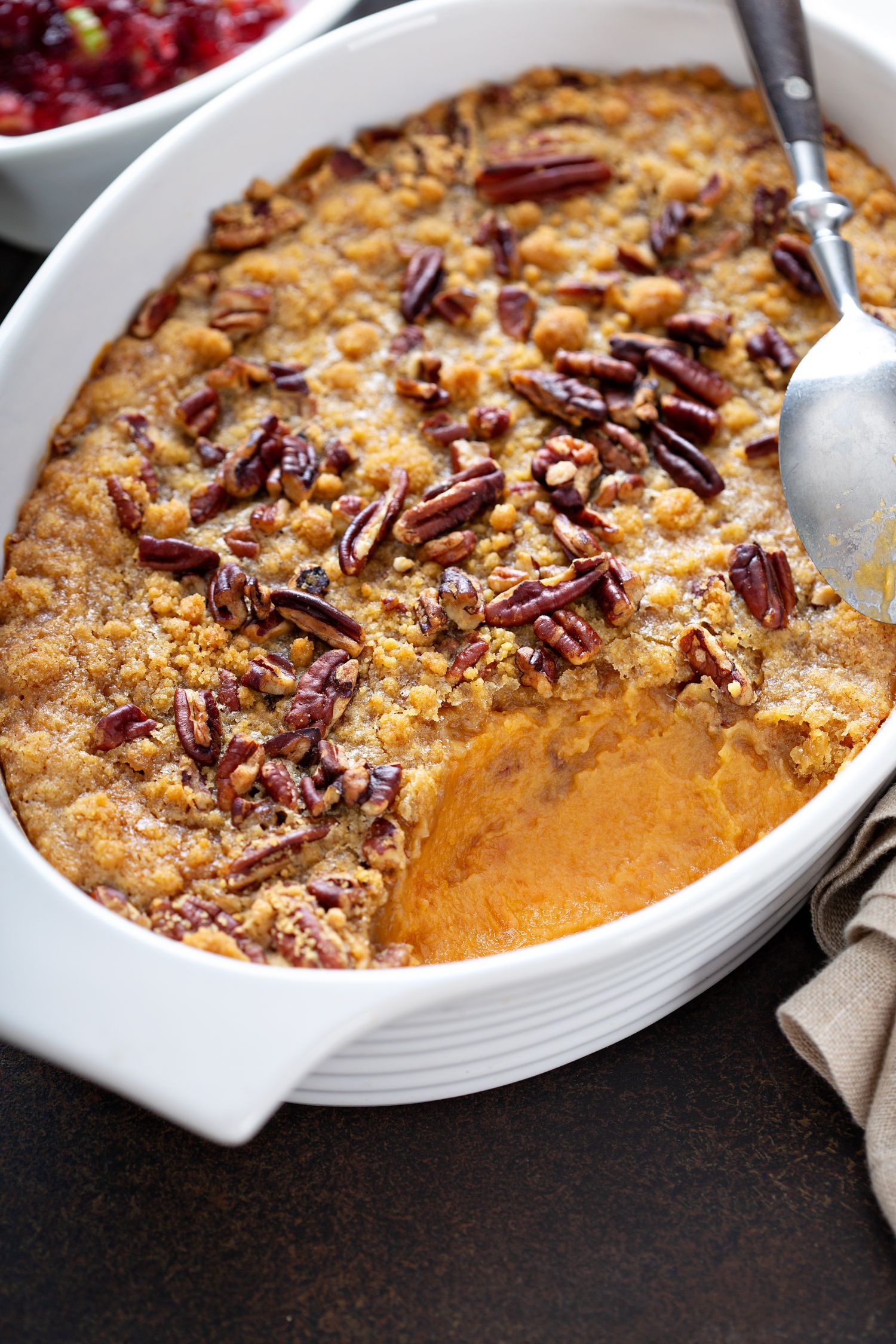
Alton Brown’s sweet potato casserole, famously known as his "Sweet Potato Rehash," is defined by its scientific approach to texture and flavor, eschewing traditional marshmallow toppings for a savory-sweet balance. The method prioritizes roasting or steaming potatoes to maximize natural sugar conversion, incorporating chipotle peppers for smoky heat and a crunchy pecan-cornflake crust for structural contrast.
For decades, the American holiday table has been dominated by a version of sweet potato casserole that leans heavily on canned syrups and gelatinous marshmallow toppings. However, for those who follow the technical rigors of Alton Brown—the creator of Good Eats and a pioneer of culinary science on television—the dish is treated as a study in botany and chemistry.
As we look at this recipe in 2026, Brown’s techniques remain the gold standard for home cooks who want to move beyond the "sugar-bomb" side dishes of the mid-20th century. By understanding the starch-to-sugar conversion of the Ipomoea batatas (the sweet potato), Brown provides a roadmap for a side dish that is sophisticated, smoky, and structurally sound.
The Botanical Foundation: Selecting the Right Potato
Before the oven is even preheated, the success of an Alton Brown-style casserole depends on the raw material. In the United States, there is significant confusion between "yams" and "sweet potatoes." As Brown has noted throughout his career, what most Americans call a "yam" is actually a soft-variety sweet potato, usually the Beauregard, Jewel, or Garnet variety.
True yams are starchy tubers from the genus Dioscorea, native to Africa and Asia, and are rarely found in standard American supermarkets. For this casserole, you are looking for the orange-fleshed sweet potato. These varieties contain a high concentration of amylase enzymes, which are crucial for the flavor profile Brown aims to achieve.
Why Quality Matters
Freshness is paramount. By 2026, farm-to-table sourcing has become even more accessible, and choosing potatoes that have been properly cured is essential. Curing involves holding the potatoes at high humidity and temperature (around 85°F) for several days immediately after harvest. This process heals cuts and, more importantly, triggers the conversion of starches into sugars. When selecting potatoes for the casserole:
- Weight: They should feel heavy for their size, indicating high moisture content.
- Skin: The skin should be smooth and taut. Shriveled skin indicates the potato has lost too much moisture and the internal texture will be woody.
- Uniformity: Choose potatoes of similar size to ensure they cook at the same rate, preventing a mix of undercooked chunks and overcooked mush.
The Science of Heat: Roasting vs. Boiling
The most critical technical departure in Alton Brown’s method is the rejection of boiling. Traditional recipes often call for peeling, cubing, and boiling sweet potatoes in water. From a scientific perspective, this is a mistake for two reasons:
- Flavor Dilution: Sweet potatoes are porous. Boiling allows water to infiltrate the cells, diluting the natural sugars and nutrients.
- Starch Damage: Boiling often leads to an inconsistent texture, as the outside of the cube overcooks and becomes waterlogged before the center is softened.
The Amylase Window
Alton Brown’s method typically involves roasting the potatoes in their skins or steaming them. Roasting is preferred for the casserole because it utilizes dry heat. When a sweet potato is heated slowly between 135°F and 170°F, the enzyme alpha-amylase breaks down complex starches into maltose, a simpler sugar.
Boiling passes through this temperature window too quickly. Roasting at a moderate temperature allows the potatoes to "self-sweeten." Furthermore, roasting creates the Maillard reaction on the skin and the layer of flesh just beneath it, adding a depth of toasted flavor that boiling cannot replicate.
Ingredients and Equipment Requirements
To execute the "Sweet Potato Rehash" or the "Chipotle Smashed" variations, you need a specific set of tools and ingredients that prioritize texture control.
Necessary Equipment
- Food Mill or Ricer: Brown often recommends a food mill. Unlike a food processor or blender, which can shear starch molecules and turn the potatoes gummy, a food mill creates a uniform, fluffy texture while removing any tough fibers.
- 9x13-inch Ceramic or Glass Baking Dish: These materials retain heat evenly, ensuring the casserole stays warm throughout the meal.
- Heavy-Duty Aluminum Foil: Essential for the initial roasting phase to trap just enough steam to soften the skins.
- Cast Iron Skillet (Optional): Used for toasting the pecan topping to maximize essential oil release.
Key Ingredients
| Ingredient | Purpose in the Science of the Dish |
|---|---|
| Chipotle Peppers in Adobo | Provides capsaicin for heat and acetic acid (vinegar) to cut through the heavy starch. |
| Unsalted Butter | Adds fat for mouthfeel; using unsalted allows for precise sodium control. |
| Dark Brown Sugar | Contains molasses, which adds a mineral depth that white sugar lacks. |
| Pecans | Provides the essential "crunch" factor and healthy fats to balance the soft mash. |
| Cornflakes | A classic Brown "hack" for a structural topping that doesn't get soggy as quickly as breadcrumbs. |
Step-by-Step Technical Execution
1. The Initial Cook
Wash the sweet potatoes thoroughly but do not peel them. Prick them with a fork to allow steam to escape—preventing "potato explosions." Place them on a baking sheet lined with foil. Roast at 375°F (190°C) for approximately 45 to 60 minutes. They are done when a paring knife slides into the center with zero resistance.
2. The Extraction
Allow the potatoes to cool only enough so you can handle them. Peel the skins away while they are still warm; the steam trapped between the flesh and skin makes this easy. Pass the warm flesh through a food mill or ricer into a large mixing bowl.
3. The Flavor Balance
This is where the Alton Brown signature appears. Instead of adding heavy cream or excessive marshmallows, add:
- Butter: Add it while the potatoes are hot so it emulsifies.
- Chipotle: Mince one or two chipotle peppers from a can of adobo. The smokiness of the dried, smoked jalapeños complements the earthy sweetness of the potato.
- Salt: Do not skip the salt. Salt suppresses bitterness and enhances the perception of sweetness.
4. The Topping Construction
The topping should be a "crumble" rather than a "crust." Combine chopped pecans, crushed cornflakes, brown sugar, and melted butter. The cornflakes provide a stay-crisp architecture that survives the moisture of the potatoes underneath.
5. The Final Bake
Spread the potato mixture into your baking dish. Cover with the crumble. Bake at 375°F for 20 minutes. This final step isn't just about heating through; it’s about "setting" the proteins in the potato and caramelizing the sugars in the topping.
Comparison of Methods: Brown vs. Traditional
To understand why this method has persisted into 2026 as a favorite, it is helpful to compare it to the standard "diner-style" casserole.
| Feature | Traditional Casserole | Alton Brown Method |
|---|---|---|
| Potato Preparation | Peeled and boiled | Roasted whole in skins |
| Sweetening Agent | White sugar, maple syrup, marshmallows | Natural maltose development + brown sugar |
| Flavor Profile | Linear sweetness | Multi-dimensional (sweet, salty, smoky, spicy) |
| Texture | Pureed/Creamy | Smashed/Structured |
| Topping | Marshmallow or flour-based crumble | Pecan and cornflake "Rehash" |
Troubleshooting Common Issues
Even with a scientifically sound recipe, variables like oven calibration and potato moisture can cause issues.
Problem: The Casserole is Too Runny
This usually happens if the potatoes were boiled or if they were "green" (too fresh/not cured). If your mash looks watery before the final bake, you can stir in a small amount of cornstarch (dissolved in a teaspoon of water) or, better yet, simmer the mash in a wide pan for five minutes to evaporate excess moisture before putting it in the baking dish.
Problem: The Topping is Burning
Because of the high sugar content in pecans and brown sugar, the topping can go from "caramelized" to "burnt" in sixty seconds. If the top is browning too fast, tent the dish loosely with aluminum foil. This reflects the radiant heat while still allowing the casserole to reach internal temperature.
Problem: It’s Too Spicy
Chipotle peppers vary in heat. If you are sensitive to spice, remove the seeds from the chipotle pepper before mincing. The "adobo" sauce itself carries significant flavor with less concentrated heat than the pepper flesh.
Variations and Modern Adjustments for 2026
While the core recipe is a classic, the culinary landscape of 2026 allows for several "Brown-approved" substitutions that maintain the spirit of the dish.
- Plant-Based Shift: For a vegan-friendly version, substitute the butter with a high-quality vegan butter block (preferably one with a high fat-to-water ratio) or refined coconut oil. The smoky chipotle actually masks the lack of dairy fat very effectively.
- Nut Alternatives: For those with nut allergies, toasted pepitas (pumpkin seeds) or sunflower seeds provide a similar crunch and earthy flavor profile to pecans.
- The Miso Twist: Some modern iterations of the "Rehash" suggest adding a tablespoon of white miso paste to the mash. Miso provides umami and salt, acting as a secondary flavor enhancer that aligns with Alton Brown’s focus on complex seasoning.
Frequently Asked Questions
Can I make Alton Brown's sweet potato casserole ahead of time?
Yes. You can prepare the sweet potato mash up to two days in advance. Store it in an airtight container in the refrigerator. However, do not add the topping until you are ready to bake. If the cornflake-pecan topping sits on the moist potatoes in the fridge, it will lose its structural integrity and become soggy.
Why does he use cornflakes instead of breadcrumbs?
Cornflakes have a higher surface-area-to-volume ratio and a distinct toasted corn flavor that pairs better with the earthy sweet potato. More importantly, cornflakes are engineered to stay crunchy in liquid (milk), a property that makes them superior to breadcrumbs when sitting atop a moist casserole.
Is this recipe gluten-free?
The potato base is naturally gluten-free. However, the topping usually requires cornflakes and sometimes a small amount of flour or butter. To ensure it is 100% gluten-free, verify that your cornflakes are certified gluten-free (some brands use malt flavoring derived from barley) and use a gluten-free flour blend if the specific crumble variation calls for it.
Can I use canned "yams" for this recipe?
It is strongly discouraged. Canned sweet potatoes are packed in syrup, which destroys the natural flavor profile and renders the texture too soft to benefit from the food mill process. Part of the Alton Brown experience is the "Rehash"—taking the raw vegetable and transforming it through heat.
How do I store and reheat leftovers?
Leftovers should be refrigerated within two hours. To reheat, avoid the microwave if possible, as it will make the topping chewy. Instead, place a portion in an oven-safe dish, cover with foil, and heat at 350°F until warmed through. Remove the foil for the last three minutes to re-crisp the topping.
Final Recommendation for the Perfect Result
For the best results with Alton Brown’s sweet potato casserole, focus on the roasting phase. Do not rush the potatoes. The deeper the roast, the more complex the maltose conversion will be, reducing the need for added processed sugars. When you combine that natural sweetness with the controlled heat of the chipotle, you create a dish that honors the ingredient rather than masking it. This approach ensures a holiday side dish that is a talking point for its technique and its taste.