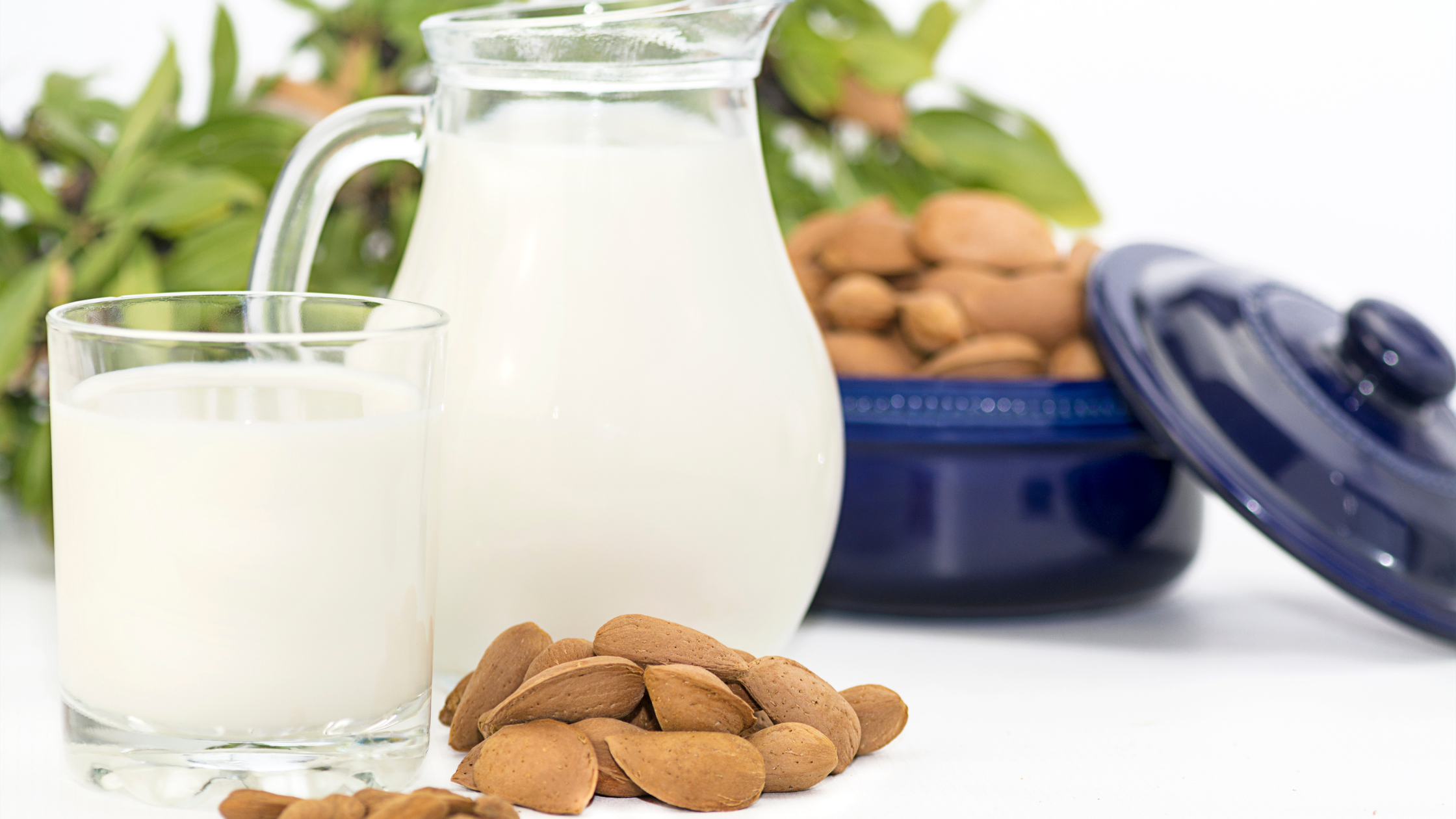
While whole almonds are one of the most fiber-dense nuts available, almond milk contains virtually no dietary fiber—typically less than 1 gram per cup. This dramatic reduction occurs during processing, when liquid almond extract is filtered and the fiber-rich nut pulp (pomace) is completely removed, leaving behind mostly water and dissolved nutrients.
Disclaimer: This article is for informational purposes only and does not constitute individual medical or dietary advice. Consult a registered dietitian or healthcare provider before making major modifications to your nutritional plan or addressing chronic digestive concerns.
The Processing Reality: Why Whole Almonds Lose Fiber in Milk Form
Understanding why almond milk is low in fiber requires examining the structural composition of the almond seed and how commercial and home manufacturing transforms it into a beverage. Whole, unpeeled almonds are an exceptional source of dietary fiber. A standard 1-ounce serving (approximately 23 whole kernels) provides roughly 3.5 grams of fiber, representing about 12% to 14% of the recommended daily intake for adults.
The fiber in whole almonds is divided between two primary structural regions:
The Seed Coat (Skin): The thin brown outer layer contains concentrated insoluble fiber, including cellulose, hemicellulose, and lignin, along with protective polyphenols and antioxidants.
The Endosperm and Cotyledons: The inner fleshy white portion contains cell walls composed of structural carbohydrates, including soluble and insoluble fibers that provide mechanical rigidity to the nut tissue.
Whole Almonds (Soaked & Blended with Water)
Filtration / Straining
- Discarded Solids (Insoluble Fiber & Pulp)
- Liquid Portion (Almond Milk: ~0.5g Fiber)
The Filtration Step Mechanics
During the production of almond milk, whole raw or roasted almonds are soaked in water to soften their cellular structure, blended at high speeds to break down the tissue, and mixed with fresh water to create a slurry. Up to this point, all the original fiber remains present in the mixture.
The critical loss of fiber occurs during the filtration stage:
- Commercial Straining: Industrial processors force the blended almond slurry through fine mesh micro-filters, centrifuges, or decanters to achieve a smooth, silky texture that mirrors the mouthfeel of dairy milk.
- Home Straining: Home cooks pour the blended mixture through cheesecloth, nut milk bags, or fine wire sieves to separate the liquid from the solids.
In both methods, the liquid that passes through the filter consists of water, dissolved minerals, water-soluble proteins, emulsified lipids (fats), and added fortificants. The vast majority of the plant's structural fiber—both insoluble cell wall fragments and insoluble skin matter—is trapped in the filtration barrier. This leftover solid material, known as almond meal or almond pomace, contains almost 100% of the original plant fiber.
Dilution Ratios and Commercial Formulations
A secondary factor contributing to low fiber content is the low ratio of actual almond solids to water in commercial beverages. Most mass-market almond milk products consist of only 2% to 3% almonds by weight, with the remaining 97% to 98% comprising purified water, emulsifiers (such as gellan gum or lecithin), thickeners, and added vitamins.
Even if a manufacturer omitted the straining step altogether, a cup of unfiltered almond milk made from just 2% almond paste would yield only a fraction of a gram of natural fiber per serving.
Nutritional Breakdown: Whole Almonds vs. Almond Milk
To contextualize the nutritional changes caused by filtration, compare whole almonds directly with unsweetened almond milk and other popular dairy and plant-based alternatives.
The following table uses standardized data compiled from the USDA FoodData Central database to highlight key macronutrient differences per typical serving size.
| Beverage / Food Item (Serving Size) | Calories | Dietary Fiber (g) | Total Carbohydrates (g) | Protein (g) | Total Fat (g) |
|---|---|---|---|---|---|
| Whole Raw Almonds (1 oz / 28g) | 164 | 3.5 | 6.1 | 6.0 | 14.2 |
| Unsweetened Almond Milk (1 cup / 240ml) | 30–45 | 0.5–1.0 | 1.0–2.0 | 1.0 | 2.5–3.0 |
| Sweetened Almond Milk (1 cup / 240ml) | 70–90 | 0.5–1.0 | 7.0–16.0 | 1.0 | 2.5–3.0 |
| Oat Milk, Commercial (1 cup / 240ml) | 120–130 | 1.5–2.0 | 15.0–19.0 | 2.0–3.0 | 5.0 |
| Soy Milk, Unsweetened (1 cup / 240ml) | 80–90 | 1.0–1.5 | 3.0–4.0 | 7.0–8.0 | 4.0–4.5 |
| Whole Cow's Milk (1 cup / 240ml) | 149 | 0.0 | 12.0 | 7.7 | 8.0 |
| High-Fiber Fortified Plant Milk (1 cup) | 60–100 | 3.0–5.0 | 5.0–8.0 | 2.0–4.0 | 2.5–4.0 |
Key Takeaways from the Data
- Macronutrient Stripping: Filtering out the almond pulp removes not only fiber but also significant amounts of native plant protein and healthy fats. Whole almonds are high-protein, high-fat, and fiber-dense, whereas plain almond milk is a low-calorie, low-protein beverage.
- Plant Milk Variations: Oat milk naturally contains slightly more fiber than plain almond milk (around 1.5 to 2 grams per cup) because beta-glucan—a soluble fiber present in oats—partially dissolves into water during processing and resists complete filtration.
- Dairy Parity: Cow's milk naturally contains zero dietary fiber. Switching from dairy milk to standard almond milk therefore offers no meaningful increase in dietary fiber, despite almond milk being derived from a plant source.
Health Implications of Low Fiber in Plant-Based Diets
The dietary fiber deficit in almond milk has direct physiological implications for gut health, blood sugar regulation, and daily satiety, particularly for individuals who rely on plant milks as primary nutritional sources.
- Whole Almond Matrix (Soluble & Insoluble Fiber + Healthy Fats + Plant Proteins)
- Physiological Impact:
- Slowed gastric emptying
- Stable blood glucose curve
- Enhanced satiety (fullness)
- Nourishes gut microbiome (SCFA production)
- Physiological Impact:
- Filtered Almond Milk (Water + Dissolved Lipids + Fortificants [Low/No Fiber])
- Physiological Impact:
- Rapid gastric emptying
- Quicker carbohydrate/sugar absorption
- Minimal impact on satiety
- Reduced prebiotic benefit to gut flora
- Physiological Impact:
Gut Microbiome and Digestive Regularity
Dietary fiber serves as the primary substrate for intestinal fermentation. The human digestive tract lacks the enzymes required to break down complex plant polysaccharides like cellulose, hemicellulose, and pectin. When fiber reaches the large intestine intact, beneficial gut bacteria (such as Bifidobacteria and Lactobacilli) ferment these carbohydrates into short-chain fatty acids (SCFAs), including acetate, propionate, and butyrate.
SCFAs play vital roles in metabolic health:
- They nourish colonocytes (the cells lining the colon barrier).
- They help maintain gut barrier integrity and reduce mucosal inflammation.
- They regulate intestinal pH, creating an acidic environment that inhibits pathogenic microbial growth.
Because standard almond milk delivers negligible amounts of fermentable fiber, consuming it does not contribute meaningfully to short-chain fatty acid production or microbial diversity. Individuals replacing fiber-rich whole foods or whole-grain beverages with filtered almond milk may fall short of the recommended daily fiber goals outlined by the Dietary Guidelines for Americans (25 grams daily for adult women and 38 grams daily for adult men).
Blood Glucose Dynamics and Satiety
The structural matrix of whole food slows digestion. When fiber is present alongside fats and carbohydrates, it forms a viscous gel-like matrix in the stomach that delays gastric emptying and slows nutrient absorption across the intestinal wall.
When almond milk is stripped of its native fiber:
- Gastric Emptying: Liquid calories empty from the stomach rapidly compared to solid food or intact plant matrices.
- Glycemic Impact: Sweetened almond milk variations contain added sugars (such as cane sugar or agave nectar) without the original fiber barrier. This allows rapid intestinal glucose absorption, which can cause sharper blood sugar spikes and subsequent insulin surges.
- Satiety Signals: Fiber triggers the release of satiety hormones like glucagon-like peptide-1 (GLP-1) and peptide YY (PYY) from enteroendocrine cells in the gut. Drinking low-fiber almond milk yields minimal satiety signals, often leaving consumers hungry shortly after consumption.
Fortified Almond Milk vs. Natural Almond Milk: Reading Labels
To compensate for fiber removal, several food manufacturers produce fortified almond milk variants. These products blend isolated plant fibers back into the liquid mixture prior to pasteurization and packaging.
Common Fiber Additives in Plant Milks
When reviewing the ingredient deck on an almond milk carton, look for these common added fiber sources:
- Inulin / Chicory Root Fiber: A highly soluble, storage carbohydrate extracted from chicory roots. Inulin functions as a strong prebiotic, stimulating the growth of beneficial gut bacteria. However, rapidly fermentable oligosaccharides like inulin can cause abdominal bloating, gas, and cramping in individuals sensitive to FODMAPs or those with Irritable Bowel Syndrome (IBS).
- Soluble Corn Fiber / Resistant Maltodextrin: A non-digestible soluble carbohydrate created through the controlled hydrolysis of cornstarch. It provides bulk and prebiotic benefits while being generally well-tolerated by the digestive system at low to moderate doses.
- Acacia Gum (Gum Arabic): A complex polysaccharide derived from the sap of Acacia trees. Manufacturers frequently use acacia gum as both an emulsifier and a fiber fortificant. It dissolves smoothly into liquid without altering viscosity or mouthfeel.
- Polydextrose: A synthetic soluble fiber made from glucose, sorbitol, and citric acid. It contributes minimal calories while increasing dietary fiber values on the nutrition panel.
Evaluating Label Integrity
To determine whether your almond milk contains natural or added fiber, check the Nutrition Facts panel alongside the Ingredients list:
- Check Fiber Per Serving: Standard almond milk shows
< 1gor0gof Dietary Fiber. Fortified versions show3g,5g, or more per 8 fl oz serving. - Review the Ingredient List: If the panel lists 3 grams of fiber but the ingredients only include water, almonds, vitamin E, sea salt, and gellan gum, the fiber value may represent rounding up from negligible trace amounts or batch variations. If added fiber is present, ingredients like chicory root extract, inulin, or soluble corn fiber will appear explicitly.
Practical Ways to Restore Fiber When Using Almond Milk
If you prefer the taste and low calorie count of almond milk but want to maintain a high-fiber diet, you can easily pair almond milk with high-fiber ingredients or utilize upcycled almond pulp.
- High-Fiber Inputs:
- Chia Seeds (10g fiber / 2 tbsp)
- Flaxseed Meal (3.8g fiber / 2 tbsp)
- Psyllium Husk (7g fiber / 1 tbsp)
- Almond Milk Liquid Base
- High-Fiber Nutritional Solution
1. High-Fiber Smoothie Formulations
Using almond milk as a liquid base allows you to blend in concentrated fiber sources without altering the beverage's neutral flavor profile.
- Chia Seed Integration: Adding 2 tablespoons of whole or ground chia seeds to 1 cup of almond milk adds 10 grams of dietary fiber (both soluble and insoluble), transforming the liquid into a nutrient-dense base or chia pudding.
- Ground Flaxseed Meal: Stirring 2 tablespoons of ground flaxseeds into almond milk provides 3.8 grams of fiber along with essential alpha-linolenic acid (ALA) omega-3 fatty acids.
- Psyllium Husk Powder: Blending 1 tablespoon of psyllium husk into a morning smoothie containing almond milk provides 7 grams of soluble fiber, promoting digestive regularity and supporting healthy cholesterol levels already within normal ranges.
- Fruit and Leafy Green Pairings: Blend almond milk with high-fiber fruits such as raspberries (8g fiber per cup), blackberries (7.6g fiber per cup), or frozen avocado slices (5g fiber per half cup).
2. High-Fiber Breakfast Bowls
Instead of drinking almond milk plain, use it to hydrate dry high-fiber whole grains:
- Overnight Oats: Combine 1/2 cup of rolled oats (4g fiber) with 1 cup of almond milk, 1 tablespoon of chia seeds (5g fiber), and a handful of blueberries (2g fiber) for a breakfast delivering over 11 grams of fiber.
- High-Fiber Cold Cereals: Pour almond milk over bran flakes, shredded wheat, or seed-based cold cereals that naturally contain 5 to 10 grams of dietary fiber per serving.
3. Repurposing Leftover Almond Pulp (Pomace)
If you make almond milk at home, do not discard the leftover almond pulp trapped in your nut milk bag. This pulp contains almost all the original fiber and structural protein of the whole almonds.
- Fresh Homemade Almond Milk Straining
- Collect Wet Almond Pulp
- Dehydrate & Grind
- Almond Flour Substitute
- Grain-free baking
- Gluten-free crusts
- Low-carb breading
- Almond Flour Substitute
- Direct Recipe Add-in
- Quick Bake Integration
- Energy balls & bars
- Muffin batters
- Oatmeal enrichment
- Quick Bake Integration
- Dehydrate & Grind
- Dehydration into Almond Flour: Spread wet almond pulp evenly across a baking sheet and dry it in an oven set to its lowest temperature (150°F–200°F / 65°C–90°C) for 2 to 3 hours. Once dry, pulse the material in a food processor to create a fine, low-fat, high-fiber almond flour suitable for gluten-free baking.
- Moist Baking Addition: Fold fresh wet pulp directly into muffin batters, pancake mixes, quick breads, or homemade energy bars to boost fiber content without altering dryness.
- Homemade Energy Bites: Combine wet almond pulp with rolled oats, dates, nut butter, and dark chocolate chips. Roll into single-serving bites and refrigerate for a high-fiber snack.
Comparative Fiber Breakdown Across Plant Milks
To choose the best beverage for your dietary goals, evaluate how almond milk compares with other commercial plant-based options in terms of natural fiber retention and fortification practices.
Oat Milk
Oat milk naturally retains more soluble fiber than nut-based milks. Oats contain high concentrations of beta-glucan, a viscous soluble fiber that partially dissolves in water during processing. While filtering oat pulp removes insoluble oat hulls, a standard cup of unsweetened oat milk delivers between 1.5 and 2 grams of soluble dietary fiber.
Soy Milk
Traditional soy milk is made by soaking, grinding, and boiling whole soybeans, followed by straining out the fibrous pulp known as okara. Consequently, standard soy milk contains relatively low fiber levels (around 1 to 1.5 grams per cup). However, like almond pulp, leftover okara is rich in fiber and micronutrients.
Coconut Milk (Carton)
Commercial coconut milk packaged in cartons for drinking is made by diluting coconut cream with purified water. It contains negligible dietary fiber (0 to 0.5 grams per cup), as the fibrous coconut meat is filtered out during processing.
Seed Milks (Hemp, Flax, Sesame)
Unfortified hemp and flax milks generally contain low fiber levels (0.5 to 1 gram per cup) because processing strains out the fibrous seed coats. However, ground seed milks that preserve finely milled seeds retain significant fiber content.
Frequently Asked Questions
Does almond milk have more fiber than cow's milk?
Yes, but only slightly. Standard unsweetened almond milk typically contains between 0.5 and 1 gram of dietary fiber per cup, whereas dairy milk from cows contains 0 grams of fiber. Because dairy products contain no plant material, they naturally lack dietary fiber entirely.
Why does whole almond butter have fiber, but almond milk does not?
Almond butter is produced by grinding whole almonds into a paste without straining out solid materials. Because all the original almond skins and cell walls remain in the paste, almond butter retains 100% of the nut's natural fiber (roughly 3 grams per 2-tablespoon serving). Almond milk undergoes filtration, which separates liquid from solid pulp.
Can drinking almond milk help relieve constipation?
Standard almond milk is unlikely to relieve constipation through fiber action because it provides less than 1 gram of fiber per serving. However, staying adequately hydrated with fluids like almond milk can support general digestion. If you seek dietary relief from constipation, look for almond milk fortified with soluble corn fiber or chicory root fiber, or blend your almond milk with chia seeds or psyllium husk.
Does homemade almond milk have more fiber than store-bought almond milk?
Not necessarily. The fiber content of homemade almond milk depends entirely on your filtration method. If you use a fine nut milk bag or double-layered cheesecloth to create a smooth milk, you will filter out the same fiber-rich pulp that commercial factories remove. If you leave your almond milk unstrained or use a coarse sieve, the beverage will retain more fiber but will have a grainy texture.
Does heating or cooking almond milk alter its fiber content?
No. Thermal processing (such as boiling, steaming for coffee, or baking) does not degrade or destroy dietary fiber. The low fiber content of almond milk is caused by physical straining during manufacturing, not thermal processing.
Practical Takeaways and Recommendations
If you enjoy almond milk for its light taste, low calorie count, or dairy-free suitability, you do not need to eliminate it from your kitchen. However, relying on almond milk as a source of plant-based fiber is ineffective.
- Recognize the Nutritional Profile: Treat standard almond milk primarily as a hydrating liquid vehicle or dairy alternative, not as a rich source of plant protein or fiber.
- Read Labels Carefully: If you need your beverage to contribute to your daily fiber goals, select brands that explicitly list 3 to 5 grams of fiber on the Nutrition Facts panel, and check the ingredient list for added prebiotic fibers like chicory root extract or soluble corn fiber.
- Fortify at Home: Transform low-fiber almond milk into a digestive wellness drink by blending it with high-fiber ingredients like chia seeds, ground flaxseeds, psyllium husk, oats, or fresh berries.
- Upcycle Almond Pulp: If preparing homemade almond milk, collect the wet pulp to dehydrate into gluten-free almond flour or fold it into baked goods to prevent food waste and preserve natural fiber.