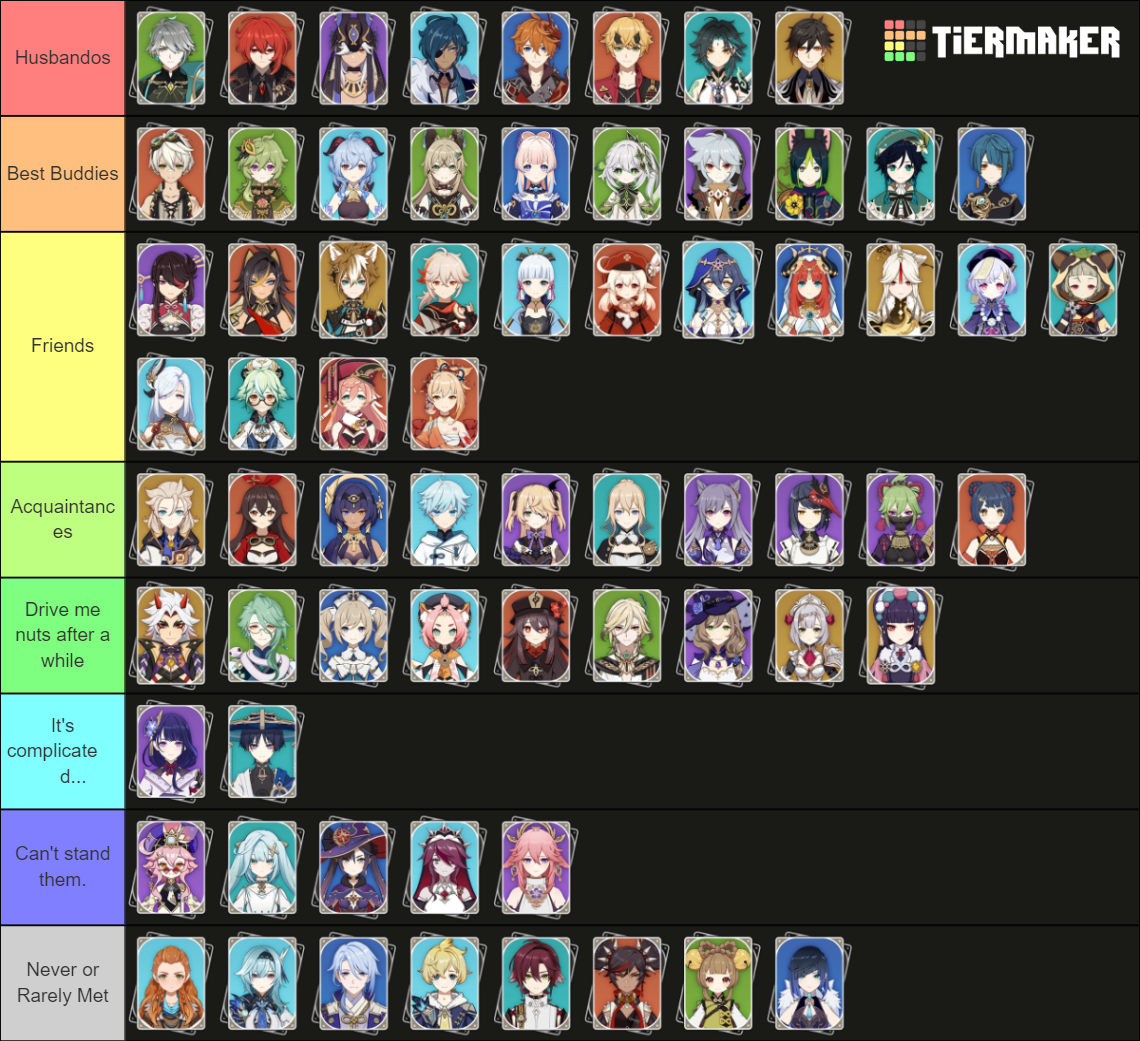
The complete roster of playable characters in Genshin Impact from the initial release of the Traveler through the debut of Chiori in Version 4.5 consists of 81 unique individuals. This collection spans five major nations—Mondstadt, Liyue, Inazuma, Sumeru, and Fontaine—encompassing diverse elemental alignments, specialized combat roles, and the evolving Arkhe mechanics introduced during the Fontaine cycle.
As of 2026, looking back at the expansive history of Teyvat’s roster provides a fascinating view of how character design has evolved. From the relatively straightforward kits of the Mondstadt era to the complex health-fluctuation mechanics of Fontaine, the journey from the Traveler to Chiori represents the foundational "Golden Age" of the game's development. This guide details every character released in this timeframe, their technical roles, and how they shaped the game’s enduring meta.
The Foundation: The Traveler and the Initial Roster (Versions 1.0 – 1.6)
The journey begins with the Traveler, the only character capable of resonating with multiple elements. By the time Chiori was released, the Traveler had access to Anemo, Geo, Electro, Dendro, and Hydro. While the Traveler serves as the player's entry point, the early roster established the elemental archetypes that would define combat for years.
The Mondstadt and Liyue Pioneers
The initial release (Version 1.0) introduced the core "Standard Banner" cast and the first limited five-star, Venti. This era focused on crowd control and elemental reactions like Vaporize and Melt. Characters like Diluc, Jean, and Mona set the baseline for DPS, healing, and support.
Liyue’s introduction brought characters that emphasized survivability and specialized scaling. Zhongli, the Geo Archon, redefined the game’s difficulty with his impenetrable shield, while Hu Tao and Ganyu introduced high-risk, high-reward playstyles involving HP management and charged-shot mechanics.
The Rise of Specialized Supports
Toward the end of the 1.x cycle, HoYoverse began experimenting with more niche roles. Eula introduced a physical damage ceiling that remains significant, while Kaedehara Kazuha (Version 1.6) became a cornerstone of the elemental damage meta. Kazuha’s ability to buff elemental damage based on his Elemental Mastery was a precursor to the more complex synergy requirements seen in later regions.
The Inazuma Expansion: Energy and Identity (Versions 2.0 – 2.8)
Inazuma shifted the focus toward Energy Recharge and Elemental Burst dependency. This era was dominated by the Raiden Shogun, whose "Musou no Hitotachi" not only dealt massive damage but also served as a battery for the entire team.
High-Frequency Combat and Niche Elements
Characters like Kamisato Ayaka and Yoimiya provided specialized Cryo and Pyro application, respectively. However, the 2.x cycle was most notable for introducing "niche" supports—characters designed specifically to buff one element or playstyle. Gorou (Geo), Kujou Sara (Electro), and Yun Jin (Normal Attacks) required players to think more critically about team compositions rather than just "slotting in" the strongest individual units.
The introduction of Sangonomiya Kokomi initially sparked debate over the value of pure healing, but her role eventually became vital with the introduction of "Corrosion" mechanics and the later Dendro reactions, proving that character value often evolves long after their initial release.
The Sumeru Revolution: The Dendro Transformation (Versions 3.0 – 3.8)
The release of Sumeru was perhaps the most significant shift in technical depth from the Traveler’s start to Chiori’s arrival. The introduction of the Dendro element added a massive layer of complexity through reactions like Bloom, Hyperbloom, and Quicken.
The Dendro Archon and Reaction Mastery
Nahida, the Dendro Archon, became the centerpiece of nearly every Dendro-based team. Her ability to link enemies and apply consistent Dendro meant that even older, underused characters like Kuki Shinobu suddenly became top-tier "meta" units.
Sumeru also introduced "transformative" characters like Nilou, who fundamentally changed how the Bloom reaction worked by creating Bountiful Cores. This era demanded that players understand Elemental Gauge Theory and internal cooldowns (ICD) more deeply than ever before. Characters like Alhaitham further pushed the envelope by requiring precise rotation management to maintain "Mirror" stacks for maximum damage output.
The Fontaine Renaissance: HP Fluctuation and Chiori (Versions 4.0 – 4.5)
Fontaine introduced the "Arkhe" system (Pneuma and Ousia) and a heavy focus on HP fluctuation. This era moved away from static HP totals and toward a dynamic system where characters gained buffs by losing or gaining health mid-combat.
The Hydro Sovereignty and the Advent of Chiori
Neuvillette and Furina are the standout icons of this era. Neuvillette redefined the "Hypercarry" role with his massive Hydro beam, while Furina’s ability to buff the entire team’s damage based on their health changes made healers more relevant than they had been since launch.
The period concluded (for the purposes of this guide) with Chiori in Version 4.5. As a Geo Sword user, Chiori brought a sophisticated sub-DPS role to the Geo element. Her kit, which involves summoning "Sode" dolls that attack periodically, rewards players for having other Geo constructs on the field. Chiori serves as a bridge between the traditional Geo "monolith" playstyle and the more modern, quick-swap design philosophy.
Complete Character List: From Traveler to Chiori
The following table summarizes the playable roster in order of their release or prominence within the versions leading up to 4.5.
| Character | Element | Weapon | Rarity | Region |
|---|---|---|---|---|
| Traveler | Multi | Sword | 5-Star | Unknown |
| Jean | Anemo | Sword | 5-Star | Mondstadt |
| Diluc | Pyro | Claymore | 5-Star | Mondstadt |
| Venti | Anemo | Bow | 5-Star | Mondstadt |
| Zhongli | Geo | Polearm | 5-Star | Liyue |
| Raiden Shogun | Electro | Polearm | 5-Star | Inazuma |
| Nahida | Dendro | Catalyst | 5-Star | Sumeru |
| Furina | Hydro | Sword | 5-Star | Fontaine |
| Chiori | Geo | Sword | 5-Star | Inazuma/Fontaine |
| Amber | Pyro | Bow | 4-Star | Mondstadt |
| Kaeya | Cryo | Sword | 4-Star | Mondstadt |
| Lisa | Electro | Catalyst | 4-Star | Mondstadt |
| Barbara | Hydro | Catalyst | 4-Star | Mondstadt |
| Xiangling | Pyro | Polearm | 4-Star | Liyue |
| Xingqiu | Hydro | Sword | 4-Star | Liyue |
| Bennett | Pyro | Sword | 4-Star | Mondstadt |
| Fischl | Electro | Bow | 4-Star | Mondstadt |
| Kazuha | Anemo | Sword | 5-Star | Inazuma |
| Ayaka | Cryo | Sword | 5-Star | Inazuma |
| Neuvillette | Hydro | Catalyst | 5-Star | Fontaine |
| Navia | Geo | Claymore | 5-Star | Fontaine |
(Note: This table highlights key figures; the full list includes all 81 characters such as Albedo, Ganyu, Xiao, Hu Tao, Yelan, Baizhu, Xianyun, and more.)
Technical Analysis of Character Roles
To understand the roster up to Chiori, one must categorize characters by their functional utility within a team. The game’s evolution can be traced through these primary roles.
1. The Main On-Field DPS
These characters occupy the most "field time." Early examples like Diluc were simple: use skills and then Normal Attack. By the time of Neuvillette (4.1), on-field DPS characters had become more self-sufficient, often possessing self-healing or massive Area of Effect (AoE) capabilities that reduced the need for complex setup.
2. Off-Field Sub-DPS (The "Battery" and "Applier")
Characters like Fischl, Xiangling, and Xingqiu have remained top-tier from 1.0 all the way to 2026. Their ability to deal damage while not on the field is the backbone of the game's combat system. Chiori fits perfectly into this lineage; her dolls provide consistent Geo damage and particle generation while the player switches to a different character to perform their primary rotation.
3. Utility and Offensive Buffers
This role evolved from the generic buffs of Bennett (Attack) to the highly specific buffs of Chevreuse (Overload reaction). The sophistication of buffers increased significantly in the Fontaine era, where Furina provides a massive damage bonus that scales with the entire team's health fluctuations, forcing players to use healers in tandem with high-damage carries.
The Impact of Chiori on the Geo Element
When Chiori was released in 4.5, she represented a refined vision for the Geo element. For years, Geo was criticized for its lack of offensive reactions. Chiori addressed this by offering high personal damage and synergy with "Geo Constructs" (like Zhongli’s pillars or Albedo’s flowers).
Her dual-wielding animation and "Tailoring" theme also signaled a shift toward more elaborate character animations and visual storytelling within combat. In the context of 2026, Chiori is often viewed as the character who successfully bridged the gap between the "old" Geo mono-teams and the modern, more flexible team compositions that began to dominate the late Fontaine and early Natlan eras.
Evolutionary Trends: 1.0 vs 4.5
Looking at the characters from the Traveler to Chiori, several trends emerge:
- Scaling Diversity: Early characters scaled almost exclusively with Attack (ATK). Later characters like Neuvillette and Furina scale with Max HP, while Chiori and Albedo utilize Defense (DEF). This diversification prevents "gear overlap" and makes different artifacts more valuable.
- Vertical Mobility: Starting with Kazuha and peaking with Xianyun (the "Cloud Retainer" released just before Chiori), characters began to offer more ways to traverse the world and engage in "Plunge Attack" gameplay.
- Team Restrictions: Early characters could be thrown into almost any team. Mid-game characters (Sumeru/Inazuma) often had "passive" talents that only worked if you had specific elements in the party, rewarding thematic team building.
Frequently Asked Questions
Who was the last character released before the Natlan expansion?
While this guide focuses on the timeline up to Chiori (Version 4.5), the Fontaine cycle continued with characters like Arlecchino, Clorinde, and Sigewinne. Chiori represents the midpoint of the Fontaine cycle, serving as the final major Geo addition of that era.
Can the Traveler still be considered "Meta" in 2026?
The Traveler’s viability depends entirely on their element. The Dendro Traveler remains a solid F2P (Free-to-Play) option for Bloom and Quicken teams. However, characters released later, such as Nahida or Baizhu, generally offer superior application and utility. The Traveler remains unique for their ability to swap elements, which is essential for certain environmental puzzles.
How many characters were in the game by Chiori’s release?
By the end of Version 4.5 with Chiori’s debut, there were 81 playable characters. This includes the Traveler, the crossover character Aloy, and the full list of 4-star and 5-star units across the five released nations.
Is Chiori worth using without other Geo characters?
Chiori is most effective when paired with at least one other character who can create a Geo Construct. While she can function as a standalone sub-DPS, a significant portion of her damage and doll-summoning potential is unlocked when a construct is present on the field. This makes her an ideal partner for Itto, Zhongli, or Ningguang.
What makes Fontaine characters different from Mondstadt characters?
The primary difference is the Arkhe System (Pneuma/Ousia) and HP scaling. Mondstadt characters are generally simpler and rely on Attack power. Fontaine characters often have mechanics that drain their own health to gain massive power boosts, which are then reset by a healer, creating a more "active" playstyle.
Final Recommendation for Players
For players looking to build a robust roster based on this era, focus on "core" units that provide universal value. While Chiori is a powerful addition to Geo teams, the "Must-Have" units from the Traveler-to-Chiori era remain Nahida, Furina, Kazuha, and Zhongli. These four provide the elemental foundation, damage amplification, and survivability needed to clear the most difficult content in the game, including the Spiral Abyss and late-game Imaginarium Theater challenges.