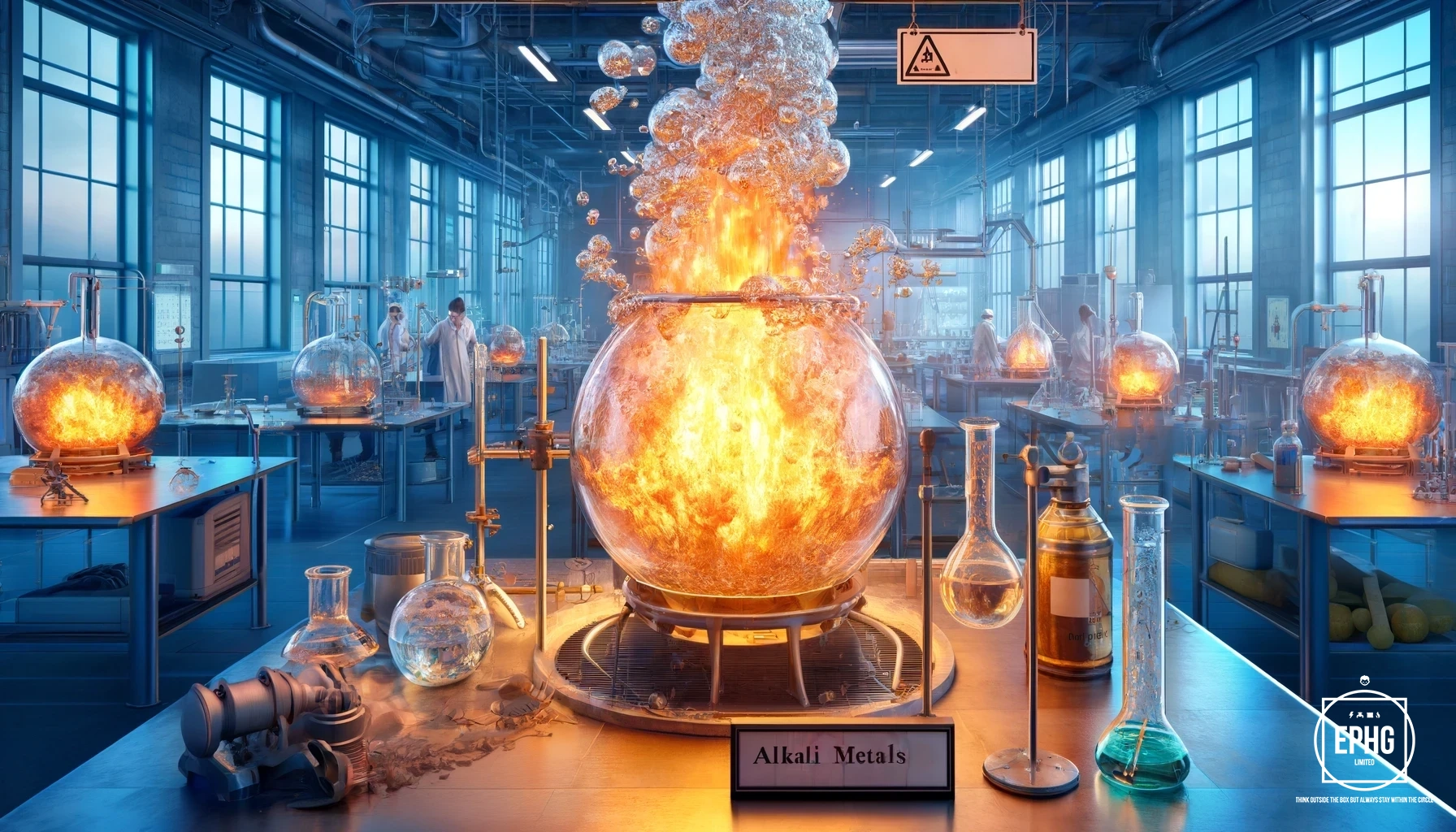
Alkali metals are widely considered the most reactive group of metals on the periodic table because they possess a single valence electron that is easily lost to achieve a stable electron configuration. While they are highly reactive toward water, oxygen, and halogens, their status as the absolute "most reactive" elements depends on how one defines chemical reactivity, as fluorine remains the most reactive non-metal.
Understanding the Chemical Nature of Alkali Metals
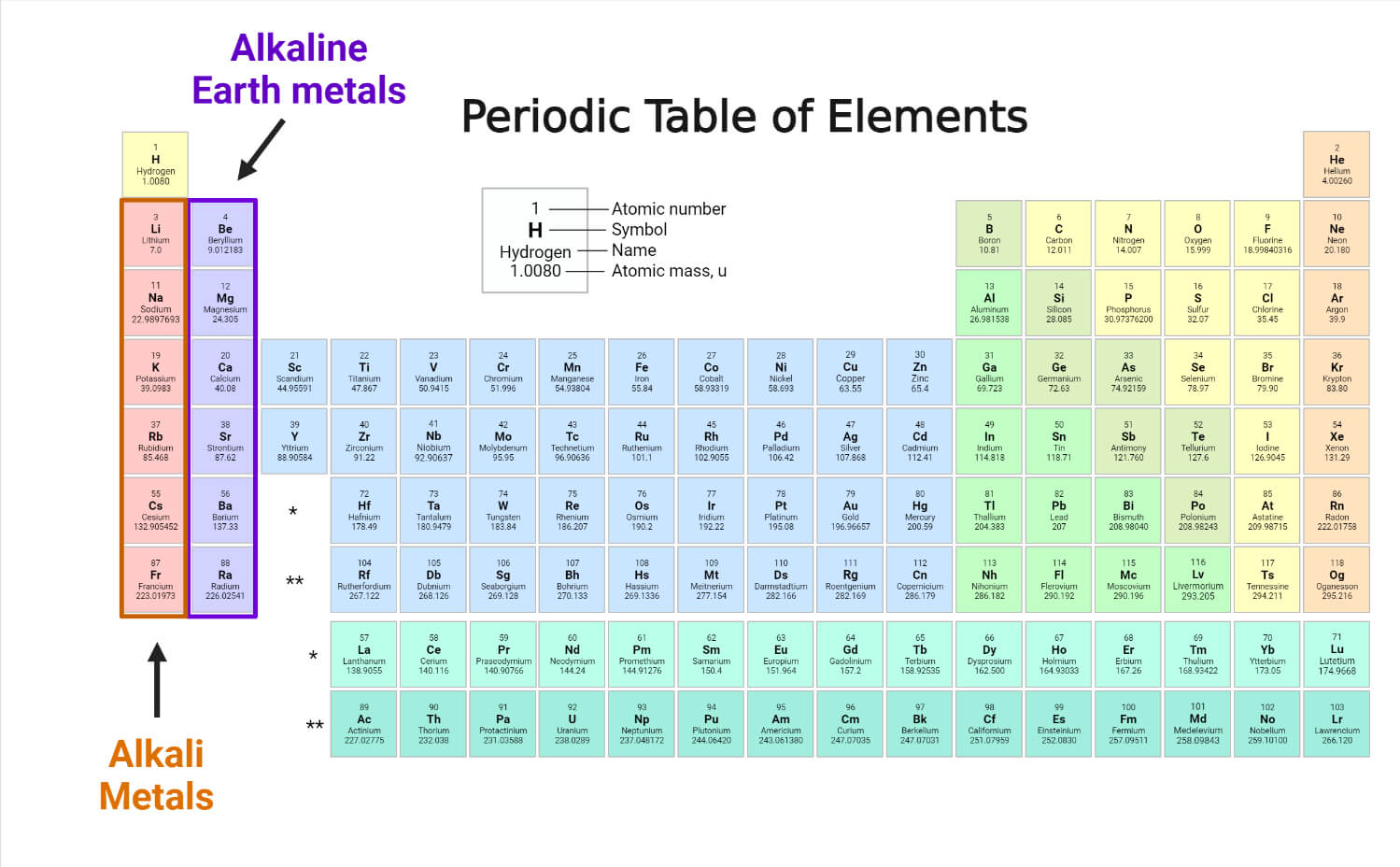
Alkali metals occupy Group 1 of the periodic table, comprising lithium (Li), sodium (Na), potassium (K), rubidium (Rb), cesium (Cs), and francium (Fr). Their chemical behavior is dominated by a single electron in their outermost energy shell (ns¹). Because this electron is relatively far from the nucleus and shielded by inner electron shells, it experiences a lower effective nuclear charge. This makes it energetically favorable for these atoms to lose that electron to attain the stable octet of a noble gas.
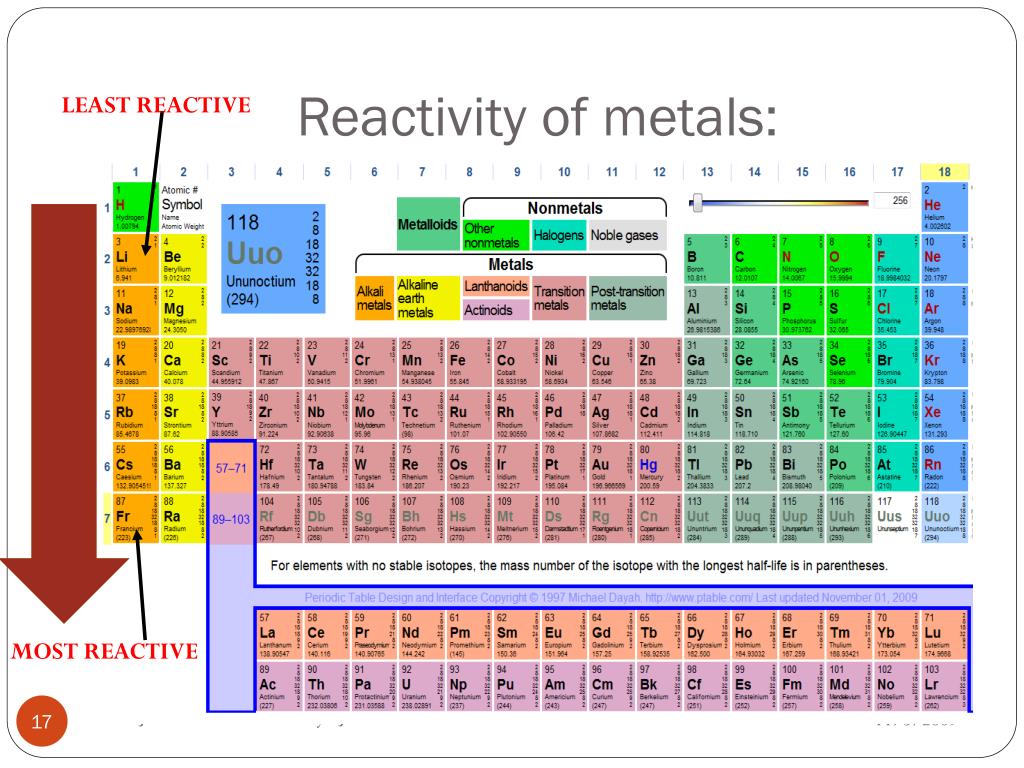
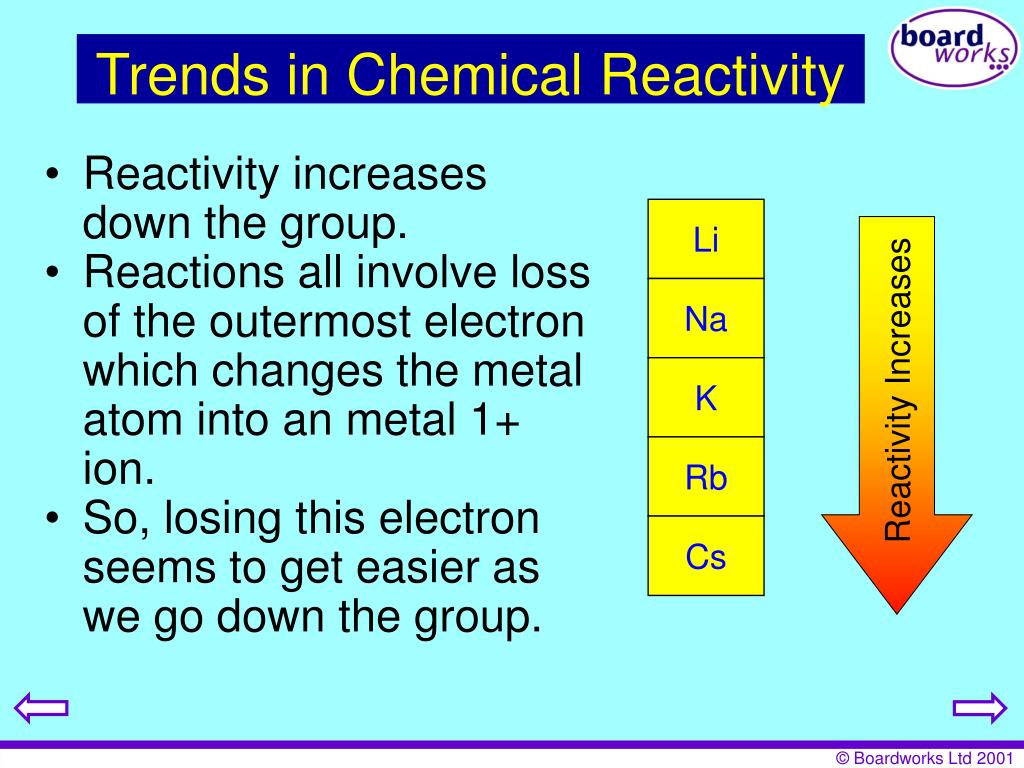
The ease with which an atom loses an electron is measured by its first ionization energy. As you move down the group, the atomic radius increases, the distance between the nucleus and the valence electron grows, and the ionization energy decreases. Consequently, francium and cesium are the most reactive members of this group, while lithium remains the least reactive due to its smaller atomic size and higher ionization energy.
Defining Reactivity in Chemistry
To understand why the "most reactive" label is nuanced, one must define what reactivity means. In a general chemical context, reactivity refers to how readily a substance undergoes a chemical change, either by gaining or losing electrons.
The Role of Ionization Energy
For metals, reactivity is primarily defined by the ease of electron loss (oxidation). In this category, the alkali metals are indeed the champions of the periodic table. Because they require the least amount of energy to shed their valence electron, they react violently with oxidizing agents.
The Role of Electronegativity
For non-metals, reactivity is defined by the ability to attract electrons (reduction). Fluorine, located in Group 17, is the most electronegative element in existence. Its small atomic radius and high effective nuclear charge allow it to pull electrons from almost any other element. Therefore, if the question asks which element is the most reactive overall, the answer often oscillates between cesium (the most reactive metal) and fluorine (the most reactive non-metal).
Comparative Reactivity: Alkali Metals vs. Other Groups
To properly evaluate the reactivity of alkali metals, it is helpful to look at how they compare to their neighbors and other highly reactive groups.
Group 1 (Alkali Metals) vs. Group 2 (Alkaline Earth Metals)
Alkaline earth metals (Group 2) have two valence electrons. While they are also reactive, they are significantly less so than the alkali metals. Removing two electrons requires more energy than removing one, meaning Group 2 metals generally require harsher conditions (such as heat or specific catalysts) to react compared to the spontaneous reactions seen with Group 1.
Group 17 (Halogens)
The halogens are the primary partners for alkali metals in chemical reactions. Because alkali metals are desperate to lose an electron and halogens are desperate to gain one, they react exothermically and often explosively to form ionic salts, such as sodium chloride (NaCl).
| Element Group | Valence Electrons | Reactivity Trend | Typical Reaction |
|---|---|---|---|
| Alkali Metals | 1 | Increases down the group | Violent, loses electron |
| Alkaline Earth | 2 | Increases down the group | Slower, loses 2 electrons |
| Noble Gases | 8 | Inert/Non-reactive | Minimal under standard conditions |
| Halogens | 7 | Decreases down the group | Vigorous, gains electron |
Environmental Hazards and Handling Requirements
Due to their extreme reactivity, the alkali metals are never found in their pure elemental form in nature; they are always bound in compounds like salts or silicates. Handling these metals in a laboratory or industrial setting in 2026 requires specialized safety protocols.
Storage Protocols
Because alkali metals react violently with atmospheric moisture and oxygen, they must be stored under inert conditions. Lithium is often stored in oil or dry argon gas to prevent surface oxidation. Heavier alkali metals like potassium and cesium are notoriously dangerous if exposed to air, as they can ignite spontaneously.
Safety Precautions
- Inert Atmosphere: When working with pure alkali metals, researchers must use a glovebox filled with an inert gas like nitrogen or argon.
- Moisture Exclusion: Even trace amounts of humidity in the air can cause a runaway reaction.
- Fire Suppression: Standard water-based fire extinguishers are useless and dangerous on alkali metal fires; Class D fire extinguishers (designed for combustible metals) or dry sand must be used.
The Influence of Atomic Size and Periodicity
The reactivity of alkali metals is a textbook demonstration of periodic trends. As an atom increases in size, the outer electron experiences less attraction to the positively charged nucleus. This phenomenon is known as "shielding."
In the case of cesium, the 6s valence electron is so shielded by the inner shells of electrons that it is held very loosely. This is why cesium exhibits such extreme reactivity compared to lithium. If you were to drop a piece of lithium into water, you would observe steady bubbling as hydrogen gas is released. If you were to drop a similar amount of cesium into water, the reaction would be instantaneous and explosive, often shattering the glass container.
Common Misconceptions
One frequent misunderstanding is that all metals are reactive. In reality, transition metals—like gold, platinum, and silver—are quite the opposite, often described as "noble" because they are resistant to oxidation. The alkali metals represent the extreme high end of the metal reactivity spectrum, while the noble metals sit at the opposite extreme.
Another misconception is that reactivity implies toxicity. While alkali metals are reactive and can cause chemical burns due to their reaction with moisture on the skin, their toxicity is generally secondary to their immediate physical danger of ignition and explosion.
Frequently Asked Questions
Why is francium not commonly discussed in reactivity experiments?
Francium is an extremely rare, radioactive element with a very short half-life. It decays into other elements in minutes, making it impossible to accumulate enough of it to study its chemical reactivity in a standard lab setting.
Which is more reactive: Lithium or Cesium?
Cesium is significantly more reactive than lithium. Because cesium has more electron shells, its valence electron is further from the nucleus and more shielded, allowing it to be lost much more easily than the valence electron of lithium.
Can alkali metals react with each other?
Under standard conditions, alkali metals do not react with one another to form compounds. They can form alloys, such as the liquid sodium-potassium alloy (NaK), which is used in heat transfer applications, but they do not typically undergo chemical bonding with each other because they are all trying to shed electrons, not gain them.
What is the most reactive element on the periodic table?
If the definition of reactivity is based on the ability to gain an electron, then fluorine is the most reactive. If the definition is based on the ability to lose an electron, then cesium is generally considered the most reactive stable element.
Why are alkali metals stored in oil?
They are stored in oil to create a barrier between the metal and the moisture/oxygen in the air. The oil prevents the metal from corroding or catching fire, effectively isolating it from the environment.
Recommendation for Further Exploration
If you are a student or researcher looking to observe these reactions safely, do not attempt to perform these experiments without professional supervision, specialized safety equipment, and institutional oversight. The most effective way to understand the reactivity of these elements without direct physical risk is to study recorded high-speed footage of the group's reactions with water or to utilize virtual chemistry simulations that accurately model ionization energy and electronegativity trends.
For those interested in the industrial applications of these metals, examine how lithium is utilized in current battery technology for the 2026 market, as its reactivity is exactly what allows it to function as a high-density energy carrier in electrochemical cells.