Alan Dean Foster is a prolific American author best known for his extensive contributions to the Humanx Commonwealth universe and his unparalleled skill in writing film novelizations, including the original Star Wars and Alien. His career spans over five decades, defining the standards for tie-in fiction and original space opera through scientific world-building.
Since his professional debut in the late 1960s, Alan Dean Foster has cultivated a reputation as one of the most versatile and reliable voices in speculative fiction. While many readers recognize him for his work on major franchises, his original bibliography is vast, encompassing science fiction, fantasy, horror, and even contemporary thrillers. As of 2026, Foster’s influence remains a cornerstone of the publishing industry, particularly regarding how intellectual property (IP) is managed and how creators are compensated for their legacy works.
The Architect of the Humanx Commonwealth
Foster's most significant original contribution to science fiction is the Humanx Commonwealth, a sprawling interstellar civilization defined not by conflict, but by the symbiotic relationship between humans and the insectoid Thranx. Unlike many of his contemporaries who focused on "us vs. them" narratives, Foster’s vision was rooted in cooperation and biological compatibility.
The Pip and Flinx Adventures
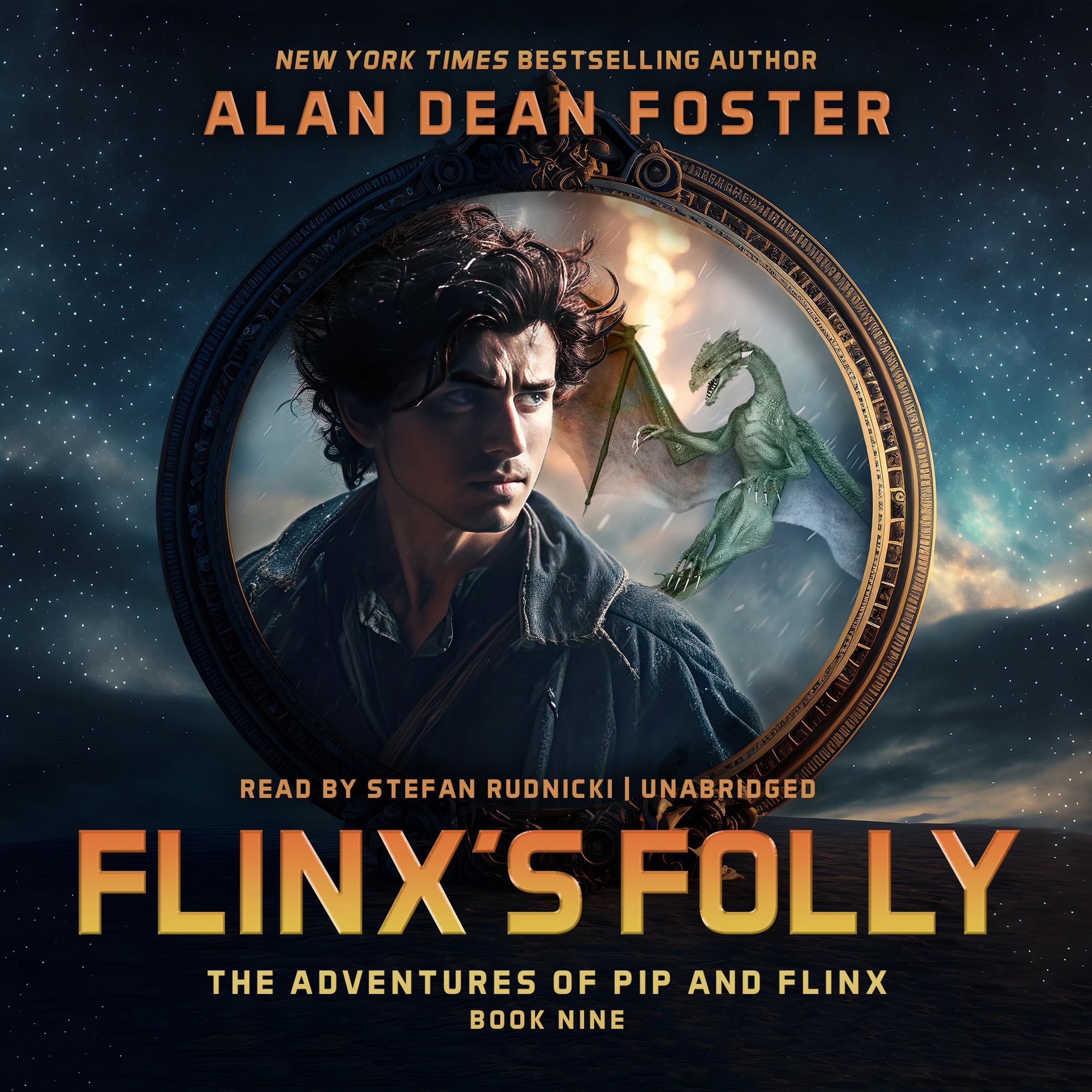
The most famous sub-series within the Commonwealth is the saga of Philip Sage "Flinx" Walker and his minidrag, Pip. Flinx is a young man with empathetic abilities, and his journey across the galaxy often involves uncovering the secrets of the Xothli, an ancient and malevolent race. Foster’s background in political science and his interest in ecology are evident in these novels. He builds planets with rigorous attention to climate, flora, and fauna, making the environments as much a character as Flinx himself.
The Thranx-Human Alliance
The "Humanx" portmanteau represents the melding of two cultures. Foster spent several novels, such as Phylogenesis, detailing the first contact and subsequent cultural integration of these two species. This focus on "hard" sociology and biology sets the Commonwealth books apart from standard space adventure. For readers interested in xenobiology, Foster’s descriptions of Thranx hive structures and their unique olfactory-based language provide a masterclass in imaginative but grounded world-building.
The King of Novelizations: Bridging Cinema and Literature
Alan Dean Foster is often called the "Dean of Novelizations." This title is not merely honorary; it reflects his unique ability to take a screenplay—often a fluid, changing document—and expand it into a cohesive literary work that stands on its own.
The Star Wars Connection
In 1976, Foster was commissioned to write the novelization of a new film called Star Wars. Published under George Lucas's name, the book appeared six months before the movie’s release. Foster’s contribution was vital; he provided the internal monologues and expanded descriptions that gave the world of Tatooine its initial depth.
Following the film's success, Foster was tasked with writing the first-ever Expanded Universe novel, Splinter of the Mind's Eye. This book was originally conceived as a low-budget sequel should the first film fail. Because of this, it focuses on a misty jungle planet (Mimban) and omits Han Solo, as Harrison Ford had not yet signed on for sequels. This work effectively birthed the multi-billion-dollar industry of Star Wars tie-in literature.
The Alien and Transformers Franchises
Foster’s work on the Alien franchise is equally significant. He novelized the first three films, often incorporating scenes that were cut from the final theatrical releases due to budget or pacing. His prose added a layer of cosmic horror that the visual medium sometimes lacked. Similarly, in the 2000s, Foster was the go-to writer for the Transformers live-action movie adaptations, proving his ability to adapt his style to modern blockbusters.
| Franchise | Notable Foster Works | Contribution Type |
|---|---|---|
| Star Wars | A New Hope (Ghostwriter), Splinter of the Mind's Eye | Novelization & First EU Novel |
| Alien | Alien, Aliens, Alien 3, Alien: Covenant | Expansion of lore/Internal monologues |
| Star Trek | Star Trek Log Series, 2009 Film Novelization | Adaptation of Animated/Live-action series |
| The Thing | The Thing (1982) | Horror atmosphere expansion |
| Chronicles of Riddick | Pitch Black, The Chronicles of Riddick | Character depth and world history |
The "DisneyMustPay" Controversy and Creator Rights
One of the most consequential chapters of Alan Dean Foster’s later career was not a book, but a legal and public relations battle that reshaped the publishing landscape. In late 2020, Foster, supported by the Science Fiction and Fantasy Writers of America (SFWA), went public with a grievance against Disney.
The Core of the Dispute
After Disney acquired Lucasfilm and 20th Century Fox, they took over the publishing rights for Foster’s Star Wars and Alien novels. However, Disney allegedly ceased paying royalties to Foster for these works. Their legal argument was unprecedented: they claimed that while they had purchased the rights to publish and profit from the books, they had not purchased the "obligations" to pay the creator for them.
This sparked the #DisneyMustPay movement. For Foster, this was not just about the money (though he was facing significant medical bills at the time), but about the fundamental principle of contract law. If a company could buy a contract’s benefits without its liabilities, then no creator’s royalty stream was safe.
Resolution and Long-Term Impact
The public pressure and legal scrutiny forced a resolution by mid-2021. Disney eventually paid Foster the back royalties and resumed regular payments. However, the incident highlighted a dangerous loophole in corporate acquisitions. Today, in 2026, the "Foster Clause" is a common informal term in publishing contracts, where agents now ensure that royalty obligations are explicitly tied to the intellectual property regardless of corporate mergers. This situation remains a vital case study for any writer working in "work-for-hire" or licensed properties.
Literary Style and Technical Mastery
Foster’s writing is characterized by high readability, brisk pacing, and a deep respect for scientific plausibility. His academic background in film and political science informs his structural choices, making his books feel cinematic even when they are entirely original.
Ecology and Xenobiology
A recurring theme in Foster’s work is the environment. In the Midworld novel (part of the Humanx Commonwealth), he depicts a planet-wide rainforest with distinct layers of life that influence the culture of the humans living there. This focus on how geography dictates destiny is a hallmark of his "hard" science fiction approach. He avoids "magic" solutions, preferring to solve plot problems through the clever application of biological or physical laws.
The Spellsinger Series: A Fantasy Pivot
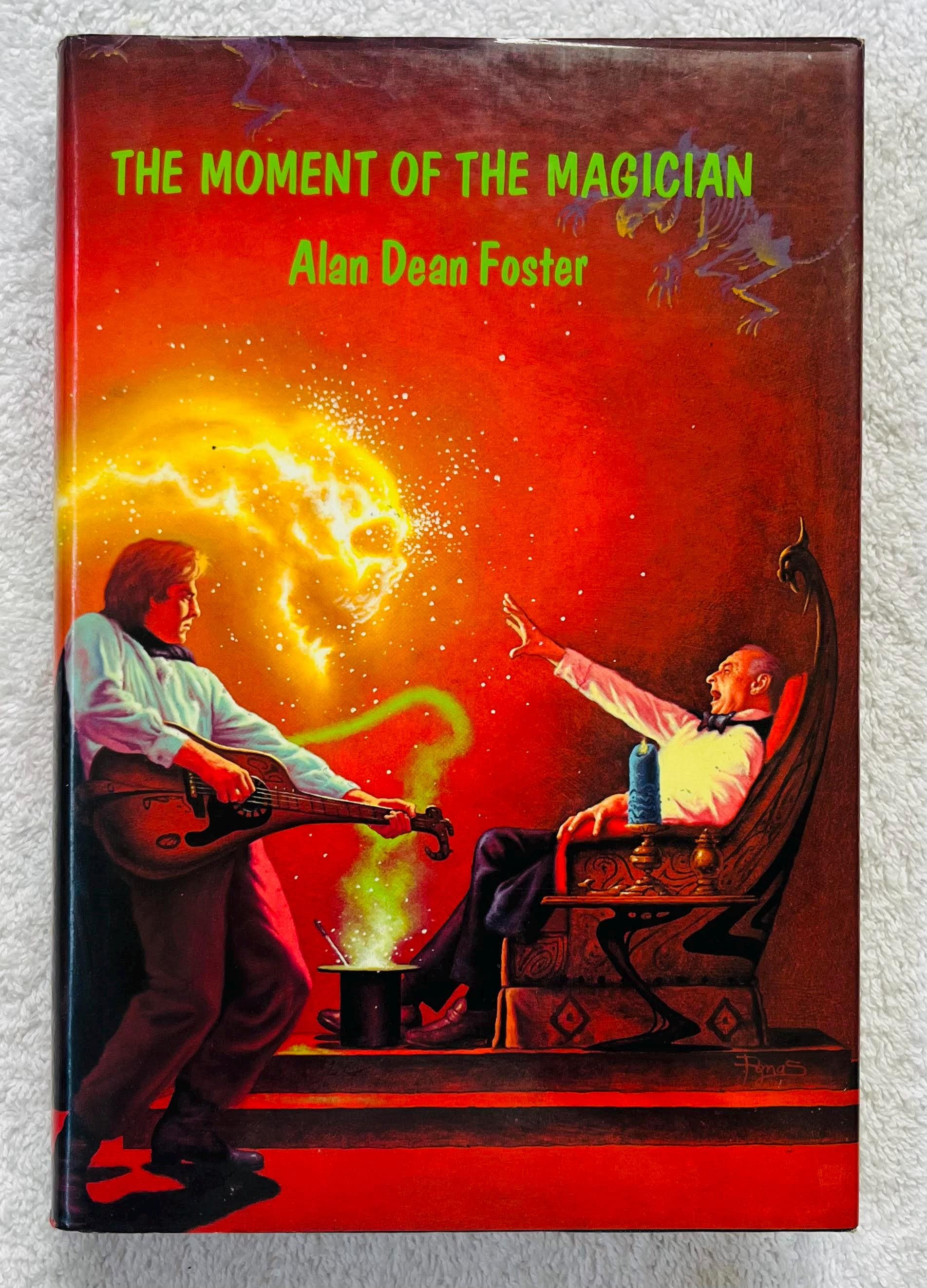
While best known for sci-fi, Foster’s Spellsinger series is a significant contribution to the "portal fantasy" genre. The story follows Jonathan Thomas Meriweather, a law student and amateur musician who is transported to a world of anthropomorphic animals. Instead of a sword, Jon-Tom uses a "ducar," a musical instrument that allows him to cast spells by playing rock-and-roll songs. This series demonstrates Foster’s humor and his ability to blend pop culture with traditional high fantasy tropes.
How to Start Reading Alan Dean Foster
With over 120 books to his name, Foster’s bibliography can be daunting for newcomers. To properly appreciate his range, a structured approach is recommended.
- For the Sci-Fi Purist: Start with Nor Crystal Tears. It is a prequel to the Humanx Commonwealth series and tells the story of the first meeting between humans and Thranx from the alien perspective.
- For the Adventure Seeker: For Love of Mother-Not is the chronological start of the Pip and Flinx saga. It introduces Flinx as a child and establishes the unique bond he shares with his minidrag.
- For the Film Buff: Read the novelization of Alien. It is widely considered one of the best film-to-book adaptations ever written, adding layers of psychological depth to the crew of the Nostromo.
- For the Fantasy Fan: Spellsinger (the first book of the series) provides a lighthearted but well-constructed look at a world where music is the ultimate power.
Technical Specifications of Foster's World-Building
Foster’s world-building follows a specific internal logic that writers often study for "consistency in scale." In his Commonwealth books, he utilizes a specific set of technologies that remain consistent across decades of writing:
- KK-Drive: The "Kenessey-Kizimoto" drive is the standard faster-than-light travel mechanism. It relies on the manipulation of gravitational fields rather than "warp" or "hyperspace," leading to specific tactical limitations in his space combat scenes.
- The Church of the Unified Faith: Instead of traditional religions, Foster’s future humans and Thranx share a philosophical organization that focuses on the "Logic of the Universal." This allows him to explore spiritual themes without getting bogged down in sectarian conflict.
- Symbiotic Evolution: Many of Foster’s aliens are designed around the concept of mutualism. This reflects his personal philosophy that cooperation is a more "advanced" evolutionary trait than competition.
Frequently Asked Questions
Did Alan Dean Foster write the first Star Wars movie?
No, George Lucas wrote and directed the film. However, Alan Dean Foster ghostwrote the novelization, titled Star Wars: From the Adventures of Luke Skywalker, based on Lucas’s screenplay. He also wrote the first original sequel novel, Splinter of the Mind's Eye.
What is the order of the Humanx Commonwealth books?
The series can be read in publication order or chronological order. Chronologically, Phylogenesis and Nor Crystal Tears are the best starting points as they detail the origins of the Commonwealth. The Pip and Flinx adventures occur later in the timeline.
Is Alan Dean Foster still writing in 2026?
Foster has maintained a consistent output throughout his career. While his pace has slowed compared to the 1980s, he continues to produce original novels and remains active in the writing community, particularly in advocating for creators' rights.
Why is the Disney royalty case important for other authors?
The case established that "assignment of contract" in corporate mergers does not allow the new owner to ignore the existing royalty obligations to authors. It protected thousands of writers whose books were caught in corporate acquisitions (such as when Penguin merged with Random House or Disney bought Fox).
What is "Splinter of the Mind's Eye" about?
It follows Luke Skywalker and Princess Leia as they crash-land on the planet Mimban. They must race against Darth Vader to find the Kaiburr crystal, a powerful Force-amplifying relic. Notably, the book features a direct lightsaber duel between Luke and Vader well before The Empire Strikes Back.
Practical Advice for Aspiring Novelization Writers
For writers looking to follow in Foster’s footsteps, his career offers several key lessons:
- Respect the Source Material: Foster never "wrote down" to the audience. He treated a movie script with the same literary respect as an original novel.
- Expand, Don’t Just Transcribe: A successful novelization includes the sensory details and internal thoughts that a camera cannot capture.
- Master the "Work-for-Hire" Contract: As evidenced by the Disney dispute, understanding the legal nuances of your contract is as important as the writing itself. Always ensure your contract includes "successor and assigns" clauses to protect your royalties during corporate sales.
Alan Dean Foster’s legacy is one of professional excellence and creative world-building. Whether through the eyes of an orphan on a backwater planet or the perspective of a multi-legged alien in a hive-city, Foster has expanded the boundaries of the human imagination for over half a century.