The AIG Direct life insurance commercials primarily promote a concept known as "living benefits" through their Quality of Life (QoL) insurance products. These policies allow policyholders to accelerate a portion of their death benefit to cover expenses if they are diagnosed with a qualifying chronic, critical, or terminal illness, effectively providing financial support while the insured is still alive.
If you have spent any time watching daytime television or news broadcasts over the last several years, you have likely encountered an advertisement for AIG Direct. These commercials often feature relatable individuals discussing a "new kind of life insurance" or "insurance you don't have to die to use." While the marketing language is designed to be catchy, it refers to a very specific set of financial products and riders that have transformed how consumers view personal protection.
As of 2026, the landscape of these offerings has evolved, particularly following the rebranding and structural shifts within the parent organization, but the core message of the AIG Direct commercials remains focused on accessibility and dual-purpose protection.
The Core Message: "Life Insurance You Don't Have to Die to Use"
The central hook of almost every AIG Direct commercial is the concept of Accelerated Death Benefits (ADBs). Traditionally, life insurance was viewed strictly as a legacy tool—a way to provide for beneficiaries after the policyholder passed away. AIG Direct shifted this narrative by emphasizing the "Quality of Life" suite of products.
When the commercial states that you can use your insurance while you are still alive, it is referring to the ability to "accelerate" or take a cash advance on the policy's face value if you suffer a major health event. This is not a loan that needs to be paid back in the traditional sense; rather, it is a reduction of the eventual payout your beneficiaries will receive.
How Living Benefits Function in 2026
In the 2026 insurance market, these benefits are more standardized but still require careful scrutiny. The commercials highlight that these funds can be used for anything: mortgage payments, experimental medical treatments, or replacing lost income. The "explanation" behind the commercial is that the policy contains specific "riders"—additional provisions—that trigger under three main conditions:
- Chronic Illness: Usually defined as being unable to perform at least two of the six "Activities of Daily Living" (ADLs), such as bathing, dressing, or eating, for a period of at least 90 days.
- Critical Illness: This covers major events like heart attacks, strokes, invasive cancer, or end-stage renal failure.
- Terminal Illness: A medical diagnosis where life expectancy is 12 to 24 months or less.
The Identity Behind the Ads: AIG Direct vs. Corebridge Financial
A point of confusion for many viewers is the branding. While the commercials often still utilize the "AIG" name due to its high brand equity, the entity responsible for these policies is Corebridge Financial. AIG (American International Group) officially completed the separation of its life and retirement business into Corebridge Financial in recent years.
When you call the number on the screen or visit the website mentioned in an AIG Direct commercial, you are interacting with a direct-to-consumer distribution channel. This channel is designed to streamline the application process, often utilizing "algorithmic underwriting" to provide quotes quickly. This explains why the commercials emphasize how "easy" it is to get started.
Breaking Down the Products Featured in Commercials
AIG Direct does not sell just one type of policy. Depending on which commercial you see, the offer might change. Understanding which product is being pitched is crucial to understanding the "catch" or the requirements.
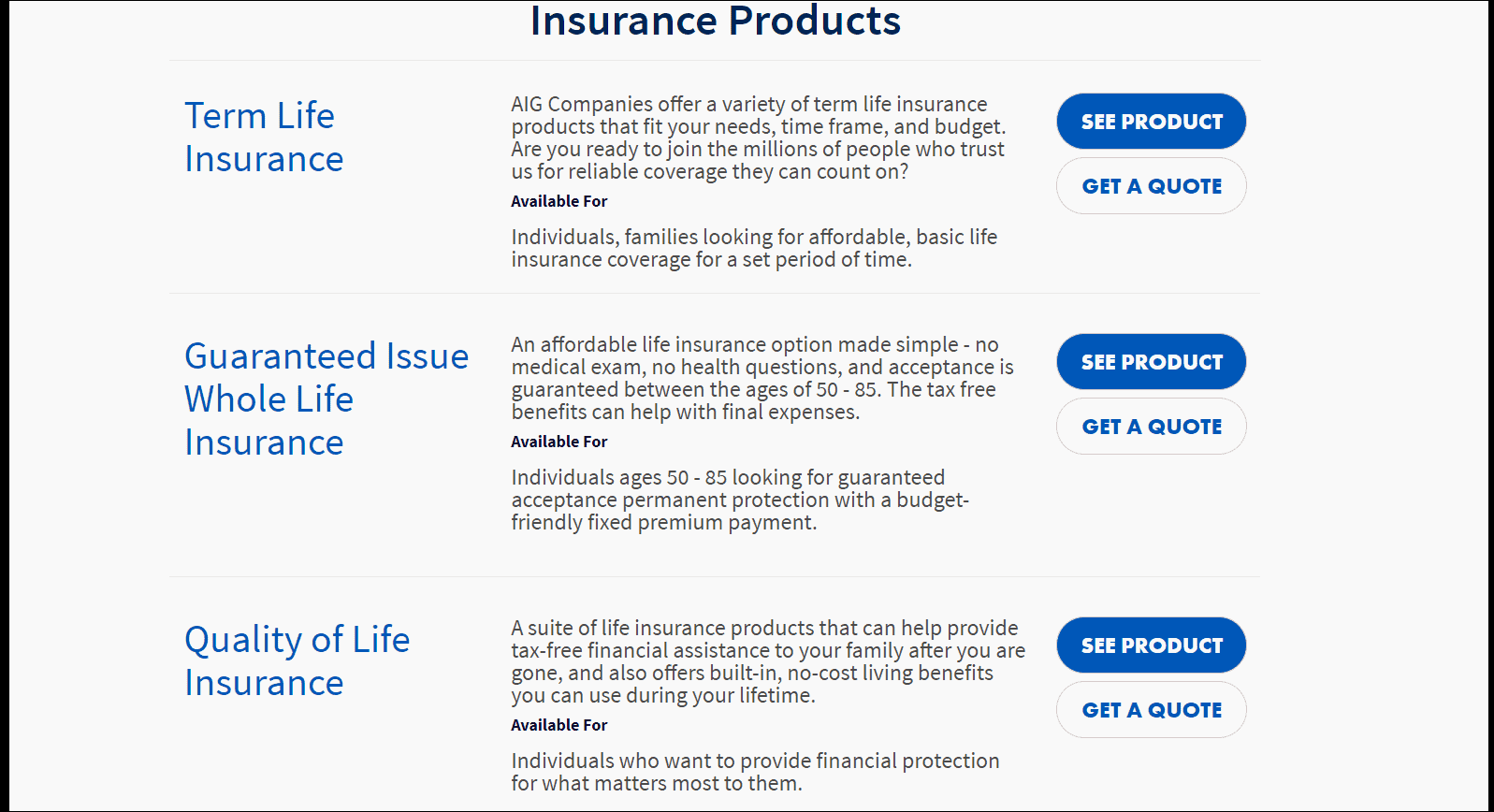
1. Quality of Life (QoL) Term Insurance
This is the most common product featured in their high-energy commercials. It offers level premiums for a set period (10, 15, 20, or 30 years). The "Quality of Life" aspect means the living benefit riders are baked into the term policy, often at a slightly higher premium than a "bare-bones" term policy from a competitor.
2. Guaranteed Issue Whole Life
These commercials usually target seniors (ages 50 to 85). You will recognize them by the claim that "you cannot be turned down for any reason." There are no medical exams and no health questions. However, the trade-off—which is often in the fine print—is a graded death benefit. This means if the insured dies within the first two years of the policy, the beneficiaries may only receive the premiums paid plus interest, rather than the full face value, unless the death was accidental.
3. Permanent Life Insurance (Universal Life)
Less frequently featured in 30-second spots but common in longer "infomercial" styles, these policies build cash value over time. They are marketed as a long-term "asset" rather than just an expense.
Decoding the Pricing Claims
AIG Direct commercials often display low monthly rates, such as "$14 a month" or "pennies a day." It is important to understand that these rates are "starting at" prices.
The criteria for the lowest advertised rates typically include:
- Age: Usually a 20 or 25-year-old applicant.
- Health Class: "Preferred Best" or "Super Preferred" status, meaning no history of smoking, ideal BMI, and no chronic health conditions.
- Coverage Amount: A lower face value, such as $100,000 or $250,000.
For a 45-year-old individual in average health looking for $500,000 in coverage with living benefits, the actual premium will be significantly higher than the teaser rates shown on screen.
Comparison of AIG Direct Policy Types (2026 Guidelines)
| Feature | QoL Term Life | Guaranteed Issue Whole Life | QoL Permanent Life |
|---|---|---|---|
| Target Audience | Families/Working Adults | Seniors (50-85) | High Net Worth/Long-term |
| Medical Exam | Often Required (or Digital) | None | Required |
| Living Benefits | Included | Limited/None | Included |
| Cash Value | No | Yes (Minimal) | Yes (Significant) |
| Duration | Temporary (10-30 years) | Lifetime | Lifetime |
| Approval Speed | Days to Weeks | Instant/24 Hours | Weeks |
The "Living Benefits" Math: How Much Can You Actually Get?
One thing the commercials don't always explain in depth is the "acceleration" calculation. If you have a $500,000 policy and are diagnosed with a critical illness, you don't necessarily get a check for $500,000 the next day.
The insurance company (Corebridge/AIG) performs an actuarial discount. They look at the severity of your illness and how much it reduces your life expectancy. If the illness is severe, they might offer you a large percentage of the death benefit (e.g., 70%). If it is a less severe "critical" event, the offer might be lower.
Additionally, there is usually an administrative fee for exercising the rider. It is a vital financial lifeline, but consumers should realize that utilizing the living benefit will reduce—or in some cases, exhaust—the money left for their heirs.
Why the "Direct" in AIG Direct Matters
The "Direct" in the name signifies that you are bypassing an independent local agent and dealing with the company's internal sales force.
- The Advantage: The process is often faster and more digitally integrated. You can often complete the entire application online or via a brief phone call.
- The Disadvantage: You are only being shown products from one company (Corebridge Financial). An independent agent might compare Corebridge against other carriers like Prudential, Transamerica, or Mutual of Omaha to find a better rate for your specific health profile.
Common Tropes and What They Really Mean
When watching these commercials, look out for these common phrases and their technical meanings:
- "No Medical Exam Required": This often refers to "Simplified Issue" or "Guaranteed Issue" policies. However, for larger term policies, they may still use "Accelerated Underwriting," where they pull your medical records and prescription history electronically instead of sending a nurse to your house.
- "Lock in Your Rate": This refers to level-premium term insurance. Your price will not increase for the duration of the term (e.g., 20 years).
- "Tax-Free Benefits": Under current IRS rules (Section 101(g)), death benefits and accelerated death benefits for terminal or chronic illness are generally received free of federal income tax. However, you should always consult a tax professional, especially regarding "critical illness" payouts which can sometimes vary by state and specific policy language.
Potential Limitations and "The Fine Print"
While the AIG Direct commercials are grounded in legitimate financial products, there are limitations that viewers should be aware of:
- Waiting Periods: For guaranteed issue policies, there is almost always a two-year waiting period before the full death benefit is active for natural deaths.
- State Availability: Not all "Quality of Life" riders are available in every state. For example, California and New York often have different regulations regarding how living benefits can be marketed and triggered.
- Definition Rigidity: To trigger a "chronic illness" claim, you must meet the specific definition in the policy. Simply "feeling old" or having "minor back pain" will not qualify; you must be unable to perform specific ADLs.
- Impact on Public Assistance: Taking a large lump sum through a living benefit could potentially disqualify you from Medicaid or other needs-based government assistance.
Expert Recommendation: Next Actions
If you are intrigued by an AIG Direct commercial, your first step should be to request a personalized illustration. This document is far more valuable than the commercial because it shows exactly how the premiums and living benefits would work for your specific age, health, and location.
As we move through 2026, the integration of AI in underwriting means you can often get these illustrations in real-time. Do not feel pressured to sign a policy during the first phone call. Instead, take the illustration and compare it to a standard term policy from another carrier to see if the "Quality of Life" features are worth the specific premium they are charging you.
For more information on life insurance regulations and consumer protections, you can visit the National Association of Insurance Commissioners (NAIC) or check the financial strength ratings of Corebridge Financial through A.M. Best.
Frequently Asked Questions
Is AIG Direct the same as Corebridge Financial?
Yes, for the purposes of these life insurance policies. AIG spun off its life and retirement division into a separate company called Corebridge Financial. While the "AIG Direct" brand is often used in marketing because it is well-known, the policies are issued by American General Life Insurance Company (a subsidiary of Corebridge).
Do I really get the money while I’m alive?
Yes, if you meet the criteria for a qualifying chronic, critical, or terminal illness as defined in your policy. You can choose to "accelerate" a portion of the death benefit. This provides you with cash when you need it most, though it reduces the amount paid to your beneficiaries later.
Does "No Medical Exam" mean they don't check my health?
Not necessarily. For most "Simplified Issue" policies, they will still check your Medical Information Bureau (MIB) report, your prescription drug history, and your motor vehicle record. Only "Guaranteed Issue" policies truly ignore your health history, but those come with lower coverage limits and higher costs.
Can I use the living benefits for anything?
Generally, yes. Once the insurance company approves the acceleration of the benefit and sends you the funds, there are no restrictions on how you spend the money. You can use it for medical bills, debt, or even a final family vacation.
What happens if I buy a policy and then the commercial changes?
Your policy is a legal contract. The terms, riders, and premiums agreed upon at the time of signing remain in effect for the duration of the policy term, regardless of how the company chooses to market to new customers in future commercials.