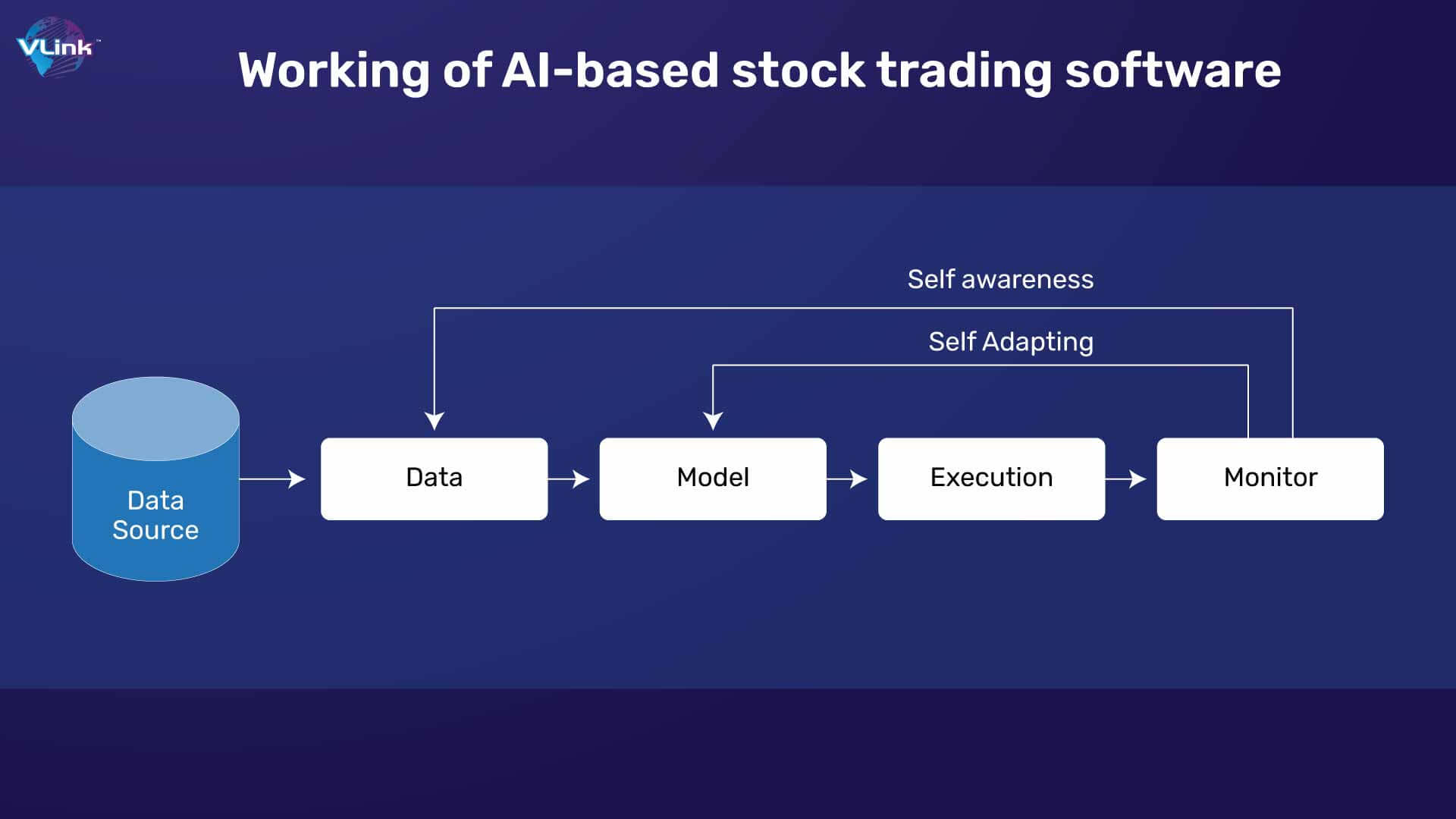
Using AI for trading stocks involves leveraging machine learning algorithms and quantitative models to analyze vast datasets, identify market patterns, and automate execution strategies. While these tools significantly enhance the speed and scope of market analysis, they function primarily as decision-support systems rather than guaranteed mechanisms for profit, requiring careful configuration, backtesting, and risk management by the user.
Understanding the Landscape of AI-Driven Trading
In the current financial landscape of 2026, the application of artificial intelligence in stock trading has evolved from a niche capability reserved for institutional high-frequency trading (HFT) desks into a multifaceted ecosystem available to individual investors. At its core, AI for trading relies on two primary methodologies: supervised learning, where models are trained on historical price and volume data to predict future movements, and natural language processing (NLP), which extracts sentiment from earnings calls, social media, and news headlines to gauge market psychology.
The fundamental objective of using AI in this domain is to mitigate the "human element"—namely cognitive biases such as loss aversion and recency bias—that often lead to suboptimal decision-making. However, it is imperative to recognize that AI systems are as effective as the data they ingest. Garbage-in, garbage-out remains a definitive constraint; if a model is trained on poor-quality or irrelevant historical data, its predictive capacity will inevitably fail during market regimes it has not previously encountered.
Prerequisites and Technical Requirements
Before attempting to integrate AI into your investment workflow, you must establish a technical foundation. Successful implementation is not merely about selecting a software package; it is about infrastructure and data integrity.
- Data Access: You require high-quality historical and real-time market data. Services such as Polygon.io, Alpha Vantage, or Quandl (now part of Nasdaq Data Link) are industry standards for providing the "fuel" that drives predictive models.
- Computational Resources: While basic trend-following algorithms can run on standard consumer hardware, deep learning models involving neural networks often require high-performance computing (HPC) or cloud-based GPU clusters to process backtesting simulations efficiently.
- Programming Proficiency: Proficiency in Python remains the industry gold standard. Libraries such as Pandas for data manipulation, Scikit-learn for machine learning, and PyTorch or TensorFlow for deep learning are essential components of the modern quant’s toolkit.
- Brokerage API Integration: To execute trades automatically, your software must communicate with your brokerage’s API (Application Programming Interface). Platforms like Interactive Brokers (IBKR) provide robust APIs that allow for secure, programmatic order entry.
Operational Workflow: From Hypothesis to Execution
Implementing an AI-driven strategy follows a rigorous, non-linear process that demands patience and disciplined verification.
1. Hypothesis Generation
You must start with a quantifiable premise. For example, rather than asking the AI to "find good stocks," a specific hypothesis might look like: "Does a 5% increase in sentiment scores on financial news sources for S&P 500 components correlate with a positive price movement over the subsequent 48-hour period?"
2. Backtesting
Backtesting is the process of running your strategy against historical data to see how it would have performed. The critical challenge here is "overfitting," a common error where the model learns the historical data so perfectly that it loses its ability to generalize to new, unseen market conditions. Always maintain a "hold-out" set of data—a period of time the model has never seen—to verify its performance before committing real capital.
3. Risk Management Layer
Never allow an AI model to operate without an automated risk-management "circuit breaker." This layer should define maximum position sizes, stop-loss triggers, and portfolio-wide volatility limits. In 2026, the most resilient systems are those where the AI proposes a trade, but a hard-coded risk script validates that the trade does not violate capital preservation mandates.
Comparing AI Approaches in Trading
| Approach | Typical Data Source | Primary Use Case | Complexity Level |
|---|---|---|---|
| Statistical Arbitrage | Price/Volume Time Series | Identifying mean reversion | High |
| Sentiment Analysis | Social Media/News APIs | Predicting short-term volatility | Medium |
| Reinforcement Learning | Simulated Market Environments | Adaptive strategy optimization | Very High |
| Technical Indicator AI | OHLCV Data | Trend following | Low to Medium |
Managing Limitations and Ethical Considerations
It is vital to acknowledge the inherent risks associated with AI in stock trading. First, market "regime shifts"—such as sudden geopolitical events or drastic changes in central bank policy—can render historical patterns obsolete overnight. AI models, which are fundamentally backward-looking, often struggle to anticipate these "black swan" events because they lack the contextual wisdom required to interpret unprecedented data.
Furthermore, investors must remain aware of regulatory compliance. Financial authorities, including the SEC, have increased scrutiny regarding algorithmic trading. If your AI executes trades on your behalf, you are ultimately responsible for ensuring that those actions comply with market manipulation laws. You must ensure that your algorithms do not engage in activities that could be construed as "spoofing" or "layering," which are illegal practices that AI might inadvertently perform if incentivized to create liquidity or influence price perception.
Common Pitfalls and Troubleshooting
New entrants frequently encounter the same barriers. If your model is failing, examine these areas first:
- Survivorship Bias: Many datasets include only companies that are currently trading. If you exclude companies that went bankrupt or were delisted, your backtest will be artificially inflated because the "losers" are missing from your historical analysis.
- Latency: If you are using a strategy that relies on speed, ensure your hardware and internet latency are accounted for. In the current market, milliseconds can be the difference between a profitable trade and a loss.
- Transaction Costs: Beginners often ignore the impact of slippage and commissions. A strategy that is profitable on paper might lose all its gains once the cost of every trade execution is factored into the performance report.
Frequently Asked Questions
Can AI guarantee a profit in the stock market? No. AI is a tool for probability, not a guarantee. All investments carry risk, and market conditions change in ways that AI models cannot always predict. No algorithm can account for all possible external variables.
Do I need a PhD to build an AI trading system? No, though a background in mathematics, statistics, or computer science is highly beneficial. Many high-level libraries in Python have abstracted the most complex math, allowing users to focus on strategy and data rather than writing algorithms from scratch.
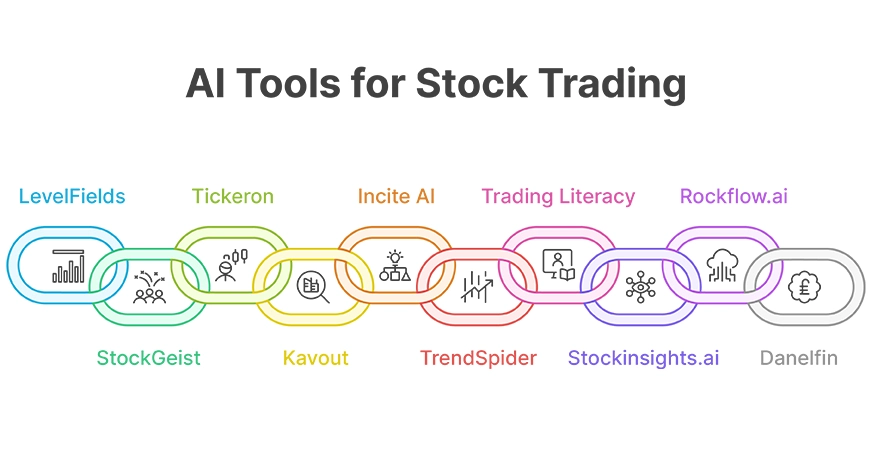
Which AI platform is best for beginners? Platforms that offer sandboxed environments for backtesting, such as QuantConnect or MetaTrader with Python integration, are generally the most accessible for those learning the ropes, as they provide both the data and the execution infrastructure.
How much capital is required to start? You can start with very little capital for testing purposes—often just the cost of data subscriptions—but real-world execution requires enough capital to satisfy brokerage margin requirements and to ensure that commissions do not consume your entire account balance.
Are there legal restrictions on automated trading? Yes. You must ensure your automated systems comply with the regulations of your jurisdiction. This includes reporting requirements and adherence to trading rules enforced by exchanges. Always consult with a qualified financial advisor before deploying automated capital.
Next Steps
To begin your journey into AI-assisted trading, start by building a paper-trading account—a simulated brokerage account that uses real-time market data but virtual money. Develop a simple moving average crossover strategy coded in Python, and backtest it against three years of data. Only after you have observed the model performing as expected in a live simulated environment for at least one month should you consider migrating to small-scale live trading. Remember, the goal is to enhance your decision-making process, not to replace your judgment entirely.