Additive manufacturing techniques create three-dimensional objects by depositing materials layer-upon-layer based on digital 3D model data. Unlike subtractive methods like CNC machining, these processes—commonly known as 3D printing—standardize seven distinct categories according to ISO/ASTM 52900, ranging from polymer extrusion to metal powder bed fusion, each suited for specific industrial requirements in 2026.
Additive manufacturing (AM) has transitioned from a prototyping curiosity into a cornerstone of decentralized, high-performance production. By the current year of 2026, the integration of generative design, advanced materials, and automated post-processing has solidified AM’s role in aerospace, healthcare, and automotive supply chains. Understanding the nuances of each technique is essential for selecting the right process for a specific engineering challenge.
The Standardized Framework of Additive Manufacturing
The international standards community (ISO and ASTM) has classified additive manufacturing into seven primary process categories. This classification allows engineers to navigate the complex landscape of hardware and feedstock based on the physical mechanism of layer formation.
1. Vat Photopolymerization
Vat photopolymerization is one of the oldest and most precise AM techniques. It utilizes a vat of liquid photopolymer resin, which is selectively cured by a light source—typically a UV laser or a digital light projector.
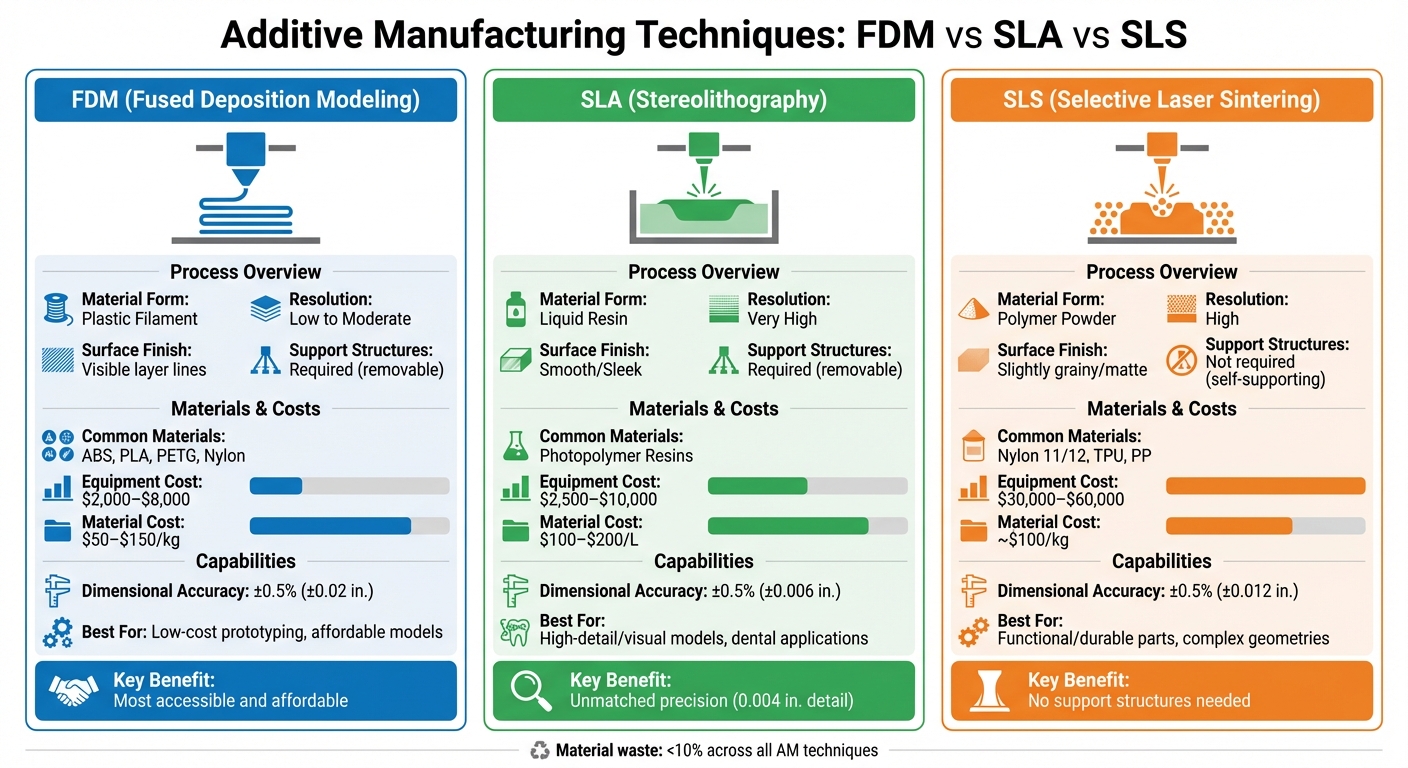
- Stereolithography (SLA): Uses a scanning laser to "draw" the cross-section of a part on the surface of the resin. SLA is renowned for its exceptional surface finish and high dimensional accuracy.
- Digital Light Processing (DLP): Employs a digital projector screen to flash a single image of the entire layer at once. This makes DLP significantly faster than SLA for small, complex parts.
- Continuous Liquid Interface Production (CLIP): A high-speed variant that uses an oxygen-permeable window to create a "dead zone" of uncured resin, allowing for continuous printing without the traditional "peel" steps between layers.
In 2026, vat photopolymerization is frequently used for dental aligners, jewelry casting patterns, and microfluidic devices where feature resolution below 50 microns is required.
2. Material Extrusion
Material extrusion is the most widely recognized AM technique, popularized by Fused Deposition Modeling (FDM) or Fused Filament Fabrication (FFF). The process works by pushing a thermoplastic filament through a heated nozzle, melting it, and depositing it along a predetermined path.
While consumer-grade machines remain popular, industrial extrusion has evolved to handle high-performance polymers like PEEK (Polyether ether ketone) and PEI (Ultem). These materials offer mechanical properties that rival some metals, particularly in high-temperature environments. Furthermore, Composite Filament Fabrication (CFF) now allows for the embedding of continuous carbon fiber, fiberglass, or Kevlar within the thermoplastic matrix, resulting in parts with extraordinary strength-to-weight ratios.
3. Powder Bed Fusion (PBF)
Powder bed fusion techniques use a thermal energy source (laser or electron beam) to selectively fuse regions of a powder bed. This is the dominant technique for industrial metal 3D printing.
- Selective Laser Sintering (SLS): Typically used for polymers like Nylon (PA11/PA12). It does not require support structures because the surrounding unsintered powder acts as a natural support.
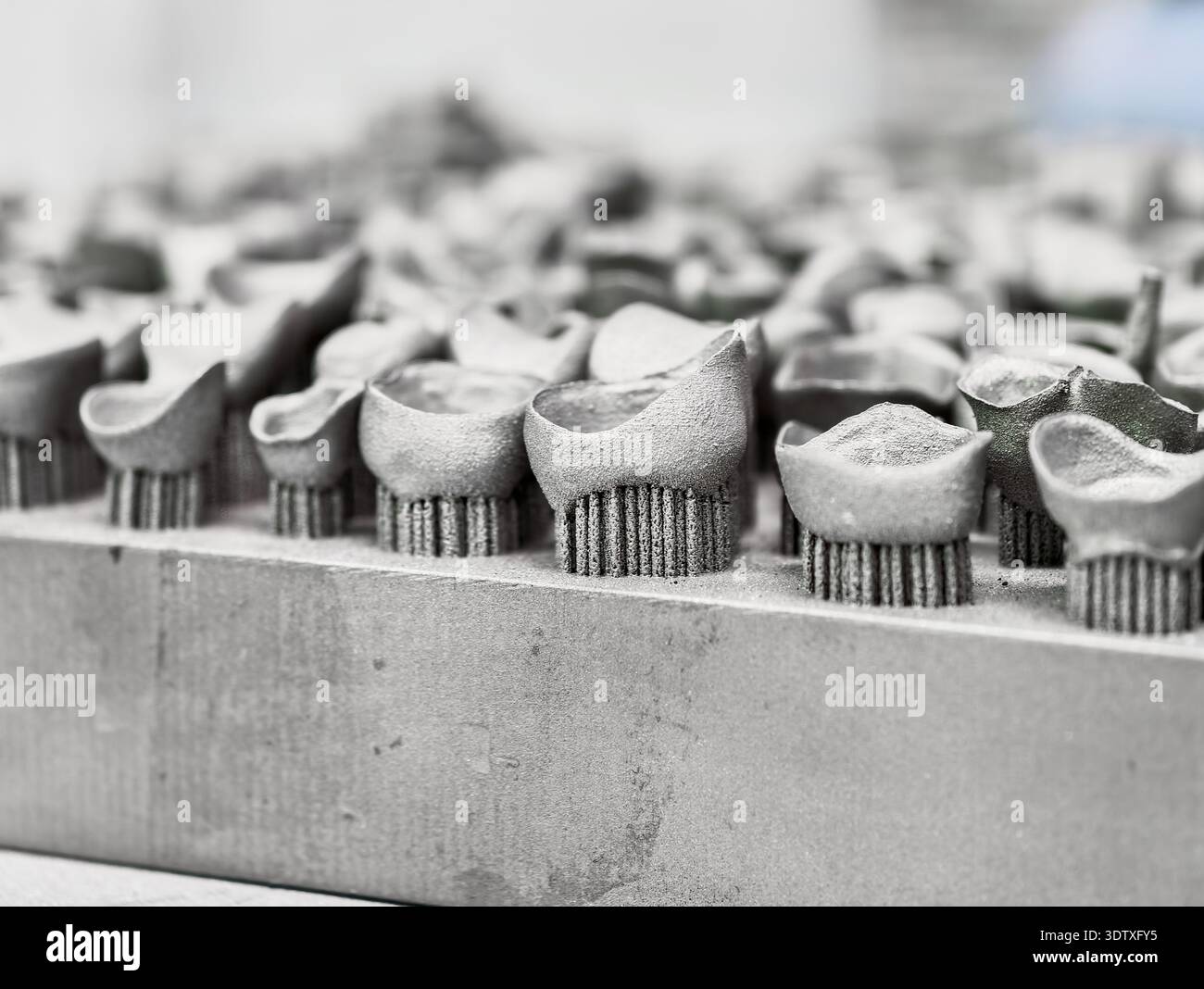
- Selective Laser Melting (SLM) and Direct Metal Laser Sintering (DMLS): These processes use a high-power laser to fully melt metal powders. They are critical for producing complex aerospace components like fuel nozzles and heat exchangers.
- Electron Beam Melting (EBM): Utilizes an electron beam in a vacuum environment. EBM operates at higher temperatures than laser-based systems, reducing internal stresses and making it ideal for brittle materials like Titanium Aluminide.
4. Material Jetting
Material jetting operates similarly to a 2D inkjet printer. Instead of ink, the print head dispenses droplets of photopolymer or wax onto a build platform. Each layer is immediately cured by a UV light attached to the print head.
This technique is unique because it allows for multi-material printing. By mixing different resins in a single build, machines can produce parts with varying colors, transparencies, and shore hardness levels (ranging from rigid to rubber-like). In 2026, this is the gold standard for high-fidelity medical anatomical models and complex visual prototypes.
5. Binder Jetting
Binder jetting separates the material and the bonding agent. A thin layer of powder (metal, ceramic, sand, or polymer) is spread across the build plate, and an inkjet head selectively deposits a liquid bonding agent to "glue" the particles together.
For metal parts, the resulting "green" part must undergo sintering in a furnace to reach full density. For sand casting, binder jetting is used to create complex molds and cores for traditional foundries, drastically reducing the time needed to produce large engine blocks or hydraulic components.
6. Directed Energy Deposition (DED)
DED is often described as automated welding. A nozzle mounted on a multi-axis robotic arm deposits material (either powder or wire) while simultaneously melting it with a laser, electron beam, or plasma arc.
DED is rarely used for creating small, intricate parts. Instead, its value lies in:
- Repairing high-value components: Adding material to worn turbine blades or drill bits.
- Large-scale manufacturing: Producing near-net-shape structures several meters in size.
- Feature addition: Printing a new feature onto an existing part produced by traditional forging.
7. Sheet Lamination
Sheet lamination involves bonding thin sheets of material together to form an object. The most common variation is Ultrasonic Additive Manufacturing (UAM), which uses ultrasonic welding to join metal foils. Because this is a "cold" process (occurring at much lower temperatures than melting), it allows for the integration of sensitive electronics or dissimilar metals within the same part.
Technical Comparison of Additive Manufacturing Techniques
The following table provides a high-level comparison of the most common AM processes used in industrial settings as of 2026.
| Technique | Common Materials | Typical Layer Height | Key Strengths | Primary Use Case |
|---|---|---|---|---|
| SLA/DLP | Photopolymers, Ceramics | 25 – 100 μm | Surface finish, Accuracy | Dental, Jewelry, Molds |
| FDM/FFF | ABS, PLA, PEEK, Nylon | 100 – 400 μm | Low cost, Material variety | Tooling, Functional Prototypes |
| SLS | Nylon (PA12), TPU | 100 – 120 μm | No supports, Durable parts | Batch production, Gearbox housing |
| SLM/DMLS | Titanium, Inconel, Steel | 20 – 60 μm | High strength, Complexity | Aerospace, Medical Implants |
| Material Jetting | Photopolymers, Wax | 16 – 30 μm | Multi-material, Full color | Visual models, Medical planning |
| Binder Jetting | Sand, Steel, Ceramics | 50 – 150 μm | Speed, Scalability | Metal mass production, Casting |
| DED | Stainless Steel, Titanium | 0.5 – 2.0 mm | Large scale, Part repair | Marine, Oil & Gas, Aerospace |
Design for Additive Manufacturing (DfAM)
To maximize the benefits of these techniques, engineers must adhere to Design for Additive Manufacturing (DfAM) principles. AM is not a direct replacement for CNC machining or injection molding; rather, it is a tool for achieving geometries that were previously impossible.
Topology Optimization and Generative Design
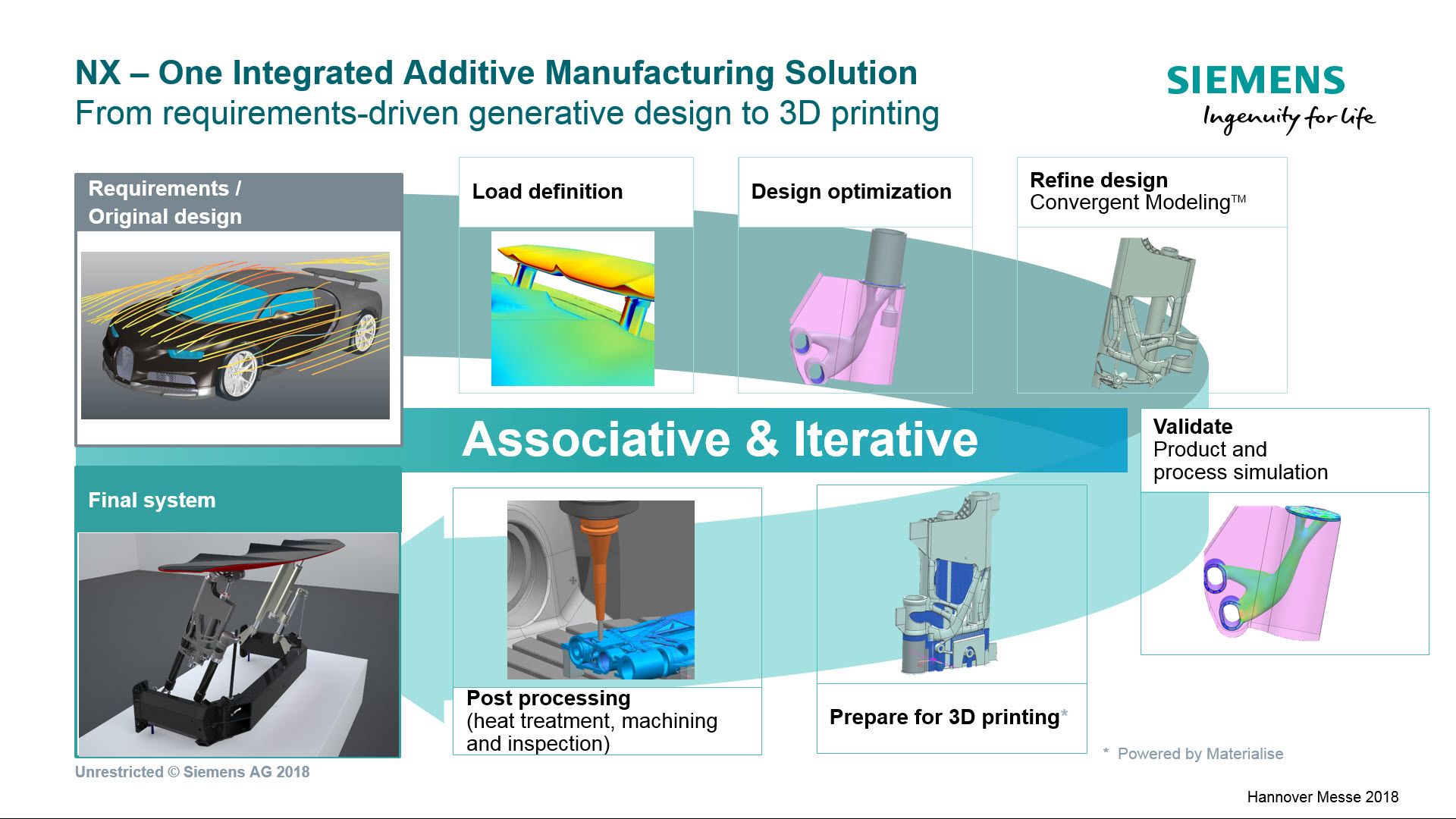
In 2026, AI-driven generative design software has become standard. These tools allow engineers to input load requirements and spatial constraints, and the software "grows" an optimized structure. This often results in organic-looking, lattice-heavy designs that are much lighter than their predecessors but maintain the same structural integrity. Only AM techniques like SLS or SLM can manufacture these complex, internal lattice structures effectively.
Part Consolidation
One of the most significant economic drivers for AM is part consolidation. By redesigning an assembly of 20 components into a single 3D-printed part, companies eliminate the need for fasteners, reduce assembly labor, and minimize potential points of failure (such as leaking seals). The NASA Mars programs have famously used this approach to reduce weight and increase reliability in propulsion systems.
Post-Processing: The "Second Half" of AM
A common misconception is that parts are "ready to use" the moment they leave the printer. In reality, post-processing often accounts for a significant portion of the total part cost.
- Support Removal: Most techniques (except SLS and some Binder Jetting) require sacrificial structures to support overhangs. These must be removed manually or dissolved in a chemical bath.
- Thermal Treatment: For metal AM, Stress Relief is mandatory to prevent warping. Hot Isostatic Pressing (HIP) is used to close internal pores and improve fatigue resistance.
- Surface Finishing: To achieve aerospace-grade tolerances, printed parts often undergo CNC machining on critical mating surfaces. Methods like vapor smoothing or media blasting are used to improve aesthetics and aerodynamics.
- Inspection and Validation: Non-destructive testing (NDT), such as CT scanning, is essential to ensure there are no internal defects, particularly in mission-critical aerospace or medical components.
Strategic Selection Criteria
Choosing the correct additive manufacturing technique requires a balanced analysis of material requirements, mechanical properties, and economic feasibility.
- Determine Material Requirements: If biocompatibility is required for an implant, SLM with Titanium or SLA with medical-grade resins are the primary candidates. If the part needs to withstand high chemical exposure, FDM with PEEK may be the solution.
- Analyze Geometric Complexity: Parts with deep internal channels (e.g., conformal cooling in injection molds) are best served by Powder Bed Fusion, which can manage the heat and geometry simultaneously.
- Evaluate Production Volume: For a single prototype, FDM or SLA is cost-effective. For high-volume production of metal parts, Binder Jetting offers the throughput necessary to compete with traditional manufacturing.
- Assess Accuracy and Finish: If the part is a visual prototype for a consumer product, Material Jetting or SLA provides the "looks like, feels like" quality required for stakeholder approval.
The Future Landscape of AM in 2026
As we move through 2026, the focus has shifted from "Can we print this?" to "How can we print this at scale?" The industry is seeing a massive push toward Hybrid Manufacturing, where additive and subtractive capabilities are housed within a single machine. This allows for the speed and geometric freedom of AM combined with the precision of CNC milling.
Furthermore, sustainability has become a regulatory requirement. Additive manufacturing inherently supports a circular economy by using only the material necessary (reducing swarf and scrap) and enabling "on-demand" spare parts, which eliminates the need for massive, carbon-heavy warehouses of inventory.
Frequently Asked Questions
1. Which additive manufacturing technique is the strongest? Strength is primarily a function of material and density rather than the technique alone. However, Powder Bed Fusion (SLM/DMLS) typically produces the strongest metal parts due to the full melting of the powder and subsequent heat treatments. For plastics, industrial FDM using carbon-fiber-reinforced PEEK offers the highest strength-to-weight ratios.
2. Can additive manufacturing replace injection molding? AM is unlikely to replace injection molding for millions of identical, simple parts due to the high speed and low per-unit cost of molding. However, for "bridge production" (quantities from 100 to 10,000) or for parts requiring customization, AM—specifically SLS or Binder Jetting—is now often the more economical choice.
3. What is the difference between SLM and DMLS? The terms are often used interchangeably. Technically, SLM (Selective Laser Melting) implies a full melt of the metal particles, resulting in a homogenous part. DMLS (Direct Metal Laser Sintering) was historically used for alloys that were "sintered" at a molecular level without reaching a full liquid state. In 2026, most industrial "DMLS" machines are capable of full melting.
4. Is 3D printing still too expensive for mass production? The "cost per part" in AM is relatively constant regardless of volume, whereas traditional manufacturing cost per part drops as volume increases. In 2026, the "break-even point" has moved higher. For complex, high-value components (like medical implants or aerospace brackets), AM is already the standard for mass production.
5. What are the safety risks associated with AM? Industrial AM involves high-power lasers, fine combustible powders, and chemical resins. Proper ventilation, explosion-proof vacuum systems for metal powders (to prevent dust explosions), and Personal Protective Equipment (PPE) for handling resins are mandatory safety requirements in any 2026 AM facility.
Final Recommendation
When implementing additive manufacturing, start with a requirements-first approach. Do not select a machine and then look for a problem to solve. Instead, identify a component that is expensive to machine, heavy, or suffers from a long lead time. Consult the ASTM F42 standards to ensure your chosen process meets the necessary quality benchmarks for your industry. For most organizations entering the space, starting with SLS for polymers or DMLS for metals provides the most versatile entry point into functional, end-use part production.