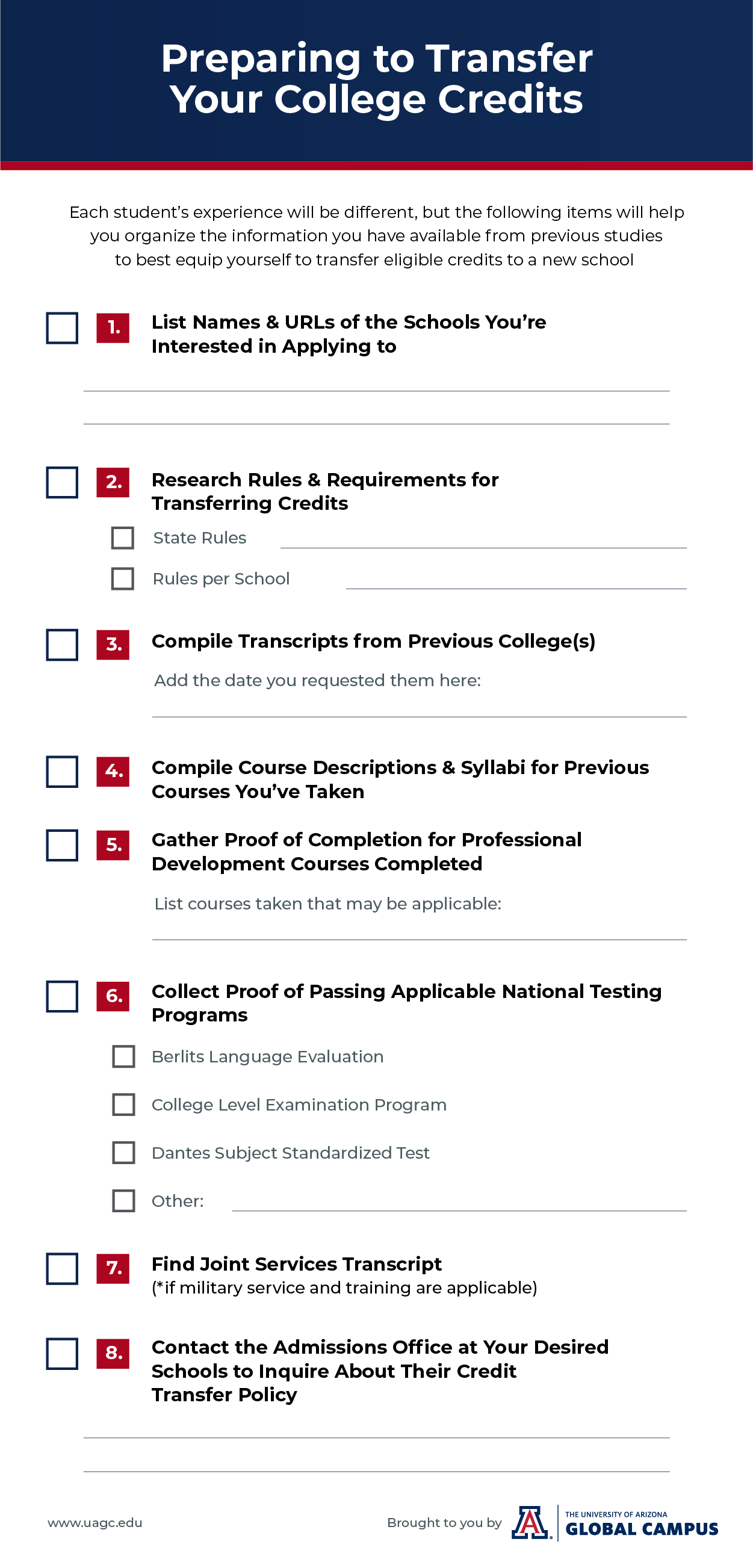
Transferring credits from Austin Community College (ACC) to a four-year university is a strategic move that can significantly reduce tuition costs and shorten the time required to earn a bachelor’s degree. By leveraging the Texas Common Core and specific articulation agreements, students can ensure their ACC coursework applies directly toward their major, maintaining a seamless academic trajectory toward graduation.
Navigating the landscape of higher education in 2026 requires a clear understanding of how community college credits integrate into a larger degree plan. Austin Community College serves as a vital pipeline for students aiming for institutions like the University of Texas at Austin, Texas State University, and Texas A&M. However, the "impact" on your path depends entirely on how early you plan, the type of courses you select, and your understanding of the transfer mechanisms established by the Texas Higher Education Coordinating Board (THECB).
The Foundation: The Texas Common Core Curriculum
The most significant factor in how ACC credits impact your college path is the Texas Common Core Curriculum. This is a 42-hour block of general education courses that, by state law, must be accepted and substituted for the core curriculum at any other public institution in Texas.
When you complete the 42-hour core at ACC, you are "core complete." If you transfer before finishing the entire block, the receiving institution will evaluate your core courses on a one-for-one basis. Being core complete is a massive advantage; it prevents the university from requiring you to take additional lower-division general education classes, regardless of their own specific core requirements. This "block transfer" ensures that you enter your junior year focused almost exclusively on your major-specific coursework.
The Role of the TCCN
To facilitate this, Texas uses the Texas Common Course Numbering System (TCCN). This is a shared coding system that allows students to see exactly how an ACC course (e.g., ENGL 1301) matches a university course (e.g., RHE 306 at UT Austin). Understanding the TCCN is the first step in ensuring that the time you spend at ACC directly reduces your workload at your future university.
Academic vs. Workforce Credits: Understanding the Distinction
Not all credits earned at ACC are created equal when it comes to transferability. The impact on your path varies based on whether a course is classified under the Lower-Division Academic Course Guide Manual (ACGM) or the Workforce Education Course Manual (WECM).
ACGM (Academic) Credits
These are designed specifically for transfer. They include subjects like History, Government, Mathematics, and Natural Sciences. If your goal is a traditional Bachelor of Arts (BA) or Bachelor of Science (BS), your path should be built primarily on ACGM courses. These credits are widely recognized and have the highest "portability" across state and private lines.
WECM (Workforce) Credits
Workforce credits are designed for immediate entry into the job market. These include highly technical courses in fields like Welding, Automotive Technology, or specific Nursing clinicals. Historically, these were difficult to transfer to four-year degrees. However, in 2026, many universities offer a Bachelor of Applied Arts and Sciences (BAAS). This specific degree path is designed to accept WECM credits, allowing technical students to move into management or specialized roles without losing their technical credit hours. If you are on a workforce path, your "college path" will likely be directed toward a BAAS rather than a traditional BS.
How Transfer Credits Shape Your Degree Timeline
The most immediate impact of ACC transfer credits is on your graduation timeline. A standard bachelor’s degree requires approximately 120 credit hours. By taking 60 hours at ACC, you are effectively completing 50% of your degree.
The "Excessive Hours" Rule
In Texas, the state limits the number of credit hours for which it will provide funding for a student. If you take too many "extra" classes at ACC that do not apply to your degree, you may hit the Excessive Hours Limit (usually 30 hours over the degree requirement). Crossing this threshold can result in being charged out-of-state tuition rates at a public university. Therefore, every ACC credit must be chosen with the final degree in mind to ensure your path remains affordable and efficient.
The Junior Year Transition
Students who transfer with 60 or more applicable hours enter the university as Juniors. This status is more than just a label; it often dictates your registration priority. Earlier registration means a better chance of getting into the specific upper-division labs or seminars required for your major. If your ACC credits are not properly aligned, you might enter as a "Sophomore," delaying your graduation by a full year and increasing your total debt.
Navigating Articulation Agreements and Transfer Maps
ACC maintains formal partnerships, known as Articulation Agreements, with dozens of universities. These are legal contracts that guarantee how specific ACC programs will transfer into specific university majors.
The Power of Transfer Maps
The most practical tool for a student is the Transfer Map. These are semester-by-semester guides produced jointly by ACC and receiving institutions. For example, a "Biology Transfer Map" for Texas State University will tell you exactly which chemistry and math sequences to take at ACC.
Following a transfer map eliminates the guesswork. If you deviate from the map—perhaps by taking a different level of math—you risk the credit transferring only as an "elective." While electives still count toward the 120-hour total, they do not satisfy specific degree requirements, which can leave you "credit-heavy" but "requirement-light," a common pitfall that extends the time to graduation.
Financial Impact: Beyond Just Tuition Savings
The financial impact of ACC transfer credits is twofold: the money you save while at ACC and the scholarship opportunities unlocked by your performance there.
Cost Comparison
As of 2026, the cost per credit hour at ACC remains a fraction of the cost at major public universities and a sliver of the cost at private institutions. By completing 60 hours at ACC, many students save between $25,000 and $50,000 in tuition and fees alone. This reduced financial burden often means students can focus more on their studies rather than working full-time, which typically leads to higher GPAs and better transfer outcomes.
Transfer Scholarships
Many universities offer scholarships specifically for ACC transfer students. Organizations like Phi Theta Kappa (PTK), the international honor society for community colleges, provide exclusive scholarship access to members. Often, a high GPA at ACC can lead to a "Transfer Scholarship" at the university that covers a significant portion of the remaining two years. In this way, your ACC credits act as financial assets that fund the second half of your education.
Comparison of Transfer Equivalencies (Sample)
The following table illustrates how common ACC courses typically translate to major Texas universities under the TCCN.
| ACC Course Number | Course Title | UT Austin Equivalent | Texas State Equivalent | Texas A&M Equivalent |
|---|---|---|---|---|
| ENGL 1301 | English Composition I | RHE 306 | ENG 1310 | ENGL 104 |
| HIST 1301 | United States History I | HIS 315L | HIST 1310 | HIST 105 |
| GOVT 2305 | Federal Government | GOV 310L | POSI 2310 | POLS 206 |
| MATH 2413 | Calculus I | M 408K/C | MATH 2471 | MATH 151 |
| BIOL 1406 | Biology for Science Majors I | BIO 311C | BIO 1330/1130 | BIOL 111 |
| PSYC 2301 | General Psychology | PSY 301 | PSY 1300 | PBSI 107 |
Note: Always verify equivalencies through the official TCCN website or the specific university's transfer credit evaluator tool, as requirements can change annually.
Common Challenges and How to Avoid "Lost" Credits
Despite the systems in place, students still encounter issues where credits do not impact their path as expected.
- The "D" Grade Dilemma: While a "D" is technically a passing grade at ACC and may count toward an Associate degree, most universities require a "C" or better for a course to transfer. If you earn a "D" in a prerequisite for your major, you will almost certainly have to retake it at the university level, costing you time and money.
- Sequence Breaks: Science and foreign language courses are often taught in sequences (e.g., Spanish I and Spanish II). Transferring in the middle of a sequence can be risky, as the curriculum at the university might start at a different point than where ACC left off. It is almost always better to finish the entire sequence at ACC before transferring.
- Credit Limits: Most four-year institutions limit the number of community college credits they will accept—usually to 60 or 66 hours. If you take 80 hours at ACC, at least 14 of those hours will likely not count toward your bachelor's degree.
Reverse Transfer: A Safety Net for Your Path
An often-overlooked aspect of the ACC transfer path is Reverse Transfer. This process allows students who transferred to a university before finishing their Associate degree to send their university credits back to ACC.
If the combined credits meet the requirements for an ACC degree, the student is awarded an Associate of Arts or Science while they are still working on their Bachelor’s. This is more than just an extra line on a resume; it provides a "credential in hand" should life circumstances force a pause in your university education. It ensures that the work you did at ACC and your first year at the university results in a recognized degree, protecting your academic investment.
Step-by-Step Guide to Maximizing Credit Impact
To ensure your ACC credits have the most positive impact on your path, follow these steps:
- Declare a Major Early: Even if you change it later, having a declared major allows ACC advisors to give you a specific Transfer Map.
- Consult the Transfer Course Guide: Every major university (UT, Texas State, etc.) publishes a "Transfer Course Guide" for ACC. Use this as your primary planning document.
- Meet with an ACC Transfer Specialist: ACC has dedicated staff whose entire job is to ensure your credits move with you. Meet with them at least once per semester.
- Request Official Transcripts Early: When applying to transfer, you must send official transcripts. In 2026, this is done via electronic services like Parchment or National Student Clearinghouse. Ensure your "Core Complete" status is noted on the transcript before it is sent.
- Check the "Transfer Equivalency Tool": Most universities provide an online database where you can type in your ACC course number and see exactly how it transfers.
Frequently Asked Questions
Will my ACC GPA transfer to my new university?
No. Generally, your "transfer GPA" is used for admission and scholarship purposes, but once you arrive at the university, you start with a fresh "Institutional GPA." However, some graduate schools (like Law or Medical school) will look at your cumulative GPA across all institutions attended.
Can I transfer "Workforce" (WECM) credits to a University of Texas school?
Typically, traditional UT degrees do not accept WECM credits. However, other institutions like Texas State University or Texas A&M University-Commerce have specific BAAS programs designed to accept these technical credits. Always check the specific degree plan of the receiving institution.
Is there a limit to how many credits I can transfer?
Yes. Most universities in Texas limit transfer credits from community colleges to 60–66 hours. Any hours taken beyond this may be evaluated for content (satisfying a requirement) but will not add to your total credit count for graduation.
What happens if a university refuses to accept an ACC core course?
Under Texas law, if a student completes the core curriculum at one public institution, any other public institution must accept it. If a university denies a core credit, you have the right to appeal. The first step is contacting the Registrar’s office at the receiving university, followed by the THECB if the issue is not resolved.
Should I finish my Associate degree at ACC before transferring?
While not strictly necessary, it is highly recommended. Completing the Associate degree (60 hours) usually aligns with being "core complete" and puts you in a stronger position for transfer scholarships. It also provides a milestone that can improve your confidence and resume.
Practical Recommendation
The most effective way to ensure your ACC credits impact your path positively is to apply for the "Core Complete" certificate as soon as you finish your 42 hours. This designation on your transcript acts as a "passport," forcing the receiving university to accept your general education as a finished block. Before you leave ACC, schedule a final audit with an advisor to confirm that your transcript is correctly coded. This single administrative step can save you from having to retake multiple classes at the much higher university tuition rate.