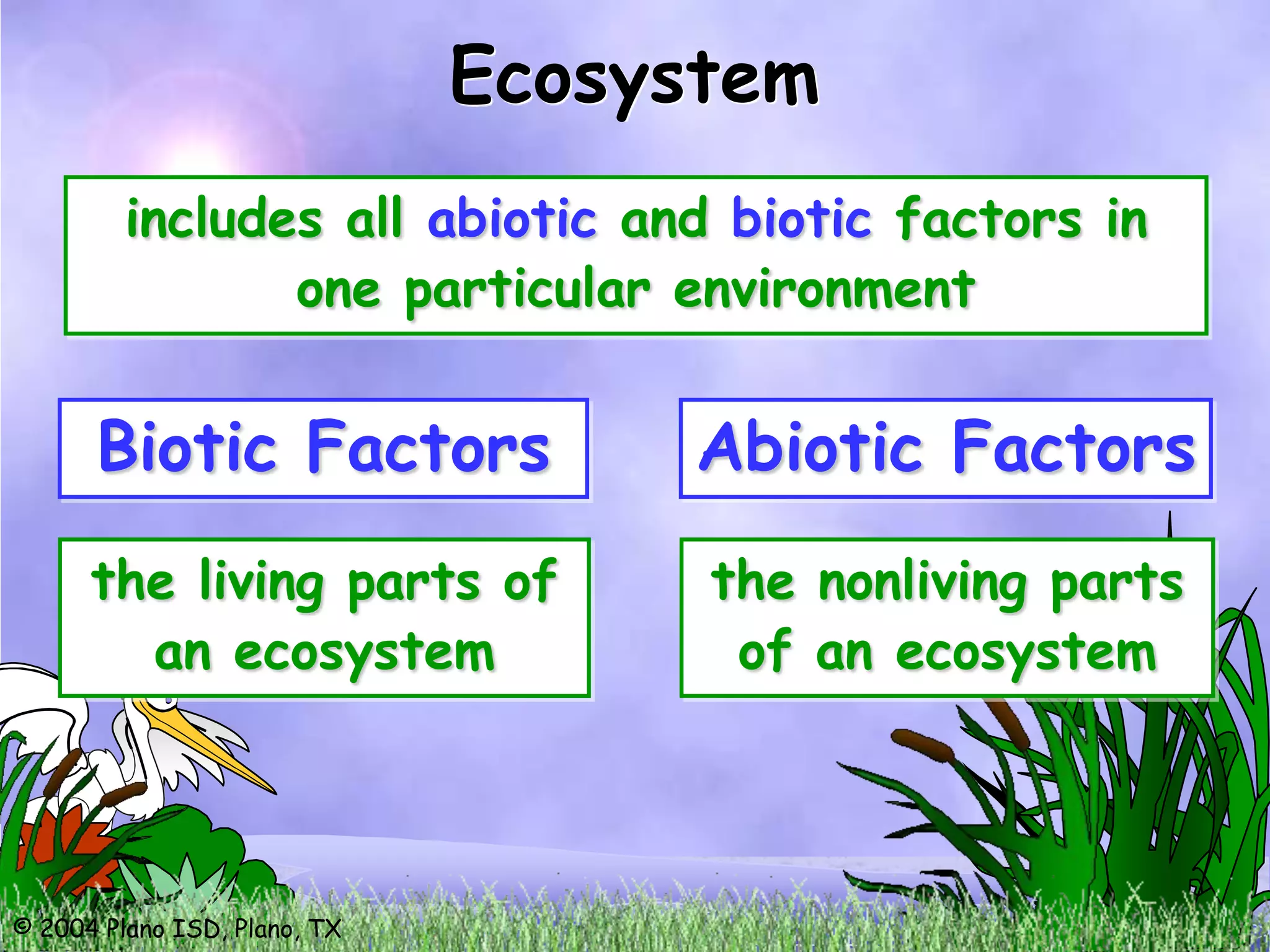
Abiotic factors are the non-living chemical and physical parts of the environment that affect living organisms and the functioning of ecosystems. These components, including sunlight, water, temperature, soil composition, and atmospheric gases, serve as the fundamental building blocks that determine which species can survive and how biological communities evolve.
Understanding the Definition of Abiotic Factors
In the study of ecology, the biosphere is divided into two primary categories: biotic and abiotic. While "biotic" refers to the living components—such as plants, animals, fungi, and bacteria—abiotic factors encompass everything else. The term "abiotic" is derived from the Greek roots "a-" (meaning without) and "bios" (meaning life).
Despite being non-living, these factors are far from static. They are dynamic forces that undergo constant change through geological, chemical, and physical processes. In 2026, our understanding of these factors has shifted significantly as we observe how anthropogenic (human-caused) changes are altering historical abiotic baselines, such as average global temperatures and ocean acidity levels.
Abiotic factors define the carrying capacity of an ecosystem, which is the maximum population size of a species that an environment can sustain indefinitely. When an abiotic factor is in short supply or exceeds the tolerance of an organism, it becomes a limiting factor. For instance, in a desert, water is the primary limiting factor, whereas in the deep ocean, sunlight and pressure take on that role.
The Hierarchy of Abiotic Influence: Classification
To better understand how non-living elements shape the world, ecologists typically classify abiotic factors into three broad categories based on their origin and influence.
1. Climatic Factors
Climatic factors relate to the atmosphere and weather patterns. These are the most influential factors on a global scale, as they determine the distribution of biomes (such as tropical rainforests vs. tundras). Key climatic factors include:
- Solar Radiation: The primary energy source for almost all life.
- Temperature: Influences metabolic rates and geographical boundaries.
- Precipitation: Dictates the availability of liquid water.
- Humidity: Affects the rate of evaporation and transpiration in plants.
2. Edaphic Factors
Edaphic factors refer specifically to the characteristics of the soil or substrate. For terrestrial ecosystems, the soil is the foundation of the food web.
- Soil Texture: The ratio of sand, silt, and clay, which affects water retention.
- Soil Chemistry: The presence of essential nutrients like Nitrogen (N), Phosphorus (P), and Potassium (K).
- pH Levels: The acidity or alkalinity of the soil, which determines nutrient availability for plants.
3. Social and Topographic Factors
These factors relate to the physical structure of the landscape and how it interacts with climate.
- Altitude: As elevation increases, temperature and oxygen levels typically decrease.
- Aspect: The direction a slope faces (e.g., south-facing slopes in the Northern Hemisphere receive more sunlight).
- Topography: The "lay of the land," which influences water runoff and wind patterns.
Primary Abiotic Factors and Their Ecosystem Impact
To appreciate the complexity of ecology, we must examine specific abiotic factors in detail and understand the "why" behind their importance.
Sunlight: The Engine of Energy
Sunlight is arguably the most critical abiotic factor for terrestrial and shallow-water ecosystems. Through photosynthesis, green plants and algae convert solar energy into chemical energy (glucose).
However, the influence of light goes beyond energy production. Photoperiodism refers to the physiological reaction of organisms to the length of night or day. Many plants only flower when the day reaches a specific length, and many animals use light cues to trigger migration, hibernation, or mating seasons. In aquatic environments, the photic zone—the upper layer of water where light can penetrate—is where the vast majority of marine life resides. Below this, in the aphotic zone, life must rely on alternative energy sources like marine snow or hydrothermal vents.
Water: The Universal Solvent
Water is essential for all known forms of life. On a cellular level, it acts as a solvent, allowing chemical reactions to occur within the cytoplasm. In an ecosystem context, water availability determines the density of life.
The hydrologic cycle governs the movement of water through the environment, but for an organism, the form and salinity of that water are what matter most. In freshwater ecosystems, organisms must manage osmotic pressure to prevent their cells from bursting. In saltwater environments, they must prevent dehydration through specialized salt-excreting glands. In 2026, the depletion of groundwater and the shifting of precipitation patterns due to climate change are among the most researched abiotic shifts impacting biodiversity.
Temperature: The Regulator of Metabolism
Temperature dictates the rate of biochemical reactions. According to the Q10 rule, the rate of biological processes generally doubles with every 10°C increase in temperature, up to a certain threshold.
Organisms are often categorized by how they interact with environmental temperature:
- Ectotherms: (e.g., reptiles, fish) rely on external heat sources to regulate body temperature.
- Endotherms: (e.g., mammals, birds) generate internal heat but require significant energy (food) to maintain a constant temperature.
Extreme temperatures lead to specialized adaptations. In sub-zero environments, some fish produce "antifreeze" proteins to prevent ice crystals from forming in their blood. In extreme heat, desert mammals may become nocturnal to avoid the peak abiotic stress of the midday sun.
Atmosphere and Dissolved Gases
The composition of the air and water is a vital abiotic component. On land, the concentration of Carbon Dioxide (CO2) is a primary driver for plant growth, while Oxygen (O2) is necessary for cellular respiration in aerobic organisms.
In aquatic ecosystems, dissolved oxygen (DO) is the critical metric. Cold water holds more oxygen than warm water. This is why many trout species, which require high oxygen levels, are only found in cold, fast-moving streams. Stagnant, warm ponds often suffer from hypoxia (low oxygen), leading to massive fish kills.
Comparison: Abiotic vs. Biotic Factors
Understanding the distinction between these two categories is fundamental to biology. The following table highlights the core differences and how they interact.
| Feature | Abiotic Factors | Biotic Factors |
|---|---|---|
| Definition | Non-living physical and chemical elements. | Living or once-living biological components. |
| Examples | Sunlight, pH, Salinity, Wind, Minerals. | Plants, Animals, Fungi, Bacteria, Detritus. |
| Origin | Lithosphere, Atmosphere, Hydrosphere. | Biosphere. |
| Influence | Determines the environment's habitability. | Interacts within the environment (predation, symbiosis). |
| Resilience | Generally unaffected by disease or biological death. | Subject to life cycles, disease, and extinction. |
| Measurement | Physical tools (Thermometers, pH meters). | Biological surveys (Population counts, DNA sequencing). |
The Dynamic Interaction: How Abiotic Affects Biotic
It is a mistake to view abiotic factors as a static "stage" upon which the "actors" (biotic factors) perform. Instead, there is a constant feedback loop.
Consider a forest. The abiotic factors (soil nutrients, rainfall, sunlight) determine that trees can grow there. However, once the trees grow, they change the abiotic environment. The canopy creates shade, lowering the temperature on the forest floor and increasing humidity. The fallen leaves decompose, changing the chemical composition and pH of the soil.
This process, known as niche construction, shows that while abiotic factors set the initial conditions, biotic factors can modify those conditions to better suit their needs. A classic example is the beaver, which alters the abiotic flow of water to create a pond ecosystem that supports a entirely different set of species.
Abiotic Factors in Specific Biomes
The unique combination of abiotic variables creates the world's distinct biomes.
- Tropical Rainforest: Characterized by high solar radiation, high year-round temperatures, and extreme precipitation. These abiotic conditions lead to rapid nutrient cycling but also cause highly leached, nutrient-poor soils.
- Tundra: Defined by low temperatures and the presence of permafrost (permanently frozen ground). The permafrost is an abiotic factor that prevents deep root growth, limiting the vegetation to mosses, lichens, and small shrubs.
- Deep Sea: The abiotic factors here are extreme—crushing hydrostatic pressure, near-freezing temperatures, and a total absence of light. Evolution in this environment has led to bioluminescence and chemoautotrophy.
- Estuaries: These are "brackish" zones where freshwater rivers meet the sea. The defining abiotic factor is fluctuating salinity, requiring organisms to be highly adaptable euryhaline species.
Human Alteration of Abiotic Factors in 2026
As of 2026, the scientific community is increasingly focused on how human activity acts as a "synthetic" driver of abiotic change. We are no longer just observers of these factors; we are active modifiers of them on a global scale.
- Ocean Acidification: By increasing atmospheric CO2, we have altered the pH of the world's oceans. This abiotic shift makes it harder for calcifying organisms (like corals and mollusks) to build shells.
- Urban Heat Islands: Cities, composed of concrete and asphalt (abiotic materials), absorb and radiate heat, creating localized temperature zones that are significantly warmer than surrounding rural areas.
- Eutrophication: The runoff of nitrogen and phosphorus from fertilizers into water bodies changes the chemical abiotic profile of lakes, leading to oxygen-depleting algal blooms.
Frequently Asked Questions
What is the most important abiotic factor?
There is no single "most important" factor, as their significance varies by ecosystem. However, sunlight is often cited as the most fundamental for terrestrial life because it provides the energy that fuels the food chain. In contrast, for an organism living in a cave or the deep sea, chemical minerals or temperature might be more critical.
Can abiotic factors change over time?
Yes, abiotic factors are constantly changing. These changes can be cyclical (like daily temperature fluctuations or seasonal rainfall), gradual (like the movement of tectonic plates affecting topography), or catastrophic (like a volcanic eruption changing air quality and soil composition overnight).
How do abiotic factors cause evolution?
Abiotic factors act as the primary agents of natural selection. If an environment becomes significantly drier, individuals within a population that have traits for water conservation (like thicker waxy cuticles in plants) are more likely to survive and reproduce. Over generations, the population evolves to match the abiotic constraints of its environment.
Are dead organisms considered abiotic?
This is a common point of confusion. In strict ecological terms, a dead organism or fallen leaf is considered organic matter or detritus. While it is no longer "alive," it is usually classified under the biotic umbrella because it originated from a living being. However, as it decomposes into its basic chemical elements (like nitrogen or carbon), those elements eventually return to the abiotic pool.
How do scientists measure abiotic factors?
Ecologists use a variety of specialized instruments. Temperature is measured with data loggers; light intensity is measured in lux or micromoles with PAR (Photosynthetically Active Radiation) sensors; soil moisture is measured with tensiometers; and water salinity is measured using conductivity meters.
Practical Recommendations for Students and Researchers
When analyzing an ecosystem, start by identifying the limiting factors. Do not just list the abiotic components; look for the one that is in the shortest supply relative to the needs of the organisms.
For those conducting field studies in 2026, it is essential to account for temporal variability. Measuring the pH of a pond once does not provide a complete picture, as abiotic factors often fluctuate based on the time of day, recent weather events, and seasonal cycles. Use continuous monitoring tools to capture the "range of tolerance" rather than a single data point. Understanding these non-living drivers is the first step toward effective conservation and environmental management.