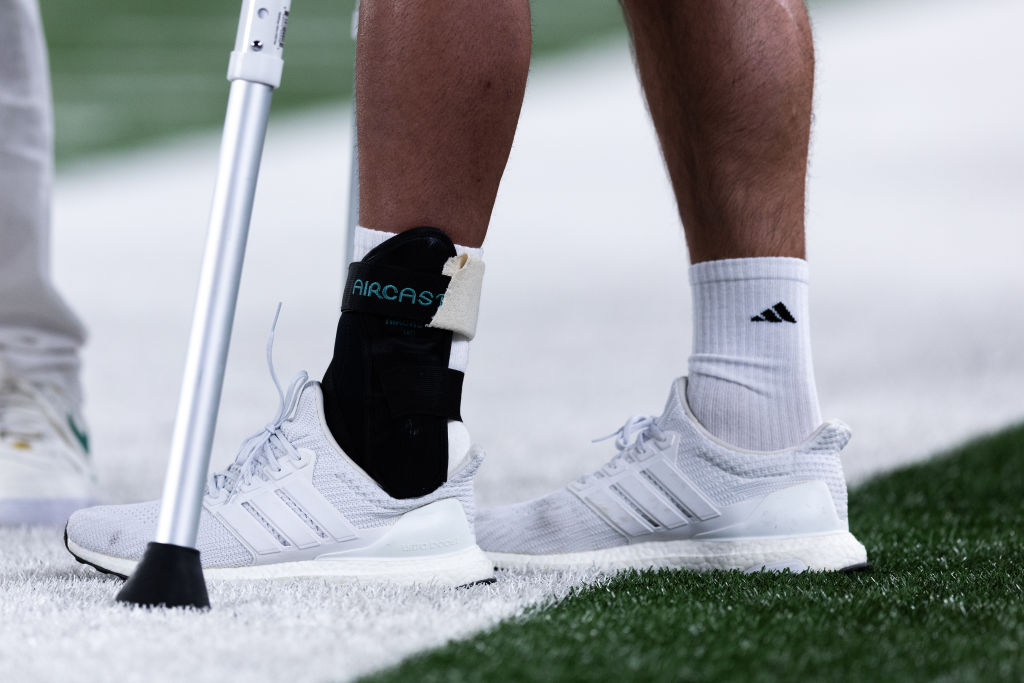
Aaron Rodgers' high-profile Achilles tendon rupture and subsequent surgical repair mark a defining moment in modern sports medicine, rehabilitation science, and professional athletic longevity. When the veteran quarterback suffered the injury just four snaps into his debut season with the New York Jets, it sent shockwaves through the National Football League and triggered widespread interest in the complexities of major orthopedic trauma. Understanding the nuances of this injury requires examining the surgical techniques employed, the biological realities of tendon healing, the rigorous physical therapy milestones necessary for recovery, and the broader implications for an athlete attempting a high-level return at an advanced age.
The Injury: Anatomy and Mechanics of an Achilles Rupture
The Achilles tendon is the thickest and strongest tendon in the human body, connecting the calf muscles—the gastrocnemius and soleus—to the calcaneus bone in the heel. It bears forces multiple times an individual's body weight during running, jumping, and cutting maneuvers. For a professional quarterback, the mechanism of injury often involves eccentric loading during a sudden push-off, pivot, or change of direction.
In Rodgers' case, the rupture occurred on artificial turf during the opening quarter of a Monday Night Football game. The sudden, violent contraction of the calf muscle against an inadequately supported or abruptly loaded ankle joint caused the collagen fibers of the tendon to tear completely.
- Complete vs. Partial Tears: A complete rupture, such as the one sustained, involves a total separation of the tendon ends, usually necessitating surgical intervention to restore optimal tension and length.
- Vascularity Challenges: The Achilles tendon possesses a notoriously poor blood supply, particularly in a region approximately two to six centimeters above its insertion into the heel. This watershed area makes natural healing slower and more unpredictable without surgical approximation.
- Age and Biomechanical Factors: While younger athletes face similar risks, older elite athletes must contend with natural decreases in tendon elasticity and cellular turnover, making surgical precision and post-operative management critical variables in recovery.
Surgical Intervention: Modern Techniques and Execution
The surgical procedure performed to repair a ruptured Achilles tendon has evolved significantly over the decades. Renowned orthopedic surgeon Dr. Neal ElAttrache performed the procedure on Rodgers, utilizing modern techniques designed to accelerate initial stability and promote faster biological healing.
The primary objective of Achilles tendon repair surgery is to reapproximate the torn ends of the tendon and secure them at the correct resting length and tension. If the tendon is sewn too long, the calf muscle will lose power and efficiency; if it is sewn too short, chronic tightness and restricted ankle dorsiflexion will result.
- Incision and Exposure: The surgeon makes a careful incision along the posterior aspect of the ankle, navigating around the sural nerve to expose the ruptured ends of the tendon.
- Debridement: Frayed, damaged, and non-viable tissue is trimmed from the ends of the tendon to expose healthy, bleeding tissue that can better integrate during the healing process.
- Suture Configuration: Strong, non-absorbable sutures are woven through the proximal and distal stumps using specialized locking stitch patterns (such as the Krackow stitch) to ensure high tensile strength.
- Biological Augmentation: In elite athlete cases, surgeons frequently utilize advanced biological enhancements, such as platelet-rich plasma (PRP) or bone marrow aspirate concentrate (BMAC), to deliver growth factors that stimulate cellular proliferation and accelerate collagen synthesis.
The Accelerated Rehabilitation Protocol
The success of Achilles tendon surgery depends heavily on the post-operative rehabilitation protocol. Historically, patients were immobilized in heavy casts for six to eight weeks, leading to severe muscle atrophy, joint stiffness, and prolonged recovery timelines. Modern sports medicine favors an accelerated, functional rehabilitation model that introduces controlled stress and early movement.
Immediately following surgery, the focus shifts to minimizing swelling, protecting the repair site, and managing pain. Within the first two weeks, sutures are removed, and the ankle is placed in a controlled ankle motion (CAM) boot equipped with heel wedges to reduce tension on the healing repair.
| Recovery Phase | Timeline | Primary Objectives | Key Physical Therapy Activities |
|---|---|---|---|
| Phase 1: Protection | Weeks 0–4 | Control inflammation, protect repair, prevent atrophy | Wound care, toe wiggles, isometric quad sets, wearing a boot with heel wedges. |
| Phase 2: Early Mobility | Weeks 4–8 | Restore passive range of motion, gradual weight-bearing | Removal of heel wedges, gentle stationary cycling with the heel, pool walking. |
| Phase 3: Strengthening | Weeks 8–16 | Rebuild calf strength, normalize gait mechanics | Double-leg heel raises, resistance band work, balance training, progressive loading. |
| Phase 4: Sport-Specific | Months 4–9 | Regain explosive power, agility, and endurance | Single-leg hops, linear running drills, cutting mechanics, position-specific throwing. |
Biological Healing Milestones and Physiological Realities
Tendon healing does not occur overnight; it follows a predictable biological timeline divided into three overlapping phases: inflammation, proliferation, and remodeling.
During the inflammatory phase, which lasts for the first few days post-surgery, neutrophils and macrophages clear away cellular debris and release growth factors. This transitions into the proliferation phase (weeks two through six), where fibroblasts migrate to the site and begin synthesizing type III collagen. This new matrix is mechanically weak initially, which explains why protective bracing is strictly enforced during this window.
The remodeling phase begins around week six and can continue for over a year. During this time, the disorganized type III collagen is gradually replaced by stronger, highly organized type I collagen fibers that align along the lines of mechanical stress. Progressive, controlled loading during physical therapy is the primary stimulus that teaches these new fibers how to withstand high-velocity athletic demands.
Mental Resilience and the Psychological Toll of Long-Term Injury
A major orthopedic trauma is as much a psychological challenge as a physical one. For an elite competitor accustomed to being on the field, leading a team, and controlling their physical output, a season-ending injury introduces profound disruption and isolation.
- Coping with Sudden Loss: The abrupt halt to a competitive season requires athletes to process grief, frustration, and uncertainty regarding their professional future.
- Goal-Reorientation: Breaking down a monumental recovery timeline into micro-goals—such as taking a first unassisted step or ditching crutches—helps maintain mental focus and daily motivation.
- The Support Ecosystem: Access to dedicated physical therapists, sports psychologists, and supportive teammates plays an indispensable role in maintaining the mental fortitude required for months of grueling rehabilitation.
Historical Context and Precedents for Quarterback Recovery
Before Aaron Rodgers' injury, a torn Achilles tendon was widely viewed as a career-altering or career-ending affliction, particularly for players over the age of thirty-five. However, advancements in surgical technique and rehabilitation science have shifted this narrative.
Other notable NFL players, such as running back Cam Akers and wide receiver Michael Crabtree, successfully returned to high-level competition following Achilles repairs, though tight ends and quarterbacks face unique biomechanical demands. Quarterbacks rely heavily on rotational torque, plant-and-throw mechanics, and the ability to slide or step up quickly to evade rushing defenders. While Rodgers did not return to game action during the immediate 2023 season, his intensive rehabilitation paved the way for a full return to the starting lineup for the subsequent campaign, providing a modern benchmark for older athletes facing identical trauma.
Frequently Asked Questions
How long does it typically take to recover from Achilles tendon surgery?
Standard recovery for an elite athlete ranges from six to nine months, though achieving full pre-injury performance, explosive power, and tissue maturation can take up to a full year or longer. The exact timeline depends on the severity of the tear, the surgical technique used, and the individual's biological healing response.
Can a torn Achilles tendon heal without surgery?
While partial tears or tears in sedentary individuals can sometimes be managed non-surgically with prolonged immobilization, complete ruptures in active or athletic populations almost always require surgical repair. Surgery significantly lowers the re-rupture rate and restores the proper resting length and tension of the tendon.
What makes artificial turf a factor in Achilles injuries?
Artificial turf surfaces often exhibit higher traction coefficients than natural grass, meaning a player's cleat grips the surface firmly while the upper body and leg twist or experience sudden deceleration. This high friction increases the eccentric load placed on the ankle joint and the Achilles tendon during cutting and pivoting movements.
Will Aaron Rodgers be the same player after his Achilles surgery?
While modern sports medicine allows athletes to return to high-level competition, physical changes in calf volume, explosive power, and ankle mobility can persist. Success depends on compensatory mechanics, meticulous rehabilitation adherence, and the athlete's ability to adapt their playing style to any subtle physiological shifts.
What are the primary signs of a re-rupture during recovery?
Warning signs of a failed repair or re-rupture include a sudden, sharp pain or audible pop at the back of the ankle, sudden swelling, bruising, and the inability to perform a single-leg heel raise or point the foot downward against resistance. Any such symptoms require immediate evaluation by an orthopedic specialist.
Next Actions and Conclusion
For athletes, trainers, and sports medicine professionals evaluating the road ahead following an Achilles tendon rupture, success relies on patience, adherence to evidence-based protocols, and progressive mechanical loading. Rushing the remodeling phase risks chronic weakness or secondary injuries, while a disciplined, milestone-driven approach maximizes the likelihood of restoring structural integrity and athletic function.