An AAA financial rating is the highest credit grade assigned to a life insurance company by independent rating agencies like Standard & Poor’s (S&P) and Fitch Ratings. It signifies that a company has an exceptionally strong capacity to meet its financial commitments, including paying out death benefits and annuity obligations, even during severe economic downturns.
When you purchase a life insurance policy, you are essentially buying a promise that may not be fulfilled for 30, 40, or even 50 years. Because of this long-term horizon, the financial "health" or solvency of the issuing company is the most critical factor in your purchase decision. In 2026, as the global economy continues to navigate shifting interest rate environments and evolving regulatory landscapes, understanding the nuances of an aaa financial rating for life insurance companies is essential for protecting your family’s financial future.
The Role of Credit Rating Agencies (CRAs)
Financial ratings are not generated by the insurance companies themselves, nor are they provided by government regulators like the National Association of Insurance Commissioners (NAIC), though regulators do monitor solvency. Instead, these ratings are issued by independent, third-party Credit Rating Agencies (CRAs).
In the United States, the Securities and Exchange Commission (SEC) designates specific agencies as Nationally Recognized Statistical Rating Organizations (NRSROs). For life insurance, the four primary agencies are:
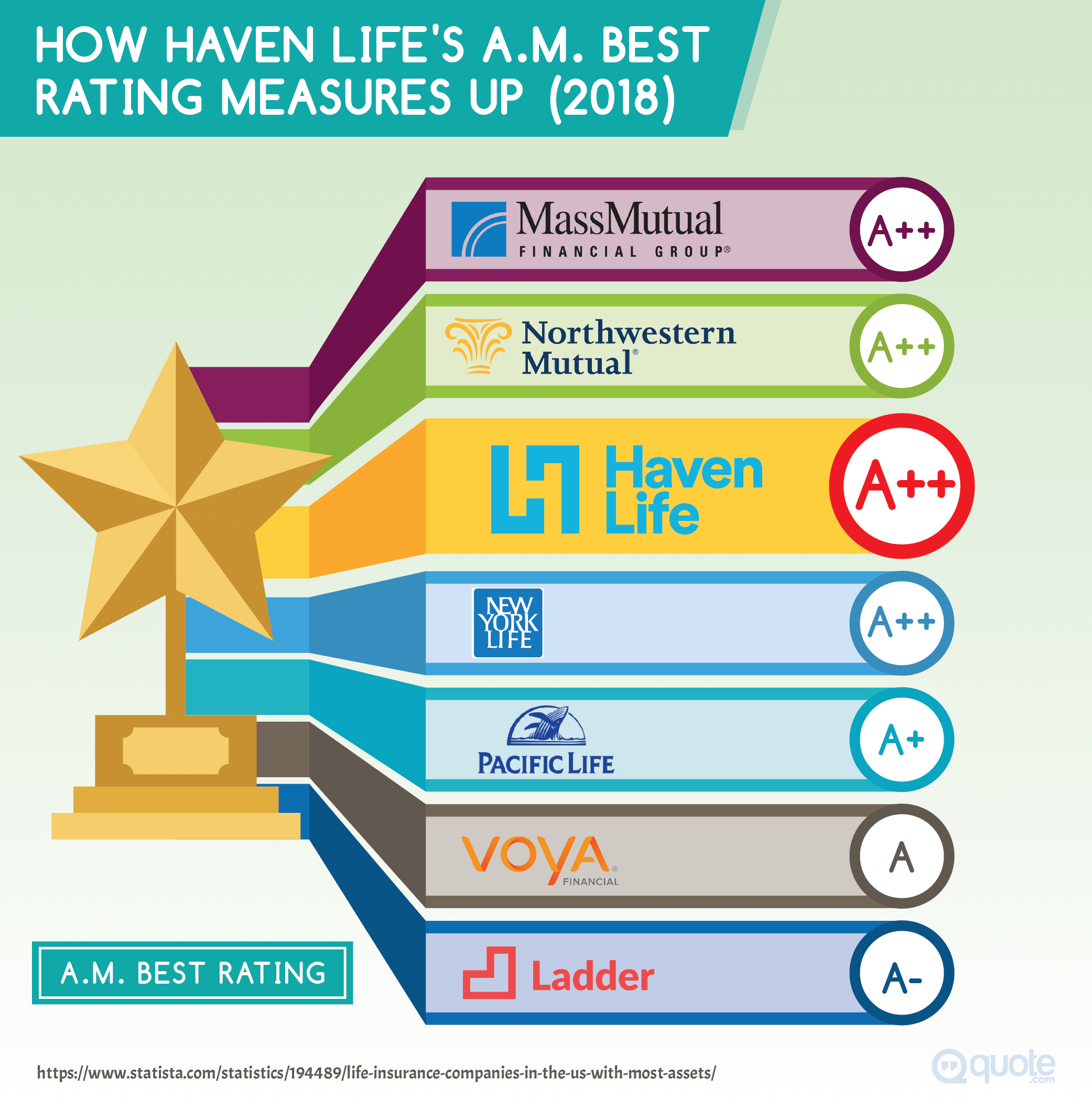
- A.M. Best: Founded in 1899, this is the only major agency that focuses exclusively on the insurance industry. While other agencies use "AAA," A.M. Best’s highest rating is actually A++ (Superior).
- Standard & Poor’s (S&P Global): One of the "Big Three" global agencies, S&P uses the AAA designation for its top-tier companies.
- Moody’s Investors Service: Moody’s uses a slightly different notation, where the highest rating is Aaa.
- Fitch Ratings: Similar to S&P, Fitch utilizes the AAA symbol to denote the highest quality of creditworthiness.
Each agency employs a proprietary methodology to evaluate an insurer’s strengths and weaknesses. They look beyond simple balance sheets to assess the "qualitative" aspects of a business, such as management depth and competitive positioning in the marketplace.
What an AAA Rating Represents in 2026
An AAA (or A++ in A.M. Best terms) rating indicates that the insurer is at the "Prime" level. In the context of 2026, reaching this tier is more difficult than in previous decades due to stricter capital requirements and the increased frequency of "black swan" economic events.
Financial Strength and Capital Adequacy
An AAA-rated company maintains a massive "surplus"—the amount of capital held above and beyond what is required to pay projected claims. This surplus acts as a shock absorber. If the company’s investments (usually high-grade corporate bonds and government securities) perform poorly, the surplus ensures that policyholders are still paid.
Operational Performance
Agencies examine the company’s "bottom line" over a multi-year period. An AAA-rated insurer typically demonstrates consistent profitability. They do not rely on aggressive, high-risk investment strategies to meet their obligations. Instead, they maintain disciplined underwriting standards, meaning they are selective about the risks they take on when issuing new policies.
Market Position and Diversification
A company with an AAA rating often dominates its specific market segment or has a highly diversified product line. If one area of the business—such as long-term care insurance—struggles, the strength of other areas, like term life or fixed annuities, can sustain the overall organization.
How Ratings are Calculated: The Evaluation Process
The process for a life insurance company to earn and maintain an AAA rating is rigorous. Agencies do not just look at historical data; they perform forward-looking stress tests.
1. Quantitative Analysis
Agencies analyze the Risk-Based Capital (RBC) ratio. This is a formula that calculates the minimum amount of capital appropriate for a reporting entity to support its overall business operations in consideration of its size and risk profile. AAA companies often hold capital significantly in excess of the regulatory "Authorized Control Level."
2. Qualitative Analysis
Rating analysts meet with the insurance company’s senior management to discuss corporate strategy. They evaluate:
- Asset-Liability Management (ALM): Does the company have the cash flow to meet payments that might be due 20 years from now?
- Reinsurance Strategies: Does the company shift some of its catastrophic risk to other stable companies (reinsurers)?
- Enterprise Risk Management (ERM): How well does the company identify and mitigate risks ranging from cyberattacks to climate-related investment shifts?
3. Economic Stress Testing
In 2026, stress testing involves modeling how an insurer would survive various scenarios:
- A sudden 3% spike or drop in interest rates.
- A 30% correction in the equity markets.
- A significant increase in mortality rates (similar to the 2020-2022 period).
Fitch Ratings and S&P Global provide detailed insights into their specific criteria for these stress tests on their official portals.
Comparing Top-Tier Ratings Across Agencies
Because each agency uses a different scale, it can be confusing for consumers to compare them. The table below provides a cross-reference for the highest "Investment Grade" categories.
| Agency | Highest Rating (Prime) | Very High Quality | High Quality |
|---|---|---|---|
| A.M. Best | A++ | A+ | A, A- |
| S&P Global | AAA | AA+, AA, AA- | A+, A, A- |
| Moody’s | Aaa | Aa1, Aa2, Aa3 | A1, A2, A3 |
| Fitch Ratings | AAA | AA+, AA, AA- | A+, A, A- |
Note: Ratings below the "A" range (such as BBB/Baa or lower) are generally considered lower-tier investment grade or speculative, and may indicate higher sensitivity to adverse economic conditions.
Why the AAA Rating Matters to You
For most consumers, the primary reason to seek out an aaa financial rating for life insurance companies is peace of mind. However, there are practical financial implications as well.
Guaranteed vs. Non-Guaranteed Elements
Many life insurance policies, particularly whole life and universal life, have "non-guaranteed" elements. These include dividends or interest credits. Highly rated companies are generally more stable in their dividend-paying history. While dividends are never guaranteed, a company with an AAA rating is statistically more likely to have the financial surplus necessary to continue paying them during market volatility.
The "Long-Tail" Nature of Claims
Unlike auto insurance, where a claim is usually settled within weeks or months of an accident, life insurance is a "long-tail" product. You might pay premiums for 40 years before a claim is filed. An AAA rating suggests that the company has the longevity and structural integrity to exist in the middle of the next century.
Impact on Annuity Payments
If you are purchasing a single-premium immediate annuity (SPIA) for retirement income, the insurer’s creditworthiness is your only guarantee of receiving that monthly check. If the company fails, you are reliant on state guaranty associations, which have coverage limits (often $250,000 to $500,000 depending on the state). If your annuity is worth more than the state limit, an AAA rating is your primary line of defense.
How to Verify a Company’s Financial Rating
Ratings are dynamic; they can be upgraded or downgraded based on the company’s performance or changes in the economy. It is important to verify ratings annually.
- Check the Insurer’s Website: Most companies proudly display their ratings in the "Investor Relations" or "About Us" section. Look for the "Financial Strength Rating" (FSR).
- Visit Agency Portals: You can create free accounts on A.M. Best or Moody's to search for specific companies.
- Review the Comdex Score: The Comdex is not a rating itself but a composite index that averages the ratings of all major agencies. It ranks companies on a scale of 1 to 100. An AAA-rated company will almost always have a Comdex score of 99 or 100.
- Consult the NAIC: The National Association of Insurance Commissioners provides a Consumer Insurance Search Tool where you can look up a company’s "closed complaints" and basic financial filings.
Limitations and Common Misconceptions
While an AAA rating is a powerful indicator of safety, it is not a guarantee of a "good" policy or a "good" company for your specific needs.
- Ratings vs. Customer Service: A company can be financially rock-solid (AAA) but have terrible customer service, a slow claims process, or an outdated mobile app. Ratings measure solvency, not user experience.
- Price vs. Protection: Often, AAA-rated companies charge higher premiums than A-rated companies. You are paying a premium for that extra layer of security. For a simple 10-year term policy, an "A" rating may be perfectly sufficient, whereas for a permanent whole-life policy, you might prioritize the "AAA."
- The "AA" Tier is Still Excellent: Do not automatically discount companies in the "AA" (Very Strong) range. Many of the world’s largest and most reliable insurers fall into this category. The difference in default risk between AAA and AA is statistically minute.
Financial Advice Disclaimer: This article is provided for informational purposes only and does not constitute financial, legal, or investment advice. Life insurance needs vary by individual circumstances. Always consult with a licensed financial advisor or insurance professional before purchasing a policy.
Frequently Asked Questions
Can a company lose its AAA rating?
Yes. Ratings are reviewed at least annually. A company may be downgraded if it takes on too much debt, suffers significant investment losses, or if its "outlook" is changed from "stable" to "negative" by the agency. For example, during the global shifts of the early 2020s, several insurers saw downgrades as they adjusted to new mortality data and fluctuating bond yields.
Is an A+ rating better than an AAA rating?
No. On the standard scales used by S&P, Fitch, and Moody’s, AAA is the top. However, if you are looking at an A.M. Best rating, an A+ is their second-highest rating, and an A++ is their highest. It is crucial to identify which agency's scale you are reading.
Does the government guarantee my life insurance policy if the company fails?
There is no federal "FDIC" for life insurance. Instead, there are state guaranty associations. Every state has a system to protect policyholders if an insurer becomes insolvent. However, these have "caps" on how much they will pay out (usually between $300,000 and $500,000 for death benefits). Choosing an AAA-rated company reduces the likelihood that you will ever need to rely on the state guaranty system.
Why do some companies only have one or two ratings?
Rating agencies charge insurance companies significant fees to perform these evaluations. Some smaller or niche insurers may choose to be rated only by A.M. Best (the most industry-specific agency) to save on costs. A lack of four ratings does not necessarily mean the company is weak, but having all four "Major" ratings is a sign of extreme transparency and scale.
How often should I check my insurance company's rating?
It is wise to check the financial strength of your insurer once a year or whenever you receive your annual policy statement. If a company drops from "Secure" (B+ or higher) to "Vulnerable" (B or lower), you should consult with a financial professional to discuss whether it is prudent to move your policy or annuity.
Final Recommendation
When shopping for life insurance in 2026, treat the aaa financial rating for life insurance companies as the "Gold Standard" for long-term safety. If you are looking for a permanent policy or a retirement annuity that you intend to hold for decades, prioritizing an AAA or AA+ rating provides the highest level of assurance that the company will be there when your beneficiaries need them most. Always cross-reference ratings across at least two agencies (such as A.M. Best and S&P) to ensure a consistent view of the company's financial health.