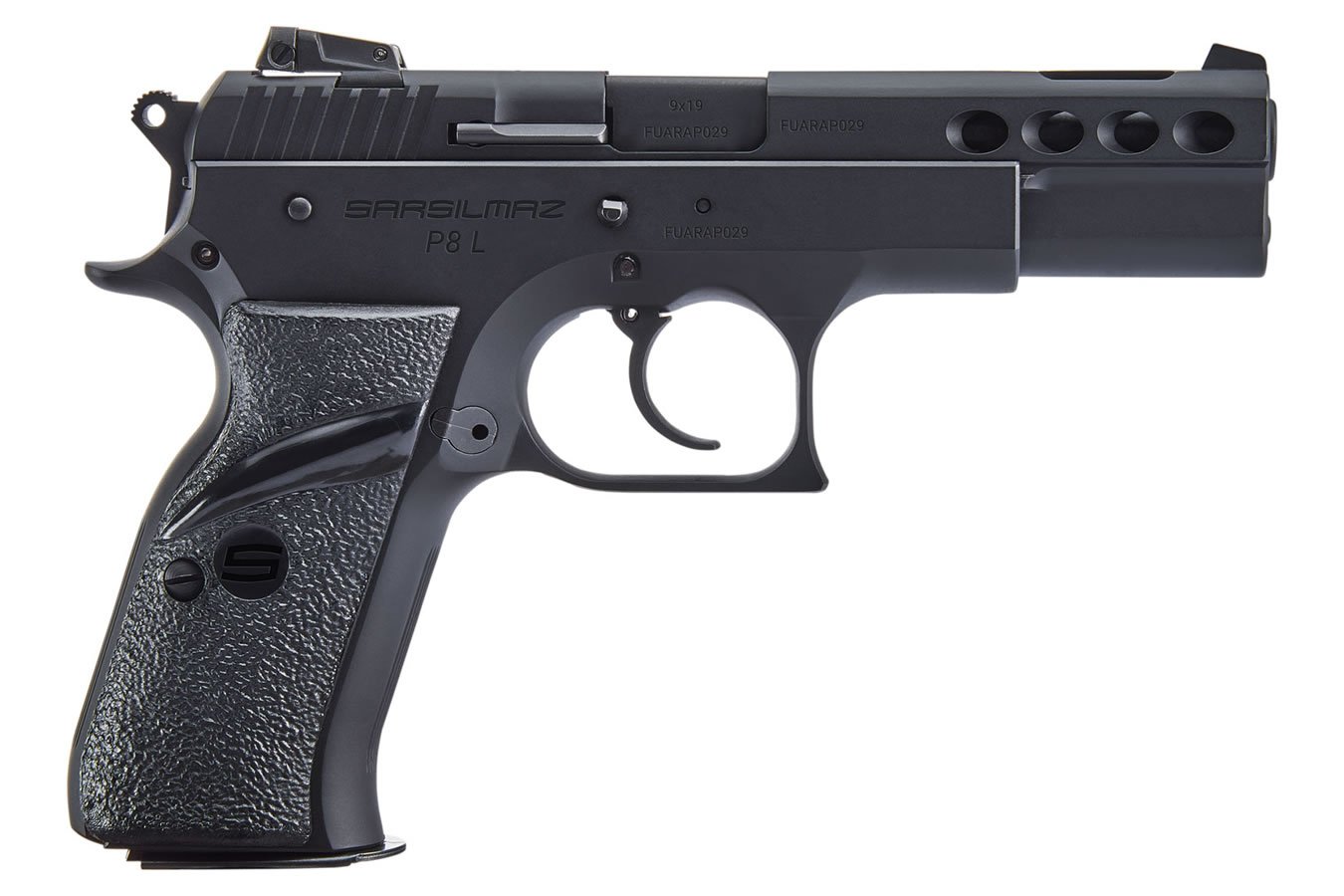
A 9mm pistol with a manual safety features an external mechanical switch or lever designed to prevent the firearm from firing by physically blocking the trigger, sear, or firing pin. While modern internal safeties are highly effective, a manual safety provides an extra layer of security for shooters who prioritize mechanical redundancy during holstering, storage, or carry.
The debate between proponents of manual safeties and those who prefer "point-and-shoot" simplicity has existed for decades. However, as of 2026, the firearm industry has reached a middle ground by offering most popular 9mm platforms in both configurations. Whether you are a first-time buyer or an experienced concealed carrier, understanding how a manual safety interacts with the mechanics of a 9mm handgun is essential for making an informed purchase.
The Mechanics of Manual Safeties in 9mm Handguns
To understand why a manual safety is used, one must first understand the internal mechanics of the modern 9mm pistol. Most 9mm handguns today are striker-fired, meaning they do not have an external hammer. Instead, a firing pin (striker) is held under partial or full tension. When the trigger is pulled, internal safeties—such as a trigger shoe safety or a firing pin block—are deactivated, allowing the striker to fly forward and ignite the primer.
A manual safety adds an external, user-operated barrier to this chain of events. There are three primary types of manual safeties found on 9mm pistols in 2026:
Thumb Safeties
The most common type is the frame-mounted or slide-mounted thumb safety. When engaged, this lever physically blocks the trigger bar or the sear from moving. In 1911-style or "2011" 9mm pistols, the thumb safety is often the primary method of making the gun "safe" while the hammer is cocked (Condition One). On modern striker-fired guns like the Sig Sauer P365 or Smith & Wesson M&P series, the thumb safety is typically a small lever located near the rear of the frame.
Grip Safeties
Grip safeties are integrated into the backstrap of the pistol’s grip. The firearm will not fire unless the shooter has a firm, positive purchase on the handle, which depresses the safety lever. This is a staple of the Springfield Armory XD and 1911 series. It is favored by those who want an external safety that does not require an intentional "flicking" motion of the thumb to deactivate.
Decockers with Integrated Safeties
Common on Double-Action/Single-Action (DA/SA) 9mm pistols like those from Heckler & Koch or Beretta, a decocker safely lowers the hammer without firing the round. In many configurations, this lever also acts as a manual safety, locking the trigger in a dead position.
Why Shooters Choose a Manual Safety
The decision to use a manual safety is often driven by the specific context in which the firearm will be used. While modern holsters are designed to protect the trigger guard, human error remains a significant factor in accidental discharges.
Re-holstering and Obstructions
A significant portion of accidental discharges occurs during the act of re-holstering. Clothing, such as a loose drawstring from a jacket or a piece of a worn-out leather holster, can enter the trigger guard as the gun is being seated. If the shooter continues to push the gun into the holster, the obstruction acts as a finger, pulling the trigger. A manual safety, when engaged during the holstering process, prevents this mechanical failure from resulting in a discharge.
Appendix Carry Considerations
Appendix Inside the Waistband (AIWB) carry—where the firearm is positioned in the front of the body—has become the dominant carry style in 2026. Because the muzzle is pointed near femoral arteries and sensitive anatomy, many shooters feel more comfortable having a physical "off" switch on their firearm. This provides peace of mind that the gun cannot fire unless the user intentionally deactivates the safety after the draw is established.
Off-Body Carry
For individuals who carry 9mm pistols in purses, backpacks, or dedicated "sling bags," a manual safety is often considered mandatory. Despite the use of holster inserts within these bags, the environment is less controlled than a belt-mounted holster. Keys, pens, or other debris could potentially shift and interact with the trigger. A manual safety ensures that even if the trigger is somehow manipulated, the firing sequence is mechanically blocked.
Top 9mm Pistols With Manual Safety in 2026
The following models represent the most reliable and widely adopted 9mm pistols that feature a manual safety as a factory option.
Sig Sauer P365 Series
The P365 redefined the micro-compact category, and in 2026, it remains a top choice. Sig Sauer offers a manual safety version of nearly every P365 variant, including the XL, Macro, and AXG Legion. The safety is ambidextrous, low-profile, and provides a tactile "click" when engaged or disengaged. Because of the P365’s modular chassis system, owners can often add or remove a manual safety by changing the grip module and installing the safety lever kit.
Smith & Wesson M&P9 M2.0 and Shield Plus
Smith & Wesson has long been a proponent of offering manual safety options. The M&P9 M2.0 full-size and compact models feature a large, 1911-style thumb safety that is easy to manipulate with the shooting hand thumb. For concealed carry, the Shield Plus offers a smaller, more discrete thumb safety. These safeties are known for being very positive, meaning they are unlikely to be bumped "on" or "off" accidentally.
Springfield Armory Hellcat Pro
The Hellcat Pro is a formidable competitor in the slim-line 9mm market. Springfield offers a manual safety model that is frame-mounted and ambidextrous. The safety on the Hellcat Pro is positioned slightly further forward than on some other models, which some shooters find more ergonomic for "high-thumb" shooting grips.
Staccato C2 and CS
For those seeking a premium 9mm, the Staccato line represents the pinnacle of the "2011" platform. These are hammer-fired 9mm pistols with crisp, light triggers. Due to the light trigger pull (often 3.5 to 4.5 lbs), a manual thumb safety is a required component of the design. These safeties are typically very large and serve as a "shelf" for the shooter's thumb during operation, aiding in recoil control.
Comparison of Popular 9mm Pistols With Manual Safety
| Manufacturer | Model | Safety Type | Standard Capacity | Primary Use |
|---|---|---|---|---|
| Sig Sauer | P365-XMacro | Ambidextrous Thumb | 17+1 | Concealed Carry/Duty |
| Smith & Wesson | M&P9 M2.0 | Ambidextrous Thumb | 17+1 | Duty/Home Defense |
| Springfield | Hellcat Pro | Ambidextrous Thumb | 15+1 | Concealed Carry |
| Staccato | CS | Ambidextrous Thumb | 15+1 | Professional/EDC |
| Heckler & Koch | P30SK | Thumb / Decocker | 10+1 / 12+1 | Subcompact Carry |
| Beretta | 92X RDO | Slide-Mounted / Decock | 18+1 | Full-Size / Duty |
Training the "Safety Sweep"
The most significant argument against a manual safety is the risk of forgetting to disengage it in a high-stress, self-defense situation. This is a valid concern that can only be mitigated through consistent, high-repetition training.
The Draw Stroke Integration
To master a 9mm with a manual safety, the deactivation of the safety must become a subconscious part of the draw stroke. As the firearm is brought toward the "ready" position and the hands meet, the shooting thumb should naturally sweep downward to disengage the safety. This should occur before the finger enters the trigger guard.
Dry Fire Practice
Dry fire is the most effective way to build this muscle memory without the cost of ammunition. Practicing the "safety sweep" thousands of times in a controlled environment ensures that under adrenaline-induced stress, your thumb will move automatically. A common drill is the "Wall Drill," where you focus solely on the draw, the safety sweep, and a perfect trigger press against a blank wall.
The "High Thumb" Grip
Many shooters who use 9mm pistols with manual safeties adopt a "high thumb" grip, where the shooting thumb rests on top of the safety lever while firing. This ensures that the safety remains in the "off" position during the cycle of fire and prevents the thumb from accidentally bumping the safety "on" during recoil.
Legal and Liability Perspectives
In certain jurisdictions, the presence of a manual safety is more than just a preference—it is a legal requirement. States with "Approved Firearms Rosters," such as California or Massachusetts, often require 9mm pistols to have external manual safeties and magazine disconnect safeties to be sold to civilians.
From a liability standpoint, some legal experts suggest that a manual safety can be a defense against claims of "negligent discharge." If a firearm has a manual safety engaged, it demonstrates an intentional level of care on the part of the owner. Conversely, if a shooter chooses to carry a gun with a manual safety but leaves it "off," a prosecutor might attempt to use that choice to suggest a lack of caution. It is generally recommended that if a gun is equipped with a manual safety, the user should be trained to use it as intended.
Addressing Common Myths
Myth: Manual Safeties Always Fail
Modern CNC machining and high-quality polymers/alloys have made manual safety failures exceedingly rare. While any mechanical part can break, a safety from a reputable manufacturer like Sig Sauer or Smith & Wesson is designed to last the lifetime of the firearm.
Myth: You Can't Be Fast With a Safety
World-class competition shooters in USPSA and IDPA almost exclusively use 9mm pistols with manual safeties (specifically 1911/2011 platforms). Their draw-to-first-shot times are often under one second. Speed is a product of training, not the presence of a lever.
Myth: Internal Safeties Are Enough
For many, internal safeties are enough. However, internal safeties only prevent the gun from firing when dropped or when the trigger is not pulled. They do not prevent the gun from firing if something—like a shirt tail—pulls the trigger. A manual safety addresses the "external" risks that internal safeties cannot.
Frequently Asked Questions
Can I add a manual safety to a 9mm that didn't come with one?
This depends entirely on the model. For the Sig Sauer P365 series, you can purchase a manual safety kit and a compatible grip module. For most other striker-fired pistols like the Glock or Smith & Wesson M&P (without the safety cut-out), adding a manual safety requires significant gunsmithing or the use of aftermarket parts, which may void the manufacturer’s warranty.
Is a manual safety necessary for home defense?
It is not strictly necessary, but it can be beneficial if the firearm is stored in a bedside drawer or a quick-access safe where you might be reaching for it while groggy or in the dark. The safety provides a buffer against a "startle response" discharge.
Does a manual safety make the trigger pull worse?
In most modern striker-fired 9mm pistols, the manual safety is completely independent of the trigger pull weight or feel. However, in some older designs or specific DA/SA models, the safety mechanism might interact with the sear in a way that slightly alters the reset or take-up.
Should I carry with the safety on or off?
If your 9mm is equipped with a manual safety, you should carry it with the safety "on." Carrying with it "off" creates an inconsistent training environment. You may accidentally bump it "on" without realizing it, and if you haven't trained to sweep it "off," you will be unable to fire when needed.
Which is better: a thumb safety or a grip safety?
This is a matter of personal preference. A thumb safety requires a conscious movement but is very deliberate. A grip safety is "automatic" upon holding the gun but requires a very consistent and firm grip to deactivate, which can be difficult in awkward shooting positions or if you have smaller hands.
Final Recommendation for 2026 Buyers
If you are choosing a 9mm pistol with a manual safety in 2026, the Sig Sauer P365-XMacro or the Smith & Wesson M&P9 M2.0 Compact are the most versatile choices. Both offer high magazine capacity, excellent ergonomics, and a safety mechanism that is intuitive to use. Regardless of the model you select, commit to a training regimen that includes at least 15 minutes of dry fire practice per week specifically focusing on the transition from the holster to the "safety off" position.
For more information on firearm safety standards and testing, visit the Sporting Arms and Ammunition Manufacturers' Institute (SAAMI) or consult the National Shooting Sports Foundation (NSSF) for safety education resources.