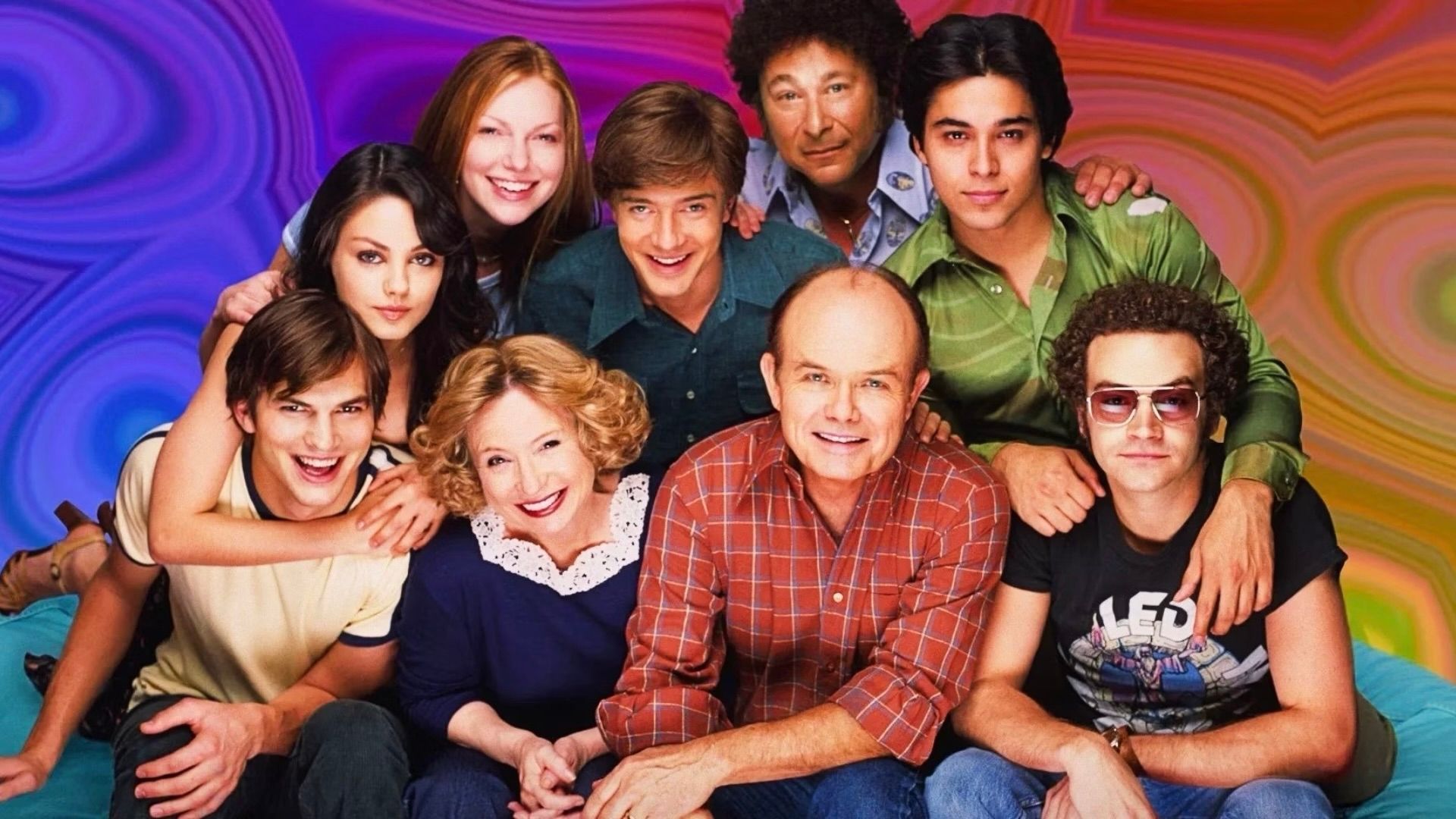
That '70s Show provides a stylized lens into American life between 1976 and 1979, blending 1990s sitcom tropes with genuine historical artifacts. While Point Place is fictional, the show’s background reflects the real-world economic anxiety, social shifts, and suburban isolation that defined the late 1970s for many Midwestern teenagers.
The Creation of Point Place: Fact vs. Fiction
The primary setting of the series, Point Place, Wisconsin, serves as a stand-in for any number of working-class suburbs surrounding Milwaukee or Green Bay. Although Point Place does not exist on a real Wisconsin map, its DNA is firmly rooted in the Fox Valley region. The show’s creators, Bonnie and Terry Turner, drew inspiration from their own experiences growing up in the Midwest, aiming to capture the specific "liminal space" of a town that was large enough to have a shopping mall but small enough to feel like a cage to its youth.
In the real world of 1976—the year the show begins—the American Midwest was undergoing a painful transition. The region, often referred to as the "Machine Shop of the World," was beginning to see the first cracks of the Rust Belt phenomenon. This economic backdrop is subtly woven into the show's background through Red Forman’s precarious employment at the local auto parts plant. The "unveiling" of the real world here is found in the constant threat of layoffs and the looming shadow of foreign competition, which were very real anxieties for Wisconsin families during that decade.
Historical Accuracy: How Well Did the Show Capture the 1970s?
To understand the background of That '70s Show, one must distinguish between aesthetic nostalgia and historical reality. The show often prioritizes the "vibe" of the era over a strict chronological checklist, yet it hits several key historical markers with surprising precision.
The Energy Crisis and Stagflation
One of the most authentic "real world" elements in the show’s background is the 1973 and 1979 Oil Crises. While the show starts in 1976, the lingering effects of the first crisis and the onset of the second are central themes. In many episodes, characters complain about gas prices or the length of gas lines. In the real 1970s, the national speed limit was lowered to 55 mph to conserve fuel, and "odd-even" gas rationing was common. The show captures this through the characters’ obsession with the Oldsmobile Vista Cruiser, a gas-guzzling relic that represents both freedom and the irony of expensive mobility.
Political Disillusionment
The real world of the late 70s was a period of deep cynicism following the Watergate scandal and the end of the Vietnam War. The show reflects this through the character of Red Forman, a Korean War veteran who views the government with a mix of rigid patriotism and bitter skepticism. The transition from the Ford administration to the Carter presidency is handled as a background hum, mirroring how many Americans felt: that the "big" movements of the 60s had stalled, leaving a vacuum of leadership.
Interior Design and Material Culture
The production design of the Forman basement is perhaps the most accurate "unveiling" of the 1970s. The heavy use of harvest gold, avocado green, and burnt orange color palettes was a direct reaction to the sleek, space-age designs of the 1960s. The real world of 1976 was covered in shag carpeting and wood paneling, a trend driven by a desire for "earthy" and "natural" tones that ironically utilized highly synthetic materials like polyester and laminate.
| Feature | Show Representation | Real-World 1970s Context |
|---|---|---|
| The Vista Cruiser | Eric's 1969 station wagon; a symbol of freedom. | A massive V8 vehicle that faced obsolescence due to fuel shortages. |
| Employment | Red's plant closures and the opening of "Price Mart." | The shift from manufacturing to a service-based "Big Box" economy. |
| The Circle | A camera technique to imply marijuana use. | Youth drug culture was prevalent, but highly stigmatized in suburban settings. |
| Fashion | Bell-bottoms, leisure suits, and feathered hair. | A mix of "Peacock Revolution" remnants and utilitarian denim. |
| Technology | Introduction of Betamax, Pong, and Space Invaders. | The very beginning of the digital home entertainment revolution. |
The Cultural Background: Unveiling Social Dynamics
Beyond the props and the politics, That '70s Show unveils the social fabric of the era, specifically regarding the "Me Decade" philosophy and the evolution of the American family.
Parenting Styles: The "Latchkey" Generation
The real world of the 1970s saw a massive spike in divorce rates and an increase in dual-income households. This led to the rise of "latchkey kids"—children who returned to empty homes after school. While Kitty Forman is a stay-at-home mother for parts of the series, the show captures the era's hands-off parenting style. Red’s authoritarianism and the general lack of adult supervision for the teenagers reflect a time before the "helicopter parenting" of the 1990s and 2000s took hold.
Youth Culture and "The Circle"
The show’s most famous recurring segment, "The Circle," is a creative solution to television censorship, but it also reflects a real-world truth about 1970s youth. In a world without the internet or mobile phones, "hanging out" was the primary activity. For teenagers in the Midwest, this often meant congregating in basements or parked cars. The "smoke-filled" room of the show represents the reality of the 1970s as a peak era for adolescent experimentation, occurring just before the "Just Say No" campaigns of the 1980s restructured the cultural conversation around drugs.
Technical Production: Creating a 70s Aesthetic in the 90s
As we look back from 2026, the technical "background" of the show reveals how creators manufactured nostalgia. The series was filmed using a multi-camera setup in front of a live studio audience at CBS Studio Center. To "unveil" the 70s, the editors used specific transition techniques:
- Split Screens: A nod to films like The Brady Bunch Movie and 70s classics like Carrie.
- Psychedelic Backgrounds: Used during transitions to evoke the fading remnants of the hippie movement.
- Aspect Ratio: While originally broadcast in 4:3, the show’s high-quality film stock allowed for a transition to widescreen in later syndication, which ironically makes the 70s look "sharper" than they actually felt at the time.
The music also played a vital role in grounding the show in the real world. By licensing tracks from Led Zeppelin, Todd Rundgren, and Cheap Trick, the show provided a sonic background that matched the aggressive rock-and-roll identity of the American Midwest. The theme song, a cover of Big Star's "In the Street" performed by Cheap Trick (starting in Season 2), perfectly encapsulates the boredom and restless energy of 1970s youth.
Comparing the Show’s Timeline to Real-World Events
The timeline of That '70s Show is notoriously "elastic." The series ran for eight seasons but only covered about three and a half years of "real" time (May 1976 to December 31, 1979). This compression allows the show to hit major cultural milestones rapidly.
- 1976: The Bicentennial celebrations. The real world was saturated in Americana, which is reflected in the show's early episodes.
- 1977: The release of Star Wars. The show accurately depicts the seismic shift this caused in pop culture, especially through Eric’s obsession with the franchise.
- 1978: The peak of Disco. The tension between "Rockers" (like Hyde) and "Disco fans" (like Fez) was a genuine cultural divide in the real world, often manifesting in events like "Disco Demolition Night."
- 1979: The transition to a new decade. The finale, set on New Year's Eve 1979, signifies the end of the "70s" as a cultural concept and the dawn of the more commercialized, neon-soaked 80s.
The Legacy and Modern Perspective in 2026
As of 2026, the background of That '70s Show has taken on a new layer of meaning. With the release and continuation of the sequel series, That '90s Show, audiences are now looking at the original through a double-lens of nostalgia. The "real world" of the 70s as depicted in the show is now fifty years in the past, yet its themes of suburban boredom and the search for identity remain universal.
The show's enduring popularity on streaming platforms (such as Peacock and Netflix internationally) suggests that its "unveiling" of the 1970s was successful not because it was a perfect historical document, but because it captured the feeling of the era. It presented a world that was grittier than the 50s but simpler than the digital age—a time when the "real world" was limited to the people you could fit in your car or your basement.
Frequently Asked Questions
Is Point Place, Wisconsin a real town?
No, Point Place is a fictional location. However, it is intended to represent the suburbs of the Fox Valley or the outskirts of Milwaukee. Many fans believe it is a composite of towns like Stevens Point, Sun Prairie, and Brookfield. The fictional name allows the show to incorporate generic Midwestern tropes without being beholden to specific local geography.
Why does the show start in 1976 instead of 1970?
The creators chose 1976 because the "cultural 1970s" are often defined by the late-decade aesthetics—disco, the energy crisis, and the post-Vietnam hangover. Starting in 1976 also allowed the characters to be at the prime "coming of age" stage (16-17 years old) during the most iconic years of the decade, culminating in the 1980 New Year's countdown.
How accurate was the portrayal of 1970s fashion?
Generally, the fashion was quite accurate but leaned into the "clichés" for comedic effect. While polyester suits and bell-bottoms were real, by 1977-1978, many Americans had transitioned to more standard denim and t-shirts. The show’s costume department, headed by Melina Root, sourced many actual vintage pieces to ensure the textures and patterns matched the authentic 70s "shag" aesthetic.
Was the "Circle" actually a real thing in the 70s?
Yes, the concept of a "smoke circle" was a common social ritual for teenagers in the 1970s. The show used the rotating camera and the haze of smoke to represent marijuana use without actually showing the drug or the act of smoking, which would have violated FCC guidelines and network standards for a primetime sitcom at the time.
What happened to the Vista Cruiser in the real world?
The 1969 Oldsmobile Vista Cruiser featured in the show was a real car that became a symbol of the series. After filming wrapped, actor Wilmer Valderrama (who played Fez) purchased the car for $500. The Vista Cruiser itself became obsolete in the real world during the 1980s as families moved toward smaller, more fuel-efficient cars and eventually the minivan.
Final Recommendation for Enthusiasts
For those looking to truly "unveil" the real-world background of the 1970s after watching the show, the best next step is to explore the non-fiction literature and documentaries of the era. Books like The Seventies: The Great Shift In American Culture, Society, And Politics by Bruce J. Schulman offer a deep dive into the economic and social realities that the show parodies. Additionally, visiting the Wisconsin Historical Society archives can provide a fascinating look at the actual newspapers, fashion catalogs, and industrial reports from 1976-1979, grounding the sitcom's humor in the tangible history of the American Midwest.