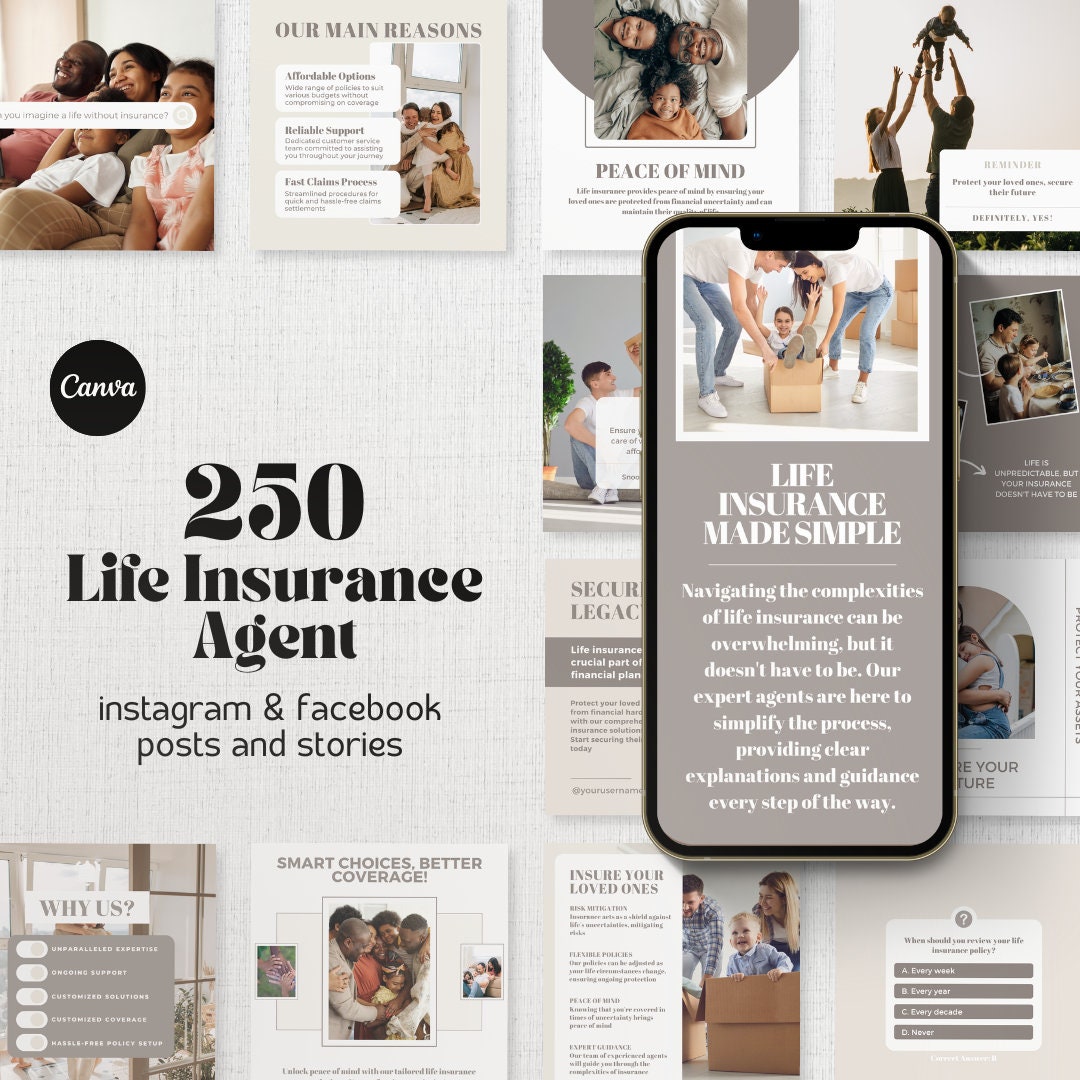
Creating engaging social media content for life insurance requires shifting away from fear-based marketing and dry policy jargon toward transparency, financial literacy, and relatable storytelling that resonates with millennial and Gen Z consumers. By modernizing your digital strategy, you can build trust, demystify underwriting, and position your brand as a helpful financial partner.
The Shift in Modern Life Insurance Marketing
The life insurance industry has traditionally relied on scarcity tactics, mortality fears, and complicated terminology. For modern audiences—particularly Millennials and Generation Z—these traditional approaches frequently backfire. Today’s consumers expect brands to be educational, empathetic, and digitally transparent. They want to understand how financial products integrate into their broader life goals, such as buying a home, starting a family, or achieving financial independence.
Social media platforms like Instagram, TikTok, LinkedIn, and YouTube Shorts demand a fresh approach. Instead of treating social channels as digital billboards for rate quotes, successful insurance professionals use them as educational hubs. By breaking down abstract financial concepts into digestible, visually appealing pieces of content, you can capture attention in crowded feeds and build long-term brand equity.
1. Demystifying Underwriting: Behind-the-Scenes Explanations
One of the greatest barriers to life insurance adoption is the fear of the unknown, particularly the medical and financial underwriting process. Many consumers assume they will automatically be rejected or that the process involves invasive medical procedures that take months to complete.
Breaking Down the Medical Exam and Medical Records
Create a carousel post or a short-form video series that walks viewers through what actually happens during a paramedical exam. Explain that it typically takes about 20 to 30 minutes, can be done at the applicant's home or office, and usually involves a simple blood draw, urine sample, and blood pressure check. Demystifying this process removes the intimidation factor and sets realistic expectations.
Highlighting Accelerated Underwriting and Digital Data
Modern carriers increasingly use algorithmic underwriting and digital data sources (such as prescription databases and motor vehicle reports) to approve policies without requiring physical fluids or exams for eligible applicants. Highlighting these expedited pathways shows modern audiences that obtaining coverage can be as seamless as opening a digital bank account.
2. Real-Life Financial Scenarios: Beyond Income Replacement
While income replacement is the foundational pillar of life insurance, modern audiences connect more deeply with holistic financial scenarios that reflect their actual daily lives and multi-layered responsibilities.
Protecting Dual-Income No-Kids (DINK) Households and Mortgages
Many young couples assume life insurance is exclusively for parents with dependents. Content creators can challenge this misconception by illustrating how a sudden loss of one income would jeopardize a mortgage, shared debt obligations, or lifestyle goals for a surviving partner.
Covering Student Loan Cosigners and Business Partnerships
Highlight niche scenarios that apply directly to younger demographics. For instance, explain how private student loans with cosigners (often parents or grandparents) can become an estate liability upon a borrower's death, and how a modest term policy prevents that financial burden. Similarly, show how buy-sell agreements funded by life insurance protect business partners and their families.
3. Debunking Cost Myths: Term vs. Permanent Realities
Affordability is a major point of friction for younger demographics. Misconceptions about the cost of life insurance frequently cause consumers to delay purchasing coverage until it becomes significantly more expensive.
Visualizing Actual Premiums vs. Perceived Costs
Studies consistently show that consumers overestimate the cost of term life insurance by as much as five times. Create graphics or video comparisons contrasting what people think a $500,000 20-year term policy costs versus the actual average monthly premium for a healthy 30-year-old.
Explaining the Core Purpose of Term Insurance
Use short-form educational clips to explain why term life insurance is generally the most cost-effective solution for income replacement during peak earning and debt-accumulation years. Contrast this with permanent insurance (such as whole or universal life), explaining its distinct estate-planning and cash-accumulation functions without relying on high-pressure sales pitches.
4. Life Events as Natural Triggers
Timing is everything in social media marketing. Rather than pitching life insurance out of nowhere, tie your content to major life milestones where financial protection becomes urgently relevant.
Mapping Content to Major Milestones
- Buying a Home: Discuss how a mortgage protection strategy ensures a surviving family member can keep their home without worrying about monthly payments.
- Getting Married or Divorced: Explain how merging finances or splitting assets changes risk profiles and necessitates updated beneficiary designations.
- Welcoming a Child: Focus on the long-term financial runway required to fund education, childcare, and daily living expenses.
Proactive Planning vs. Reactive Purchasing
Encourage viewers to lock in lower premium rates while they are young and healthy. Emphasize that insurance is purchased when you don't need it, so it's there when you do.
5. Interactive Financial Literacy Quizzes and Calculators
Engagement is a core metric for social media algorithms. Interactive content transforms passive scrollers into active participants while delivering personalized value.
Designing Quick Engagement Tools
Use native platform features such as Instagram Stories polls, interactive sliders, or dedicated link-in-bio calculators to help users estimate their coverage needs.
- Poll Idea: "True or False: My employer-provided group life insurance is enough to cover my family's needs." (Follow up with a reel explaining why employer coverage usually ends upon job separation and often only equals 1x or 2x salary).
- Calculator Prompts: Guide users through a simplified rule-of-thumb calculation (such as 10 to 12 times annual income plus debt) to spark curiosity and encourage them to seek professional guidance.
6. Addressing Complex Beneficiary and Estate Scenarios
Modern family structures are diverse, and traditional insurance marketing often fails to address the unique legal and financial nuances of blended families, unmarried partners, and special needs planning.
Navigating Non-Traditional Family Structures
Create carousel posts detailing how unmarried partners can legally designate each other as beneficiaries, and why failing to update beneficiaries after a divorce can lead to unintended legal disputes.
Integrating Insurance into Estate and Trust Planning
For higher-net-worth audiences on platforms like LinkedIn, discuss how irrevocable life insurance trusts (ILITs) help mitigate estate taxes and provide liquidity for generational wealth transfer. Keeping the language accessible ensures the content remains engaging without becoming overly dense.
7. Authenticity and Transparency: Day-in-the-Life and Q&A Sessions
Audiences connect with people, not logos. Humanizing your brand through unscripted, authentic content builds relational trust that traditional advertising cannot replicate.
Hosting Live Q&A Sessions
Host regular live streams on Instagram, LinkedIn, or TikTok where viewers can ask anonymous insurance questions without the pressure of a sales pitch. Answer questions about riders, exclusions, conversion privileges, and medical ratings in real time.
Behind-the-Scenes Agency Content
Showcase the human side of your practice by sharing day-in-the-life clips, explaining how you advocate for clients during the underwriting process, or breaking down complex industry news updates in plain English.
Content Format and Platform Strategy Comparison
To maximize reach and engagement, match your content ideas to the specific strengths of each social media platform.
| Platform | Best Content Formats | Primary Objective | Recommended Frequency |
|---|---|---|---|
| Carousels, Reels, Stories | Visual education, myth-busting, lifestyle triggers | 3–5 posts/week, daily stories | |
| TikTok | Short-form video (15–60s) | Reaching younger demographics, breaking down jargon | 3–4 videos/week |
| Text-and-image posts, PDFs/Carousels | B2B networking, estate planning, executive insights | 2–3 posts/week | |
| YouTube | Long-form explainers, Shorts | Search-driven educational content, deep dives | 1–2 videos/week |
Note: For further regulatory guidance on advertising financial products, consult guidelines from regulatory bodies such as the Financial Industry Regulatory Authority (FINRA) or your specific state insurance commissioner.
Frequently Asked Questions
What type of life insurance content performs best on social media?
Educational carousels and short-form videos that bust common financial myths or explain complex underwriting processes in simple terms consistently generate the highest engagement. Modern audiences prefer value-first content over direct sales pitches.
How can financial advisors stay compliant when posting on social media?
Always adhere to compliance guidelines established by your broker-dealer, compliance department, or state insurance commissioner. Avoid guaranteeing specific returns, making exaggerated claims about policy performance, or using misleading cost estimates without proper disclosures.
Is term life insurance or permanent life insurance better to feature in content?
Both have distinct places in a balanced content strategy. Term insurance is ideal for addressing affordability and basic income replacement for younger demographics, while permanent insurance suits discussions around estate planning, business continuation, and cash accumulation for higher-net-worth audiences.
How often should insurance professionals post on social media?
Consistency matters more than high volume. Aim for a sustainable schedule of two to four high-value posts per week across your primary platforms, supplemented by daily interactive stories to maintain visibility.
Can employer-sponsored group life insurance replace individual policies?
Generally, no. Employer-sponsored policies are usually tied to employment, offer limited coverage amounts (often 1x or 2x salary), and lack portability if you leave the company. Content highlighting this gap is an effective way to prompt viewers to secure supplemental individual coverage.
Next Steps for Your Social Media Strategy
Begin by auditing your current social media presence and identifying gaps where your content leans too heavily on sales language rather than education. Choose two ideas from this guide—such as demystifying the underwriting exam or breaking down term insurance affordability—and build a three-part content series for Instagram or LinkedIn. Measure your engagement metrics, refine your messaging based on audience questions, and consistently prioritize transparency to build lasting digital trust.