Article 7 of the Special Education Act establishes foundational statutory mandates regarding the identification, assessment, placement, and delivery of specialized educational services for students with disabilities, ensuring that learners receive an appropriate, individualized program tailored to their unique educational needs.
Introduction to the Special Education Act and Article 7
The landscape of special education law is built on a foundation of civil rights, educational equity, and statutory mandates designed to protect vulnerable student populations. Across various legislative frameworks governing special education—such as the Individuals with Disabilities Education Act (IDEA) in the United States or equivalent statutory provisions in international jurisdictions—specific sections or articles are dedicated to the core mechanisms of service delivery. When examining the specific components often referred to as "Article 7" within specialized educational frameworks, practitioners, legal experts, and families encounter vital rules governing multidisciplinary evaluations, individualized education programs (IEPs), procedural safeguards, and the principle of the Least Restrictive Environment (LRE).
Navigating these regulations requires a comprehensive understanding of statutory text, administrative code, and practical implementation strategies. Whether you are an educator striving for compliance, an administrator allocating resources, or a parent advocating for a child, understanding how these legal tenets operate in practice is essential. This guide explores the structure, obligations, and operational realities associated with Article 7 provisions of special education acts, offering a detailed roadmap to ensure educational equity and legal compliance.
Historical Context and Legislative Purpose
Special education legislation did not emerge in a vacuum; it represents the culmination of decades of advocacy, litigation, and legislative reform aimed at ending the systematic exclusion of children with disabilities from public schools.
The Shift from Exclusion to Inclusion
Historically, children with significant physical, cognitive, or emotional disabilities were frequently denied access to public education systems. Many were institutionalized or kept at home without formal instructional support. Landmark judicial decisions and civil rights movements during the mid-20th century established that education is a fundamental right that must be made available to all children on an equal basis.
Statutory provisions like Article 7 serve as the operational vehicle for this fundamental right. The primary purpose is twofold:
- To guarantee access: Ensuring that every child, regardless of the nature or severity of their disability, has an enforceable right to a free appropriate public education (FAPE).
- To ensure quality and accountability: Establishing standardized procedures for identifying, evaluating, and educating students so that services are meaningful, measurable, and tailored to individual progress.
Core Pillars of Article 7 Provisions
While exact statutory wording varies by jurisdiction, provisions designated as Article 7 typically focus on several non-negotiable pillars of special education law. These pillars form the architecture through which schools identify students and deliver specialized instruction.
- Core Pillars of Article 7
- Child Find & Identification
- Active screening, referral processes, and universal screening.
- Comprehensive Multi-Disciplinary Evaluation
- Non-discriminatory testing across all areas of suspected disability.
- Individualized Education Program (IEP) Development
- Collaborative goal-setting, accommodations, and related services.
- Least Restrictive Environment (LRE) Mandate
- Maximizing integration with non-disabled peers.
- Procedural Safeguards & Due Process
- Protecting parent and student rights through formal dispute resolution.
- Child Find & Identification
1. Child Find and Identification Mandates
School districts bear an affirmative, ongoing legal obligation—often termed "Child Find"—to locate, identify, and evaluate all resident children who have disabilities and may require special education services. Article 7 frameworks outline the precise mechanisms districts must use to advertise these services, screen incoming students, and handle parent or teacher referrals.
2. Comprehensive Multi-Disciplinary Evaluations
Before any specialized services can be implemented, a comprehensive, non-discriminatory evaluation must be conducted. Article 7 mandates that:
- Evaluations must use a variety of assessment tools and strategies to gather relevant functional, developmental, and academic information.
- Tests must be administered in the child’s native language or other mode of communication unless it is clearly not feasible to do so.
- Assessments must be racially and culturally non-biased.
- A multidisciplinary team of professionals, including the parents, must interpret the data to determine eligibility.
3. The Individualized Education Program (IEP)
Once a student is found eligible under the criteria specified in the act, the multidisciplinary team must develop an Individualized Education Program. This legally binding document outlines present levels of academic achievement, measurable annual goals, specialized instruction, related services, testing accommodations, and the anticipated frequency and duration of services.
4. Least Restrictive Environment (LRE)
A cornerstone of modern special education law is the LRE mandate. Article 7 stipulates that students with disabilities must be educated with non-disabled peers to the maximum extent appropriate. Removal from the general education environment should occur only when the nature or severity of the disability is such that education in regular classes with the use of supplementary aids and services cannot be achieved satisfactorily.
5. Procedural Safeguards and Due Process
To balance the power dynamics between school systems and families, Article 7 details extensive procedural safeguards. These include written notice requirements for any change in placement or evaluation, access to educational records, mediation services, and formal due process hearings for dispute resolution.
Comparison of Special Education Procedural Stages
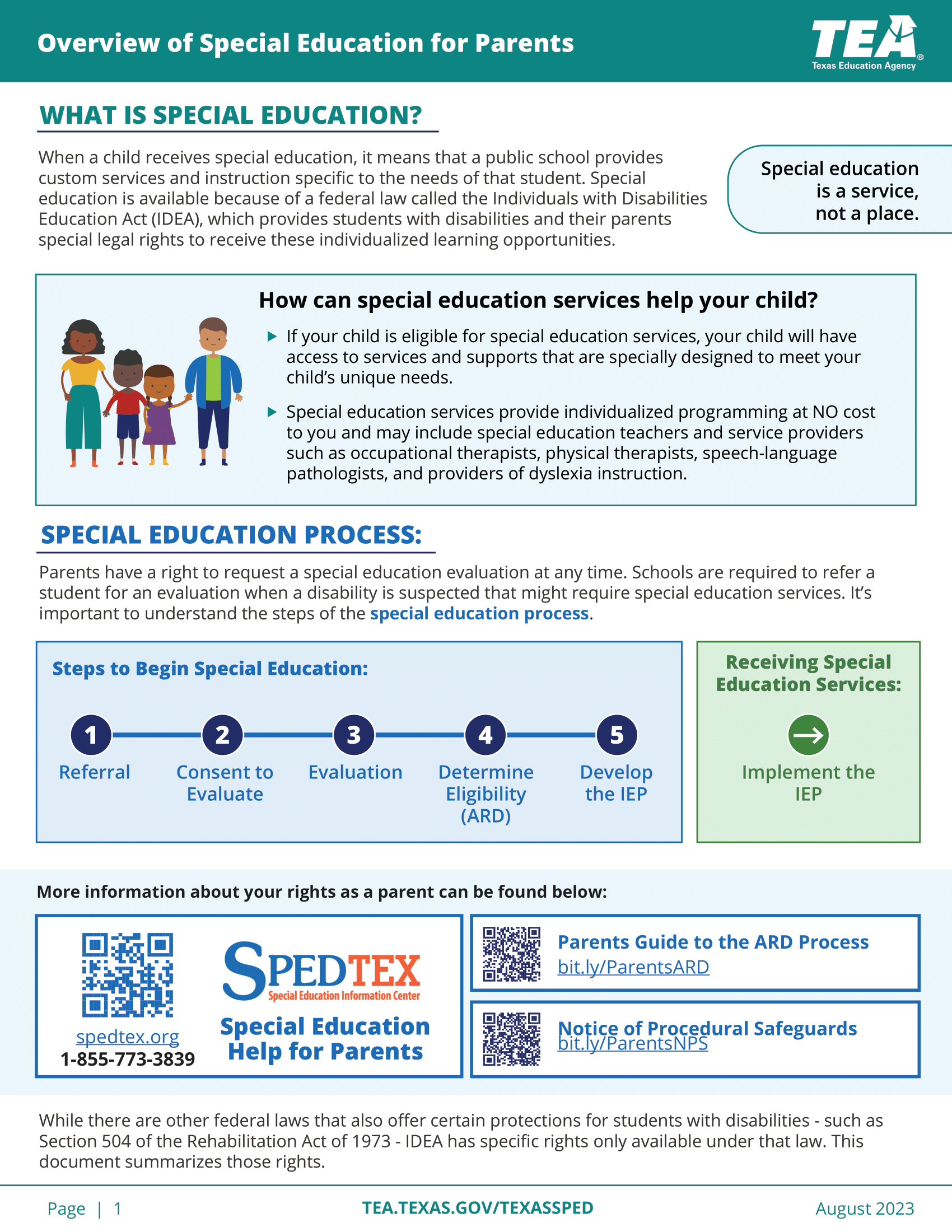
To understand how Article 7 provisions govern the lifecycle of a special education student, it is helpful to examine the sequential stages of implementation, responsible parties, and statutory requirements.
| Stage | Primary Objective | Key Stakeholders | Core Legal Requirement |
|---|---|---|---|
| Referral & Screening | Identify students potentially requiring support. | Parents, Teachers, Child Find Coordinators | Timely response to written requests; no unreasonable delays. |
| Evaluation | Determine disability eligibility and educational needs. | School Psychologists, Specialists, Parents | Comprehensive, multi-source assessment free of cultural bias. |
| IEP Development | Design a customized, goal-oriented learning plan. | IEP Team (Teachers, Admin, Parents, Specialists) | Creation of measurable annual goals and identification of required services. |
| Placement & Delivery | Execute the IEP within the Least Restrictive Environment. | General/Special Educators, Related Service Providers | Placement in general education settings unless justification for removal exists. |
| Annual Review | Monitor progress and update goals and accommodations. | IEP Team | Formal review of progress data at least once every 365 days. |
Implementation Responsibilities for Schools and Educators
Compliance with Article 7 requires rigorous administrative oversight and adherence to strict timelines. School districts cannot treat special education as an afterthought; it must be woven into the core operational fabric of the educational institution.
Timelines and Documentation
Statutory frameworks impose strict deadlines on every phase of the special education process. For instance, once a parent signs consent for an evaluation, districts typically have a defined window (often 60 calendar days or a state-mandated equivalent) to complete the evaluation and hold the initial eligibility meeting. Missing these deadlines constitutes a procedural violation of the Special Education Act, which can leave the district liable for compensatory education.
Teacher Qualifications and Professional Development
General and special education teachers must possess appropriate licensure and endorsements to deliver specialized instruction. Article 7 underscores the importance of highly qualified personnel, ensuring that paraprofessionals are adequately supervised and that related service providers—such as speech-language pathologists, occupational therapists, and school psychologists—hold valid professional credentials.
Parental Rights, Advocacy, and Procedural Safeguards
The framework established by Article 7 places significant emphasis on parental involvement. Parents are not merely informed participants; they are legally recognized equal members of the IEP team.
Informed Consent
Schools must obtain written, informed consent from parents before conducting an initial evaluation or providing special education services for the first time. This means parents must be fully informed of all information relevant to the activity for which consent is sought, in their native language or other mode of communication.
Dispute Resolution Mechanisms
Disagreements between parents and school districts regarding identification, evaluation, educational placement, or the provision of FAPE are inevitable. Article 7 provides a structured hierarchy of dispute resolution options:
- Facilitated IEP Meetings: Bringing in a neutral third-party mediator to help the team reach consensus.
- Formal Mediation: A voluntary, legally binding process overseen by a trained, impartial mediator appointed by the state education agency.
- Due Process Complaints: A formal administrative legal proceeding where an impartial hearing officer hears evidence, reviews testimony, and issues a legally binding decision.
Common Misconceptions and Compliance Pitfalls
Misunderstandings regarding the scope and enforcement of Article 7 provisions frequently lead to friction between families and educational institutions. Recognizing these pitfalls helps prevent legal disputes and ensures better outcomes for students.
Misconception 1: "An IEP is a guarantee of academic success."
An IEP guarantees access to specialized instruction, accommodations, and related services designed to help the student make meaningful progress. However, courts have consistently ruled that it does not guarantee a specific outcome or grade level mastery, provided the plan was reasonably calculated to enable the child to make progress appropriate in light of the child's circumstances.
Misconception 2: "Schools can deny services due to budget constraints."
Financial hardship or lack of resources is never a legally defensible justification for failing to provide services mandated by an IEP or required under Article 7. FAPE is an absolute statutory entitlement that supersedes local budgetary allocations.
Misconception 3: "Discipline policies apply universally without regard to disability."
Students with disabilities are subject to the same school code of conduct as non-disabled peers, but Article 7 provisions trigger specific protections when disciplinary actions result in long-term removals or suspensions. A Manifestation Determination Review (MDR) must be held to determine whether the student's behavior was caused by, or had a direct and substantial relationship to, their disability, or was the direct result of the school's failure to implement the IEP.
Frequently Asked Questions
What happens if a school district fails to follow Article 7 mandates?
When a school district violates procedural or substantive requirements of the Special Education Act, parents can file a state complaint with the department of education, request mediation, or initiate a due process hearing. If violations are substantiated, remedies can include ordering the district to provide compensatory education, reimburse out-of-pocket expenses for private placements, or overhaul non-compliant administrative procedures.
Are private school students covered by Article 7 provisions?
Public school districts have obligations under "Child Find" to locate and evaluate private school students, including those in parochial schools, residing within their boundaries. However, the mechanism for delivering services differs; eligible private school students typically receive services through a proportionate share of federal funds via a services plan rather than a traditional public school IEP.
Can a parent revoke consent for special education services?
Yes. Parents possess the legal right to revoke consent for the continued provision of special education and related services at any time. Upon receiving a written revocation, the school district must provide prior written notice before stopping services, after which the student returns to general education without special education protections.
How often must an Individualized Education Program be reviewed?
By statutory requirement, the IEP team must convene to review the student's progress, goals, and accommodations at least once every 365 days. Additionally, an IEP must be revised as appropriate to address any lack of expected progress, information provided by parents, anticipated needs, or other matters.
What constitutes the "Least Restrictive Environment" for a student with severe disabilities?
LRE is determined on an individual basis. For one student, LRE might be a full-time general education classroom with push-in support and assistive technology. For another student with more intensive needs, LRE might be a specialized special education classroom or a separate public day school. The guiding legal principle is that the placement must be as integrated as appropriate while still enabling the student to receive educational benefit.
Conclusion and Next Actions
Navigating Article 7 of the Special Education Act requires diligence, precise documentation, and a steadfast commitment to student equity. Whether you are preparing for an upcoming IEP meeting, evaluating a child's eligibility for services, or reviewing school district compliance records, understanding these statutory mechanics ensures that educational rights are protected.
Recommended Next Actions:
- Review Local Regulations: Cross-reference federal baseline standards with your specific state or regional administrative code, as local interpretations of Article 7 provisions can contain unique procedural timelines.
- Maintain Meticulous Records: Keep an organized binder containing all evaluation reports, past IEP documents, progress monitoring data, and written correspondence with school personnel.
- Seek Professional Guidance: If facing a complex dispute regarding eligibility, placement, or discipline, consult with a qualified special education advocate or educational attorney to protect the student's rights under the law.