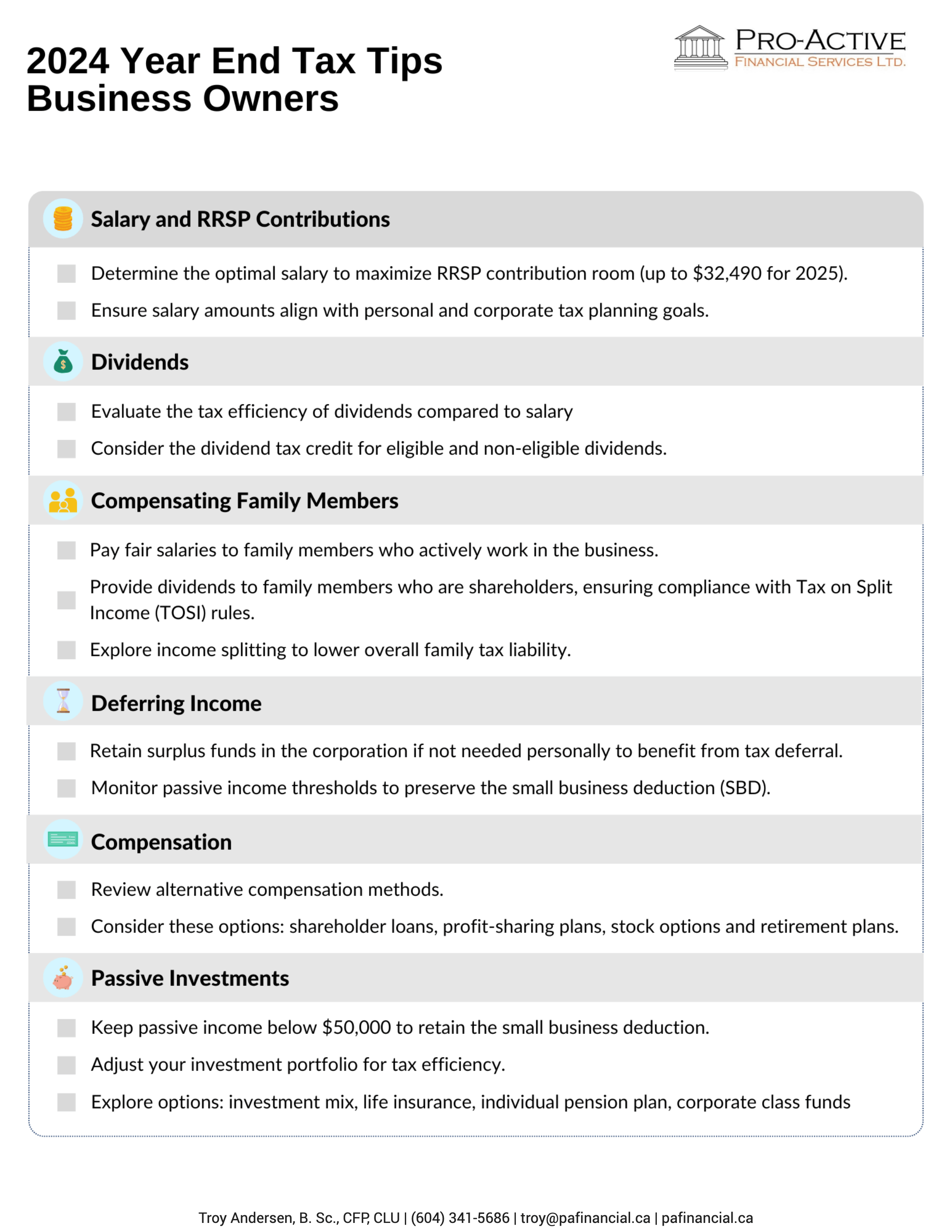
Small business owners in 2026 must focus on navigating the post-TCJA landscape, maximizing retirement contributions to lower taxable income, and leveraging remaining bonus depreciation. Strategic entity selection and maintaining meticulous digital records are essential for optimizing liabilities and ensuring compliance with evolving IRS digital reporting requirements during this fiscal year.
The 2026 tax year represents a significant turning point for American small businesses. With many provisions of the Tax Cuts and Jobs Act (TCJA) of 2017 having reached their sunset dates at the end of 2025, the strategies that worked for the past decade require immediate re-evaluation. For the individual entrepreneur, LLC member, or S-corp shareholder, understanding these shifts is not merely a matter of compliance—it is a fundamental component of cash flow management and long-term financial viability.
1. Re-evaluate Deductions in the Post-TCJA Landscape
As we move through 2026, the most pressing concern for small business owners is the expiration or reduction of several key tax breaks. The most notable change is the sunset of the Section 199A Qualified Business Income (QBI) deduction. For years, this allowed eligible self-employed individuals and pass-through entity owners to deduct up to 20% of their qualified business income from their taxes. Without a legislative extension, 2026 marks the first full year where many businesses must account for a higher effective tax rate.
Maximizing the Home Office Deduction
With the QBI deduction gone or significantly altered, maximizing the "ordinary and necessary" business expenses becomes paramount. The home office deduction remains one of the most underutilized tools. To qualify in 2026, your home office must be your principal place of business or a place where you meet regularly with clients or customers.
There are two methods to calculate this:
- The Simplified Method: You can claim $5 per square foot of the portion of the home used for business, up to a maximum of 300 square feet (a $1,500 maximum deduction).
- The Actual Expenses Method: This requires tracking all home-related expenses, such as mortgage interest, insurance, utilities, and repairs. You then deduct the percentage of these costs that corresponds to the percentage of your home used for business. For many in 2026’s high-utility-cost environment, the actual expenses method often yields a higher deduction than the simplified version.
Health Insurance for the Self-Employed
If you are self-employed and have a net profit for the year, you may be eligible to deduct 100% of the premiums paid for medical, dental, and long-term care insurance for yourself, your spouse, and your dependents. This is an "above-the-line" deduction, meaning it reduces your Adjusted Gross Income (AGI) regardless of whether you itemize other deductions. Given the continued rise in healthcare premiums into 2026, this deduction is a critical lever for reducing tax liability while ensuring personal well-being.
2. Master Estimated Tax Payments and Safe Harbor Rules
The IRS operates on a "pay-as-you-go" basis. For small business owners who do not have taxes withheld from a traditional paycheck, quarterly estimated tax payments are mandatory. In 2026, the penalties for underpayment have become more stringent as the IRS utilizes advanced data analytics to track income fluctuations in real-time.
The 2026 Payment Schedule
Estimated tax payments are generally due on the following dates:
- April 15: For income earned Jan 1 – March 31.
- June 15: For income earned April 1 – May 31.
- September 15: For income earned June 1 – Aug 31.
- January 15 (2027): For income earned Sept 1 – Dec 31.
Utilizing the Safe Harbor Provision
To avoid underpayment penalties, business owners should rely on the "Safe Harbor" rules. Generally, you will not face a penalty if you pay at least 90% of the tax you owe for the current year (2026) or 100% of the tax shown on your return for the prior year (2025). If your 2025 Adjusted Gross Income was more than $150,000 ($75,000 if married filing separately), the prior-year safe harbor requirement increases to 110%.
Failing to make these payments can result in a significant tax bill in April 2027, compounded by interest charges that are often higher than standard market loan rates. Business owners should set aside 25% to 30% of every payment received into a high-yield savings account specifically designated for taxes to ensure liquidity when these deadlines arrive.
3. Leverage Retirement Plans as Strategic Tax Shields
One of the most effective ways to reduce taxable income in 2026 is through robust contributions to small business retirement plans. Following the full implementation of the SECURE Act 2.0, there are more incentives than ever for small business owners to save.
SEP IRA (Simplified Employee Pension)
The SEP IRA remains a favorite for solo entrepreneurs due to its high contribution limits and ease of setup. In 2026, you can contribute the lesser of 25% of your net earnings from self-employment or a maximum dollar limit (which has been adjusted for inflation for the 2026 tax year). This contribution is tax-deductible, providing an immediate reduction in your federal tax bill.
Solo 401(k)
For business owners with no employees (except a spouse), the Solo 401(k) offers even more flexibility. It allows for contributions as both an employee (elective deferrals) and an employer (profit sharing). In 2026, the catch-up contribution limits for those aged 50 and older have been enhanced, and certain "super catch-up" provisions for those aged 60–63 may apply, allowing for massive tax-deferred growth and immediate deductions.
Tax Credits for New Plans
If you have employees and are starting a new retirement plan in 2026, you may be eligible for a tax credit of up to $5,000 for three years to cover the costs of starting and administering the plan. Additionally, a separate credit exists for employer contributions made to employee accounts in the first five years of a small business plan's existence.
4. Strategic Asset Acquisition and Depreciation
The way businesses write off the cost of equipment, machinery, and vehicles has changed significantly for 2026. Understanding the difference between Section 179 and Bonus Depreciation is vital for timing your capital expenditures.
The Bonus Depreciation Phase-Down
Under the TCJA, bonus depreciation allowed businesses to immediately deduct 100% of the cost of eligible assets. However, this provision has been phasing out. For the 2026 tax year, bonus depreciation has dropped to 20%. This means you can only deduct 20% of the asset's cost in the first year, with the remaining 80% depreciated over the asset's useful life according to standard MACRS (Modified Accelerated Cost Recovery System) schedules.
Section 179 Expensing
Because bonus depreciation is less attractive in 2026, Section 179 expensing has become the primary tool for small business asset deductions. Section 179 allows you to deduct the full purchase price of qualifying equipment and software purchased or financed during the tax year, up to a specific limit ($1,160,000+, adjusted for 2026 inflation).
Crucially, Section 179 is limited to your taxable business income; you cannot use it to create a net loss. Bonus depreciation, however, can be used to create or increase a Net Operating Loss (NOL), which can be carried forward to future years. A balanced approach involves using Section 179 for smaller equipment purchases and saving bonus depreciation for larger investments that might exceed the Section 179 income limits.
5. Implement Rigorous Digital Record-Keeping
By 2026, the IRS has significantly increased its digital audit capabilities. Small business owners can no longer rely on paper receipts or manual spreadsheets if they wish to withstand an inquiry. Digital transformation of your accounting process is not just a productivity tip; it is a defensive tax strategy.
The 1099-K Thresholds
In 2026, the reporting threshold for third-party payment processors (like PayPal, Venmo, and Stripe) remains a focal point. Ensure that your personal and business transactions are strictly separated. The IRS receives copies of these 1099-K forms, and any discrepancy between your reported gross receipts and the 1099-K totals will likely trigger an automated notice or a full audit.
Substantiating Business Travel and Meals
The "Cohan Rule" once allowed for some leniency in estimating expenses, but the modern IRS requires strict substantiation for travel, meals, and entertainment. For 2026, business meals are generally 50% deductible. To claim these, you must record:
- The date and amount of the expense.
- The location.
- The business purpose of the meeting.
- The professional relationship of the persons entertained.
Using automated mileage tracking apps and cloud-based receipt scanning software ensures that this data is captured at the point of sale, creating a contemporaneous record that is much harder for an auditor to dispute.
Comparison of Small Business Legal Structures for 2026 Taxation
The following table outlines how different business entities are taxed in 2026, helping you determine if your current structure is still the most efficient.
| Entity Type | Tax Treatment | Self-Employment Tax | Primary Advantage in 2026 |
|---|---|---|---|
| Sole Proprietorship | Pass-through to Form 1040 | Paid on all net profit (15.3%) | Simplest to administer; no separate corporate return. |
| Single-Member LLC | Pass-through (Disregarded Entity) | Paid on all net profit (15.3%) | Asset protection with minimal administrative overhead. |
| S-Corporation | Pass-through to shareholders | Paid only on "reasonable salary" | Potential to save on SE tax by taking distributions. |
| C-Corporation | Double taxation (Corp & Dividends) | None (Owner is an employee) | Flat 21% corporate rate; better for reinvesting profits. |
| Partnership | Pass-through to partners | Paid on distributive share for active partners | Flexibility in allocating profits and losses among partners. |
Frequently Asked Questions
Can I still claim the 20% QBI deduction in 2026?
Technically, the QBI (Section 199A) deduction expired on December 31, 2025. Unless Congress passes a late extension or new legislation, the deduction is not available for income earned during the 2026 calendar year. However, when you file your taxes in early 2026 for the 2025 tax year, you can still claim it on that return. For your 2026 planning, you should assume a higher tax liability and adjust your estimated payments accordingly.
What is the 2026 mileage rate for business use of a vehicle?
The IRS typically announces the standard mileage rate in late December for the following year. For 2026, the rate is expected to be adjusted upward from the 2025 levels to account for inflation and the rising costs of vehicle maintenance and fuel. It is critical to keep a contemporaneous log of business miles, as the "Simplified" mileage rate is only defensible if you have a log showing the date, destination, and business purpose of each trip.
How do I handle 1099-NEC forms for contractors I hire in 2026?
If you pay an unincorporated contractor $600 or more for services during 2026, you are required to issue them a Form 1099-NEC and file a copy with the IRS. In 2026, the IRS requires almost all 1099s to be filed electronically if you are filing more than 10 information returns in total. Failure to issue these forms can lead to the IRS disallowing the deduction for those labor costs on your own return.
Is the 100% deduction for business meals still available?
No, the temporary 100% deduction for business meals provided by restaurants expired at the end of 2022. For 2026, the deduction for business-related meals has returned to the standard 50% limit. Entertainment expenses (such as tickets to sporting events or theater) generally remain non-deductible, even if business is discussed during the event.
What are the "reasonable salary" requirements for S-Corp owners in 2026?
The IRS is increasingly scrutinizing S-Corp owners who take low salaries to avoid self-employment taxes. In 2026, a "reasonable salary" must reflect what you would pay an outside hire to perform the same duties. Factors include your experience, the complexity of the business, and geographical pay scales. If your salary is deemed too low, the IRS can reclassify your distributions as wages, subjecting them to back taxes, interest, and heavy penalties.
Recommended Next Actions
For small business owners navigating 2026, the first step is a mid-year tax projection. Because the tax environment has shifted so significantly following the TCJA sunset, relying on last year's numbers could lead to a massive underpayment penalty.
Schedule a meeting with a qualified tax professional before the end of the third quarter (September 2026). Use this time to review your entity structure—specifically looking at whether an S-Corp election could offset the loss of the QBI deduction. Finally, ensure all your accounting software is integrated with your business bank accounts to automate the documentation process, leaving you more time to focus on growth rather than record-hunting.