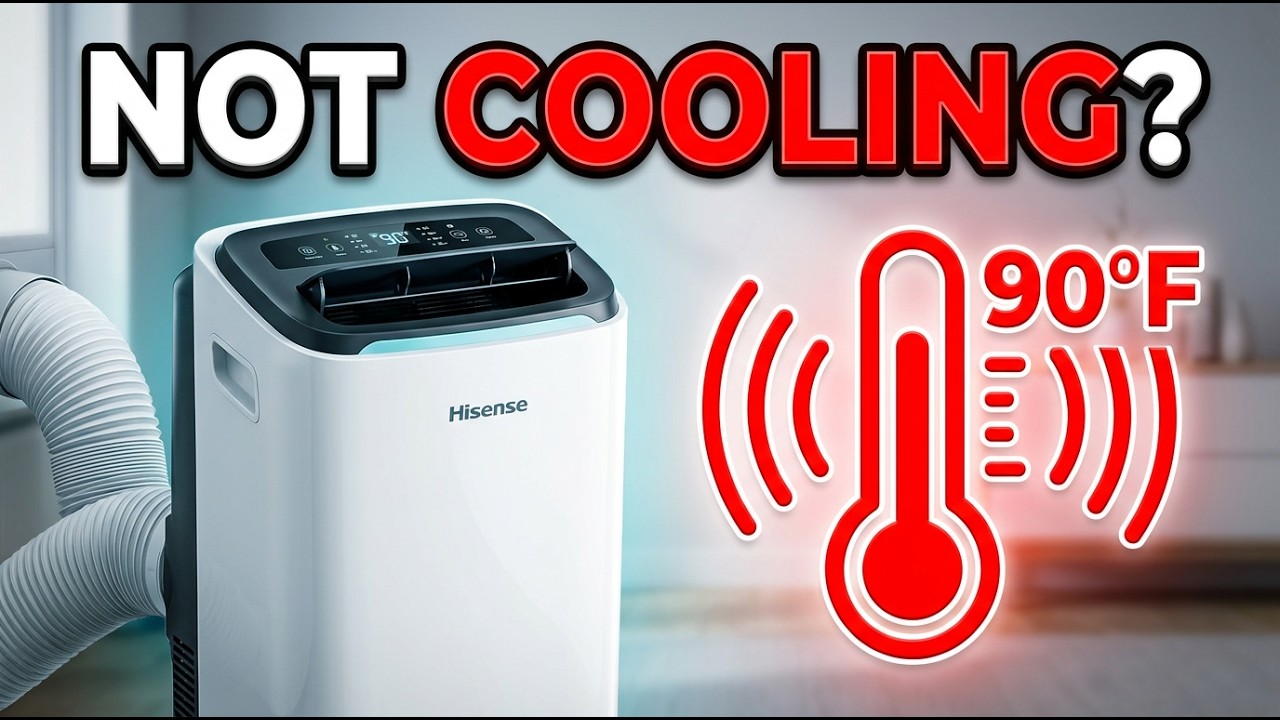
Encountering an E5 error code on a Hisense portable air conditioner typically indicates a full internal water tank or a drainage system failure, triggering the unit's automatic safety shutoff mechanism to prevent water damage or electrical hazards. Resolving this issue involves safely powering down the unit, draining accumulated moisture from the lower drain plug, clearing potential clogs in the drainage channel, and ensuring the appliance is positioned on a completely level surface before resuming operation.
Understanding the Hisense Portable Air Conditioner E5 Error
Modern portable air conditioners are sophisticated climate control appliances designed to cool spaces by drawing in warm air, passing it over refrigerated coils, and venting the heat out through a hose. During this refrigeration cycle, moisture from the air condenses on the evaporator coils, transforming into liquid water. This water drips into an internal collection pan located at the base of the machine.
In standard cooling operations, portable air conditioners use a self-evaporating system where a splash motor flings collected condensation against the hot condenser coils, causing it to evaporate and vent out the exhaust hose along with the hot air. However, in environments with high relative humidity, heavy continuous use, or when the internal evaporation mechanisms cannot keep up with the volume of water produced, the reservoir fills up faster than it can evaporate.
When the internal water level reaches a critical threshold, a float switch or electronic sensor is triggered. This safety sensor immediately halts the compressor and the fan motor to prevent overflowing, which could otherwise spill water onto internal electronic components or onto your flooring. The control panel responds by displaying the E5 error code. Recognizing this code as a safety notification rather than a permanent mechanical failure allows you to approach troubleshooting systematically without unnecessary panic or premature hardware replacement.
Prerequisites and Safety Preparations Before Troubleshooting
Before diving into any hands-on troubleshooting or physical maintenance on your Hisense portable air conditioner, you must prioritize personal safety and protect your living space. Water, electricity, and heavy appliances require careful handling to avoid injury or property damage.
Gather Necessary Supplies
- A shallow pan, baking dish, or low-profile bucket to catch draining water.
- Clean microfiber towels or old rags to mop up any accidental spills.
- A short length of garden hose or a compatible drain tube (if gravity draining).
- A small wire brush, pipe cleaner, or compressed air can (optional, for clearing blocked drain ports).
- Personal protective gloves to protect your hands from sharp sheet metal edges inside the unit.
Safety Protocol Checklist
- Disconnect Power: Always unplug the air conditioner from the electrical wall outlet before touching any drainage ports or attempting internal maintenance. Never service a plugged-in appliance.
- Protect Flooring: Place towels underneath the unit, especially when moving it or removing the lower drain plug, as residual water inside the chassis can easily slosh out onto hardwood or carpeted floors.
- Avoid Tilting Violently: While moving the unit may be necessary, avoid tilting it past a 45-degree angle. Excessive tilting can dislodge internal components or cause stagnant water to spill directly onto electrical wiring harnesses.
Step 1: Power Down and Unplug the Unit Safely
The very first action you must take when the E5 error appears is to interrupt the power supply to the air conditioner. While the unit has already automatically shut off its compressor and fan, the electronic control board remains live and energized as long as the power cord is plugged into the wall outlet.
Begin by pressing the power button on the control panel or remote control to ensure the system executes a normal shutdown sequence, allowing internal louvers or fans to park correctly if they are still functioning. Once the unit is powered off, reach down and firmly pull the power plug from the electrical outlet.
Allow the appliance to sit completely unpowered for approximately 5 to 10 minutes. This pause serves two critical purposes:
- It allows any remaining water inside upper channels or cooling fins to cascade downward into the main reservoir, ensuring a thorough initial drain.
- It allows internal electrical capacitors to fully discharge, protecting you from any potential electrical shock during the physical maintenance steps.
Step 2: Locate and Drain the Internal Water Tank
The most common cause of the E5 error is a saturated lower water reservoir. To clear this, you need to manually drain the accumulated water from the unit.
Portable air conditioners typically feature a primary lower drain plug located near the bottom rear of the chassis. Depending on your specific Hisense model, this may be a rubber stopper paired with a plastic threaded cap, or a simple rubber plug that pulls straight out.
Manual Draining Procedure
- Carefully roll or slide the portable air conditioner to an area where water can be safely released, such as a bathroom, a utility sink, or directly out an exterior door. If the unit is too heavy to move easily, place your shallow pan or baking dish directly beneath the lower drain port.
- Remove the threaded cap (if applicable) and gently pull out the rubber stopper from the drain port. Be prepared for water to begin flowing immediately upon removal of the plug.
- If you are using a low-profile pan, you may need to gently tilt the unit backward slightly to encourage all trapped water to exit the reservoir. Do not tilt the unit forward or sideways aggressively.
- Allow all water to drain completely until the flow drops to zero. This may take several minutes depending on how full the reservoir is.
| Drain Method | Best Used For | Equipment Needed | Advantages |
|---|---|---|---|
| Manual Pan Draining | Periodic maintenance, low humidity environments | Shallow pan, towels | Quick, requires no permanent modifications |
| Continuous Gravity Drainage | Basements, humid summers, unattended rooms | Garden hose, floor drain | Eliminates manual emptying, prevents E5 recurrence |
| Continuous Pump Drainage | Units with built-in condensate pumps | Compatible drain line | Allows water to be pumped upward or over long distances |
Step 3: Inspect and Clear Blocked Drainage Channels
Sometimes, simply draining the water does not permanently resolve the E5 error because the internal drainage path or the external drain port is partially obstructed by algae, mold, dust, or mineral scale buildup. If water cannot flow freely out of the internal collection pan to the drain port, the sensor will continue to register a high water level.
Inspect the drain opening thoroughly using a flashlight. Look for slimy deposits or debris blocking the orifice. You can clear minor blockages using a pipe cleaner, a flexible piece of wire, or a cotton swab dipped in a mild solution of warm water and white vinegar to eliminate organic growth.
If your Hisense unit features a continuous drainage option using a hose, ensure that the hose itself is not kinked, pinched, or elevated above the height of the drain port. Gravity-fed drainage systems require a continuous downward slope to function correctly; if the hose runs upward at any point, water will back up into the machine and trigger the E5 error code all over again.
Step 4: Ensure Proper Leveling and Positioning of the Appliance
Physical placement plays a surprisingly vital role in the proper operation of a portable air conditioner. If the unit is resting on an uneven floor, a thick rug, or a slanted surface, the internal water collection pan will tilt to one side.
When the pan tilts, water pools unevenly against the walls of the reservoir rather than spreading out flat toward the float switch and drain channel. This can cause the electronic sensor to register a "tank full" condition even when the actual volume of water inside the machine is relatively low.
Check the levelness of the floor beneath your Hisense portable air conditioner using a standard bubble level or by observing its stability. Adjust the caster wheels or place stable, flat shims underneath the feet if the unit wobbles or leans. Furthermore, ensure that the unit maintains adequate clearance—at least 20 to 30 inches—from walls, furniture, and curtains to allow proper airflow and prevent condensation issues caused by restricted ventilation.
Step 5: Reset the System and Verify Operation
Once you have drained the water tank, cleared any blockages, and ensured the unit is level, you are ready to reassemble the drainage components and test the system.
- Firmly push the rubber stopper back into the lower drain port until it sits flush and secure. If your model uses a threaded cap, screw it on tightly to prevent air leaks during operation.
- Plug the power cord back into a grounded 115V electrical wall outlet.
- Power on the air conditioner using the control panel or remote.
- Select your desired cooling mode and set the temperature well below the current room temperature to force the compressor to engage.
Observe the unit for 15 to 20 minutes. Check that cold air is blowing steadily from the front louvers, that the exhaust hose is expelling hot air outdoors, and that no error codes reappear on the digital display. If the E5 error stays off and the unit operates normally, the troubleshooting process is complete.
Comprehensive Troubleshooting and Alternative Solutions
If you have executed all five steps and the E5 error code immediately returns or persists upon powering the unit back on, the underlying issue may extend beyond a simple full water tank.
Float Switch Malfunctions
Inside the lower reservoir, a mechanical float switch moves up and down on a hinge to track water levels. Over time, mineral deposits or debris can jam this switch in the "up" position, tricking the control board into thinking the tank is permanently full. Inspecting this switch requires removing the outer plastic housing of the portable air conditioner—a task best performed by a qualified appliance repair technician if you are unfamiliar with internal electronics.
Electronic Control Board Glitches
Occasionally, temporary power surges or electrical spikes can corrupt the memory of the main control board, causing it to lock into an error state. You can attempt a hard system reset by leaving the unit unplugged for a full 30 minutes, allowing all residual electrical charge to bleed off completely before plugging it back into a surge-protected outlet.
High Humidity Operating Conditions
If you live in an exceptionally humid climate, a portable air conditioner may fill its internal tank within just a few hours of operation. In such environments, relying on internal self-evaporation is often insufficient. Transitioning to continuous drainage mode by attaching a garden hose directly to the continuous drain port and routing it to a floor drain or sump pump permanently eliminates the need for manual emptying.
Frequently Asked Questions
Can I run my Hisense portable air conditioner continuously without draining it?
Yes, under normal humidity conditions, Hisense portable air conditioners utilize a self-evaporating technology that vaporizes condensation and exhausts it through the hose. However, in high-humidity environments, manual draining or setting up a continuous gravity drain hose is required to prevent the E5 error.
What should I do if water keeps leaking from the bottom of the unit?
Water leaks usually indicate that the lower drain plug is loose, missing, or improperly seated, or that the internal collection tank has developed a crack. Unplug the unit immediately, drain it completely, and inspect the rubber stopper and surrounding plastic housing for damage.
Is the E5 error covered under the Hisense manufacturer warranty?
Most Hisense portable air conditioners come with a limited 1-year warranty covering manufacturing defects in materials and workmanship. However, standard maintenance tasks like draining water tanks and clearing clogged filters are considered regular user upkeep and are typically not covered under warranty service calls.
How often should I drain the water tank on my Hisense portable air conditioner?
The frequency depends entirely on the ambient humidity of your room. In dry climates, you may only need to drain the unit once or twice a season (or never, if self-evaporation keeps up). In coastal or tropical environments, you may need to drain the tank every 24 to 48 hours of continuous use.
Why does the E5 error appear immediately even after I just drained the tank?
This usually indicates that residual water is still trapped in secondary internal channels, the float switch is stuck in the raised position due to debris or scale, or the unit is positioned on an unlevel surface that prevents water from clearing the sensor.
Summary and Final Recommendations
Dealing with an E5 error code on a Hisense portable air conditioner is a common maintenance event that can be resolved quickly by following a structured approach: powering down the unit, draining the internal reservoir, clearing blockages, ensuring proper leveling, and resetting the system. By performing routine checks on your drainage setup—especially during peak summer humidity—you can prevent unexpected cooling interruptions and extend the operational lifespan of your appliance. If persistent hardware faults or sensor failures continue despite thorough troubleshooting, consult a certified HVAC professional or reach out to Hisense customer support for authorized repair options.