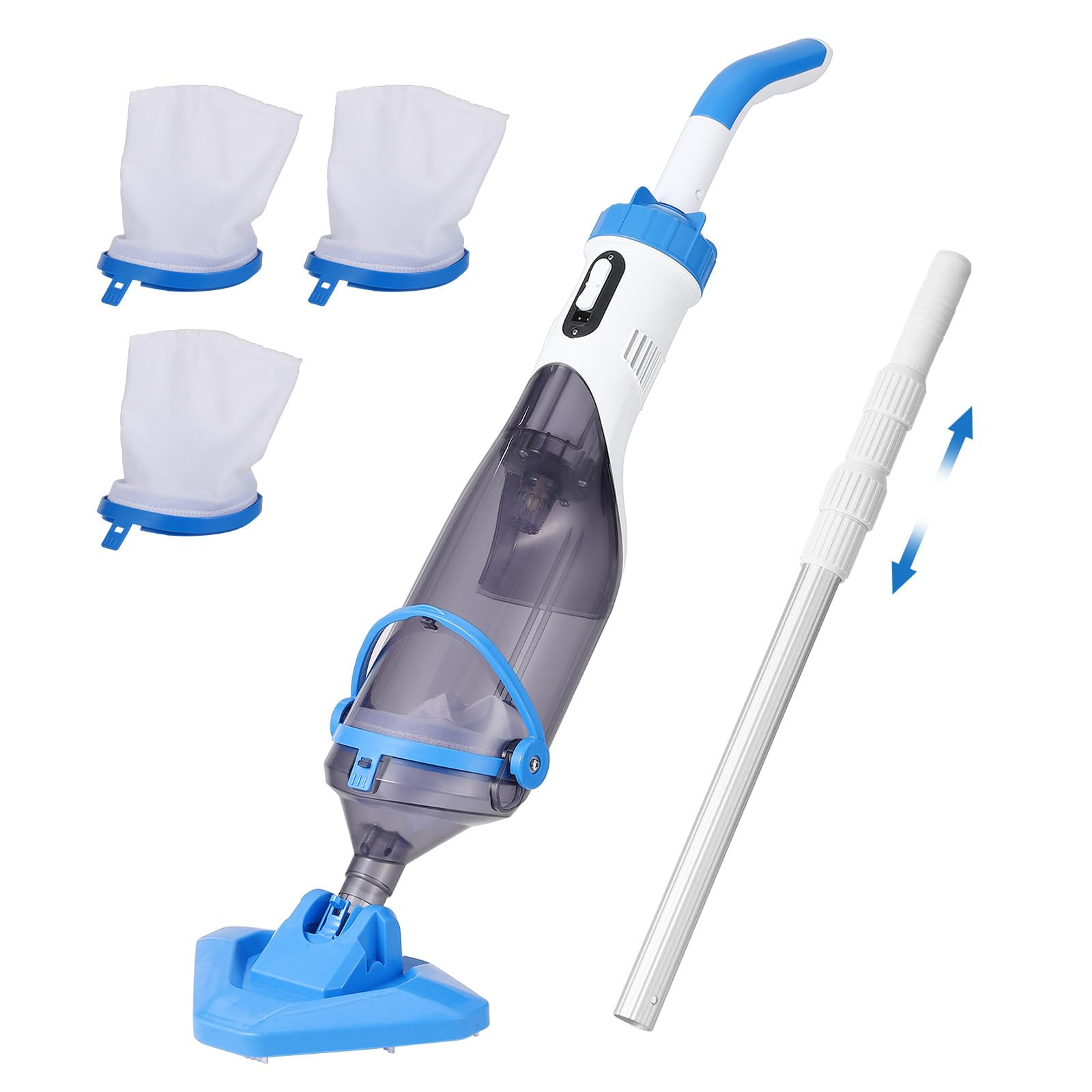
Finding the best value pool vacuum in 2026 requires balancing initial purchase price with long-term durability, energy efficiency, and cleaning performance. For most homeowners, the Dolphin Nautilus CC Plus remains the premier choice for robotic value, while suction-side cleaners like the Hayward Navigator V-Flex offer the most reliable performance for those on a stricter budget.
Maintaining a swimming pool is an investment in both time and money. While the primary goal is clear water, the path to achieving it varies significantly based on the equipment you choose. In the current market, "value" no longer means "cheapest." Instead, it refers to the total cost of ownership over the vacuum’s lifespan, including electricity usage, replacement parts availability, and the literal hours of manual labor saved. Whether you manage a small above-ground setup or a sprawling custom in-ground pool, selecting the right tool ensures your backyard remains an oasis rather than a chore.
Understanding Pool Vacuum Categories and Value Propositions
Before selecting a specific model, it is vital to understand the three primary technologies driving pool maintenance in 2026: suction-side, pressure-side, and robotic cleaners. Each serves a specific niche and carries different long-term cost implications.
Suction-Side Cleaners: The Entry-Level Standard
Suction-side cleaners are the most affordable automated options. They connect directly to your pool’s skimmer or a dedicated suction line. As the pool pump runs, the vacuum moves around the floor, pulling debris into the pool’s existing filtration system.
- Pros: Low upfront cost, few moving parts, easy to repair.
- Cons: Increases wear on your main pool pump and filter; requires the pump to run at higher speeds, which can increase electricity bills.
Pressure-Side Cleaners: The Heavy-Duty Workhorse
These cleaners use water pressure from a return line to propel themselves and create a venture vacuum. Most require a secondary "booster pump." They are exceptionally good at handling large debris like acorns and heavy leaves because they typically have their own debris bag, preventing the pool filter from clogging.
- Pros: Excellent for heavy foliage; does not clog the main filter.
- Cons: Requires a booster pump (higher energy use); complex installation.
Robotic Cleaners: The Modern Efficiency Leader
Robotic cleaners are self-contained units that run on low-voltage electricity. They do not rely on your pool pump at all. In 2026, many models have transitioned to cordless, battery-operated designs, though corded models remain the gold standard for consistent "set-and-forget" value.
- Pros: Highest energy efficiency; superior scrubbing capabilities; independent filtration.
- Cons: Higher initial price; batteries in cordless models have a finite lifespan.
1. The Best Overall Value: Dolphin Nautilus CC Plus (Wi-Fi)
The Dolphin Nautilus CC Plus has maintained its position as the industry benchmark for value because it strikes a perfect balance between high-end features and mid-range pricing. While more expensive than suction cleaners, its efficiency and cleaning thoroughness often pay for the unit within three seasons through reduced chemical and electricity costs.
Technical Performance and Features
The 2026 iteration of the Nautilus CC Plus features dual scrubbing brushes that spin twice as fast as the tracks, allowing it to dislodge stubborn algae and biofilm from the pool floor and walls. Its CleverClean technology uses advanced algorithms to map the pool, ensuring it doesn't just wander aimlessly but covers every square inch in approximately two hours.
The "value" here is found in the twin cartridge filtration system. Unlike bag-based robots, these cartridges are easy to rinse and can capture debris as fine as 50 microns. This reduces the load on your pool's primary sand or DE filter, extending the time between backwashes and saving thousands of gallons of water annually.
Long-Term Ownership
Maytronics (the manufacturer of Dolphin) has the most robust parts network in the industry. If a motor or cable fails after the warranty period, parts are readily available and user-replaceable. This longevity is a core component of its value proposition; a Nautilus CC Plus typically lasts 5–7 years with basic maintenance, whereas "budget" robots often become e-waste after two seasons.
2. Best Budget Suction Cleaner: Hayward Navigator V-Flex
For pool owners who want an automated solution for under $500, the Hayward Navigator V-Flex is the definitive choice. It is an evolution of the classic Navigator design, updated with "V-Flex" variable vane turbine technology.
Handling Large Debris
The primary weakness of older suction cleaners was their tendency to clog on small twigs or large leaves. The V-Flex technology allows the internal vanes to adjust their position, enabling the vacuum to swallow larger debris without jamming the turbine. This makes it a viable option for pools near deciduous trees, a task previously reserved for more expensive pressure-side units.
Compatibility and Installation
The Navigator V-Flex is optimized for use with variable-speed pumps, which are standard in 2026. It can operate effectively at lower flow rates, meaning you don't have to crank up your pump to 3450 RPM just to get the vacuum moving. This synergy between the cleaner and modern pump technology is where the "hidden" value lies, as it keeps your daily energy consumption low.
3. Best for Heavy Debris: Polaris 280 Pressure-Side Cleaner
It may seem strange to list a decades-old design as a "best value" in 2026, but the Polaris 280 remains unmatched for specific environments. If your pool is constantly bombarded by heavy leaves, pebbles, or organic matter, robotic and suction cleaners will require constant emptying and maintenance.
Mechanical Simplicity
The Polaris 280 operates on a purely mechanical drive system with no complex electronics submerged in the water. Its value lies in its indestructibility. In an era of planned obsolescence, the Polaris 280 is a "forever" tool. Every single screw and wheel is available for purchase separately, allowing for cheap, DIY repairs that keep the unit running for decades.
Debris Management
Because it uses an independent debris bag, the Polaris 280 prevents "blinding" your pool filter. When your pool filter gets dirty, the pressure rises, and your pump has to work harder, consuming more power. By keeping the mess in the bag, the Polaris 280 maintains your system's hydraulic efficiency. Note that this unit requires a booster pump, so the initial setup cost is higher if your pool isn't already plumbed for it.
4. Best for Above-Ground Pools: Wybot Osprey 700 (Cordless)
Above-ground pools have different structural needs than in-ground ones, and the Wybot Osprey 700 offers the best value for this specific segment. In 2026, cordless technology has matured significantly, and this model provides the convenience of a robot without the "robotic" price tag associated with in-ground models.
Cordless Convenience
Cords are a major hassle in above-ground pools, where skimmer placement and deck configurations can lead to tangles. The Osprey 700 is a "drop and go" solution. It features a dual-motor system and a quick-charge battery that provides roughly 90 to 110 minutes of cleaning—more than enough for a standard 24-foot round pool.
Efficiency and Limitations
The value here is pure convenience. It includes a "self-parking" feature where it moves to the edge of the pool when the battery is low, making it easy to retrieve with the included hook. While it lacks the wall-climbing ability of the Dolphin Nautilus, for an above-ground pool floor, its coverage and suction power are specialized and highly effective for the price point.
5. Best Mid-Range Robotic: Zodiac MX6 Elite
The Zodiac MX6 Elite sits in a unique "hybrid" space. It is a high-performance suction cleaner that utilizes many of the mechanical advantages of a robot, such as programmed navigation and scrubbing brushes.
Cyclonic Suction Technology
The MX6 Elite uses a cyclonic turbine that generates a high level of torque. This allows the cleaner to climb walls more effectively than almost any other suction-side cleaner in its class. For homeowners who want the "wall-to-wall" clean of a robot but only have the budget for a suction cleaner, the MX6 Elite is the compromise that doesn't feel like a sacrifice.
Flow Control and Maintenance
It includes a Flow Regulator Valve that automatically controls the water flow, ensuring the cleaner doesn't move too fast (which causes it to lift off the floor) or too slow (which prevents it from climbing). This "smart" mechanical design reduces the need for manual adjustments, providing a "set-and-forget" experience that is rare at this price point.
Value Comparison Table
The following table summarizes the key metrics for these five models to help you decide based on your specific pool environment and budget.
| Model | Type | Best For | Estimated Lifespan | Primary Value Factor |
|---|---|---|---|---|
| Dolphin Nautilus CC Plus | Robotic | In-ground Pools | 5–7 Years | High energy savings & filtration |
| Hayward Navigator V-Flex | Suction | Budget In-ground | 4–6 Years | Low upfront cost & V-Flex turbine |
| Polaris 280 | Pressure | Heavy Debris | 10+ Years | Extreme durability & part availability |
| Wybot Osprey 700 | Robotic (Cordless) | Above-ground | 3–4 Years | Cordless ease & portability |
| Zodiac MX6 Elite | Suction | Mid-Range Versatility | 4–6 Years | Wall climbing at a lower price |
Technical Considerations for Maximizing Value
To get the most out of your pool vacuum, you must match the technical specifications of the cleaner to your pool’s hardware.
Pump Synchronization
If you choose a suction-side cleaner (Hayward or Zodiac), your variable-speed pump settings are critical. Running the pump at a speed that is too low will prevent the vacuum from moving, while a speed that is too high can damage the internal gears. The "value" is only realized if you find the "sweet spot" (typically 2200–2500 RPM) where the cleaner operates efficiently without excessive electricity draw.
Micron Ratings and Water Quality
Value is also found in chemical savings. Robotic cleaners with fine porosity filters (like the Dolphin) remove much smaller particles than a standard sand filter. By removing these microscopic contaminants, you reduce the "organic load" in the water. This means you need less chlorine to maintain a residual level, saving you hundreds of dollars in chemical costs over the summer season.
Surface Compatibility
Not all vacuums work on all surfaces.
- Vinyl Liners: Require soft brushes or wheels to prevent tearing. (Dolphin and Wybot excel here).
- Pebble Tec / Plaster: Require high-grip tracks or wheels. (Polaris and Hayward are robust enough for these textures).
- Tile: Robotic cleaners with foam rollers or high-friction brushes are necessary for climbing slick tile lines.
Common Mistakes That Kill "Value"
Even the best vacuum can become a poor investment if handled incorrectly. To preserve your vacuum’s value in 2026, avoid these common pitfalls:
- Leaving the Vacuum in the Pool: Constant exposure to high chlorine levels and UV rays degrades plastic components and rubber seals. For robots, this can eventually lead to motor seal failure.
- Incorrect pH Balance: If your water is too acidic (low pH), it will "eat" the rubber tracks and diaphragms of your cleaner, leading to premature replacement costs.
- Ignoring the Filter Bag/Cartridge: A full filter causes the motor to strain and overheat. In suction cleaners, a full basket can starve the main pump of water, potentially leading to a multi-thousand-dollar pump failure.
Frequently Asked Questions
Are cordless robotic pool vacuums worth it in 2026?
Yes, but with caveats. Cordless technology has improved, offering better battery life and water-tightness. However, they are best suited for smaller pools or above-ground models. For large in-ground pools, a corded robot still offers better value because it provides consistent power for deep scrubbing and doesn't require the battery replacements that typically occur every 3–4 years.
How much can I save on electricity with a robotic cleaner?
A typical robotic cleaner like the Dolphin Nautilus CC Plus costs about $0.05 per cleaning cycle. In contrast, running a 1.5 HP pool pump at high speed to power a suction cleaner can cost $1.00 to $1.50 per cycle. Over a 100-day swimming season, the robot can save you over $100 in electricity alone.
Can I use an in-ground vacuum in an above-ground pool?
Generally, yes, but it may not be "best value." In-ground cleaners are designed for deeper water and different wall transitions. Using a heavy in-ground robot in a small above-ground pool is "over-buying." Conversely, using an above-ground suction cleaner in a deep in-ground pool often results in poor coverage and stuck units.
How often should I replace the brushes or tracks?
For most "value" models, tracks and brushes should last 2 to 3 seasons. If you notice the vacuum struggling to climb walls or slipping on the floor, it is time for a replacement. Buying OEM (Original Equipment Manufacturer) parts is usually the better value, as "knock-off" rubber often degrades significantly faster in chlorinated water.
Final Recommendation
For the average pool owner seeking the absolute best value, the Dolphin Nautilus CC Plus is the smartest investment. While its $800–$900 price tag is higher than suction models, its ability to clean the walls, scrub the waterline, and filter the water independently leads to lower chemical and power bills. If your budget is strictly under $500, the Hayward Navigator V-Flex provides the most "set-and-forget" reliability for the money. Regardless of your choice, ensure you match the vacuum to your specific debris type and pool surface to maximize the lifespan of your equipment.