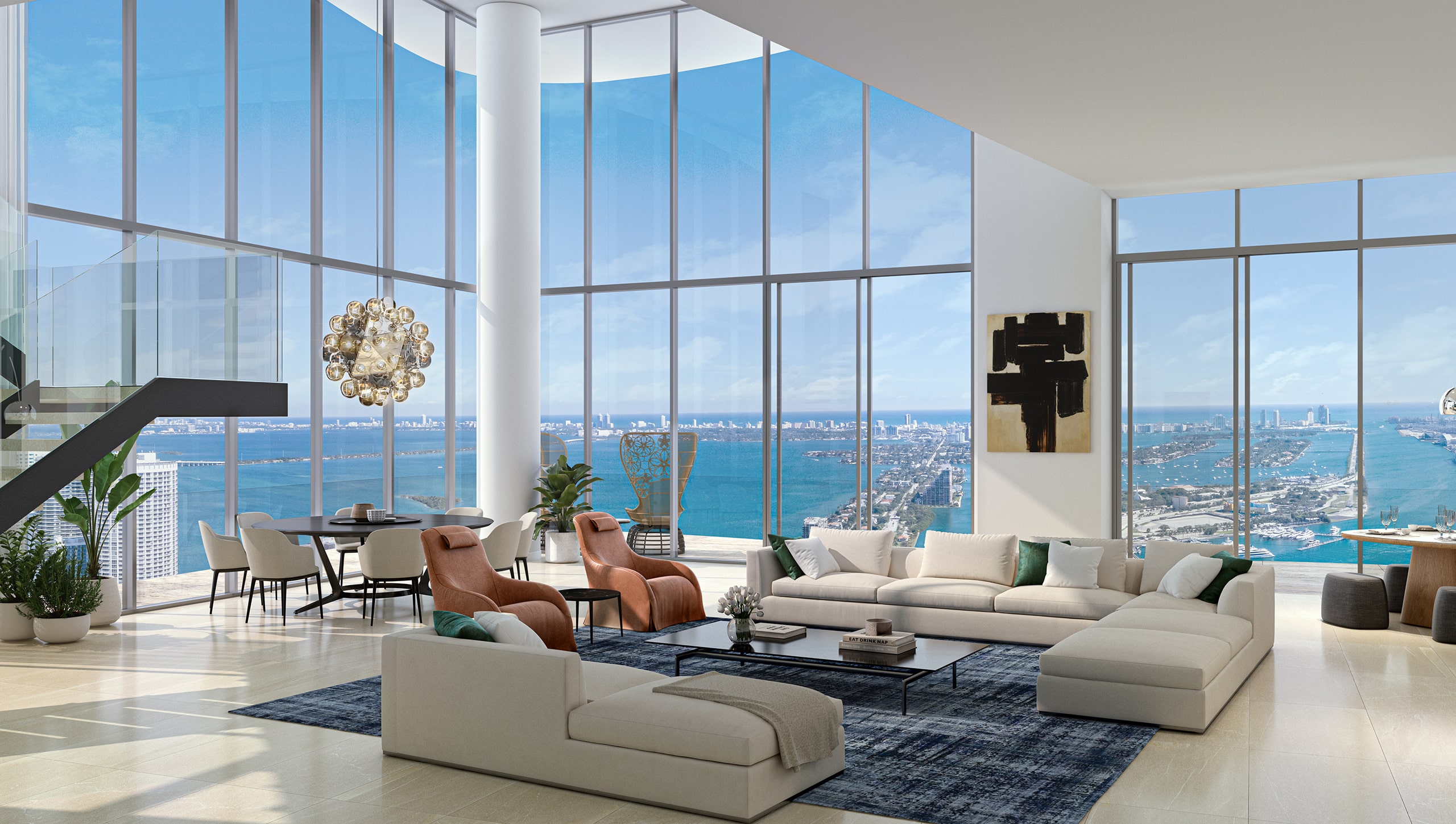
The $238 million sale of the penthouse at 220 Central Park South in New York City by billionaire hedge fund manager Ken Griffin stands as a watershed moment in global real estate. This transaction reshaped the luxury property market by setting a historic benchmark for residential sales in the United States, illustrating the extreme divergence between ultra-prime assets and the broader housing economy, and introducing new regulatory scrutiny into anonymous corporate real estate acquisitions.
The Anatomy of a Historic Transaction
When Ken Griffin, the founder of Citadel, purchased the multi-level penthouse overlooking Central Park in 2019 for approximately $238 million, the transaction instantly shattered previous American residential records. Situated within a limestone skyscraper designed by Robert A.M. Stern and developed by Vornado Realty Trust, the property offered roughly 24,000 square feet of interior space across multiple top floors, boasting unobstructed, panoramic views of Central Park and the Manhattan skyline.
The sale was not merely an isolated display of immense personal wealth; it represented the culmination of a decade-long boom in ultra-luxury development across Manhattan. Developers had bet heavily on the "Billionaires' Row" corridor along 57th Street, constructing ultra-tall, slender towers packed with amenities specifically tailored to the global ultra-high-net-worth individual (UHNWI) demographic.
To understand the mechanics of such a transaction, one must examine how ultra-prime real estate operates outside traditional market fundamentals:
- Off-Market Dynamics: Many of these mega-transactions bypass public listings entirely, negotiated quietly through elite brokerages and private wealth managers.
- Customization and Shell State: Properties at this price point are frequently delivered as "raw space," allowing buyers to spend tens of millions of dollars additionally on bespoke interior architecture and finishing.
- Complex Ownership Structures: Acquisitions are typically funneled through tiered limited liability companies (LLCs), trusts, or offshore entities to shield the buyer’s identity and manage global tax liabilities.
Economic and Market Implications for Ultra-Prime Real Estate
The $238 million price tag sent immediate ripples through the global luxury housing sector, acting as a psychological and financial anchor for property valuations. When a single transaction commands nearly a quarter of a billion dollars, it recalibrates how appraisers, developers, and wealth managers view the upper ceiling of residential asset classes.
The Decoupling of Ultra-Prime from Mainstream Housing
While median home prices across the United States face persistent affordability pressures driven by high mortgage rates and regional inventory shortages, the ultra-prime segment operates on a different economic plane. UHNWIs are frequently insulated from domestic interest rate hikes because their acquisitions rely heavily on cash reserves, equity financing, or specialized private bank lending rather than conventional retail mortgages.
Consequently, record-breaking sales like the 220 Central Park South penthouse demonstrate that global wealth concentration continues to generate localized asset bubbles that defy broader macroeconomic downturns. For global elites, trophy real estate functions similarly to fine art or gold—a tangible, scarce store of value designed to preserve capital across jurisdictions.
Shifts in Developer Strategy
Following the success of 220 Central Park South and similar supertall developments, real estate developers adjusted their blueprints. The emphasis shifted toward fewer, larger, and vastly more amenity-rich units. Buildings incorporated private restaurants managed by Michelin-starred chefs, private wellness spas, subterranean motor courts for discreet arrivals, and dedicated concierge services capable of handling private aviation and security details.
| Feature / Metric | Standard Luxury Condominium | Ultra-Prime Trophy Penthouse (e.g., 220 Central Park South) |
|---|---|---|
| Typical Price Range | $5 Million to $20 Million | $50 Million to $250+ Million |
| Square Footage | 2,000 to 5,000 sq. ft. | 10,000 to 24,000+ sq. ft. |
| Finishing State | Move-in ready with designer finishes | Delivered as "white box" or raw space for custom buildout |
| Primary Buyer Profile | Successful executives, local professionals | Global ultra-high-net-worth individuals, billionaires |
| Financing Structure | Jumbo mortgages or cash | All-cash, private banking wealth-management loans |
Regulatory Scrutiny and the Push for Transparency
A major implication of record-shattering transactions involving anonymous corporate entities is the subsequent regulatory backlash. Historically, the use of shell companies allowed buyers to purchase multi-million-dollar properties while keeping their names entirely off public registries.
Government Interventions
In response to concerns that luxury real estate was being utilized as a vehicle for capital flight or illicit wealth concealment, regulatory bodies began tightening reporting standards. The Financial Crimes Enforcement Network (FinCEN), a bureau of the U.S. Department of the Treasury, implemented Geographic Targeting Orders (GTOs) requiring title insurance companies to identify the natural persons behind shell companies purchasing residential real estate in major metropolitan areas like New York City in all-cash transactions.
Furthermore, federal transparency initiatives and local legislation, such as New York's Stop Wall Street Tax Loopholes or broader corporate transparency laws, have sought to unmask the beneficial owners of high-value properties. These rules aim to ensure tax compliance, track foreign investment accurately, and prevent money laundering within the domestic housing market.
Property Taxes and Carrying Costs
Owning a $238 million asset entails staggering ongoing expenses. Annual property taxes, building common charges, and maintenance fees can easily run into the millions of years. The transaction also highlighted the fiscal contributions these mega-penthouses make to local municipalities. Transfer taxes, mansion taxes, and recurring property assessments generate substantial revenue for city governments, though critics frequently debate whether these contributions offset the broader inflationary pressures such developments place on local housing markets.
Comparative Analysis: Global Trophy Markets
New York is not alone in hosting nine-figure residential transactions. The ripples of the 220 Central Park South sale can be contextualized within the broader global ecosystem of ultra-prime real estate, which includes cities like London, Hong Kong, Monaco, and Dubai.
- London (Knightsbridge and Mayfair): Historically prone to similar influxes of international capital, London's ultra-prime market has navigated distinct regulatory hurdles, including adventurous stamp duty land tax (SDLT) hikes and shifting geopolitical ties with foreign investors.
- Hong Kong (The Peak): Characterized by extreme geographical constraints, Hong Kong has routinely recorded staggering per-square-foot prices, often eclipsing Western markets due to intense localized demand and limited land supply.
- Dubai: In recent years, Dubai has emerged as a formidable competitor, attracting global billionaires with tax-free incentives, rapid infrastructure growth, and newly constructed beachfront mega-penthouses.
Despite these global alternatives, New York City retains a unique status as a primary safe-haven asset market, underpinned by the stability of the U.S. legal system, global liquidity, and the enduring cultural prestige of Manhattan.
Common Misconceptions About Mega-Penthouse Sales
Public fascination with sales like Ken Griffin's acquisition often generates widespread myths regarding how these transactions function and what they signify.
- Myth: These properties are primarily used as primary residences. In reality, ultra-prime penthouses are frequently pied-à-terre properties utilized for only a few weeks or months out of the year, serving as secondary or tertiary homes within a global portfolio.
- Myth: High-end sales directly inflate middle-class housing prices. While luxury developments alter neighborhood skylines and land valuations, the economic drivers of entry-level housing (such as zoning laws, construction labor costs, interest rates, and overall inventory deficits) are distinct from the macroeconomic forces governing billionaire assets.
- Myth: The listed price is always the final realized price. Ultra-prime real estate involves complex negotiations, often including trade-ins of other properties, assumption of specific liabilities, or customized closing terms that obscure the true net value of the deal.
Practical Considerations for Tracking Ultra-Prime Market Trends
For analysts, investors, and real estate professionals monitoring the trajectory of the luxury sector, observing transactions of this magnitude requires looking beyond the headline figures.
- Monitor Beneficial Ownership Filings: Keep track of evolving federal and state disclosure mandates to understand how transparency laws impact transaction volume in the upper tier.
- Analyze Inventory Absorption Rates: Evaluate the pipeline of upcoming supertall developments versus actual buyer absorption to gauge whether supply is outpacing global wealth migration trends.
- Assess Financing Shifts: Pay close attention to how private wealth divisions structure loans for ultra-prime buyers, as shifts in liquidity among global private banks directly influence high-end market velocity.
The $238 million penthouse sale remains a defining benchmark of an era defined by hyper-concentration of global capital. Its legacy extends far beyond a single transaction, permanently altering the architectural landscape of Manhattan, testing the boundaries of tax and regulatory policy, and setting a high-water mark for the economics of ultra-luxury real estate.
Frequently Asked Questions
Who bought the record-breaking $238 million penthouse?
The penthouse at 220 Central Park South was purchased by billionaire Ken Griffin, the founder and CEO of hedge fund Citadel, in a transaction finalized in 2019.
Why do ultra-prime penthouses cost so much?
These properties command astronomical prices due to a combination of extreme scarcity, prime geographic positioning (such as direct Central Park views), ultra-high-end architecture, customized sprawling layouts, and their function as global store-of-value assets for ultra-high-net-worth individuals.
How do all-cash luxury real estate purchases affect local markets?
All-cash purchases bypass traditional mortgage markets, meaning they are largely immune to interest rate fluctuations. However, they contribute significantly to local transfer and property tax revenues while frequently drawing increased regulatory scrutiny regarding beneficial ownership transparency.
Are properties like the 220 Central Park South penthouse subject to special taxes?
Yes. Transactions of this magnitude in New York are subject to substantial state and city transfer taxes, mansion taxes, and ongoing property assessments that generate millions in municipal revenue annually.
What impact did the sale have on subsequent luxury developments?
The record-breaking sale served as a psychological validation for developers building supertall luxury towers along Manhattan's Billionaires' Row, encouraging a continued focus on ultra-spacious floor plans, five-star building amenities, and bespoke architectural designs.