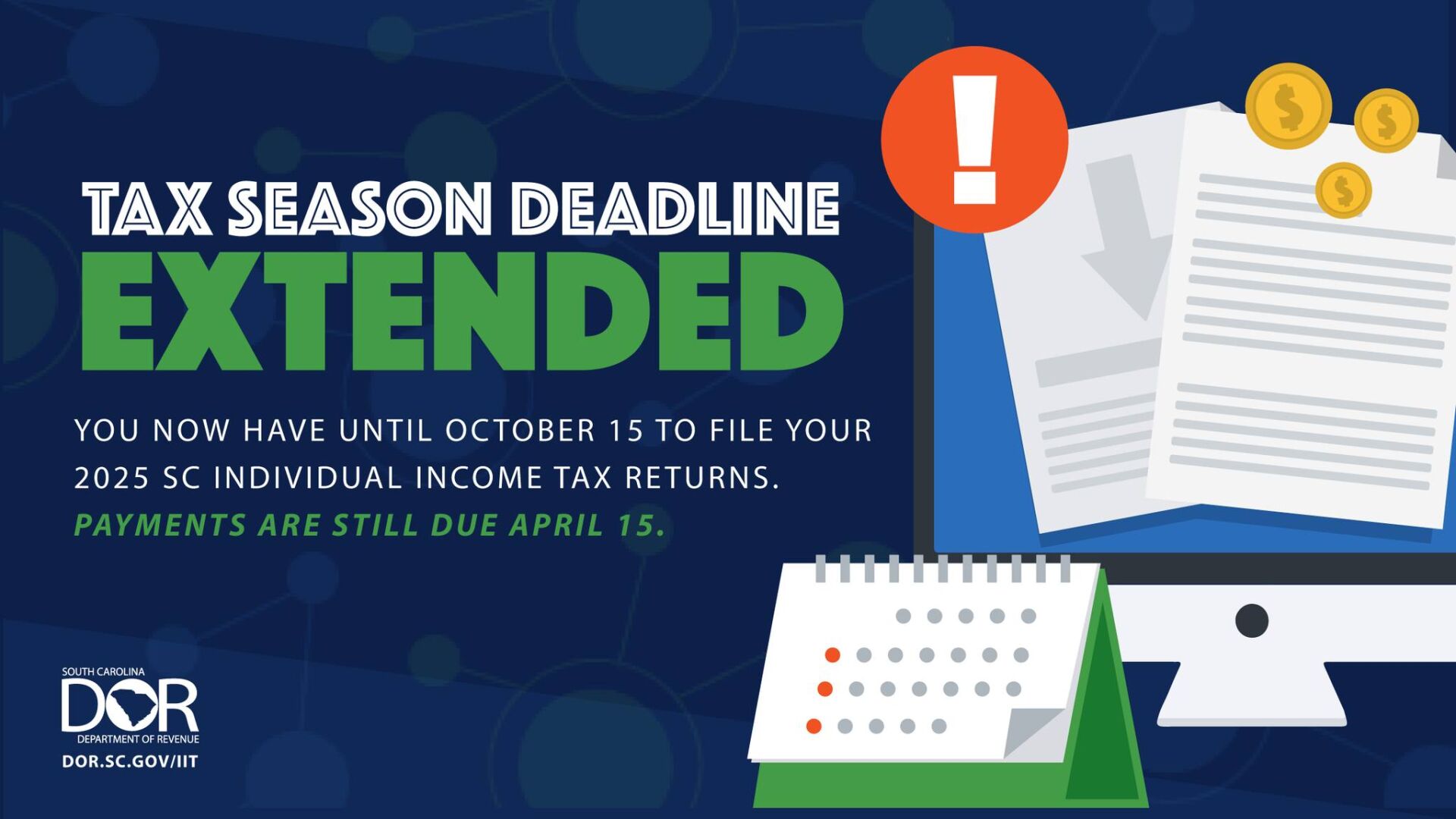
Corporate tax deadlines for the 2025 tax year depend on business entity structure, jurisdiction, and fiscal calendar. In the United States, calendar-year S-corporation returns (Form 1120-S) are due March 16, 2026, while C-corporations (Form 1120) must file by April 15, 2026. In the United Kingdom, HMRC requires tax payments nine months and one day following the accounting period end, with returns due within 12 months.
Understanding Corporate Tax Calendars: Fiscal vs. Calendar Year
Navigating corporate tax compliance requires distinguishing between a company's fiscal year and the standard calendar year. While many entities operate on a calendar year ending December 31, corporations frequently adopt fiscal years aligned with their operational cycles. Statutory filing and payment deadlines across major tax authorities—such as the Internal Revenue Service (IRS) in the United States and Her Majesty’s Revenue and Customs (HMRC) in the United Kingdom—are calculated directly from the official end date of the business's tax accounting period.
Tax authorities enforce strict compliance schedules, distinguishing clearly between return filing deadlines and tax payment deadlines. A common misstep among corporate officers is assuming that requesting a filing extension also delays the payment deadline. In nearly all jurisdictions, tax obligations must be paid by the original statutory due date to prevent interest accrual and non-compliance penalties.
Disclaimer: Tax laws, interest rates, and procedural compliance rules vary by jurisdiction and corporate entity structure. This guide provides technical overview information for business planning purposes. Corporations should consult a licensed Certified Public Accountant (CPA), Enrolled Agent, or qualified tax attorney regarding specific corporate tax liabilities.
US Corporate Tax Filing Timeline (2025 Tax Year Filed in 2026)
In the United States, corporate tax deadlines are governed by Subchapter C and Subchapter S of the Internal Revenue Code (IRC). The deadline structure depends on whether the business is organized as a C-corporation, an S-corporation, or an entity taxed as a partnership.
When a statutory tax deadline falls on a weekend or federal holiday, the IRS rules automatically move the due date to the next business day. Because March 15, 2026, falls on a Sunday, the statutory deadline for calendar-year S-corporations and partnerships shifts to Monday, March 16, 2026.
- March 16, 2026: Form 1120-S (S-Corps) & Form 1065 Due
- April 15, 2026: Form 1120 (C-Corps) Due & 2026 Q1 Estimated
- Sept 15, 2026: Form 1120-S Extended Filing Deadline
- Oct 15, 2026: Form 1120 Extended Filing Deadline
S-Corporation Deadlines (IRS Form 1120-S)
S-corporations are pass-through entities for federal income tax purposes. Although the entity itself generally does not pay federal income tax, it must file an information return (Form 1120-S) and issue Schedule K-1 forms to shareholders detailing their pro-rata share of income, deductions, credits, and losses.
- Original Filing Deadline: March 16, 2026 (for the tax year ending December 31, 2025).
- Extended Filing Deadline: September 15, 2026.
- Fiscal Year Entities: Returns are due on the 15th day of the 3rd month following the close of the fiscal year. An extension provides an additional six months from that initial date.
C-Corporation Deadlines (IRS Form 1120)
C-corporations are separate taxable legal entities subject to double taxation—at the corporate level on income and at the shareholder level on distributions.
- Original Filing Deadline: April 15, 2026 (for calendar-year entities ending December 31, 2025).
- Extended Filing Deadline: October 15, 2026.
- Fiscal Year Entities: For C-corporations operating on a fiscal year other than December 31, Form 1120 is generally due on the 15th day of the 4th month following the close of the fiscal year.
- Special Rule for June 30 Fiscal Year-End: C-corporations with a fiscal year ending June 30 maintain a statutory exception where the original return is due on the 15th day of the 3rd month (September 15), with an extended deadline of April 15 (a seven-month extension period).
UK Corporation Tax Timeline (HMRC Accounting Periods)
In the United Kingdom, corporate tax administration operates under a dual-deadline framework managed by HMRC. Unlike the US system, where tax returns and final payments generally align on the same calendar date, the UK enforces a statutory payment deadline that occurs before the final Company Tax Return (Form CT600) filing deadline for small and medium-sized enterprises (SMEs).
- Accounting Period Ends: Day 0
- Payment Deadline (SMEs): 9 Months + 1 Day Post Period-End
- CT600 Return Deadline: 12 Months Post Period-End
Small and Medium Enterprises (SMEs)
For companies with taxable profits under £1.5 million, the UK timeline is structured as follows:
- Corporation Tax Payment Deadline: Exactly 9 months and 1 day after the end of the accounting period. For an accounting period ending December 31, 2025, tax owed must be remitted to HMRC by October 1, 2026.
- CT600 Filing Deadline: Exactly 12 months after the end of the accounting period. For an accounting period ending December 31, 2025, the statutory return deadline is December 31, 2026.
Details regarding statutory payment schedules and submission requirements are documented on the official HMRC Corporation Tax guidance page on GOV.UK.
Large and Very Large Companies (Quarterly Installment Payments)
Corporations exceeding £1.5 million in taxable profits fall under the UK Quarterly Installment Payments (QIPs) regime. Under QIPs, payments are divided across four equal installments based on estimated annual liabilities:
- First Installment: 6 months and 13 days after the start of the accounting period.
- Second Installment: 3 months after the first installment.
- Third Installment: 3 months after the second installment.
- Fourth Installment: 3 months after the third installment (typically 14 days after the end of the accounting period).
Very large companies (taxable profits exceeding £20 million) operate under an accelerated schedule where all four installments are settled during the active accounting period itself.
Master Corporate Tax Timeline Comparison
The table below summarizes standard return and payment timelines across key business entity types and jurisdictions.
| Entity Type / Jurisdiction | Tax Accounting Period End | Original Payment Due Date | Original Tax Return Due Date | Extended Return Due Date |
|---|---|---|---|---|
| US C-Corporation (Calendar Year) | Dec 31, 2025 | April 15, 2026 | April 15, 2026 | October 15, 2026 |
| US S-Corporation (Calendar Year) | Dec 31, 2025 | N/A (Pass-Through)* | March 16, 2026 | September 15, 2026 |
| US Partnership / LLC (Calendar Year) | Dec 31, 2025 | N/A (Pass-Through)* | March 16, 2026 | September 15, 2026 |
| US C-Corp (Fiscal Year End June 30) | June 30, 2025 | Sept 15, 2025 | Sept 15, 2025 | April 15, 2026 |
| UK SME (< £1.5M profit) | Dec 31, 2025 | Oct 1, 2026 | Dec 31, 2026 | Not Applicable |
| UK Large Company (> £1.5M profit) | Dec 31, 2025 | Quarterly Installments | Dec 31, 2026 | Not Applicable |
| Canada Corporation (T2) | Dec 31, 2025 | Feb 28 / Mar 31, 2026** | June 30, 2026 | Not Applicable |
* Note: US pass-through entities may incur state-level Pass-Through Entity (PTE) elective taxes or entity-level withholding taxes due on standard filing dates. ** Note: Canadian CCPCs (Canadian-Controlled Private Corporations) generally receive a 3-month payment window post-year-end, compared to 2 months for general corporations.
How Corporate Tax Extensions Work (and What They Exclude)
In the United States, corporations requiring additional time to prepare financial accounting documentation can request an extension from the IRS. However, a common misunderstanding among corporate managers is what an extension actually accomplishes.
Understanding IRS Form 7004
To receive an automatic extension of time to file a federal corporate income tax return, entities must submit Form 7004 to the IRS on or before the original return due date.
- Extension Period: Form 7004 grants an automatic six-month extension for Form 1120 and Form 1120-S submissions.
- Extension to File vs. Extension to Pay: Form 7004 grants an extension of time to file the return only. It does not grant an extension of time to pay taxes owed.
- Mandatory Tax Estimation: When submitting Form 7004, the corporation must estimate its total tax liability for the tax year and remit any balance due by the original statutory deadline (e.g., April 15, 2026, for calendar-year C-corps). Failure to pay at least 90% of the ultimate tax liability by the original deadline triggers statutory interest and failure-to-pay penalties under IRC Section 6651.
Extension Policies in Other Jurisdictions
- United Kingdom (HMRC): HMRC does not offer an informal or automatic extension mechanism for CT600 returns. If a business files past the 12-month window, automatic penalties apply unless the company proves a formal "reasonable excuse" (such as unexpected catastrophic disruption, severe illness, or major system failure) directly to HMRC.
- State Level (US): State requirements vary. Many US states accept a federal Form 7004 extension automatically, but several states require separate state extension filings and separate prepayment of state corporate income or franchise tax.
Estimated Tax Payments & Quarterly Timelines
Corporations operating in continuous profit positions are required to make estimated tax payments throughout the tax year rather than remitting a single lump sum at year-end.
US Federal Quarterly Schedule for C-Corporations
For calendar-year C-corporations, estimated quarterly payments for the 2026 tax year follow the standard IRS schedule:
- Q1 Payment: Due April 15, 2026
- Q2 Payment: Due June 15, 2026
- Q3 Payment: Due September 15, 2026
- Q4 Payment: Due December 15, 2026
Under IRS safe harbor rules, a corporation must generally pay at least 100% of the tax shown on the return for the prior year or 100% of the tax determined for the current year through quarterly estimated payments to avoid underpayment penalties (Form 2220). Large corporations—defined by the IRS as having taxable income of $1 million or more in any of the three preceding tax years—can only use the prior-year tax liability safe harbor for their first quarterly installment.
- April 15, 2026: 1st Quarter Payment (Q1)
- June 15, 2026: 2nd Quarter Payment (Q2)
- Sept 15, 2026: 3rd Quarter Payment (Q3)
- Dec 15, 2026: 4th Quarter Payment (Q4)
State Franchise and Estimated Tax Rules
In addition to federal obligations, state corporate income tax schedules often mandate distinct filing timelines:
- California Franchise Tax Board (FTB): Requires estimated tax payments of 30% in Q1, 40% in Q2, 0% in Q3, and 30% in Q4.
- New York State Department of Taxation and Finance: Mandates an annual mandatory first installment (MFI) for large taxpayers alongside quarterly estimated declarations.
Penalties, Interest, and Non-Compliance Risks
Missing corporate tax filing or payment deadlines exposes a business to compounding financial liabilities.
- Failure to File: 5% per month of unpaid tax (up to 25%)
- Failure to Pay: 0.5% per month of unpaid tax (up to 25%)
- Interest Rate: Federal short-term rate + 3% (compounded)
IRS Penalty Structures
- Failure-to-File Penalty: Applied if Form 1120 or Form 1120-S is submitted late without a valid extension. The fee is 5% of the unpaid tax for each month or fraction of a month the return is late, capped at a maximum of 25%.
- Failure-to-Pay Penalty: Charged for failing to pay taxes owed by the original statutory due date. The penalty is 0.5% per month of the unpaid tax balance, up to a maximum of 25%. If both penalties apply in the same month, the 5% failure-to-file penalty is reduced by the 0.5% failure-to-pay penalty.
- Late Filing Penalty for S-Corporations: Because S-corporations often pass through income without entity-level tax liability, the IRS charges a fixed per-shareholder penalty for late Form 1120-S returns. The monthly penalty is multiplied by the total number of shareholders for each month the return is late.
- Statutory Interest: Under IRC Section 6621, interest accrues on unpaid tax balances from the original due date until full payment is made. The IRS sets interest rates quarterly based on the federal short-term rate plus 3 percentage points.
HMRC Penalty Structures (UK)
HMRC enforces strict automatic penalties for late filing of the CT600 return:
- 1 Day Late: Fixed penalty of £100.
- 3 Months Late: Additional fixed penalty of £100 (totaling £200).
- 6 Months Late: HMRC calculates an estimated tax liability and adds a penalty equal to 10% of the estimated unpaid tax.
- 12 Months Late: An additional 10% penalty on the unpaid tax is charged (totaling 20% in percentage-based penalties).
Step-by-Step Corporate Tax Preparation Checklist
To ensure operational compliance and protect against late penalties, corporate finance departments should follow a systematic milestone workflow leading up to tax deadlines.
- Step 1: Close Books & Draft Financial Statements
- Step 2: Reconcile Tax Adjustments (Depreciation, M-1, M-3)
- Step 3: Calculate Final Tax Liability & Audit Documentation
- Step 4: Submit Extension (Form 7004) & Remit Payment if Needed
- Step 5: Execute Electronic Return Filing & Schedule Retention
Step 1: Books Closing & Financial Statement Finalization
- Finalize the general ledger for the accounting year ending December 31, 2025.
- Perform balance sheet reconciliations, including cash accounts, accounts receivable, inventory valuations, and accounts payable.
- Generate finalized income statements and balance sheets under GAAP or IFRS standards.
Step 2: Calculate Book-to-Tax Adjustments
- Identify non-deductible expenses (e.g., entertainment, executive compensation limits, specific fines/penalties).
- Calculate tax depreciation versus accounting depreciation (e.g., MACRS bonus depreciation vs. straight-line financial depreciation).
- Complete Schedule M-1 or Schedule M-3 reconciliations for US Form 1120 filings to reconcile financial accounting income with taxable income.
Step 3: Determine Payment Obligations vs. Extension Needs
- Evaluate whether full tax documentation can be assembled before the primary filing date (March 16 for S-corps; April 15 for C-corps).
- If additional time is required, calculate estimated tax liabilities for the year.
- Ensure funds are transferred electronically via the Electronic Federal Tax Payment System (EFTPS) in the US or direct bank transfer to HMRC in the UK on or before the statutory due date.
Step 4: Submit Extension Forms
- Submit Form 7004 electronically to the IRS prior to midnight on the primary due date.
- Verify acceptance confirmation codes (e-file ACK messages) from the IRS tax portal.
- File state-specific extension forms where separate filings are mandated.
Step 5: Final Review & Electronic Submission
- Review all schedules (Schedule K-1 for S-corps; Schedule C, G, J, and M-3 for C-corps; CT600 for UK entities).
- Submit finalized returns electronically via authorized tax software.
- Retain filed returns, proof of payment, and e-file confirmations in the corporate records archive for a minimum of seven years.
Frequently Asked Questions
What happens if a corporate tax deadline falls on a weekend or public holiday?
In the US, under Internal Revenue Code Section 7503, when a legal deadline falls on a Saturday, Sunday, or legal holiday, the performance of the required act (filing or payment) is considered timely if completed on the next succeeding business day. For example, because March 15, 2026, falls on a Sunday, the statutory deadline for calendar-year S-corporations shifts to Monday, March 16, 2026.
Does filing Form 7004 extend the deadline to pay corporate taxes owed to the IRS?
No. Form 7004 provides an automatic six-month extension of time to file the corporate tax return (Form 1120 or 1120-S), but it does not extend the time to pay corporate tax obligations. Any estimated tax balance owed for the tax year must be paid in full by the original statutory due date (e.g., April 15, 2026) to avoid late-payment penalties and interest charges.
When is UK Corporation Tax due for a company whose financial year ends on December 31, 2025?
For a UK small or medium-sized company (SME) with an accounting period ending December 31, 2025, the Corporation Tax payment deadline is October 1, 2026 (9 months and 1 day post period-end). The CT600 Company Tax Return filing deadline is December 31, 2026 (12 months post period-end).
Can S-Corporations pay corporate-level income taxes?
Generally, federal income taxes pass through S-corporations to individual shareholders. However, S-corporations may owe direct corporate-level taxes under specific circumstances, such as Built-in Gains Tax (IRC Section 1374) or Excess Net Passive Income Tax (IRC Section 1375). Additionally, many US states enforce mandatory or elective pass-through entity (PTE) taxes assessed directly at the S-corporation entity level.
What are the quarterly estimated tax deadlines for calendar-year C-Corporations in 2026?
For the 2026 tax year, calendar-year C-corporations must pay quarterly estimated taxes according to the following schedule: Q1 on April 15, 2026; Q2 on June 15, 2026; Q3 on September 15, 2026; and Q4 on December 15, 2026.
Actionable Next Steps for Corporate Officers
- Verify Entity Classification and Fiscal Year End: Confirm whether your organization is classified as a C-corp, S-corp, partnership, or overseas limited company, and confirm your tax year-end date.
- Calendar Internal Reporting Deadlines: Set internal accounting close targets at least 30 days prior to legal tax deadlines to leave adequate time for tax adjustment reconciliations.
- Set Up Electronic Payment Channels: Register for official tax payment tools—such as EFTPS for US federal corporate taxes—well ahead of payment deadlines, as bank account authorizations can take several days to process.
- Evaluate Extension Requirements Early: If financial audits or year-end reconciliations remain incomplete two weeks before the primary tax date, calculate estimated tax liabilities and prepare Form 7004 filings immediately.