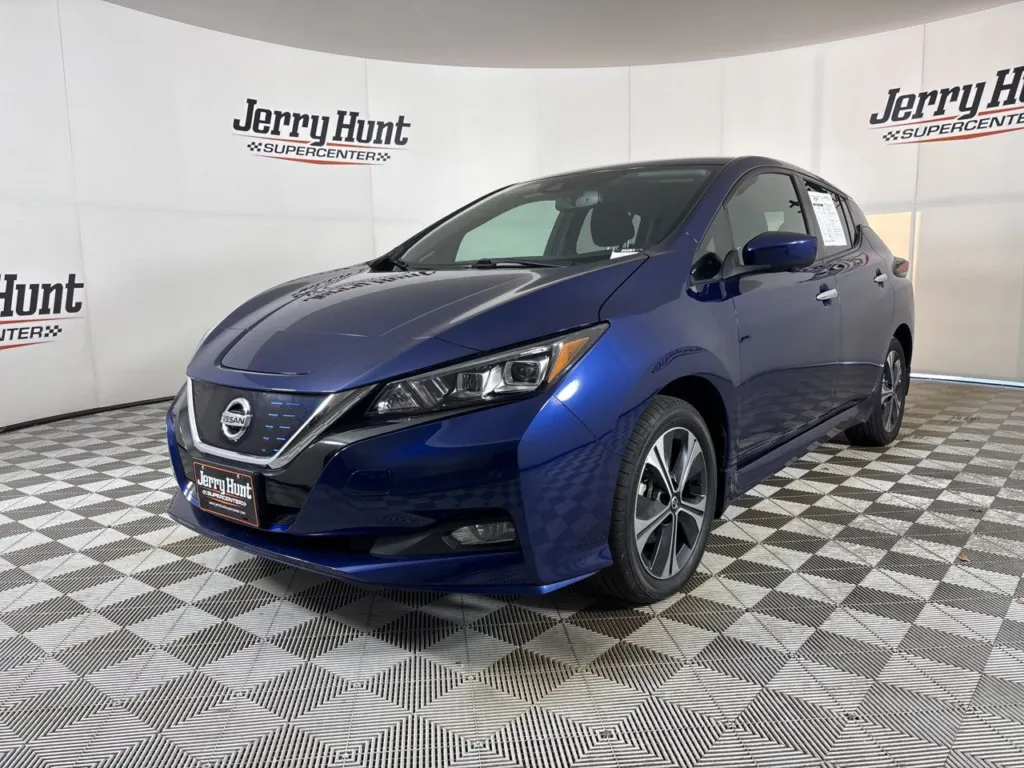
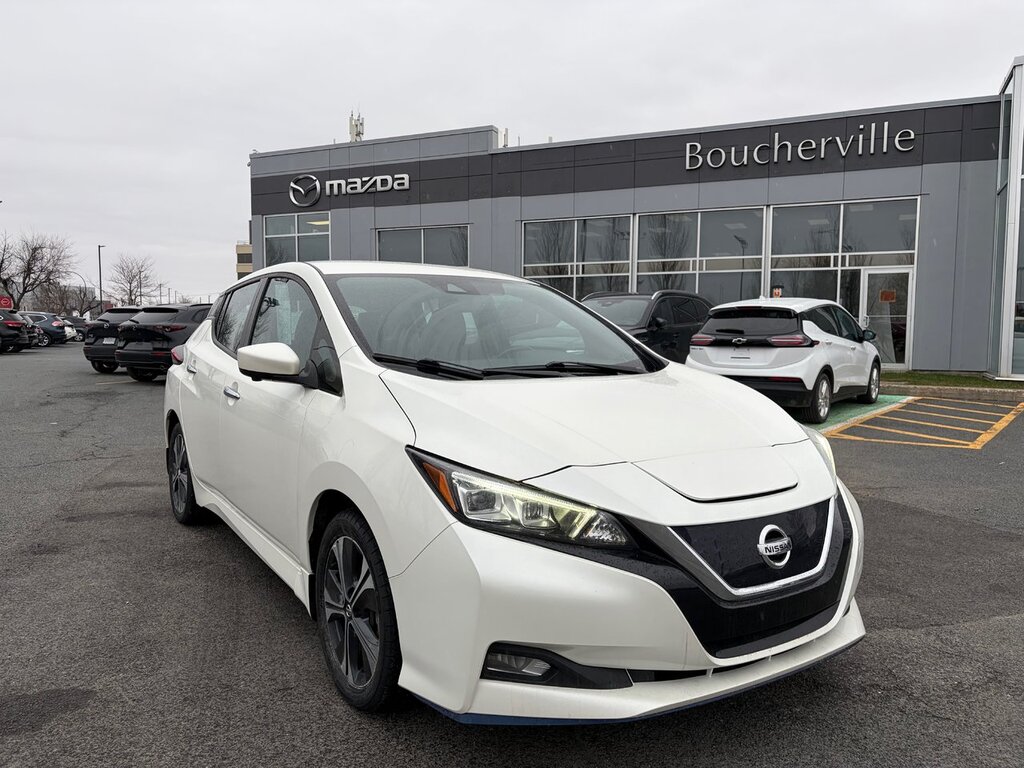
The 2022 Nissan Leaf SV Plus is a long-range battery electric vehicle (BEV) featuring a 62-kWh lithium-ion battery, providing an EPA-estimated range of 215 miles. Positioned as the mid-level long-range trim, it balances advanced driver-assistance technology, like ProPILOT Assist, with a more powerful 160-kW motor compared to the standard Leaf models.
The 2022 Nissan Leaf SV Plus represents a significant milestone in the evolution of the world's first mass-market electric vehicle. While the automotive landscape in 2026 has shifted toward newer platforms and different charging standards, the 2022 SV Plus remains a relevant and frequently sought-after option in the pre-owned market. It occupies a specific niche for drivers who require more than 200 miles of range but do not need the premium price tag or luxury features found in the SL Plus trim.
By 2022, Nissan had refined the second-generation Leaf to address the primary criticisms of the original model—namely, limited range and modest power. The "Plus" designation is the key differentiator, signifying the larger battery pack and a more robust powertrain that allows the vehicle to compete more effectively with contemporaries like the Chevrolet Bolt EV and the Hyundai Kona Electric.
The Technical Specifications of the "Plus" Powertrain
The heart of the 2022 Nissan Leaf SV Plus is its 62-kWh battery pack. This pack is physically larger and denser than the 40-kWh unit found in the base S and SV trims. To accommodate this larger battery, the vehicle’s ride height is slightly higher, and the suspension was specifically tuned to handle the additional weight while maintaining a comfortable ride quality.
The motor in the SV Plus is a high-output 160-kW AC synchronous motor. This translates to 214 horsepower and 250 lb-ft of torque. Unlike internal combustion engines that must build RPMs to reach peak torque, the Leaf’s electric motor provides maximum torque immediately from a standstill. This results in a 0-60 mph acceleration time of approximately 6.5 to 7.0 seconds, which is remarkably brisk for a practical five-door hatchback.
Passive Thermal Management
One of the most discussed technical aspects of the 2022 Leaf is its passive thermal management system. Unlike many of its competitors that use liquid-cooled battery systems, the Leaf relies on air cooling. While this design is simpler and reduces the mechanical complexity of the vehicle, it has implications for high-speed DC fast charging and performance in extreme climates. In 2026, buyers often look at the "State of Health" (SoH) of the battery, as repeated fast charging in hot weather can lead to faster degradation in air-cooled packs compared to liquid-cooled counterparts.
Range and Real-World Efficiency
The EPA-estimated range of 215 miles for the 2022 SV Plus is a "combined" figure. In practice, range is highly dependent on driving habits, topography, and ambient temperature. Electric vehicles are most efficient in city driving where regenerative braking can recoup energy.
Factors Affecting Range
- Temperature: Like all EVs, the Leaf SV Plus sees a reduction in range during cold winter months. This is due to the decreased efficiency of battery chemistry at low temperatures and the high energy demand of the cabin heater. The SV Plus comes standard with a heat pump, which is significantly more efficient than traditional resistive heaters, helping to preserve range in cold weather.
- Highway Speed: Aerodynamic drag increases significantly at speeds above 65 mph. Drivers maintaining 75 mph on the highway will likely see a real-world range closer to 170-180 miles rather than the 215-mile estimate.
- The e-Pedal System: The 2022 Leaf features Nissan’s "e-Pedal" technology. When engaged, this allows for one-pedal driving, where the car decelerates aggressively when the driver lifts off the accelerator, using the motor as a generator to feed power back into the battery. Proper use of the e-Pedal can maximize efficiency in stop-and-go traffic.
Charging Standards and Infrastructure in 2026
When evaluating the 2022 Nissan Leaf SV Plus from a 2026 perspective, the charging port configuration is a critical consideration. The Leaf utilizes two separate ports located under the front nose flap: a J1772 port for Level 1 and Level 2 AC charging, and a CHAdeMO port for DC fast charging.
Level 2 Home Charging
For most owners, the primary method of refueling is a Level 2 home charging station. The SV Plus features a 6.6-kW onboard charger. On a 240V circuit, a full charge from empty takes approximately 10 to 11 hours. Nissan included a portable charge cable with the 2022 SV Plus that can plug into either a standard 120V household outlet or a 240V NEMA 14-50 outlet, often eliminating the need for a separate wall-mounted charging station.
The CHAdeMO Challenge
The 2022 Leaf was one of the last major EVs in North America to persist with the CHAdeMO DC fast-charging standard. By 2026, the industry has largely consolidated around the North American Charging Standard (NACS) and CCS. While CHAdeMO stations are still operational at most major charging hubs (like Electrify America or EVgo), they are rarely the focus of new infrastructure expansion.
The SV Plus can accept DC fast charging at rates up to 100 kW, though it more commonly peaks around 50 kW to 75 kW depending on the station and the battery’s temperature. A 0% to 80% charge typically takes about 45 to 60 minutes.
Interior Design and Technology Suite
The SV Plus trim was designed to be the "sweet spot" for value, offering a suite of technology that feels modern without reaching the luxury price point of the SL trim.
Infotainment and Connectivity
The 2022 model comes with an 8-inch color touchscreen display as standard. It includes:
- Apple CarPlay and Android Auto: Wired integration for seamless smartphone mirroring.
- NissanConnect Services: Allows owners to remotely start the climate control or check battery levels via a smartphone app.
- Navigation: Integrated door-to-door navigation with SiriusXM Traffic and Travel Link.
ProPILOT Assist
A standout feature of the SV Plus is the inclusion of ProPILOT Assist. This is a hands-on driver-assist system that combines Nissan’s Intelligent Cruise Control with Steering Assist. It is designed for highway use, helping the vehicle stay centered in its lane and maintaining a set distance from the car ahead, even in stop-and-go traffic. While it is not an autonomous driving system, it significantly reduces driver fatigue during long commutes.
Cabin Comfort and Cargo
The interior of the SV Plus features cloth seating, which many drivers find more breathable than the leather found in the SL Plus. The front seats utilize Nissan’s "Zero Gravity" design, intended to reduce pressure points and improve comfort on long drives.
- Cargo Capacity: The Leaf offers 23.6 cubic feet of space behind the rear seats.
- Folding Seats: The 60/40 split-fold rear seats expand the capacity to 30 cubic feet, though the seats do not fold completely flat due to the battery placement under the floor.
Safety Ratings and Driver Assistance
Safety was a primary focus for the 2022 model year. The SV Plus includes the Nissan Safety Shield 360 suite as standard equipment. This includes several active safety technologies:
- Automatic Emergency Braking with Pedestrian Detection: Monitors the area in front of the car and can apply brakes if a collision is imminent.
- Rear Automatic Braking: Detects stationary objects behind the vehicle and applies brakes to avoid a low-speed backing collision.
- Blind Spot Warning and Rear Cross Traffic Alert: Essential for navigating highway lane changes and backing out of parking spaces.
- Lane Departure Warning and Intelligent Lane Intervention: Alerts the driver if the car drifts out of the lane and can apply slight braking to guide the vehicle back.
According to the Insurance Institute for Highway Safety (IIHS), the 2022 Leaf performed well in crashworthiness tests, though it often lacked the "Top Safety Pick" designation due to headlight performance on certain trims.
Comparison of 2022 Nissan Leaf Trims
| Feature | Leaf S (Standard) | Leaf SV Plus | Leaf SL Plus |
|---|---|---|---|
| Battery Size | 40 kWh | 62 kWh | 62 kWh |
| EPA Range | 149 Miles | 215 Miles | 215 Miles |
| Horsepower | 147 hp | 214 hp | 214 hp |
| ProPILOT Assist | Not Available | Standard | Standard |
| Seat Material | Cloth | Cloth | Leather-Appointed |
| Audio System | 4-Speaker | 6-Speaker | 7-Speaker Bose Premium |
| Wheel Size | 16-inch Steel | 17-inch Aluminum-alloy | 17-inch Aluminum-alloy |
Reliability and Maintenance in 2026
As the 2022 Nissan Leaf SV Plus moves into its fourth and fifth years of service, its reliability record has remained generally strong. Because electric vehicles have significantly fewer moving parts than internal combustion engines—no oil changes, spark plugs, timing belts, or transmissions—scheduled maintenance is minimal.
Routine Maintenance Tasks
Owners should focus on:
- Cabin Air Filter: Replacement every 15,000 to 20,000 miles.
- Tire Rotation: Electric motors produce high torque, which can lead to faster tire wear on the driven wheels.
- Brake Fluid: Exchange every 2 years or 20,000 miles.
- Coolant Systems: The inverter and motor use a coolant loop that requires inspection, though changes are infrequent.
Battery Warranty and Longevity
The most critical component is the battery. Nissan provides an 8-year/100,000-mile warranty against battery defects and a separate warranty against capacity loss (falling below 9 out of 12 bars on the capacity gauge). In 2026, most 2022 SV Plus vehicles are still well within this warranty period, providing peace of mind for used car buyers. To maximize battery life, it is recommended to keep the state of charge between 20% and 80% for daily use and avoid frequent DC fast charging in extremely high temperatures.
Common Questions About the 2022 Leaf SV Plus
Does the 2022 Nissan Leaf SV Plus have a heat pump?
Yes, the SV Plus trim comes standard with a hybrid heater system that includes a heat pump. This is a critical feature for those living in colder climates, as it uses significantly less battery power to heat the cabin than the resistive heaters found in the base S trim, thereby preserving more driving range in the winter.
Can I use Tesla Superchargers with a 2022 Leaf?
As of 2026, most Tesla Superchargers have transitioned to NACS. Because the Leaf uses CHAdeMO for DC fast charging, it cannot natively plug into a Tesla Supercharger. While some adapters exist for CCS-to-NACS, CHAdeMO-to-NACS adapters are technically complex and not widely supported for high-speed Supercharging. Leaf owners typically rely on the CHAdeMO plugs available at networks like EVgo and Electrify America.
How do I check the battery health of a used 2022 Leaf?
The Leaf is unique because it provides a battery capacity gauge directly on the digital instrument cluster. It is represented by small segments (bars) on the far right of the power meter. A new battery has 12 bars. Additionally, enthusiasts often use a third-party OBDII dongle and an app called "LeafSpy" to get a detailed readout of the battery’s State of Health (SoH) and cell voltage balance.
Is the SV Plus better than the 2022 Chevrolet Bolt EV?
The choice between the two often comes down to charging and seating. The Bolt EV offers a slightly longer range (259 miles) and uses the more common CCS charging standard. However, many drivers find the Leaf SV Plus to have a more comfortable ride and superior seat comfort. The Leaf also features the e-Pedal, which some prefer over the Bolt's "Regen on Demand" paddle.
Strategic Recommendation for Buyers
In 2026, the 2022 Nissan Leaf SV Plus is an excellent choice for a specific type of driver: the "predictable commuter." If you have the ability to charge at home and your daily round-trip is under 150 miles, this vehicle offers exceptional value. It provides a smooth, quiet, and surprisingly quick driving experience with enough range to handle most regional trips without anxiety.
However, for those who frequently embark on long-distance road trips exceeding 300 miles, the limitations of the CHAdeMO charging standard and the passive battery cooling may be a drawback compared to newer EV models with liquid-cooled batteries and CCS or NACS ports. For the used car market, the SV Plus remains the "goldilocks" trim of the Leaf lineup—offering the best balance of range, safety tech, and price.
Before purchasing, always verify the battery's state of health via the dashboard display and, if possible, a LeafSpy report. Ensuring the vehicle has at least 11 or 12 bars of capacity will guarantee that it continues to meet your range requirements for years to come.