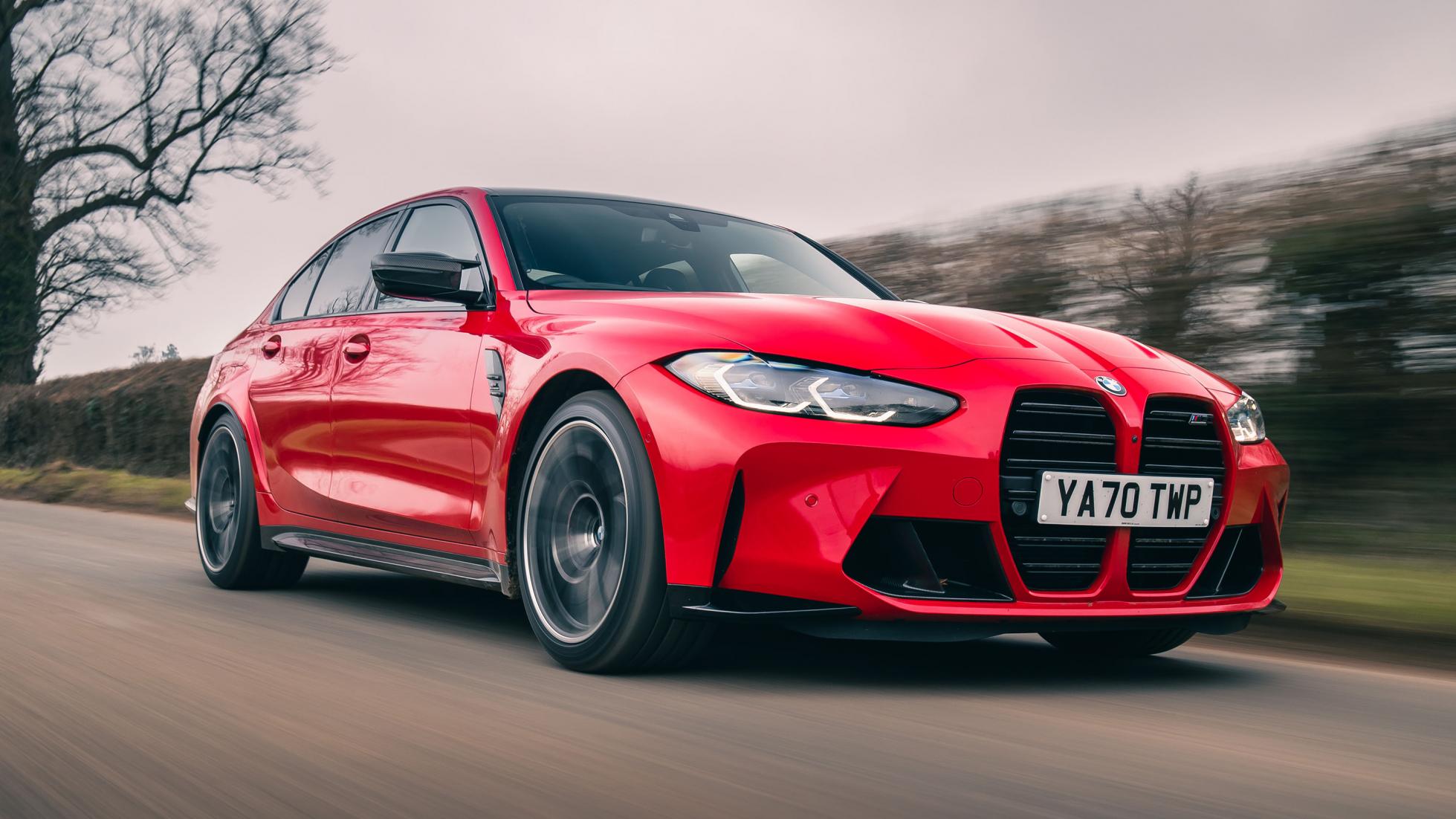
When the 2021 BMW M3 Competition horsepower revealed details emerged, automotive enthusiasts and performance car buyers learned that BMW's high-performance sedan would output 503 horsepower from its twin-turbocharged inline-six engine, marking a significant power leap over its predecessor while introducing a polarizing design language and an optional all-wheel-drive system.
The Genesis of the G80 Generation and the M3 Competition Designation
The introduction of the sixth-generation BMW M3, designated internally as the G80, represented a monumental shift in the trajectory of BMW M's flagship sports sedan. For years, automotive enthusiasts dissected every rumor regarding the powertrain, chassis dynamics, and aesthetic direction of the upcoming car. When BMW officially lifted the veil on the lineup, the automotive world focused heavily on the bifurcation of the model range into a standard M3 and the more potent M3 Competition variant.
Understanding the positioning of the Competition model requires looking at how BMW M structures its hierarchy. The standard M3 launched with a manual transmission and a lower power output, catering to purists who preferred a traditional three-pedal setup and rear-wheel drive. Conversely, the M3 Competition was engineered from the ground up to deliver uncompromising track capability, sharper throttle response, and maximum straight-line acceleration. By reserving the highest output figures for the Competition trim, BMW signaled a strategic shift toward automated performance metrics that could rival dedicated super-sedans from competing German manufacturers.
The anticipation surrounding the power figures reached a fever pitch because the previous F80 generation M3 had pushed the limits of its S55 engine. Transitioning to a completely new powerplant meant engineers had to balance stringent global emissions regulations with the insatiable demand for more power, better throttle response, and enhanced thermal efficiency under heavy track conditions. The resulting specifications established a new benchmark for the compact luxury performance segment.
Dissecting the Powertrain: The S58 Engine Anatomy
At the heart of the 2021 BMW M3 Competition is the S58 engine, a 3.0-liter twin-turbocharged inline-six cylinder powerplant that replaced the outgoing S58's spiritual predecessor, the S55. This engine is not merely a bored-out version of a standard consumer block; it is an extensively re-engineered masterpiece built specifically to withstand the rigors of high-boost operation and sustained track use.
The S58 utilizes a closed-deck crankcase design, which provides exceptional rigidity compared to open-deck blocks, allowing cylinder pressures to rise significantly without compromising structural integrity. Inside the block, a forged, lightweight crankshaft minimizes rotational mass, enabling the engine to rev freely toward its redline while reducing internal friction. The cylinder bores feature a wire-arc sprayed iron coating, replacing heavy traditional cylinder liners and optimizing heat transfer away from the combustion chambers.
Airflow management plays a pivotal role in achieving the high output figures of the M3 Competition. The engine breathes through a sophisticated dual-branch intake system with optimized routing that minimizes pressure losses before the air reaches the twin mono-scroll turbochargers. These turbochargers are engineered with indirect intercoolers supplied by a low-temperature coolant circuit, ensuring dense, oxygen-rich air enters the combustion chambers even during repeated hard accelerations in high ambient temperatures. Fuel is delivered via a high-precision direct injection system operating at pressures up to 350 bar, ensuring atomization that promotes clean combustion and rapid flame propagation.
| Engine Specification | Standard M3 | M3 Competition |
|---|---|---|
| Displacement | 3.0 Liters (2,993 cc) | 3.0 Liters (2,993 cc) |
| Configuration | Inline-6 (S58) | Inline-6 (S58) |
| Induction | Twin Mono-Scroll Turbochargers | Twin Mono-Scroll Turbochargers |
| Horsepower | 473 hp @ 6,250 rpm | 503 hp @ 6,250 rpm |
| Torque | 406 lb-ft @ 2,650–6,130 rpm | 479 lb-ft @ 2,750–5,500 rpm |
| Transmission | 6-Speed Manual | 8-Speed M Steptronic with Drivelogic |
Horsepower and Torque Delivery: Numbers in Context
When the horsepower figures were officially revealed, the 503 horsepower (375 kW) rating at 6,250 rpm placed the M3 Competition firmly at the head of its class. More critical than the peak horsepower figure, however, is the expansive torque plateau. The engine delivers 479 lb-ft (650 Nm) of torque across a broad band from 2,750 rpm to 5,500 rpm. This wide torque curve ensures that power delivery feels linear and relentless, eliminating the sudden drop-offs or turbo lag traditionally associated with high-output forced-induction engines.
Comparing these figures to the outgoing F80 M3 Competition package illustrates the magnitude of the engineering upgrade. The older model produced 444 horsepower and 406 lb-ft of torque. The G80 M3 Competition added nearly 60 horsepower and 73 lb-ft of torque, translating to dramatically improved real-world performance. In independent testing, the rear-wheel-drive M3 Competition routinely achieved zero to 60 mph sprints in approximately 3.8 seconds, outperforming manufacturer estimates and rival sports sedans.
The transmission paired with this powerhouse is an 8-speed M Steptronic automatic transmission with Drivelogic, supplied by ZF. Unlike the dual-clutch transmission (DCT) used in the F80 generation, this torque-converter automatic was chosen for its ability to handle the massive torque output of the S58 engine while offering smoother low-speed operation in daily driving conditions. Drivers can adjust the shift aggression through multiple Drivelogic settings, ranging from comfortable, seamless gear changes for highway commuting to lightning-fast, violent shifts suited for track days.
Transmission, Drivetrain, and the M xDrive Revolution
One of the most consequential announcements surrounding the 2021 BMW M3 Competition was the subsequent introduction of the M xDrive all-wheel-drive system, which arrived shortly after the initial rear-wheel-drive launch. Historically, the M3 badge was synonymous exclusively with rear-wheel drive, a tradition that fostered a distinct driving dynamic characterized by progressive oversteer and demanding car control.
The M xDrive system in the M3 Competition is an electronically controlled, rear-biased setup that utilizes an electronically controlled multi-plate clutch in the transfer case to distribute torque between the front and rear axles dynamically. It is integrated directly with the Dynamic Stability Control (DSC) system and the central powertrain controller, allowing the car to anticipate traction losses before they occur.
To satisfy purists who desired traditional handling characteristics alongside all-wheel-drive traction, BMW engineered three distinct driver-selectable modes:
- 4WD Default Mode: Provides maximum traction and neutral handling, utilizing front-axle engagement only when the rear tires approach their grip limits.
- 4WD Sport Mode: Directs a greater proportion of torque to the rear wheels, allowing for controlled slip angles and a more agile feel on winding roads or damp tracks.
- 2WD Mode: Completely decouples the front axle, turning the vehicle into a pure rear-wheel-drive machine. This mode requires disabling DSC entirely, offering uncompromised driver engagement and the ability to execute controlled power slides.
Chassis Dynamics, Suspension, and Braking Performance
Power is meaningless without the structural rigidity and suspension engineering required to manage it. The G80 chassis features extensive aluminum bracing throughout the engine bay, front subframe, and rear axle carrier, significantly increasing torsional rigidity compared to the standard 3 Series upon which it is based. This stiff foundation allows the adaptive M suspension—standard equipment on the Competition model—to control wheel movement with exceptional precision without riding excessively harshly.
The front axle utilizes a double-joint spring strut setup with aluminum control arms, while the rear features a five-link design. Standard electronically controlled dampers continuously adjust to road conditions and driving modes, providing distinct separation between Comfort, Sport, and Sport Plus settings. Steering weight and ratio are handled by a variable-ratio Electric Power Steering system that communicates road texture effectively while filtering out undesirable kickback.
Stopping power matches the engine's capability. The standard braking system features six-piston fixed calipers with 380 mm ventilated discs at the front and single-piston floating calipers with 370 mm discs at the rear. For enthusiasts planning frequent track days, BMW offered an optional M Carbon Ceramic brake system featuring gold-painted calipers and larger 400 mm front discs. These ceramic brakes offer superior fade resistance under extreme thermal loads and reduce unsprung weight by a significant margin, directly improving handling agility and suspension response.
Styling, Ergonomics, and Interior Technology
Beyond the mechanical specifications, the 2021 BMW M3 Competition generated intense discussion due to its polarizing exterior design. The most prominent feature is the large, vertical kidney grille design, a styling departure from previous generations that drew strong opinions from the automotive community. Flanked by aggressive air intakes, sculpted hood lines, and standard LED headlights (with optional BMW Laserlight technology), the front fascia commands an unmistakable road presence.
Aerodynamic enhancements extend across the entire body. The flared wheel arches accommodate a wider track than the standard 3 Series, housing staggered forged M light-alloy wheels measuring 19 inches up front and 20 inches in the rear. A carbon-fiber-reinforced plastic (CFRP) roof lowers the vehicle's center of gravity, while aerodynamic side mirrors, a subtle rear spoiler, and a quad-exhaust outlet integrated into a pronounced rear diffuser complete the aggressive aesthetic.
Inside, the cabin bridges the gap between luxury touring and motorsport utility. Standard features include Merino leather upholstery, an M-specific leather-wrapped steering wheel with red M1 and M2 preset buttons, and ambient lighting. Buyers could opt for lightweight M Carbon bucket seats, which feature exposed carbon fiber structural elements, integrated harness pass-throughs, and significant weight savings over the standard seats, though their aggressive bolstering requires careful consideration for daily driving comfort.
The technology suite centers around BMW's iDrive 7 operating system, displayed via a 12.3-inch digital instrument cluster and a 10.25-inch central touchscreen. The system supports wireless Apple CarPlay and Android Auto, gesture control, and an extensive heads-up display configured specifically for M-specific performance data, including a shift light indicator and a G-meter.
Frequently Asked Questions
What is the exact horsepower of the 2021 BMW M3 Competition?
The 2021 BMW M3 Competition produces an official output of 503 horsepower (375 kW) at 6,250 rpm from its 3.0-liter twin-turbocharged inline-six engine.
How does the M3 Competition differ in power from the standard 2021 M3?
The standard 2021 BMW M3 outputs 473 horsepower and 406 lb-ft of torque, paired exclusively with a six-speed manual transmission and rear-wheel drive. The M3 Competition bumps output to 503 horsepower and 479 lb-ft of torque, utilizing an eight-speed automatic transmission.
Is the 2021 BMW M3 Competition available with all-wheel drive?
Yes, the M3 Competition was introduced with rear-wheel drive, and an M xDrive all-wheel-drive variant became available shortly after launch, featuring driver-selectable modes including a pure rear-wheel-drive setting.
What is the 0-60 mph acceleration time for the M3 Competition?
In independent testing and manufacturer specifications, the rear-wheel-drive M3 Competition achieves 0-60 mph in approximately 3.8 seconds, while the M3 Competition with M xDrive accomplishes the same sprint in about 3.4 seconds.
What kind of engine does the 2021 M3 Competition use?
It uses the S58 engine, a 3.0-liter twin-turbocharged inline-six cylinder powerplant featuring a closed-deck block, forged crankshaft, and direct fuel injection operating at up to 350 bar.
Next Actions for Prospective Buyers
For enthusiasts evaluating a pre-owned 2021 BMW M3 Competition, verifying the vehicle's service history, modification status, and brake wear is essential. Prioritize models with documented maintenance records, particularly regarding oil change intervals and brake pad thickness, as these vehicles are frequently subjected to rigorous driving conditions. Inspect the chassis and underbody for scrape marks, verify tire health across the staggered setup, and ensure all software recalls have been completed by an authorized service center before finalizing a purchase.