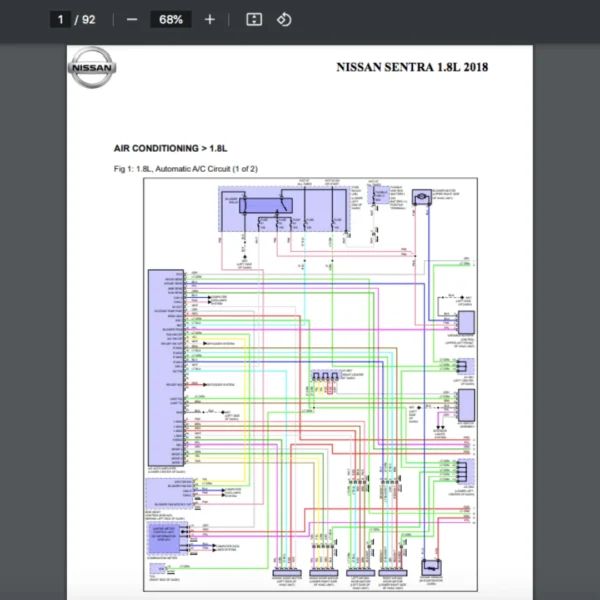
The 2018 Nissan Sentra owner’s manual serves as the definitive reference guide for vehicle operation, routine maintenance schedules, safety protocols, and technical specifications. Whether you are troubleshooting an indicator light, understanding the electronic features of the infotainment system, or identifying the correct fluid types, the manual provides the manufacturer-authorized instructions necessary to maintain the vehicle’s long-term performance and safety.
The Scope and Purpose of the 2018 Nissan Sentra Manual
For owners of the 2018 Nissan Sentra, the factory-issued owner’s manual is more than just a supplementary booklet; it is an essential tool for vehicle stewardship. Nissan publishes this document to ensure that drivers understand the integration of mechanical components and electronic systems. Because the 2018 model represents a mature stage in the B17 generation, the manual reflects specific configurations for various trim levels, ranging from the base S model to the performance-oriented SR Turbo and NISMO variants.
The manual is divided into distinct sections, typically starting with “Safety—Seats, seat belts and supplemental restraint system,” and moving through “Instruments and controls,” “Pre-driving checks and adjustments,” and “Monitor, climate, audio, phone and voice recognition systems.” Navigating these sections allows owners to transition from basic operational tasks, such as adjusting side mirrors or programming the remote keyless entry, to more complex functions like managing the NissanConnect infotainment system or understanding the parameters of the Xtronic CVT (Continuously Variable Transmission).
Locating and Accessing the Documentation
In 2026, finding a physical copy of an owner’s manual for a vehicle produced years prior can be challenging if it was lost by a previous owner. However, Nissan provides digital access to these records through its official Owner Portal. Accessing the digital version of the 2018 Nissan Sentra manual is often more efficient than utilizing a paper copy, as digital files allow for keyword searching, which is invaluable when searching for obscure fuse box diagrams or specific warning light definitions.
To retrieve the official documentation:
- Visit the official Nissan USA Owners website.
- Select the "Manuals and Guides" section.
- Input the vehicle’s Year (2018), Make (Nissan), and Model (Sentra).
- Download the PDF version for your specific trim.
It is highly recommended to keep a digital copy stored on a mobile device or cloud service. This ensures that if you are stranded or performing maintenance at a remote location, you have immediate access to technical specifications such as tire pressure ratings, oil capacities, and jump-starting procedures.
Key Technical Specifications and Operational Data
A significant portion of the manual is dedicated to technical data that owners often overlook until a problem arises. Understanding these specifications is critical for preventing mechanical failure. For example, the 2018 Nissan Sentra utilizes different engine configurations, and using the incorrect oil viscosity or coolant type can lead to long-term engine wear.
The manual outlines the exact requirements for the 1.8-liter 4-cylinder engine standard in most trims, as well as the 1.6-liter Direct Injection Gasoline (DIG) turbocharged engine found in the SR Turbo and NISMO. The documentation explicitly states the required fluid standards, including:
- Engine Oil: SAE 0W-20 is the standard for most 1.8L engines, but always check the specific oil filler cap and the manual’s “Technical and consumer information” section to confirm.
- Transmission Fluid: The Xtronic CVT requires specific Genuine Nissan CVT Fluid NS-3. Using a non-specified fluid is a leading cause of transmission failure in this generation of Sentra.
- Brake Fluid: DOT 3 is the specified standard for the hydraulic braking system.
Understanding Maintenance Intervals
The "Maintenance and schedules" section is perhaps the most important part of the manual for preserving the vehicle’s resale value and mechanical integrity. The 2018 Sentra is designed with specific service intervals that must be followed. While many owners rely on automated reminders in the vehicle's dashboard, the manual provides the master schedule that covers extreme driving conditions—such as heavy traffic, mountainous terrain, or dusty environments—which require more frequent service than standard conditions.
Comparative Overview of Maintenance Tasks
| Component | Inspection/Replacement Task | Typical Interval (Standard) |
|---|---|---|
| Engine Oil | Change | Every 5,000–7,500 miles |
| Engine Air Filter | Replace | Every 15,000–30,000 miles |
| CVT Fluid | Inspect/Replace | Inspect every 30k; Replace as needed |
| Brake Pads | Inspect | Every 10,000 miles |
| Cabin Air Filter | Replace | Every 15,000 miles |
| Battery | Inspect | Every 5,000 miles |
Note: These intervals are generalized guidelines. Always refer to the specific “Maintenance and schedules” section of your 2018 Sentra manual, as individual driving habits and environmental factors dictate deviations from the standard schedule.
Safety Features and Warning Lights
The 2018 Nissan Sentra is equipped with various passive and active safety systems, including the supplemental restraint system (SRS), anti-lock braking system (ABS), and vehicle dynamic control (VDC). The manual provides the definitive guide to interpreting the dashboard warning lights associated with these systems.
When a warning light illuminates, owners should consult the “Instruments and controls” section immediately. A solid light often indicates a need for inspection at the next scheduled maintenance, while a flashing light or a red warning indicator usually signifies an urgent issue that requires the vehicle to be pulled over safely and the engine turned off. Never ignore a flashing check engine light, as this often points to a severe misfire that can cause damage to the catalytic converter.
Troubleshooting and FAQ
The manual includes a troubleshooting section designed to help owners resolve minor issues without needing a tow truck or a professional technician. Below are common questions often addressed by the manual’s diagnostic charts.
How do I reset the TPMS light after inflating my tires? After adjusting the tire pressure to the manufacturer’s recommended PSI (found on the driver’s side door jamb placard, not the tire sidewall), the Tire Pressure Monitoring System (TPMS) will typically reset automatically after the vehicle has been driven for several miles at speeds above 15 mph.
Why is my key fob not working even after replacing the battery? The manual outlines a re-initialization process. If the fob remains unresponsive after a battery swap, ensure the battery is seated correctly and that the CR2032 battery type was used. If it still fails, the fob may need to be reprogrammed at an authorized service center.
What does the "CVT Error" warning mean? This indicates an issue with the transmission control module or the CVT hardware. Because the CVT is a complex piece of engineering, the manual advises immediate professional inspection, as continued operation can lead to catastrophic internal component failure.
Can I change my own spark plugs? The manual provides the torque specifications and the necessary gap settings for the spark plugs. While DIY replacement is possible for those with mechanical experience, the 1.6L turbocharged engine requires removing several components, making it a more involved process than on the standard 1.8L engine.
What is the "Valet" mode mentioned in the audio settings? This security feature locks the glove box (if equipped with a locking mechanism) and restricts access to private information stored in the navigation and infotainment system when handing the vehicle over to a valet attendant.
Practical Steps for Effective Utilization
To make the most of your 2018 Nissan Sentra manual, treat it as a living document. Many owners find it helpful to keep a maintenance log in the back of the manual (or a digital equivalent). Record dates, mileage, and parts used for every oil change, tire rotation, and major repair. This documentation is crucial for warranty verification and significantly increases the vehicle's value when it comes time to sell or trade in the car in 2026 or beyond.
Additionally, pay close attention to the "In case of emergency" chapter. This section covers procedures for jump-starting the vehicle, changing a flat tire using the provided jack and tools, and what to do if the vehicle becomes stuck in mud or snow. Familiarizing yourself with these steps in a safe, controlled environment prevents panic if a genuine emergency occurs on the roadside.
Final Recommendations
The 2018 Nissan Sentra is a reliable vehicle when operated and maintained according to the factory manual. If you have misplaced your original booklet, download the digital version from the Nissan Owner Portal immediately and store it on your phone. If you encounter a situation that the manual does not clarify, or if a warning light persists despite your efforts to troubleshoot, consult a certified Nissan technician. Using the manual not only ensures your safety but also protects the longevity of your investment by preventing minor oversights from becoming major mechanical issues.