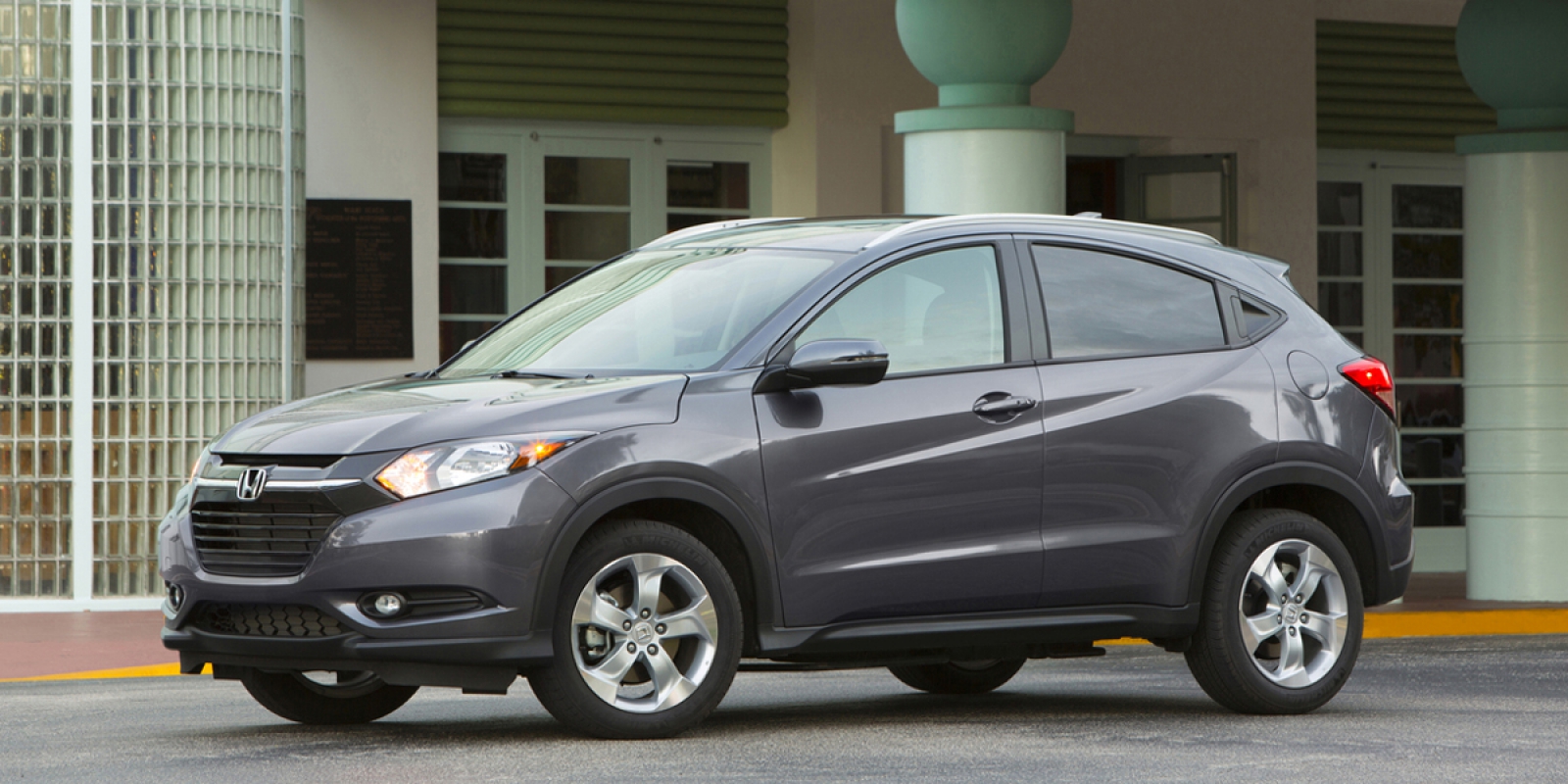
The 2018 Honda HR-V achieves an EPA-estimated fuel economy ranging from 28 to 34 mpg depending on the drivetrain configuration, with front-wheel-drive CVT models delivering up to 28 mpg city, 34 mpg highway, and 30 mpg combined. Real-world efficiency varies based on driving habits, vehicle maintenance, and whether the model is equipped with front-wheel drive (FWD) or all-wheel drive (AWD), as well as a continuously variable transmission (CVT) or a 6-speed manual transmission.
Evaluating the fuel economy of a pre-owned subcompact crossover requires looking past the window sticker and understanding how powertrain configurations, real-world driving conditions, and vehicle maintenance intersect. Released during the second generation of Honda’s global subcompact SUV lineup, the 2018 Honda HR-V carved out a prominent niche by blending the cargo-carrying versatility of the brand's proprietary "Magic Seat" system with the footprint and efficiency of a subcompact hatchback. For prospective buyers, current owners, and automotive enthusiasts, dissecting the official ratings, mechanical variables, and operational nuances of the 2018 HR-V provides a clear roadmap for maximizing fuel efficiency and understanding long-term ownership costs.
EPA Fuel Economy Ratings by Powertrain Configuration
To understand the 2018 Honda HR-V fuel economy, one must first examine how the Environmental Protection Agency (EPA) rated the vehicle across its various trim levels and mechanical layouts. Under the skin, every 2018 HR-V utilizes a 1.8-liter, 16-valve SOHC i-VTEC four-cylinder engine producing 141 horsepower and 127 lb-ft of torque. However, how that power is transferred to the pavement dictates the vehicle's miles-per-gallon (mpg) metrics.
Honda paired the 1.8-liter engine with two distinct transmissions for the 2018 model year: a responsive 6-speed manual transmission and a Continuously Variable Transmission (CVT) with "G-Design Shift" logic. The availability of these transmissions varied by trim level (LX, EX, and EX-L Navi) and drivetrain choice (FWD versus Real Time AWD with Intelligent Control System).
Front-Wheel Drive (FWD) Models
Front-wheel-drive configurations consistently yield the highest fuel economy figures for the 2018 HR-V.
- CVT Automatic: Models equipped with the FWD layout and the CVT achieve an EPA-estimated 28 mpg in the city, 34 mpg on the highway, and 30 mpg combined. This configuration represents the benchmark for maximum efficiency within the lineup, making it a favorite for daily commuters and urban dwellers.
- 6-Speed Manual: Interestingly, the 6-speed manual transmission—available exclusively on the entry-level LX and mid-tier EX trims with FWD—drops slightly in efficiency compared to the CVT. It returns an EPA-estimated 27 mpg city, 33 mpg highway, and 29 mpg combined. While manual enthusiasts appreciated the direct mechanical engagement, the taller gear ratios and lack of infinite gear variation in the CVT resulted in a minor penalty at the fuel pump.
All-Wheel Drive (AWD) Models
Honda’s Real Time AWD system enhances traction in adverse weather conditions by automatically engaging the rear wheels via a multi-plate clutch system when front-wheel slip is detected. This mechanical capability adds weight and parasitic drivetrain drag, which impacts fuel economy.
- CVT with AWD: All-wheel-drive models are paired exclusively with the CVT. The EPA rates these configurations at 27 mpg city, 31 mpg highway, and 29 mpg combined for the LX trim, while the heavier EX and EX-L trims slip slightly to 27 mpg city, 31 mpg highway, and 28 mpg combined due to minor weight differences from added creature comforts and standard equipment.
| Trim Level & Drivetrain | Transmission | EPA City MPG | EPA Highway MPG | EPA Combined MPG | Fuel Tank Capacity |
|---|---|---|---|---|---|
| LX / EX / EX-L FWD | CVT | 28 | 34 | 30 | 13.2 Gallons |
| LX / EX FWD | 6-Speed Manual | 27 | 33 | 29 | 13.2 Gallons |
| LX AWD | CVT | 27 | 31 | 29 | 14.1 Gallons |
| EX / EX-L AWD | CVT | 27 | 31 | 28 | 14.1 Gallons |
Mechanics of HR-V Efficiency: The 1.8-Liter i-VTEC Engine
The core driver of the 2018 Honda HR-V fuel economy is its naturally aspirated 1.8-liter powerplant. Sharing architectural DNA with engines found in past Civic models, this engine utilizes Honda’s Intelligent Variable Valve Timing and Lift Electronic Control (i-VTEC) system.
Unlike performance-oriented VTEC systems designed to maximize top-end horsepower, the iteration in the HR-V prioritizes low-to-mid-range torque delivery and thermal efficiency. By optimizing valve overlap and intake duration, the engine breathes efficiently under partial throttle loads common in city driving and highway cruising.
Furthermore, the integration of Eco Assist™ technology standard across all trims plays a psychological and mechanical role in conserving fuel. When the driver presses the green "ECON" button on the dashboard, the vehicle alters throttle response, dampens air conditioning compressor operation, and modifies transmission shift mapping to encourage conservative driving behavior. An instrument cluster visual indicator shifts colors from blue (inefficient acceleration) to green (efficient operation), giving real-time feedback to the driver.
Real-World Fuel Economy vs. EPA Estimates
While laboratory-derived EPA figures provide a standardized baseline for comparing vehicles, real-world fuel economy for the 2018 Honda HR-V often fluctuates based on operating environments, topography, and driving style.
Real-world tracking data compiled from thousands of independent owner logs and automotive testing organizations indicates that the FWD CVT model frequently achieves close to or slightly above its rated 30 mpg combined figure during mixed highway and suburban commuting. Conversely, AWD models driven extensively in heavy stop-and-go urban traffic or mountainous terrain may see real-world averages dip into the 25–26 mpg range.
Several operational factors account for these variances:
- Aerodynamics and Speed: Subcompact crossovers feature a taller, boxier profile than traditional sedans. At highway speeds exceeding 65 mph, aerodynamic drag increases exponentially, diminishing the fuel economy gains normally achieved during steady highway cruising.
- Climate Control Load: Operating the air conditioning compressor heavily in hot summer months places an auxiliary load on the 1.8-liter engine, resulting in a noticeable 1 to 2 mpg drop in real-world city efficiency.
- Cargo and Passenger Weight: The HR-V is renowned for its interior packaging and cargo capacity. However, carrying heavy cargo loads or multiple adult passengers adds significant weight to a 2,900-to-3,100-pound vehicle, requiring more throttle input to accelerate from a standstill.
Comparing the 2018 HR-V to Competitors
When evaluating the subcompact SUV segment of the late 2010s, the 2018 Honda HR-V positioned itself competitively against primary rivals such as the Toyota C-HR, Subaru Crosstrek, and Jeep Renegade.
Compared to the front-wheel-drive-only Toyota C-HR, which managed 27 mpg city / 31 mpg highway (29 mpg combined), the HR-V held a distinct highway advantage with its 34 mpg rating in FWD form. Against the standard all-wheel-drive Subaru Crosstrek of the same model year—which achieved roughly 27 mpg city / 33 mpg highway (29 mpg combined) with its CVT—the HR-V offered competitive parity while providing superior interior cargo flexibility through its second-row Magic Seat configuration. Vehicles with rugged, boxier profiles like the Jeep Renegade lagged significantly behind, often hovering in the low-to-mid 20s for combined fuel economy.
Factors That Degrade HR-V Fuel Economy Over Time
As a pre-owned vehicle, a 2018 Honda HR-V may exhibit lower fuel economy than its original sticker estimates if routine maintenance has been neglected. Understanding mechanical wear points helps owners troubleshoot sudden drops in efficiency.
1. Spark Plug Degradation and Ignition Coils
The 1.8-liter engine relies on precise spark timing to achieve complete combustion. Worn spark plugs with widened gaps lead to incomplete fuel burns, forcing the engine control unit (ECU) to inject more fuel to maintain power output. Replacing spark plugs at recommended service intervals restores optimal thermal efficiency.
2. Air Filter and Mass Air Flow (MAF) Sensor Contamination
A clogged engine air filter restricts airflow, forcing the engine to work harder to draw air into the cylinders (pumping losses). Similarly, a contaminated MAF sensor sends inaccurate air-mass data to the computer, skewing the air-fuel ratio toward a rich mixture.
3. CVT Fluid Maintenance
The Continuously Variable Transmission relies on specialized fluid to maintain friction between the steel belt and variable-diameter pulleys. Neglecting fluid changes can lead to micro-slippage, reducing mechanical efficiency and ultimately threatening transmission longevity.
4. Tire Pressure and Alignment
Underinflated tires increase rolling resistance. A drop of just a few psi below the manufacturer's recommended placard pressure forces the engine to overcome higher resistance, directly degrading fuel economy. Improper wheel alignment creates similar parasitic drag.
Best Practices for Maximizing HR-V Efficiency
Drivers looking to squeeze every possible mile out of a gallon of gasoline in a 2018 Honda HR-V can adopt several operational and maintenance strategies:
- Leverage Eco Mode for Commuting: Utilize the ECON button during city driving and highway congestion to smooth out abrupt throttle inputs.
- Maintain Correct Tire Pressures: Check cold tire pressures monthly, adhering strictly to the door-jamb sticker specifications (typically 32 to 35 psi depending on load and tire size).
- Minimize Excessive Idling: Modern fuel-injected engines consume very little fuel during startup compared to older carbureted designs, making engine shut-off during extended stationary periods beneficial for fuel conservation.
- Adhere to Periodic Maintenance Schedules: Keep up with engine oil changes using the correct 0W-20 low-viscosity synthetic oil specified by Honda, clean air filters, and regular fuel system inspections.
Frequently Asked Questions
What fuel grade does the 2018 Honda HR-V require?
The 2018 Honda HR-V is engineered to run on regular unleaded gasoline with an octane rating of 87 or higher. Using premium fuel (91 octane or higher) provides no mechanical benefit, performance increase, or fuel economy improvement for this naturally aspirated engine.
Does the 2018 Honda HR-V have a turbocharger?
No. The 2018 HR-V utilizes a naturally aspirated 1.8-liter four-cylinder engine. It does not feature a turbocharger, meaning power delivery is linear, and fuel economy relies entirely on efficient mechanical design and transmission ratios rather than forced induction.
How big is the fuel tank on the 2018 Honda HR-V?
The fuel tank capacity varies slightly by drivetrain. Front-wheel-drive (FWD) models feature a 13.2-gallon fuel tank, while all-wheel-drive (AWD) models are equipped with a slightly larger 14.1-gallon tank to accommodate the rear differential packaging.
Why do AWD models get lower fuel economy than FWD models?
All-wheel-drive models incorporate additional mechanical hardware, including a power take-off unit, a propeller shaft, a rear differential, and a multi-plate clutch system. This hardware adds roughly 150 to 200 pounds of dead weight and creates constant mechanical drag, reducing overall efficiency.
Can I disable the Eco Assist feature permanently?
Yes. The ECON mode is entirely optional and can be toggled on or off via the dashboard button at the driver's discretion. Disabling it returns throttle sensitivity and air conditioning output to standard calibration without causing any mechanical faults.
Conclusion
The 2018 Honda HR-V balances subcompact crossover utility with practical fuel efficiency, making it a sound choice for cost-conscious motorists. Whether opting for the highly efficient front-wheel-drive CVT configuration rated at 30 mpg combined or the weather-capable all-wheel-drive variant, understanding mechanical requirements and maintenance baselines ensures optimal real-world performance. By prioritizing timely scheduled maintenance, proper tire inflation, and efficient driving habits, owners can consistently achieve or exceed factory fuel economy estimates throughout the vehicle's operational lifespan.