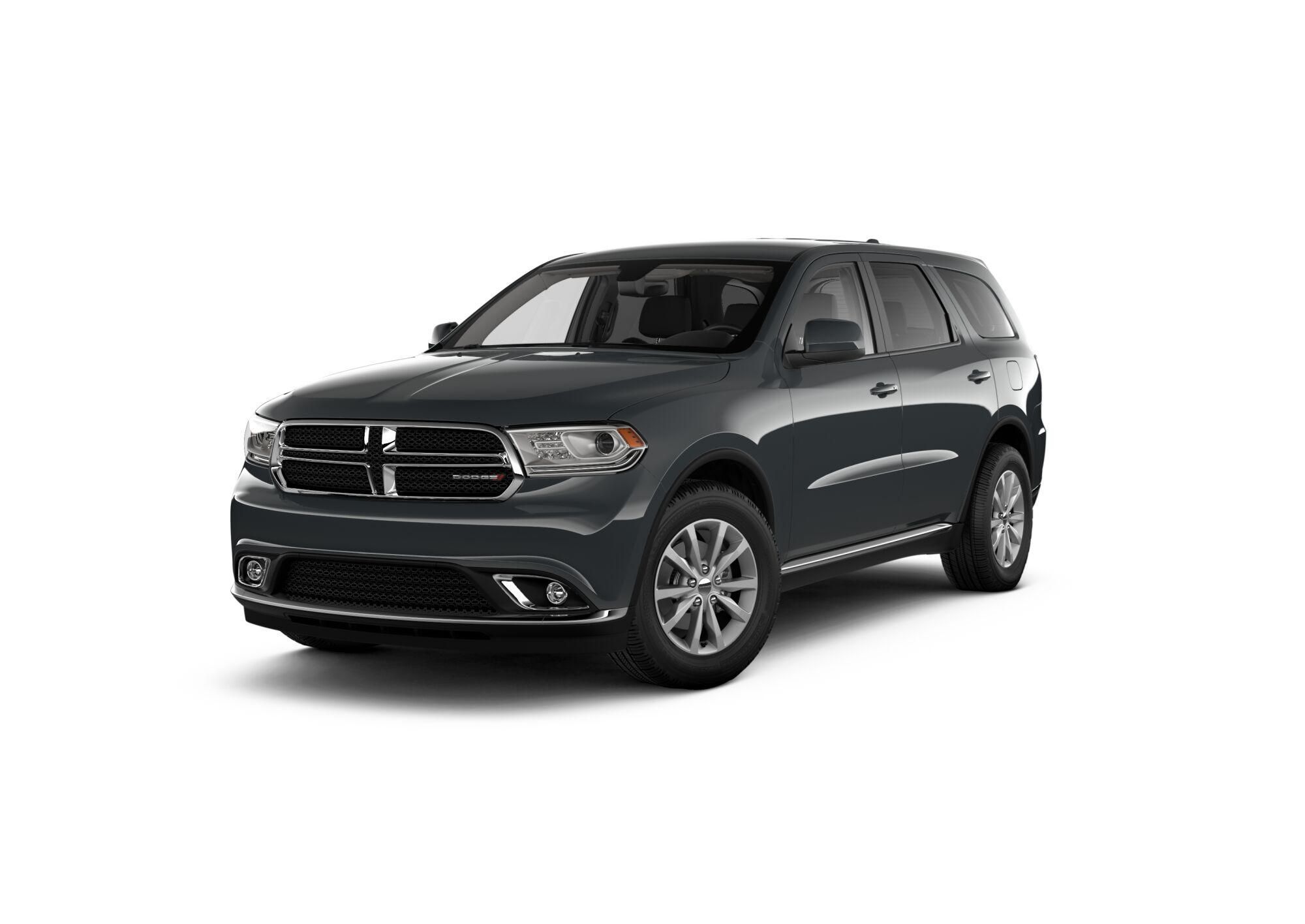
The 2017 Dodge Durango R/T produces 360 horsepower at 5,150 RPM and 390 lb-ft of torque at 4,250 RPM. Powered by a naturally aspirated 5.7-liter HEMI V8 engine paired with an eight-speed automatic transmission, this output enables the three-row midsize SUV to accelerate from 0 to 60 mph in approximately 6.2 seconds while offering a maximum towing capacity of 7,400 pounds.
Technical Specifications of the 5.7L HEMI V8 Engine
The heart of the 2017 Dodge Durango R/T is the naturally aspirated 5.7-liter (345 cubic-inch) HEMI V8 engine. Built on a cast-iron cylinder block with aluminum alloy cylinder heads, this engine utilizes a classic pushrod, two-valve-per-cylinder overhead valve (OHV) design enhanced by modern automotive electronics.
5.7L HEMI V8 Architecture:
- Displacement: 5,654 cc (345 cu in)
- Bore x Stroke: 3.92 in x 3.58 in (99.5 mm x 90.9 mm)
- Compression Ratio: 10.5:1
- Valvetrain: Overhead Valve (OHV), 16 valves, Variable Valve Timing (VVT)
- Fuel Delivery: Sequential multi-port electronic fuel injection
Horsepower and Torque Curve Characteristics
The engine generates its peak 360 horsepower relatively high in the rev range at 5,150 RPM, while the peak torque of 390 lb-ft arrives at 4,250 RPM. However, peak numbers tell only part of the story. The 5.7L HEMI delivers over 80 percent of its peak torque between 2,000 RPM and 5,000 RPM. This flat, accessible torque curve provides prompt throttle response from a dead stop and linear acceleration when passing at highway speeds, even when hauling a full load of passengers or towing heavy cargo.
Cylinder Deactivation (Fuel Saver Technology)
To improve operational efficiency, Dodge equipped the 5.7L V8 with a Multi-Displacement System (MDS). Under light throttle load—such as steady highway cruising—the engine control module (ECM) seamlessly deactivates four of the eight cylinders by collapsing the hydraulic lifters on those cylinders and cutting fuel flow. This transitions the engine into a V4 configuration, reducing pumping losses and fuel consumption. When the driver presses the accelerator, MDS reactivates the four disabled cylinders in milliseconds without noticeable hesitation.
Variable Valve Timing (VVT)
The engine incorporates dual-independent Variable Valve Timing. By continuously adjusting the camshaft position relative to the crankshaft, VVT optimizes valve timing for low-end torque during off-the-line acceleration and high-RPM power delivery during heavy throttle requests. This dynamic timing adjustment also reduces exhaust emissions and smooths idle quality.
Transmission and Drivetrain Dynamics
The 2017 Durango R/T relies on the ZF-sourced TorqueFlite 8HP70 eight-speed automatic transmission. This electronically controlled transmission plays a central role in converting the engine's 360 horsepower into efficient real-world movement.
TorqueFlite 8HP70 Gear Ratios:
- 1st Gear: 4.71:1 (Aggressive low-end acceleration)
- 2nd Gear: 3.14:1
- 3rd Gear: 2.10:1
- 4th Gear: 1.67:1
- 5th Gear: 1.29:1 (Direct power transfer)
- 6th Gear: 1.00:1
- 7th Gear: 0.84:1 (Overdrive)
- 8th Gear: 0.67:1 (Highway overdrive for fuel economy)
The short first-gear ratio (4.71:1) allows the heavy vehicle—weighing between 5,100 and 5,300 pounds depending on options—to launch off the line aggressively. The double-overdrive top gears (7th and 8th) lower engine RPM during highway driving, keeping the V8 operating in its most economical range and reducing cabin noise.
Rear-Wheel Drive (RWD) vs. All-Wheel Drive (AWD)
The 2017 Durango R/T came standard with Rear-Wheel Drive (RWD) and offered an optional heavy-duty All-Wheel Drive (AWD) system.
- RWD Configuration: Provides a classic performance feel with dynamic weight transfer to the rear tires during hard launches. RWD models weigh slightly less and experience lower drivetrain friction, yielding marginally faster throttle response on dry pavement.
- AWD Configuration: Utilizes a single-speed transfer case that automatically distributes torque between the front and rear axles based on traction conditions. While adding approximately 200 pounds to the vehicle's curb weight, the AWD system eliminates wheelspin under hard acceleration on wet or slippery surfaces, allowing all 360 horsepower to translate cleanly to the road.
Straight-Line Acceleration and Performance Metrics
When launched properly, the 2017 Dodge Durango R/T delivers competitive acceleration numbers for a non-boosted, three-row midsize SUV:
- 0–60 mph Acceleration: 6.2 to 6.4 seconds (depending on drivetrain and wheel traction).
- Quarter-Mile Time: Approximately 14.7 seconds at 93–95 mph.
- Top Speed: Electronically limited to approximately 120 mph.
The combination of the fast-shifting 8HP70 transmission and the 5.7L V8's mid-range torque allows the Durango R/T to achieve strong mid-gear passing power. Accelerating from 50 to 70 mph takes roughly 4.2 seconds, making high-speed highway passes and short entrance-ramp merges predictable and controlled.
Towing Capabilities and Chassis Tuning
Beyond straight-line performance, the 360-horsepower output directly contributes to the Durango R/T’s towing capabilities. When equipped with the optional Trailer Tow Group IV, the 2017 Durango R/T achieves a maximum towing capacity that rivals many traditional body-on-frame SUVs.
2017 Durango R/T Towing Setup:
- Maximum Towing Capacity: 7,400 lbs (RWD and AWD)
- Maximum Payload Capacity: 1,280 to 1,330 lbs
- Hitch Standard: Class IV Receiver Hitch
- Cooling System: Heavy-duty engine cooling radiator and auxiliary oil cooler
- Suspension: Rear load-leveling shocks with lowered sport-tuned springs
Suspension and Steering Setup
Unlike lower Durango trims fitted with comfort-oriented suspensions, the R/T features a factory-tuned sport suspension. Ride height is lowered by 20 millimeters (0.8 inches), reducing the center of gravity to limit body roll in corners. Firm spring rates and stiffer anti-roll bars improve cornering stability. The electric power-assist rack-and-pinion steering provides heavier, more direct feedback than standard trims, giving the driver precise control when managing 360 horsepower on winding roads.
2017 Durango Trim Comparison
To understand where the R/T sits within the 2017 Dodge Durango lineup, consider how its 5.7L V8 engine compares against the standard 3.6L Pentastar V6 used in lower trims.
| Trim Level | Engine Type | Displacement | Horsepower | Torque (lb-ft) | Max Towing (lbs) | Standard Drivetrain |
|---|---|---|---|---|---|---|
| SXT | Pentastar V6 | 3.6 Liters | 293 hp @ 6,400 RPM | 260 lb-ft @ 4,000 RPM | 6,200 lbs | RWD |
| GT | Pentastar V6 | 3.6 Liters | 295 hp @ 6,400 RPM | 260 lb-ft @ 4,000 RPM | 6,200 lbs | RWD |
| Citadel (V6) | Pentastar V6 | 3.6 Liters | 295 hp @ 6,400 RPM | 260 lb-ft @ 4,000 RPM | 6,200 lbs | RWD |
| Citadel (V8) | HEMI V8 | 5.7 Liters | 360 hp @ 5,150 RPM | 390 lb-ft @ 4,250 RPM | 7,400 lbs | RWD |
| R/T | HEMI V8 | 5.7 Liters | 360 hp @ 5,150 RPM | 390 lb-ft @ 4,250 RPM | 7,400 lbs | RWD |
(Note: The high-output Durango SRT featuring the 6.4L 392 HEMI V8 producing 475 hp was introduced for the 2018 model year and was not available in 2017.)
Real-World Fuel Economy
While the 5.7L HEMI V8 provides muscular performance, its larger displacement and elevated output reflect in its official energy consumption metrics. The U.S. Environmental Protection Agency (EPA) ratings for the 2017 Dodge Durango R/T are as follows:
- RWD Fuel Economy: 14 MPG City / 22 MPG Highway / 17 MPG Combined
- AWD Fuel Economy: 14 MPG City / 22 MPG Highway / 17 MPG Combined
- Recommended Fuel Grade: 89 Octane Mid-Grade (87 Octane Regular Unleaded is acceptable, but 89 octane is recommended for peak engine efficiency and rated horsepower output).
- Fuel Tank Capacity: 24.6 U.S. gallons (93.1 liters)
In real-world driving, aggressive use of the throttle or frequent urban stop-and-go driving can lower city fuel economy to 12–13 MPG. Conversely, long highway trips with the engine running in cylinder-deactivation (V4) mode can yield around 21 to 23 MPG under steady cruising conditions.
Modifying the 5.7L HEMI: Safely Increasing Horsepower
Owners seeking more performance out of their 2017 Durango R/T often turn to the aftermarket. The 5.7L HEMI platform responds well to basic bolt-on modifications and tuning:
1. Cold Air Intake (CAI)
- Expected Gain: 5 to 10 horsepower
- Mechanics: Replacing the stock, restrictive airbox with a high-flow cold air intake allows cooler, denser air to reach the throttle body. This improves throttle response and adds a deeper intake growl under wide-open throttle.
2. Cat-Back Exhaust Systems
- Expected Gain: 7 to 15 horsepower
- Mechanics: The factory exhaust system on the R/T is tuned for a moderate V8 rumble while keeping interior drone minimal. Installing a performance mandrel-bent cat-back exhaust reduces backpressure, allowing the V8 to exhale more freely at high RPM.
3. Engine Control Unit (ECU) Tuning
- Expected Gain: 15 to 25 horsepower / 20 to 30 lb-ft torque
- Mechanics: An aftermarket ECU tune optimizes ignition timing, fuel-air ratios, and throttle response curves. Note that 2017 Dodge vehicles feature locked PCMs (Power Control Modules). To apply a custom tune, owners must either purchase an unlocked PCM swap or send their original module to a tuning company for unlocking before flashing new parameters.
4. Long-Tube Headers and Camshaft Upgrades
- Expected Gain: 40 to 70+ horsepower
- Mechanics: Upgrades like an upgraded performance camshaft (often called a "cam swap") paired with long-tube exhaust headers significantly alter the engine’s volumetric efficiency. However, cam swaps usually require upgraded valve springs, pushrods, and custom dyno tuning to prevent valve float and engine knock.
Maintenance Considerations for the 5.7L HEMI V8
To preserve the 2017 Durango R/T’s 360 horsepower over long ownership cycles, pay close attention to several documented mechanical area items specific to the 5.7L HEMI engine:
- Exhaust Manifold Bolts: The rear exhaust manifold bolts on 5.7L HEMI engines are prone to snapping over time due to repeated thermal expansion and contraction cycles. A ticking sound during cold starts that diminishes as the engine warms up usually indicates a leaking exhaust manifold gasket caused by broken bolts.
- Valvetrain and Lifter Wear ("HEMI Tick"): Extended idling can restrict oil flow to the top end of the engine, leading to premature needle-bearing failure inside the roller lifters. Over time, a failing lifter can score the camshaft lobe, resulting in a persistent metallic ticking sound, engine misfires, and loss of power. Using high-quality synthetic oil and avoiding prolonged idling reduces this risk.
- Water Pump Wear: The engine's water pump shaft bearing can wear out around 70,000 to 100,000 miles, leading to coolant leaks or play in the cooling fan pulley. Regular inspection of the serpentine belt area prevents sudden overheating.
- Spark Plug Maintenance: The 5.7L HEMI engine utilizes sixteen spark plugs (two per cylinder). For the 2017 model year, Dodge specifies iridium-tipped spark plugs with a replacement interval of 100,000 miles.
Frequently Asked Questions
What engine comes in the 2017 Dodge Durango R/T?
The 2017 Dodge Durango R/T comes standard with a 5.7-liter naturally aspirated HEMI V8 engine. It features overhead valves, 16 valves total, variable valve timing (VVT), and cylinder deactivation (Multi-Displacement System).
Is the 2017 Durango R/T horsepower enough for heavy towing?
Yes. With 360 horsepower and 390 lb-ft of torque, the Durango R/T can tow up to 7,400 pounds when equipped with the factory Trailer Tow Group IV package. The high torque output ensures stable highway merging and strong hill-climbing capability while towing heavy trailers.
What is the 0-60 time for a 2017 Durango R/T?
The 2017 Durango R/T accelerates from 0 to 60 mph in approximately 6.2 to 6.4 seconds. Performance can vary slightly based on wheel drive configuration (RWD vs. AWD), ambient temperature, tire condition, and fuel quality.
Does the 2017 Durango R/T require premium gas?
Dodge recommends 89 octane mid-grade fuel for optimal performance and efficiency in the 5.7L HEMI V8. However, the engine's control system can adjust ignition timing to run safely on 87 octane regular unleaded fuel without causing engine damage, though power output may drop slightly.
What is the difference in horsepower between the 2017 Durango GT and R/T?
The 2017 Durango GT uses a 3.6-liter Pentastar V6 engine producing 295 horsepower, while the R/T features the 5.7-liter HEMI V8 producing 360 horsepower. The R/T provides an additional 65 horsepower and 130 lb-ft of extra torque over the GT trim.
Final Verdict and Buyer Guidance
The 2017 Dodge Durango R/T balances family utility and muscle-car performance. Its 360-horsepower 5.7L HEMI V8 engine, paired with a responsive eight-speed automatic transmission, produces plenty of passing power and a maximum towing capacity of 7,400 pounds. While fuel economy figures (17 MPG combined) reflect the demands of a large V8 engine moving a 5,000-pound vehicle, the trade-off comes in the form of linear power delivery, dynamic towing capability, and a distinctive exhaust note. Buyers evaluating a used 2017 model should check for complete service records, confirm whether the vehicle has the factory tow package, and listen for exhaust manifold leaks during cold starts.