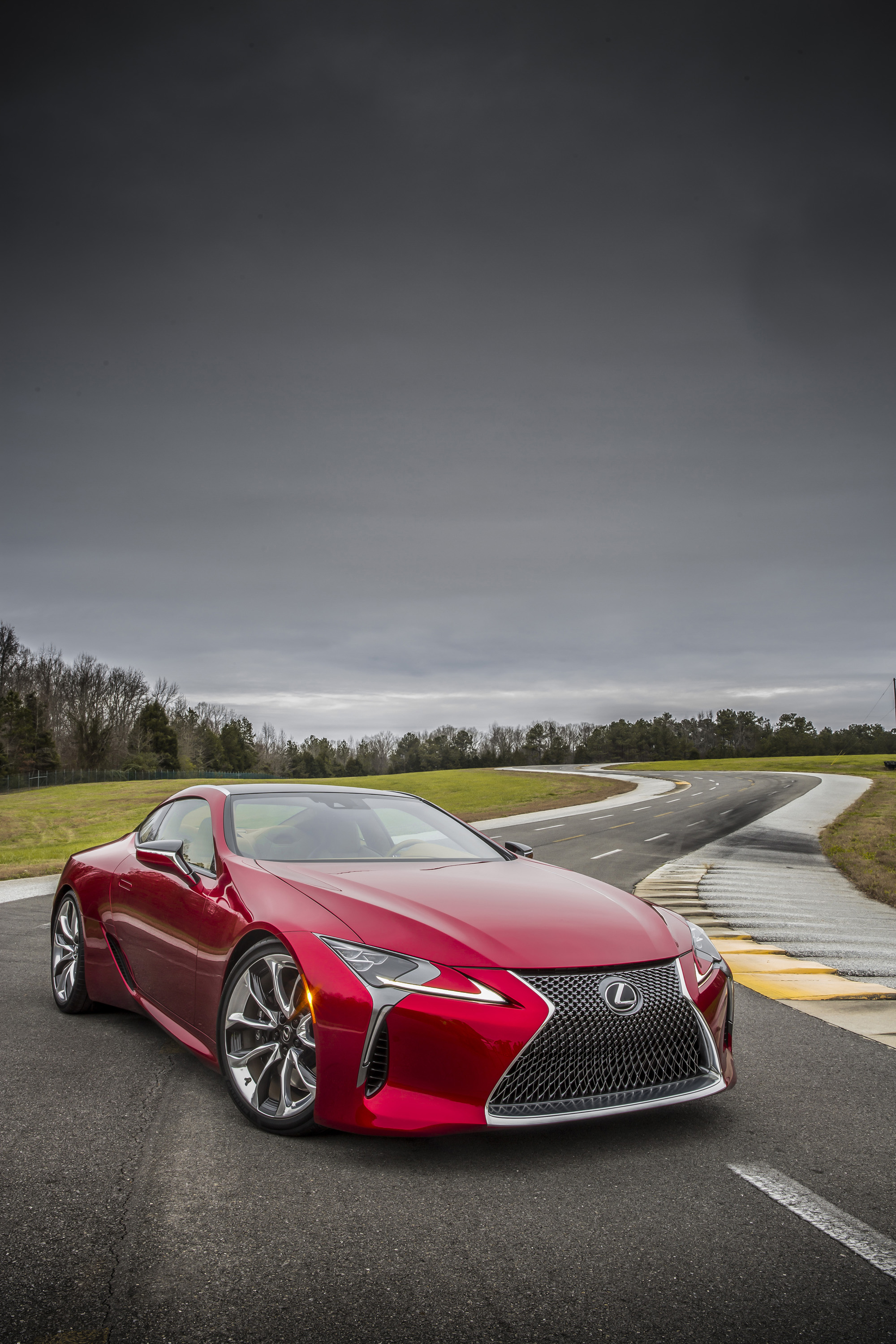
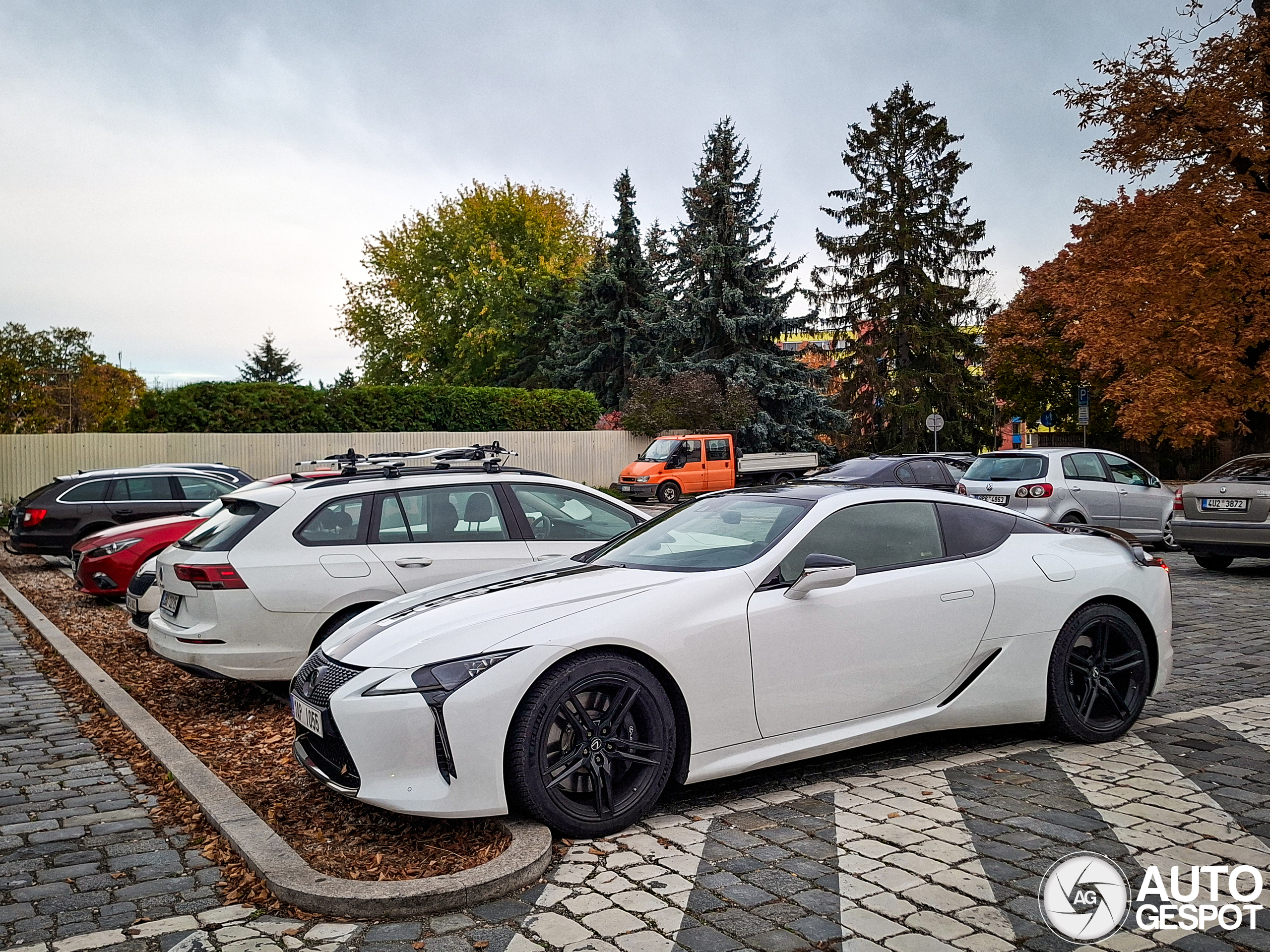
The 2016 Lexus LC 500 represents the pivotal moment when Lexus transitioned from a concept to a world-class grand tourer. Unveiled at the Detroit Auto Show, this luxury coupe features a high-revving 5.0-liter V8 engine and the revolutionary GA-L platform, redefining the brand's performance and design identity for the modern era.
The Significance of the 2016 Debut
The automotive world changed for Lexus in January 2016. At the North American International Auto Show (NAIAS) in Detroit, the brand revealed the production version of the LC 500. This was not merely another luxury coupe; it was the physical manifestation of a promise made by Akio Toyoda to infuse the brand with more "soul" and "passion."
For years, Lexus had been criticized for producing vehicles that were technically perfect but emotionally reserved. The LC 500, which stayed remarkably true to the 2012 LF-LC concept car, was designed to silence those critics. While the vehicle officially went on sale as a 2018 model, the specifications and engineering philosophies established in 2016 remain the foundation of the LC’s legacy.
In the current landscape of 2026, we look back at the 2016 reveal as the catalyst that allowed Lexus to compete directly with European heavyweights like the BMW 8 Series and the Porsche 911, offering a unique Japanese perspective on the grand touring (GT) experience.
Design Philosophy: From Concept to Reality
One of the most striking aspects of the LC 500 overview is the fidelity of the production model to its concept predecessor. Typically, concept cars are "toned down" for production due to safety regulations, cost, and manufacturing limitations. Lexus, however, engineered the LC 500 to maintain the LF-LC’s low hood line, dramatic spindle grille, and athletic silhouette.
Brave Design and Aerodynamics
The exterior design follows a philosophy Lexus calls "Brave Design." The front fascia is dominated by a massive mesh grille that changes pattern from top to bottom, creating a sense of tension and movement even when the car is stationary. The triple-LED headlamp units were specifically developed to be ultra-compact, allowing for the incredibly short front overhangs and a low hood line that would be impossible with traditional light housing.
Aerodynamics were not sacrificed for aesthetics. The LC 500 features functional venting, including rear aero ducts that channel air to stabilize the car at high speeds. The "floating" roof design, achieved through blacked-out C-pillars, gives the car a lower appearance, while the active rear spoiler (available on higher trims) deploys at 50 mph to increase downforce on the rear axle.
The GA-L Platform
The 2016 reveal introduced the world to the Global Architecture - Luxury (GA-L) platform. This front-engine, rear-wheel-drive layout was engineered to place as much mass as possible toward the center and lower part of the chassis. By positioning the engine behind the front axle (a front-midship layout) and moving the wheels to the corners, Lexus achieved a nearly ideal weight distribution.
The Heart of the Machine: The 5.0-Liter V8
While many competitors were moving toward smaller-displacement turbocharged engines in 2016, Lexus took a different path by utilizing a naturally aspirated 5.0-liter V8 (engine code 2UR-GSE). This engine is a masterpiece of mechanical engineering, favored for its linear power delivery and visceral acoustic profile.
Performance Specifications
The V8 produces approximately 471 horsepower and 398 lb-ft of torque. Because it lacks turbochargers, the engine provides an immediate throttle response that is increasingly rare in the modern market. The redline is set at a soaring 7,300 RPM, accompanied by an exhaust note that was tuned using acoustic chambers—a technique borrowed from the legendary LFA supercar development.
The 10-Speed Direct Shift Transmission
A major technical highlight revealed in 2016 was the world’s first 10-speed automatic transmission in a luxury performance car. Lexus chose a traditional torque-converter automatic over a dual-clutch system to ensure smoothness during grand touring while maintaining lightning-fast shift times. The transmission uses an "AI-Shift" control system that selects the optimum gear based on the driver’s past behavior and real-time inputs, rather than just speed and throttle position.
Interior Craftsmanship and Human-Machine Interface
The interior of the LC 500 is often cited as one of the finest in the automotive industry, characterized by the "Takumi" (master craftsman) approach to manufacturing. Every surface the driver touches—from the magnesium alloy paddle shifters to the Alcantara door inserts—is designed for tactile satisfaction.
Driver-Centric Cockpit
The cockpit is divided into two distinct zones. The driver’s side is focused on control, with a low seating position that places the driver's hip point as close to the car’s center of gravity as possible. The steering wheel was designed with varying cross-sections to provide the perfect grip during spirited driving.
The passenger side, by contrast, is designed for comfort and openness. The "grab handle" integrated into the center console is both a functional support for the passenger and a visual separator that emphasizes the driver’s focus.
Materials and Assembly
The 2016 overview highlighted the use of premium materials, including:
- Hand-stitched leather: Found on the dashboard and center console.
- Alcantara: Often used on the seats and headliner for a high-grip, luxury feel.
- Carbon Fiber: Used in the door sills and the optional roof panel to reduce weight.
Technical Specifications Summary
The following table outlines the core specifications of the LC 500 as established during its 2016 introduction.
| Feature | Specification |
|---|---|
| Engine Type | 5.0-Liter Naturally Aspirated V8 |
| Horsepower | 471 hp @ 7,100 RPM |
| Torque | 398 lb-ft @ 4,800 RPM |
| Transmission | 10-Speed Direct Shift Automatic |
| 0-60 MPH | 4.4 Seconds |
| Top Speed | 168 mph (Electronically Limited) |
| Chassis | GA-L (Global Architecture - Luxury) |
| Brakes | 6-Piston Front / 4-Piston Rear Monoblock |
| Wheelbase | 113.0 Inches |
| Curb Weight | ~4,280 lbs |
The Multi-Stage Hybrid System: The LC 500h
Shortly after the V8 debut, Lexus introduced the LC 500h, which utilized the Multi-Stage Hybrid System. This was a significant technological leap, combining a 3.5-liter V6 engine with two electric motors and a unique transmission setup that paired a planetary gear set with a four-speed automatic gearbox. This configuration simulated a 10-speed feel, providing the fuel efficiency of a hybrid with the engagement of a traditional performance car. While the V8 remains the enthusiast's choice for its sound, the hybrid variant proved that Lexus was committed to sustainable performance.
Handling and Dynamics: The GA-L Advantage
The engineering of the LC 500 focused heavily on "inertia specifications." By using lightweight materials such as aluminum for the hood and fenders, and carbon fiber-reinforced plastic (CFRP) for the inner door structures, Lexus kept the center of mass low.
The suspension system is a sophisticated multi-link setup with double ball joints on the upper and lower control arms. This allows for precise control of the wheel geometry, ensuring that the tires maintain maximum contact with the road during cornering. In the 2016 testing phases, engineers emphasized that the LC 500 was designed to provide "linear" steering—meaning the car responds exactly as the driver expects, without twitchiness or lag.
Ownership and Reliability in 2026
As of 2026, the early iterations of the LC 500 (the 2018 model years based on the 2016 reveal) have proven to be exceptionally reliable. Unlike many European competitors that face steep depreciation and rising maintenance costs after eight years, the LC 500 has maintained a strong following in the used market.
Common Considerations for Buyers
- Infotainment: The original 2016/2018 era infotainment system utilized a touchpad interface that many found difficult to use compared to the touchscreens introduced in later mid-cycle refreshes.
- Tires: Due to the staggered wheel setup and the performance nature of the car, owners should expect higher-than-average costs for replacement rubber, especially if opting for the 21-inch forged wheels.
- Battery Maintenance: Like many modern luxury cars with extensive electronics, the LC 500 requires a healthy battery to avoid "ghost" electrical issues, particularly if the car is not driven daily.
Frequently Asked Questions
Is the 2016 Lexus LC 500 a production year or a reveal year?
The Lexus LC 500 was revealed in January 2016 at the North American International Auto Show. However, it was released for the 2018 model year. There is no "2016 model year" LC 500 for sale; the date refers to the global debut of the vehicle's design and specifications.
How does the LC 500 compare to the Lexus LFA?
While the LFA was a limited-production, mid-engine supercar with a V10 engine, the LC 500 is a mass-production, front-engine grand tourer. The LC 500 was inspired by the LFA's engineering—specifically the use of carbon fiber and the tuning of the exhaust note—but it is designed for daily comfort rather than track-focused dominance.
Does the LC 500 have rear seats?
Technically, the LC 500 is a 2+2 coupe. However, the rear seats are extremely cramped and are better suited for luggage or small children. Most owners treat the rear seats as an extension of the trunk space.
What is the difference between the LC 500 and the LC 500h?
The LC 500 uses a 5.0-liter V8 engine and a 10-speed automatic transmission. The LC 500h is a hybrid variant that uses a 3.5-liter V6 paired with electric motors. The V8 focuses on sound and raw power, while the hybrid focuses on efficiency and advanced technology.
Is the LC 500 all-wheel drive?
No, the Lexus LC 500 is exclusively rear-wheel drive. This layout was chosen to preserve the traditional grand touring driving dynamics and to optimize the weight distribution provided by the GA-L platform.
Final Recommendations for Enthusiasts
If you are evaluating the LC 500 from the perspective of its 2016 debut, it remains one of the most successful "concept-to-production" stories in history. For those looking to acquire an early model in 2026, focus on vehicles with a documented service history at Lexus dealerships. The naturally aspirated V8 is a robust engine, but the complex electronics and high-end materials require proper care to maintain their value.
The 2016 Lexus LC 500 overview confirms that this vehicle was never about chasing the highest 0-60 times; it was about creating a "sensory experience." Whether it is the sound of the V8 or the silhouette of the bodywork, the LC 500 continues to stand as a benchmark for what a flagship luxury coupe should be.