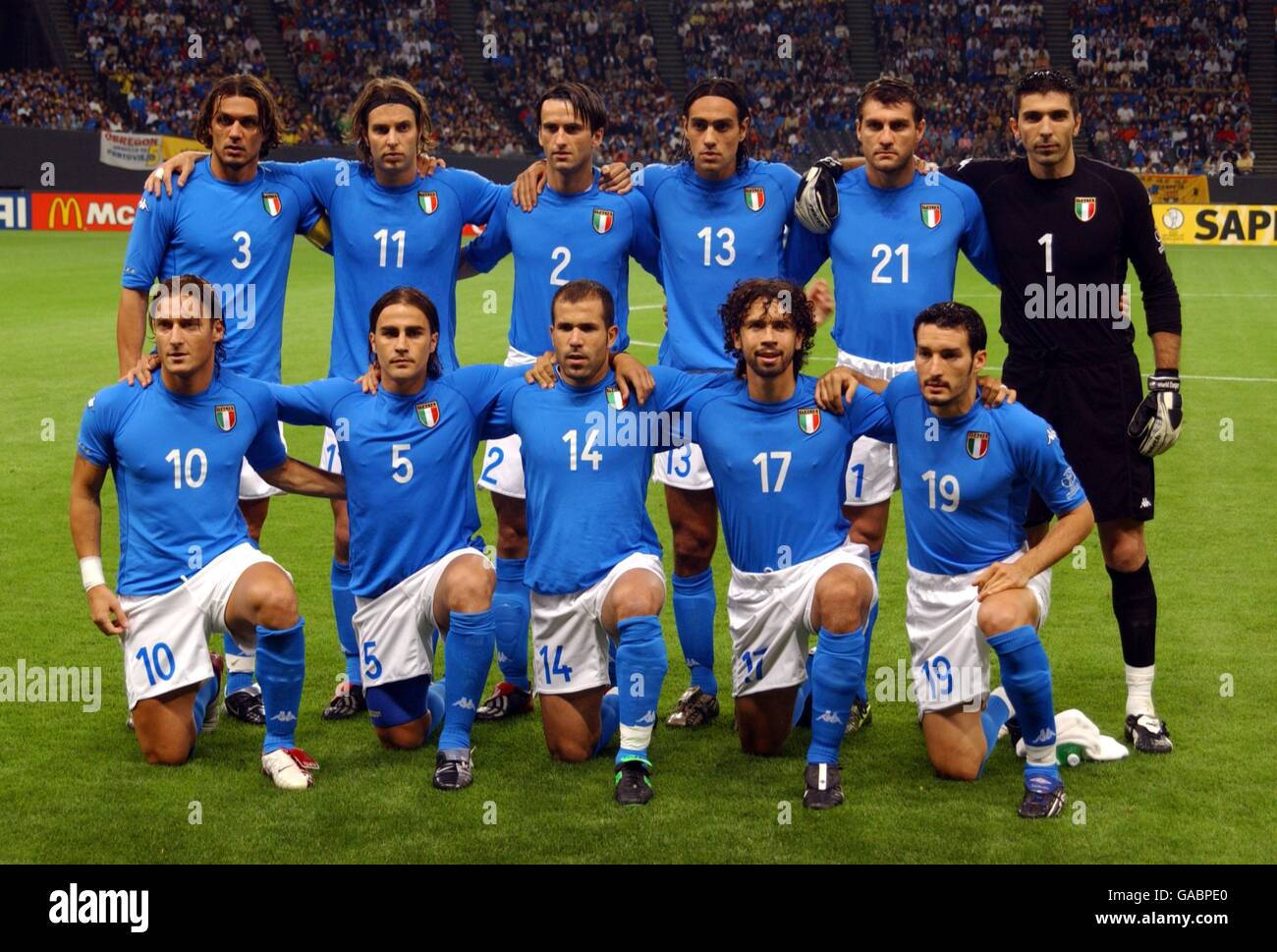
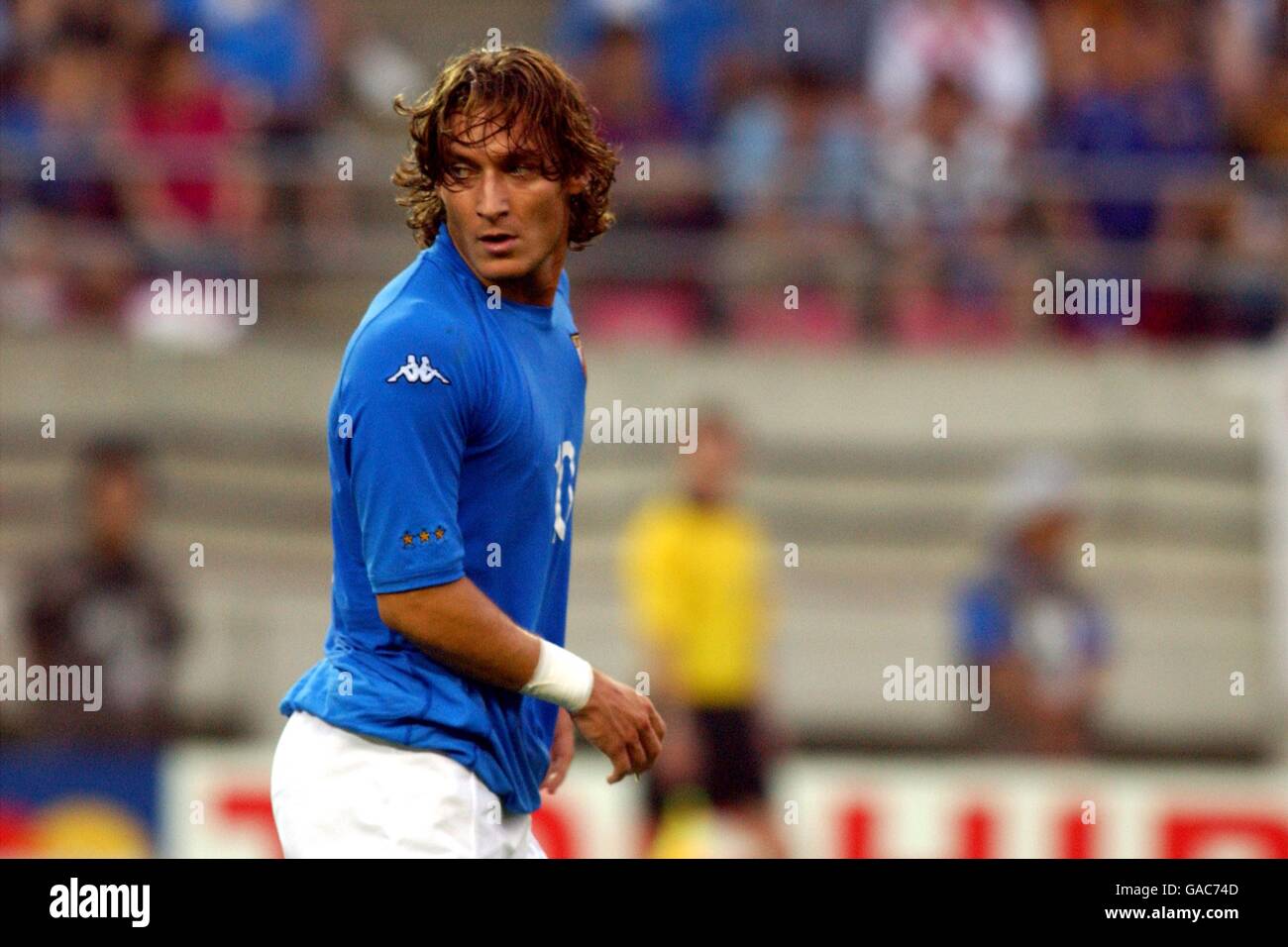
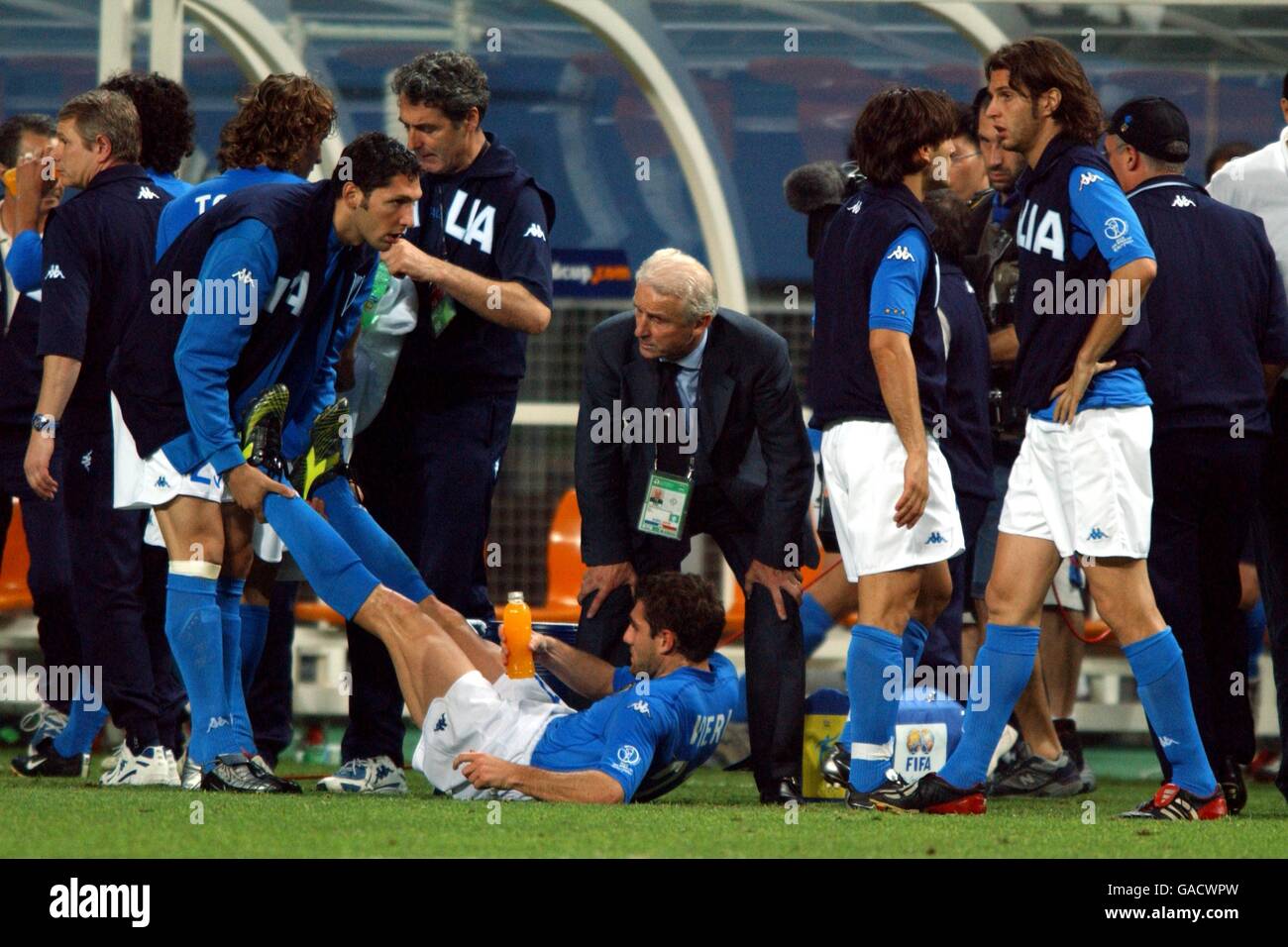
The 2002 Italy World Cup squad featured a star-studded generation of veterans and emerging talents under manager Giovanni Trapattoni, arriving in South Korea and Japan as one of the tournament favorites. Despite possessing world-class individual brilliance across every position, the Azzurri campaign became defined by controversial refereeing decisions, tactical conservatism, and a dramatic round-of-eliminate exit against co-hosts South Korea.
Historical Context and Qualification Path
Heading into the 2002 FIFA World Cup, Italian football was experiencing a golden era of tactical sophistication, defensive mastery, and financial power within Serie A. The national team, managed by the veteran tactician Giovanni Trapattoni, navigated the European qualification campaign with authority. Italy topped Group 8, securing six wins and two draws out of eight matches, finishing ahead of Romania, Georgia, Hungary, and Lithuania.
Trapattoni inherited a deep talent pool, blending remnants of the squad that reached the Euro 2000 final under Dino Zoff with a new wave of physical and technical players. However, the preparation was shadowed by high expectations. The Italian public and media demanded nothing less than a fourth World Cup trophy, placing immense pressure on a squad that balanced legendary defensive resilience with an abundance of creative attacking options. The team arrived in East Asia possessing arguably the most complete roster on paper, yet underlying tactical questions regarding Trapattoni's cautious approach began to surface before a ball was kicked.
Goalkeepers: The Ultimate Security and Backup
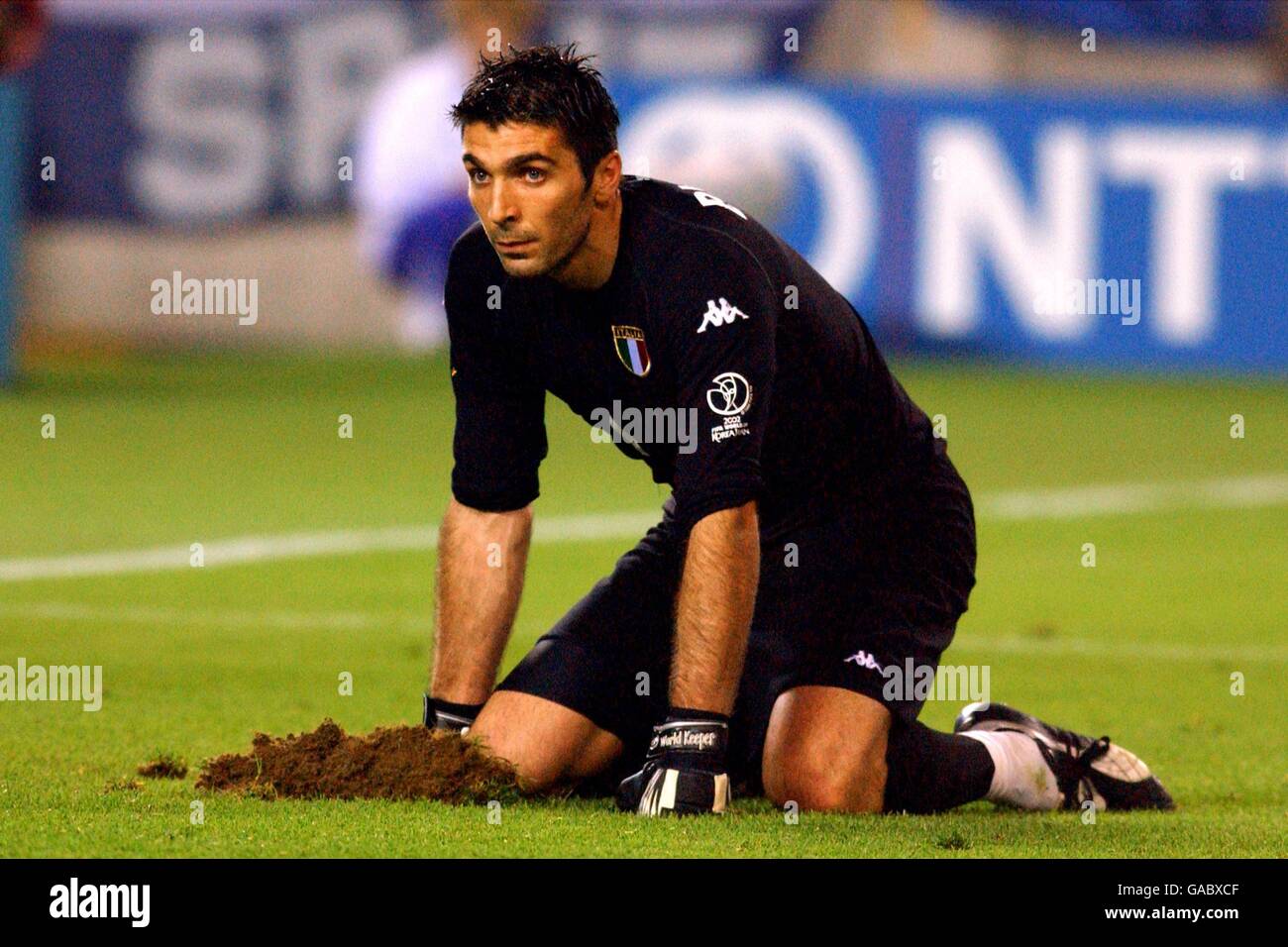
Gianluigi Buffon entered the 2002 tournament as Italy's undisputed number one, having established himself as a generational talent following his blockbuster transfer from Parma to Juventus a year prior. Buffon's exceptional shot-stopping ability, command of his penalty area, and vocal leadership anchored the defense throughout the tournament.
Behind Buffon sat two experienced and reliable deputies who provided crucial depth and locker-room stability:
- Gianluigi Buffon (Juventus): The undisputed starter, playing every minute of Italy's four matches.
- Francesco Toldo (Inter Milan): Fresh off heroics at Euro 2000, Toldo accepted a secondary role without disrupting squad harmony.
- Christian Abbiati (AC Milan): The athletic AC Milan goalkeeper completed the three-man goalkeeping department as the third choice.
Trapattoni’s selection in goal required zero debate, as Buffon’s physical peak coincided perfectly with the tournament cycle. His presence allowed the tactical block in front of him to maintain structural discipline, knowing any defensive leakage would be met by world-class reflexes.
Defensive Line: Experience, Versatility, and Tactical Mastery
The defensive pillar of the 2002 Italy World Cup squad represented a bridge between traditional Italian catenaccio principles and modern zonal marking. Trapattoni deployed a fluid defensive structure that heavily relied on the rigid organizational brilliance of Juventus and AC Milan stalwarts.
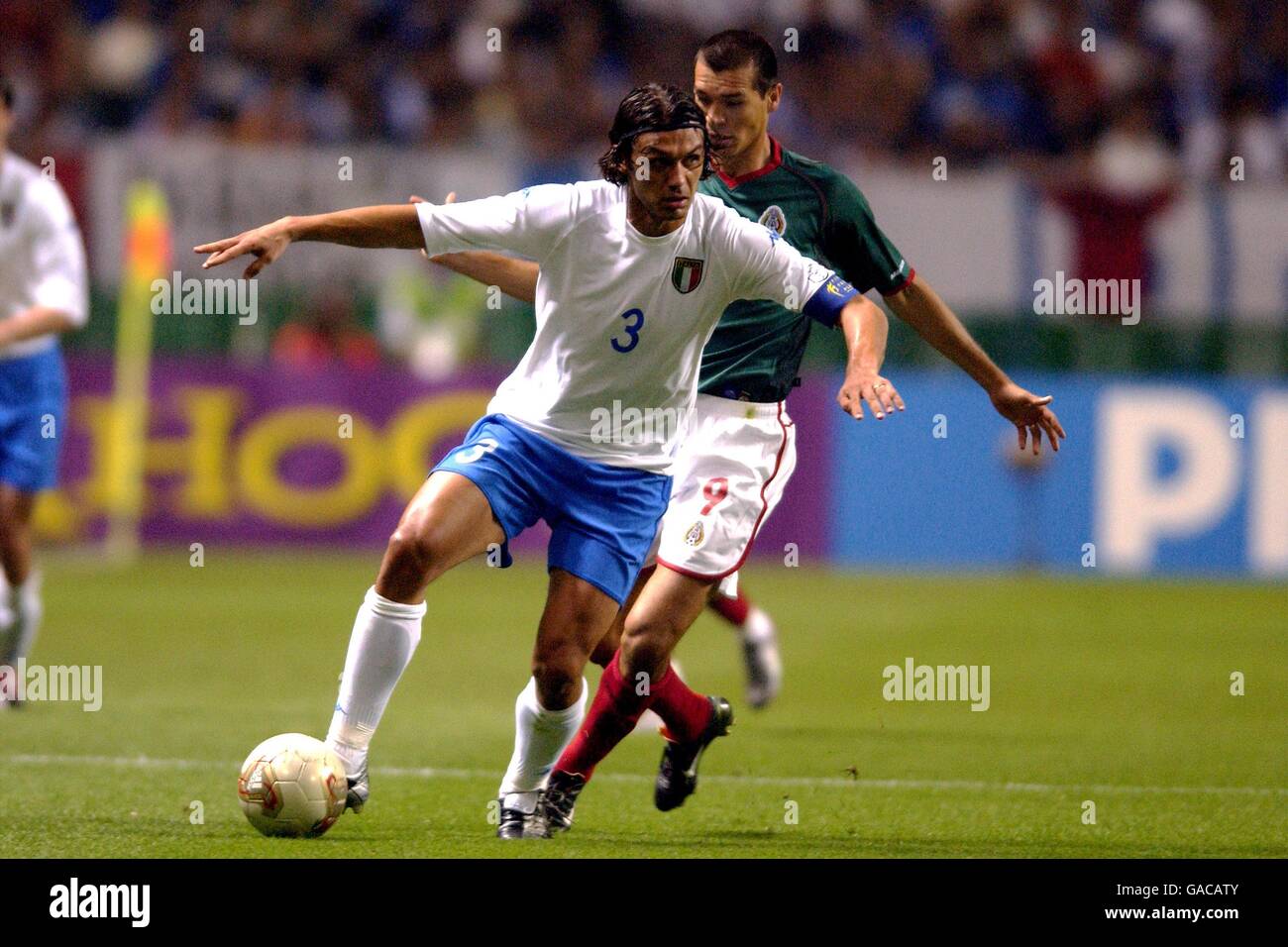
Paolo Maldini captained the side, operating primarily as a left-back or a central defensive stopper depending on the tactical phase. Alongside him, Fabio Cannavaro and Alessandro Nesta formed one of the most formidable central defensive partnerships in football history. Their anticipation, timing in the tackle, and aerial dominance were unquestioned.
| Player | Position | Club | Role / Status |
|---|---|---|---|
| Gianluca Pessotto | Defender | Juventus | Versatile wide option, providing tactical coverage on both flanks. |
| Fabio Cannavaro | Defender | Parma | Elite central defender, aggressive marker and defensive leader. |
| Francesco Coco | Defender | Barcelona | Dynamic left-sided defender offering overlapping energy. |
| Mark Iuliano | Defender | Juventus | Experienced central backup, reliable in physical duels. |
| Alessandro Nesta | Defender | Lazio | World-class ball-playing center-back, crucial to defensive transitions. |
| Christian Panucci | Defender | AS Roma | Tactical right-back with excellent recovery pace and European experience. |
| Paolo Maldini | Defender | AC Milan | Team captain, legendary leader operating across central and left defense. |
| Marco Materazzi | Defender | Inter Milan | Physically imposing central defender known for aerial dominance and aggression. |
Despite this star-studded cast, the defensive unit faced unique challenges in Asia, particularly due to sweltering humidity and strict officiating interpretations regarding shirt-pulling and set-piece marking.
Midfield Engine: Balancing Creativity and Industry
Trapattoni’s midfield selection reflected his pragmatic philosophy, balancing tireless defensive workers with refined playmakers. Demetrio Albertini, a long-serving metronome, missed the tournament due to injury, forcing Trapattoni to reshuffle his central options.
Luigi Di Biagio and Damiano Tommasi provided tireless defensive cover and box-to-box energy, allowing the more creative elements to operate. Cristiano Donadel and Angelo Di Livio added wide depth, while Gennaro Gattuso brought relentless aggression and disruptive pressing from the bench.
The true focal point of the midfield creativity was Francesco Totti. Operating primarily as a trequartista (attacking midfielder) behind the strikers, Totti possessed the vision, technique, and physical strength to unlock low blocks. Alongside him, midfielders like Stefano Fiore and Gianluca Zambrotta—who was often deployed as a right wing-back—provided crucial versatility. Zambrotta's ability to cover the entire flank became an essential outlet for an Italian side that occasionally struggled to build width through traditional wingers.
Forwards and Attack: An Embarrassment of Riches
Few national team squads in history could boast the sheer volume of elite attacking talent that Italy brought to the 2002 World Cup. Trapattoni possessed a selection headache with multiple world-class strikers operating at the peak of their professional careers.
Christian Vieri was the undisputed spearhead of the attack. Coming off a prolific season with Inter Milan, Vieri’s physical strength, aerial power, and ruthless finishing made him a nightmare for opposing center-backs. Flanking or supporting him were elite talents capable of changing a match in a single moment:
- Alessandro Del Piero (Juventus): The elegant second striker, valued for his technical brilliance, free-kick mastery, and clutch goalscoring.
- Filippo Inzaghi (AC Milan): The ultimate penalty-box predator, renowned for his uncanny ability to time runs and exploit the offside trap.
- Vincenzo Montella (AS Roma): A clinical, agile left-footed striker offering a different tactical profile off the bench.
- Marco Delvecchio (AS Roma): A hard-working target man who excelled at holding up the ball and creating space for supporting runners.
- Nicola Amoruso (Perugia): Rounding out the attacking roster as an auxiliary option.
Despite this formidable firepower, tactical friction occasionally arose. Trapattoni favored a conservative approach, often deploying only two primary attacking players and demanding immense defensive tracking from creative personnel, which occasionally isolated Vieri upfront.
Group Stage Campaign: Struggles and Survival
Drawn into Group G alongside Ecuador, Croatia, and Mexico, Italy expected a smooth progression to the knockout rounds. The tournament started brightly in Sapporo against Ecuador, with Christian Vieri scoring twice in a comfortable 20 victory. However, cracks quickly appeared in the second fixture against Croatia.
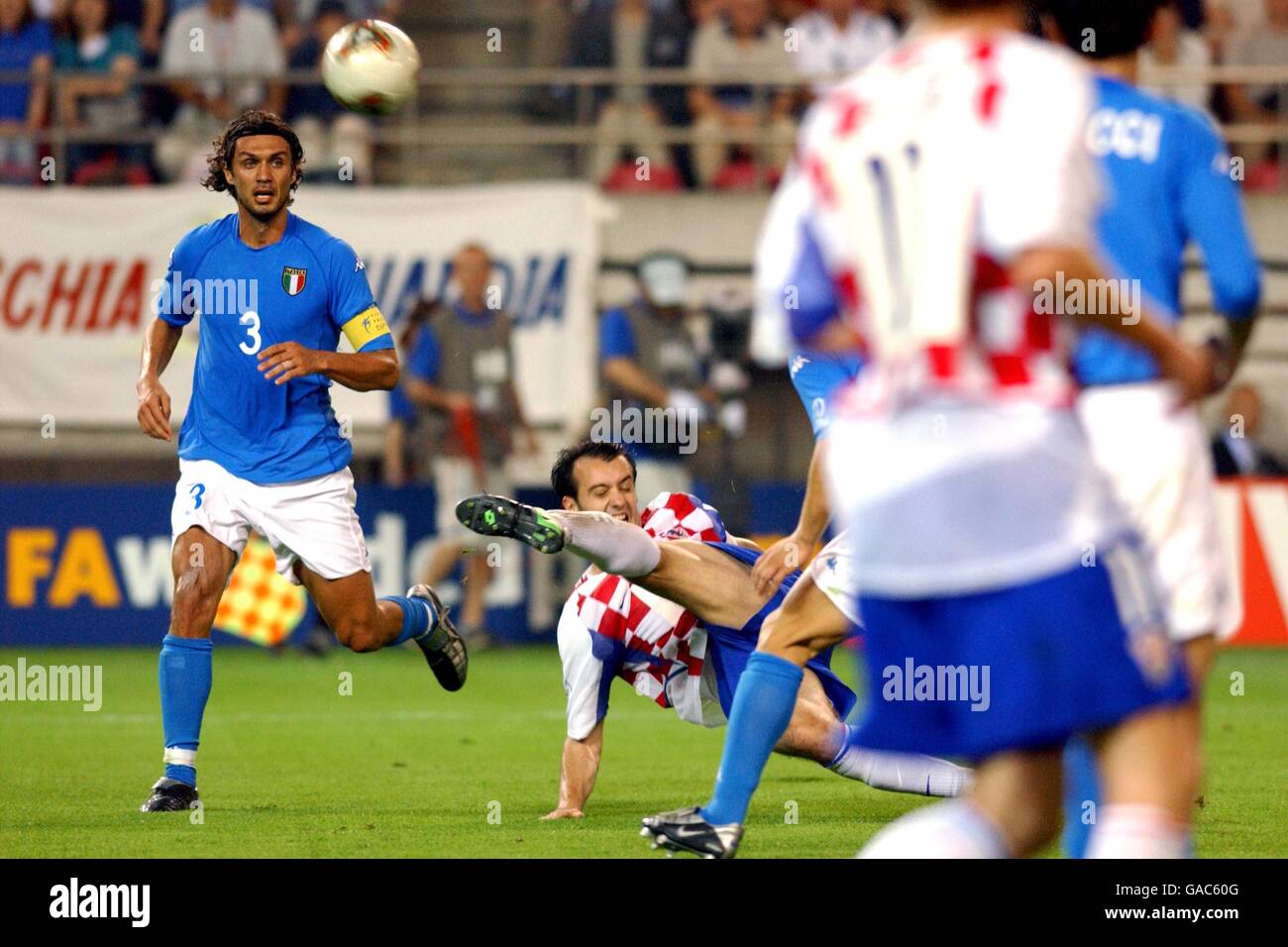
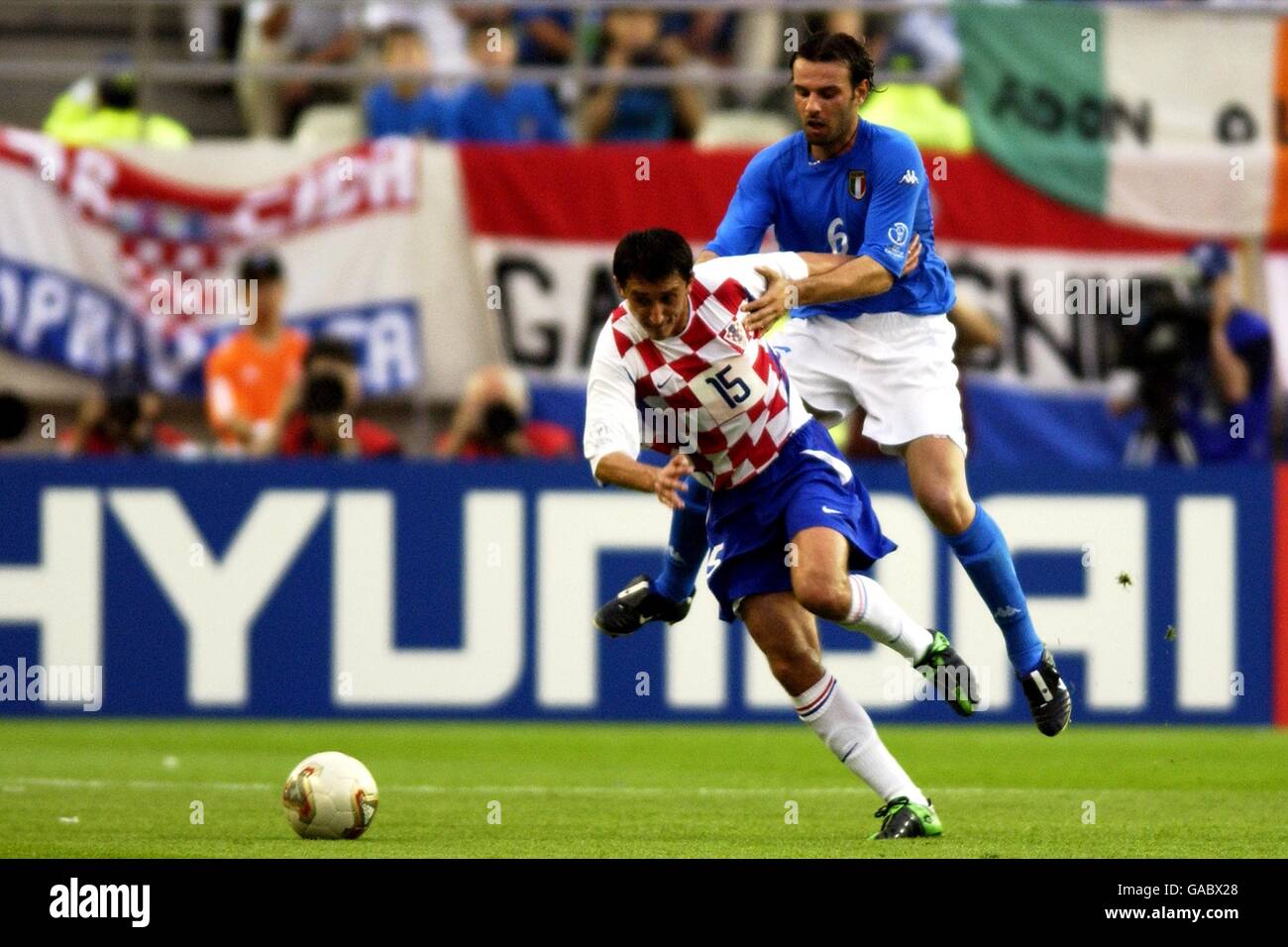
Against Croatia, Italy suffered from controversial officiating, with two legitimate goals disallowed by referee Graham Poll. Croatia capitalized, scoring two late goals to secure a stunning 21 victory.
The final group match against Mexico in Oita carried high stakes. Trapattoni's side struggled to break down a well-organized Mexican defense led by Jared Borgetti, who scored a legendary looping header past Buffon. With Italy facing a shock group-stage exit, substitute Alessandro Del Piero rose to meet a brilliant cross from Francisco Coco in the 85th minute, securing a 11 draw that sent the Azzurri through to the round of 16 as runners-up behind Mexico.
The Controversial Exit: South Korea and the Golden Goal
Italy's journey ended in the round of 16 in Daejeon against co-hosts South Korea, in one of the most controversial and dramatic matches in World Cup history. Trapattoni set his team up to absorb pressure after Christian Vieri opened the scoring with a towering header in the 18th minute.
What followed was a masterclass in resilient defending by Italy, counterbalanced by heavily disputed officiating from Ecuadorian referee Byron Moreno. South Korea equalized in the 88th minute through Seol Ki-hyeon after a defensive error by Christian Panucci.
During extra time, the controversy peaked. Francesco Totti was harshly shown a second yellow card—and subsequently red-carded—for an alleged dive in the penalty box when replays clearly showed heavy contact. Moments later, Damiano Tommasi had a golden goal incorrectly ruled out for offside. Punishing Italy's inability to clear their lines, Ahn Jung-hwan scored a dramatic golden goal header in the 117th minute, eliminating the Azzurri and sending South Korea into the quarter-finals.
Legacy and Aftermath of the 2002 Roster
The elimination of the 2002 Italy World Cup squad left deep psychological scars on Italian football, triggering widespread condemnation of refereeing standards and internal debates over tactical conservatism. Critics argued that Trapattoni possessed a squad capable of winning the tournament outright, yet his defensive pragmatism invited unnecessary pressure against lower-ranked opponents.
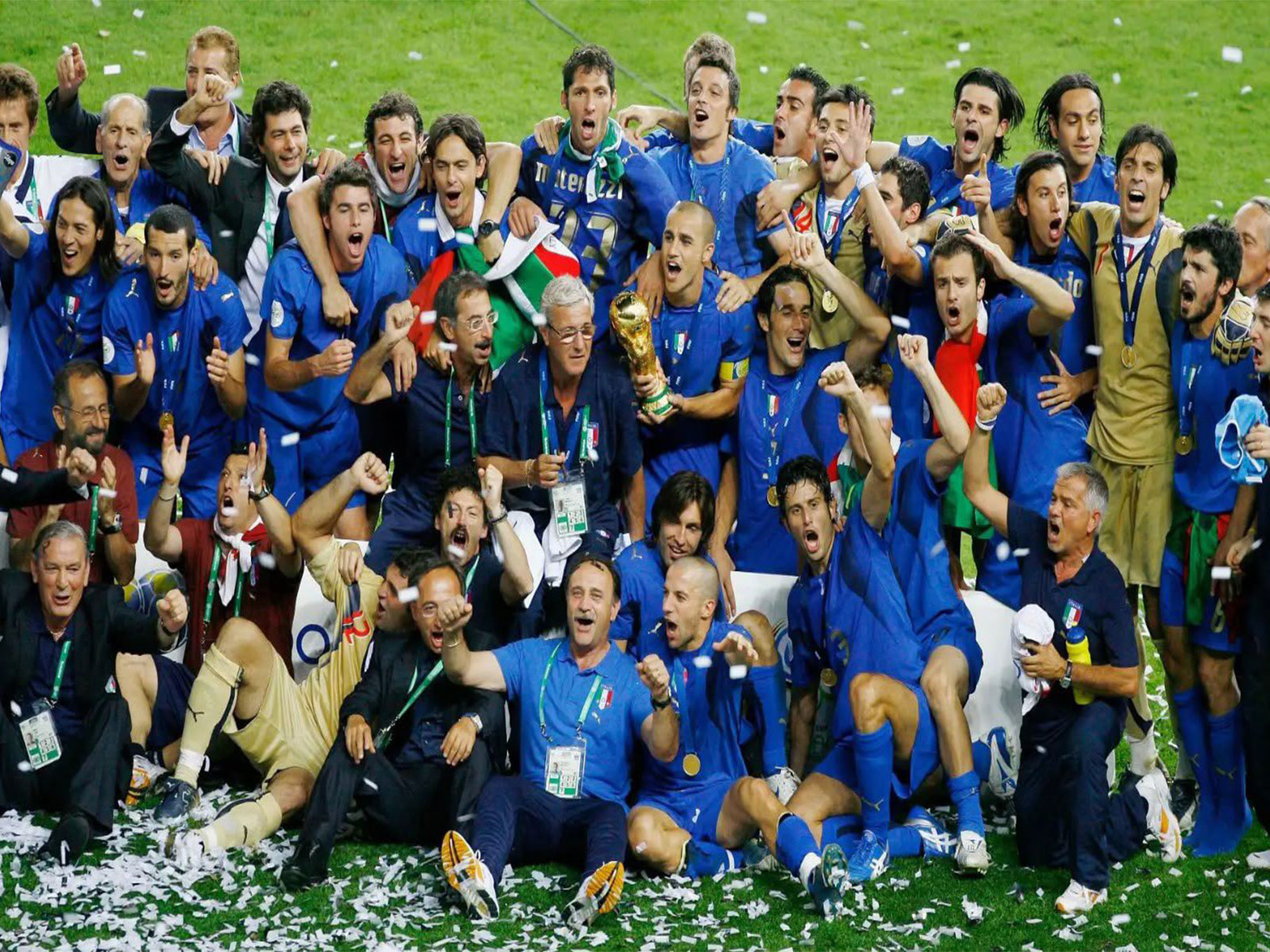
Despite the bitter ending, the core of this squad laid the mental and structural foundations for ultimate success four years later. The majority of the 2002 roster—including Buffon, Cannavaro, Nesta, Zambrotta, Gattuso, Del Piero, Inzaghi, and Totti—returned four years later under Marcello Lippi to lift the World Cup trophy in Germany in 2006. The heartbreak in East Asia forged a resilient, battle-tested generation that ultimately achieved international immortality.
Frequently Asked Questions
Who was the manager of the 2002 Italy World Cup squad?
Giovanni Trapattoni managed the team. A legendary figure in Italian club football, Trapattoni took charge of the national side ahead of the 2002 tournament, bringing a cautious, defensively structured tactical approach.
Who was the top scorer for Italy in the 2002 tournament?
Christian Vieri was Italy's top goalscorer, netting four goals in four matches. Vieri scored a brace against Ecuador, another crucial goal against Croatia, and the opening strike against South Korea in the round of 16.
Why was Francesco Totti sent off against South Korea?
Francesco Totti received a second yellow card—resulting in a red card—from referee Byron Moreno during extra time of the round of 16 match. The referee judged Totti to have dived inside the penalty box, though television replays clearly showed a defender tripping him.
Which players from the 2002 squad won the World Cup in 2006?
A large core of the 2002 squad remained integral four years later. Gianluigi Buffon, Fabio Cannavaro, Alessandro Nesta, Gianluca Zambrotta, Gennaro Gattuso, Francesco Totti, Alessandro Del Piero, and Filippo Inzaghi all went on to win the 2006 FIFA World Cup under Marcello Lippi.
How did Italy qualify for the 2002 World Cup?
Italy qualified by winning UEFA Group 8. They finished undefeated in their qualifying group, securing six wins and two draws ahead of opponents Romania, Georgia, Hungary, and Lithuania.