The Russell 2000 Index is the premier benchmark for measuring the performance of small-capitalization companies in the United States. Comprising the smallest 2,000 stocks in the broader Russell 3000 Index, it serves as a critical barometer for the health of the domestic economy and the risk appetite of the equity markets.
Defining the 2000 Small Cap Index
The Russell 2000 Index, often referred to simply as "the 2000 small cap index," is managed by FTSE Russell, a subsidiary of the London Stock Exchange Group. To understand this index, one must first understand its parent, the Russell 3000. The Russell 3000 Index seeks to track the performance of the 3,000 largest publicly traded U.S. companies, which represents roughly 98% of the investable U.S. equity market.
The Russell 2000 is specifically the bottom two-thirds of that parent index. While the S&P 500 tracks the "blue-chip" giants like Apple, Microsoft, and Amazon, the Russell 2000 tracks the "engine room" of the American economy—smaller, often more nimble companies that focus predominantly on domestic operations rather than international exports.
As of 2026, the index remains a float-adjusted, capitalization-weighted index. This means that the influence of any single company on the index's price is proportional to the total market value of its shares available for public trading (the "float"). Because small-cap companies have smaller valuations, the index is naturally more diversified than the S&P 500, where a handful of trillion-dollar companies can dictate the entire market's direction.
The Significance of Small-Cap Exposure in 2026
Small-cap stocks occupy a unique niche in a balanced investment portfolio. Historically, small caps have offered the potential for higher returns than large caps over long time horizons, albeit with significantly higher volatility. In the economic landscape of 2026, several factors make the Russell 2000 a focal point for analysts:
- Domestic Economic Sensitivity: Unlike large-cap companies that derive a significant portion of their revenue from overseas markets, Russell 2000 companies are primarily focused on the U.S. consumer and domestic supply chains. This makes the index a "pure play" on the American economy.
- M&A Activity: Small-cap companies are often targets for acquisition by larger corporations. In a 2026 environment where cash-rich tech giants and healthcare conglomerates seek growth, the components of the Russell 2000 frequently see price spikes due to mergers and acquisitions.
- Interest Rate Sensitivity: Small-cap firms typically carry more debt relative to their size and often rely on floating-rate loans. Therefore, the Russell 2000 is often the first major index to react to shifts in Federal Reserve policy regarding interest rates.
The Annual Reconstitution Process
One of the most critical events for the "2000 small cap index" is the annual reconstitution, which occurs every June. This process ensures that the index accurately reflects the current state of the small-cap market, as companies grow into the "large-cap" category or shrink out of the index entirely.
The Rank Day
In May of each year, FTSE Russell captures the market capitalization of all eligible U.S. stocks. This is known as "Rank Day." Companies are ranked from largest to smallest. The 3,000 largest companies form the Russell 3000, and the companies ranked 1,001 through 3,000 are designated for the Russell 2000.
The Transition
Throughout June, the preliminary lists are published, and the index is slowly adjusted. The "Reconstitution Friday" (usually the fourth Friday in June) is one of the highest-volume trading days on the U.S. stock market. Institutional investors and index funds must buy and sell billions of dollars worth of stock simultaneously to ensure their portfolios mirror the new index composition.
For investors in 2026, understanding this cycle is vital. Stock prices for companies "graduating" from the Russell 2000 to the Russell 1000, or those being added to the index for the first time, can experience significant price pressure during this window.
Key Sector Weights in the Russell 2000
The sector composition of the Russell 2000 is vastly different from that of the S&P 500 or the Nasdaq-100. This disparity is why the Russell 2000 can sometimes move in the opposite direction of the broader market.
- Healthcare (Biotechnology): The Russell 2000 is heavily weighted toward small-cap biotech and pharmaceutical companies. These stocks are "binary" in nature—their value often depends on a single FDA approval or clinical trial result. This adds a layer of volatility to the index.
- Financials (Regional Banks): Small and mid-sized regional banks are a cornerstone of the index. Their performance is tightly linked to the "yield curve"—the difference between short-term and long-term interest rates.
- Industrials: From construction firms to specialized manufacturing, the industrial sector in the Russell 2000 reflects the health of U.S. infrastructure and capital spending.
- Technology: While large-cap tech focuses on AI and cloud computing at a massive scale, Russell 2000 tech companies are often software-as-a-service (SaaS) providers or niche hardware manufacturers.
Comparison: Russell 2000 vs. S&P 600
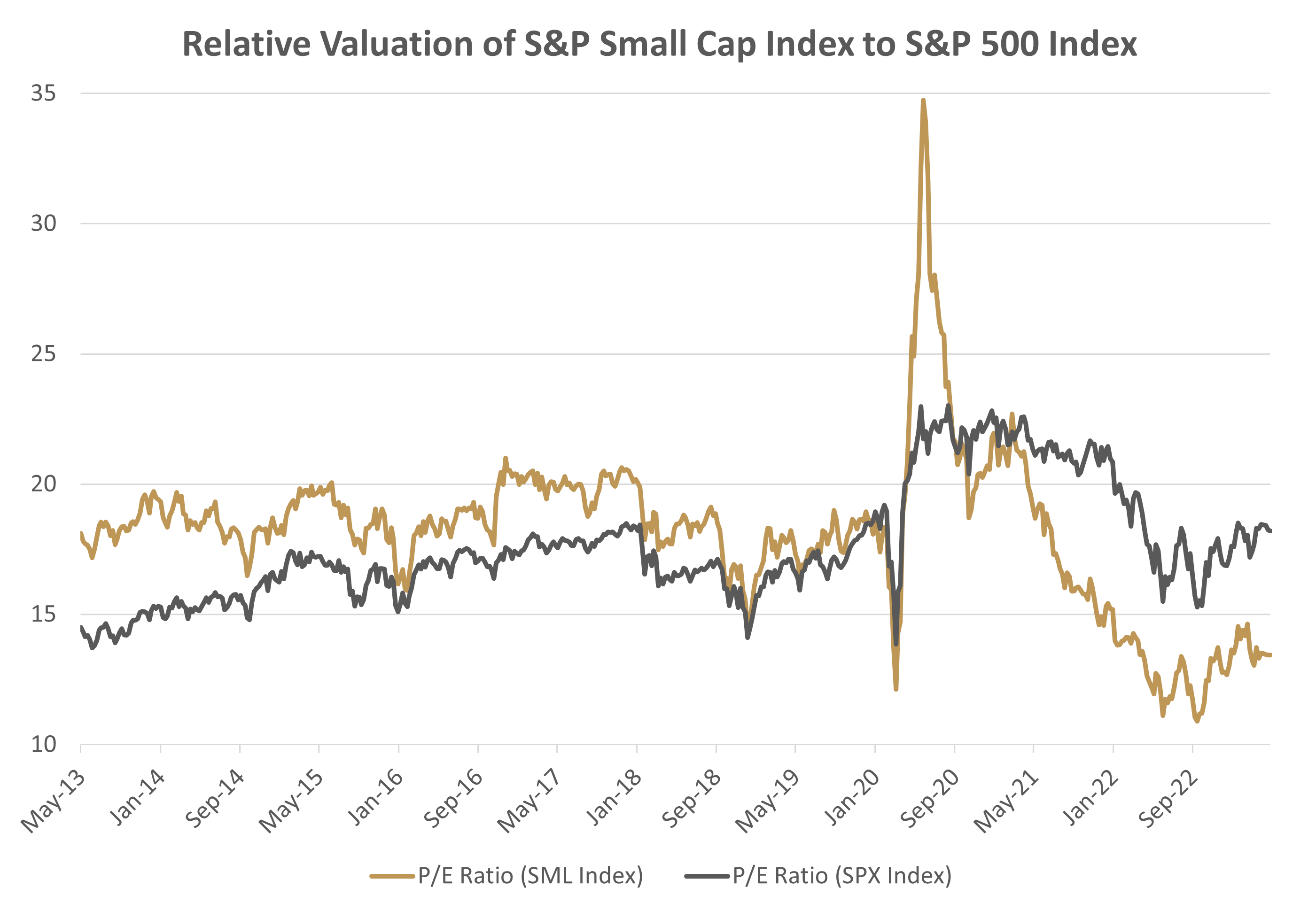
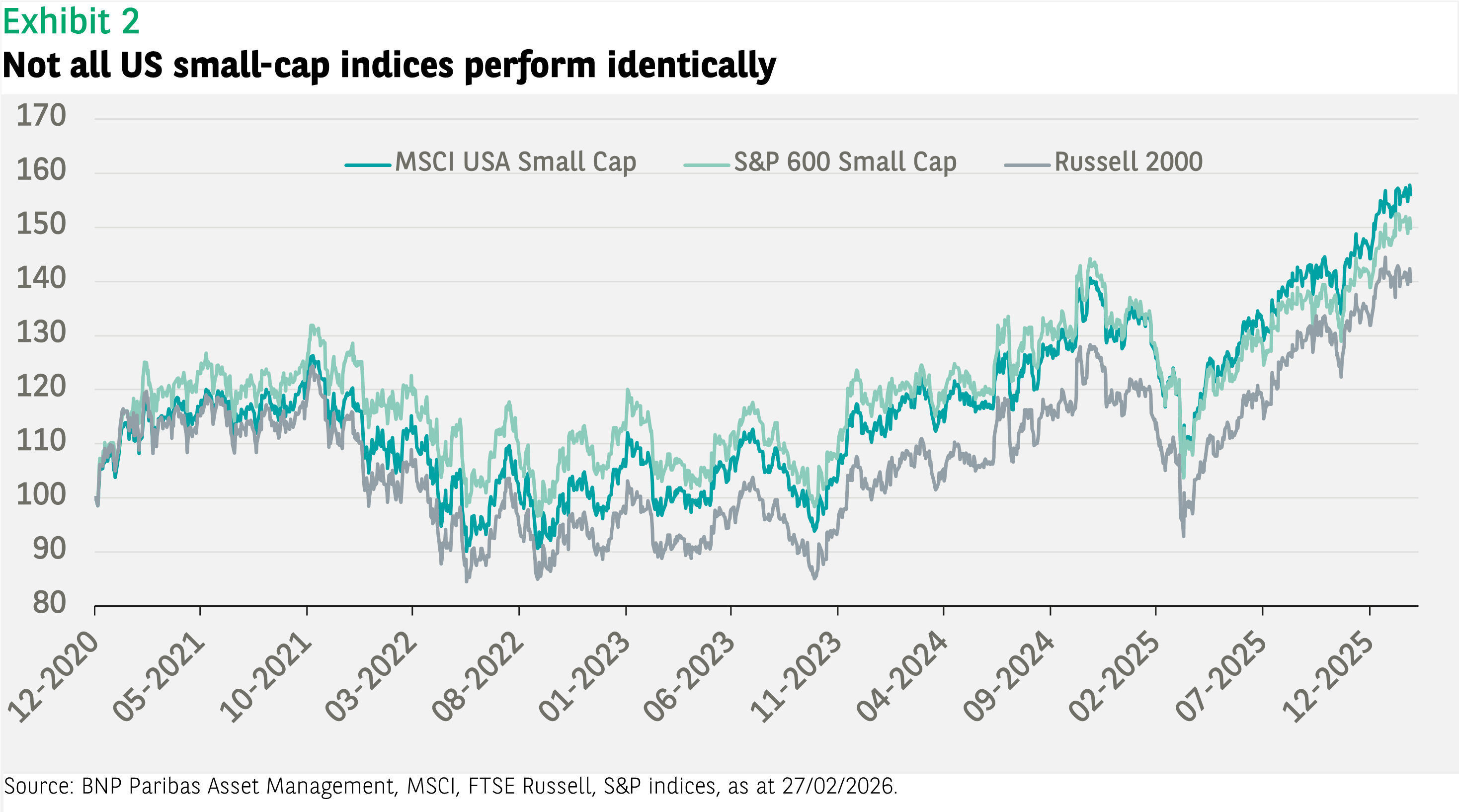
While the Russell 2000 is the most famous small-cap index, it is not the only one. The S&P SmallCap 600 is its primary competitor. The difference between the two is a common point of confusion for investors.
The Russell 2000 is "mechanical." If a company falls within the 1,001 to 3,000 market-cap range, it is included. The S&P 600, however, has a "quality filter." Companies must be profitable (defined as positive earnings over the most recent quarter and the sum of the last four quarters) to be included.
This difference often leads to the S&P 600 outperforming the Russell 2000 during economic downturns, as the Russell 2000 includes many "zombie companies"—firms that are not yet profitable or are burdened by high debt. However, in bull markets or periods of high speculation, the Russell 2000 often leads because it includes the "high-growth, high-risk" stocks that the S&P 600 excludes.
| Feature | Russell 2000 Index | S&P SmallCap 600 |
|---|---|---|
| Number of Holdings | Approximately 2,000 | Approximately 600 |
| Selection Criteria | Market Cap Only (Mechanical) | Market Cap + Profitability Requirement |
| Reconstitution | Annually (June) | As needed (Quarterly updates) |
| Volatility | Generally Higher | Generally Lower |
| Sector Concentration | High in Biotech/Financials | More Balanced |
| Market Coverage | Broader representation of small-caps | Focused on "Quality" small-caps |
How to Invest in the 2000 Small Cap Index in 2026
Investors cannot buy an index directly; they must invest in products that track it. For the Russell 2000, there are several vehicles available, ranging from low-cost ETFs to sophisticated derivatives.
Exchange-Traded Funds (ETFs)
ETFs are the most common way for retail investors to gain exposure. They offer liquidity and low expense ratios.
- iShares Russell 2000 ETF (IWM): The most liquid Russell 2000 ETF, preferred by traders for its high volume and robust options market.
- Vanguard Russell 2000 ETF (VTWO): Typically offers a lower expense ratio than IWM, making it a favorite for long-term buy-and-hold investors.
- Schwab Russell 2000 ETF (RTY): Another low-cost alternative that tracks the same benchmark.
Index Mutual Funds
For those who prefer traditional fund structures, companies like Fidelity and Vanguard offer mutual funds that track the Russell 2000. These are often used in 401(k) plans where ETFs might not be available.
Futures and Options
Professional traders use Russell 2000 futures (traded on the CME) to hedge portfolios or bet on market direction with leverage. Options on the IWM ETF are also among the most traded derivative contracts in the world.
Risks and Limitations of Small-Cap Investing
Investing in the Russell 2000 is not without significant risks, especially in the 2026 economic environment.
1. High Volatility
Small-cap stocks are inherently more volatile than large-cap stocks. A 2% move in the S&P 500 might correspond to a 4% or 5% move in the Russell 2000. Investors must have the stomach for "drawdowns" (periods of significant loss).
2. Credit Risk
As mentioned, small-cap companies often lack the massive cash reserves of "Big Tech." If the credit markets tighten or interest rates remain high through 2026, small-cap companies may struggle to refinance their debt, leading to a higher rate of defaults or bankruptcies within the index.
3. "The Quality Gap"
Because the Russell 2000 does not require companies to be profitable, a significant portion of the index (sometimes up to 30-40%) may be comprised of companies that are losing money. These are often called "non-earners." In a market that prizes "flight to quality," the Russell 2000 can underperform significantly.
4. Liquidity Risk
While the index itself is liquid through ETFs, the individual stocks within it may not be. If a major fund decides to exit a specific small-cap position, the lack of buyers can cause the stock price to crater rapidly.
The Role of the Russell 2000 in Portfolio Construction
In 2026, financial advisors generally recommend the Russell 2000 as a "satellite" holding rather than a "core" holding. A common strategy is to allocate 5% to 15% of an equity portfolio to small caps to capture growth that is not present in large-cap indices.
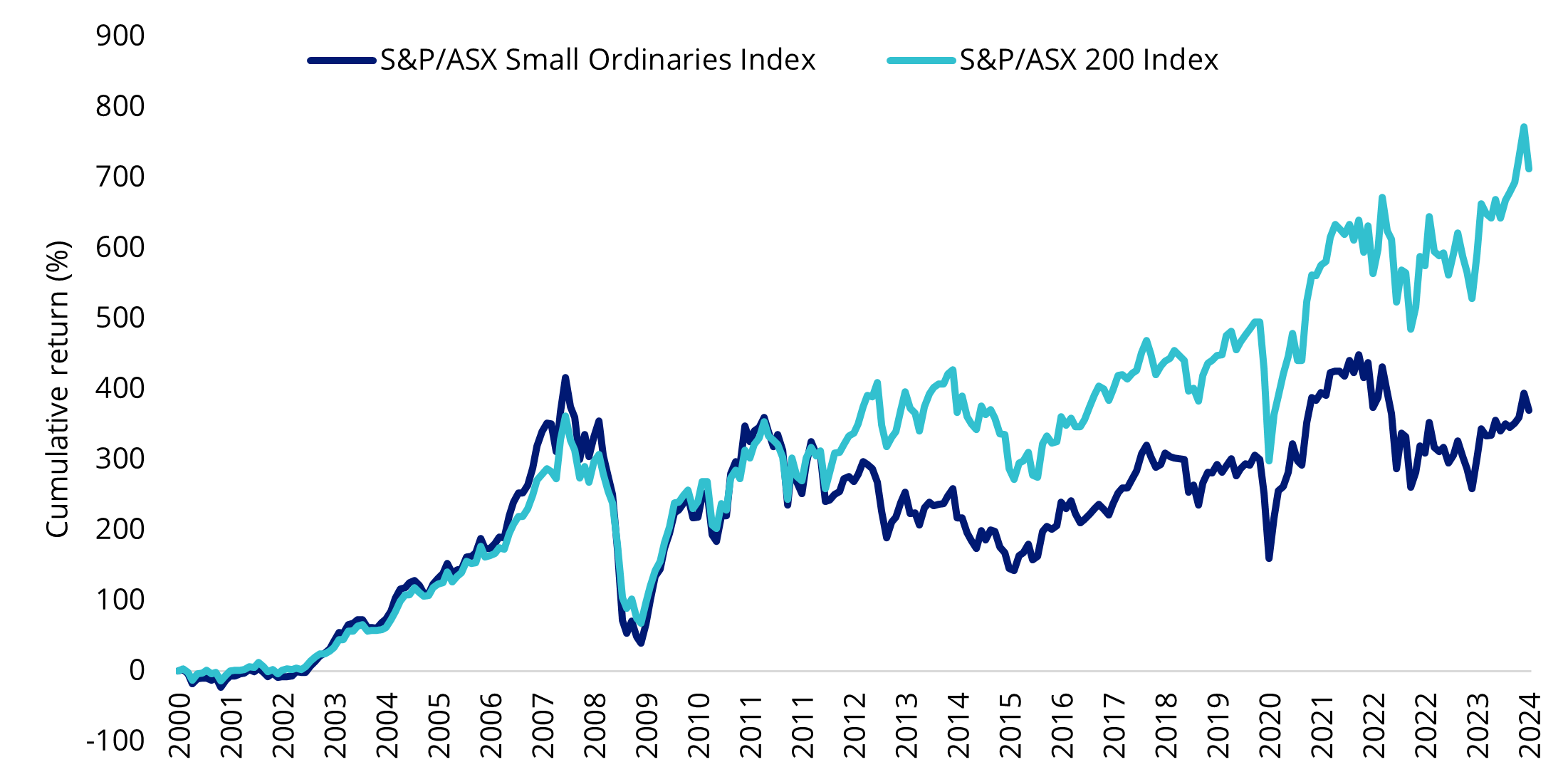
Small caps also provide diversification. They do not always correlate 1:1 with the S&P 500. There are periods, such as the early 2000s or the mid-2020s recovery phases, where small caps significantly outperform their larger counterparts. By holding the Russell 2000, an investor ensures they own the "next generation" of market leaders before they become household names.
Technical Specifications and Index Governance
The Russell 2000 is maintained with rigorous transparency. FTSE Russell uses a transparent, rules-based methodology. For a stock to be eligible, it must:
- Be traded on a major U.S. exchange (NYSE, NASDAQ, etc.).
- Have a stock price of at least $1.00 on rank day.
- Meet minimum liquidity requirements (measured by Average Daily Trading Volume).
- Be an operating company (certain structures like ADRs, closed-end funds, and limited partnerships are excluded).
These rules ensure that the index remains "investable," meaning that a large fund can actually buy the underlying stocks without distorting the market too heavily.
Frequently Asked Questions
What is the difference between the Russell 2000 and the Russell 3000?
The Russell 3000 represents the entire U.S. stock market. The Russell 2000 is a subset of the Russell 3000, specifically consisting of the 2,000 smallest companies within that larger group. If you own the Russell 1000 (large caps) and the Russell 2000 (small caps), you essentially own the Russell 3000.
Why is the Russell 2000 considered a "leading indicator"?
Small-cap companies are usually the first to feel the effects of a slowing economy because they have less "cushion" than large corporations. Conversely, they are often the first to bounce back when the economy begins to recover, as they can adapt more quickly to changing conditions. Therefore, many economists watch the Russell 2000 to predict broader market trends.
Does the Russell 2000 pay dividends?
Yes, many companies within the Russell 2000 pay dividends, but the overall dividend yield of the index is typically lower than that of the S&P 500. This is because small-cap companies usually prefer to reinvest their profits back into the business to fuel growth rather than distributing them to shareholders.
How often does the Russell 2000 change its members?
The major update happens once a year in June during the "Reconstitution." However, smaller adjustments can occur throughout the year due to mergers, acquisitions, or companies going private.
Is the Russell 2000 better than the S&P 500?
Neither is "better"; they serve different purposes. The S&P 500 offers stability and exposure to global leaders. The Russell 2000 offers higher growth potential and domestic exposure but comes with much higher risk and volatility. Most diversified investors hold both.
Practical Recommendation for 2026
For investors looking to engage with the 2000 small cap index in 2026, the most prudent approach is to focus on cost and purpose. If you are a long-term investor seeking to diversify away from "Big Tech" dominance, a low-cost ETF like VTWO or IWM is the most efficient entry point.
However, given the sensitivity of small-caps to interest rates, monitor the Federal Reserve's 2026 outlook closely. If rates are expected to decline, the Russell 2000 often acts as a coiled spring, ready to outperform. If rates are rising or the economy is cooling, ensure your small-cap exposure is balanced with higher-quality "large-cap" assets to mitigate potential losses. Always verify the current expense ratios and tracking errors of any fund before committing capital.