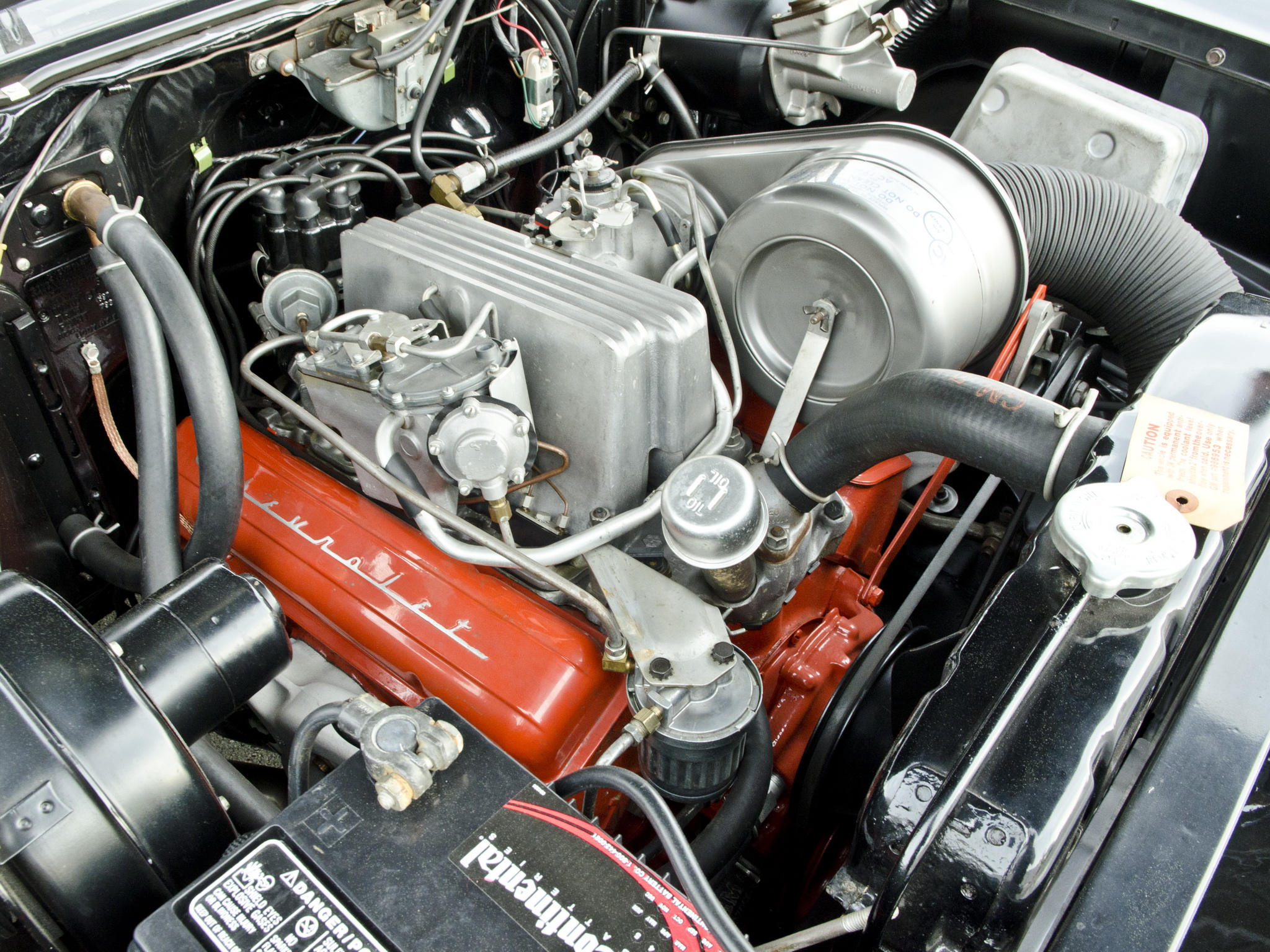
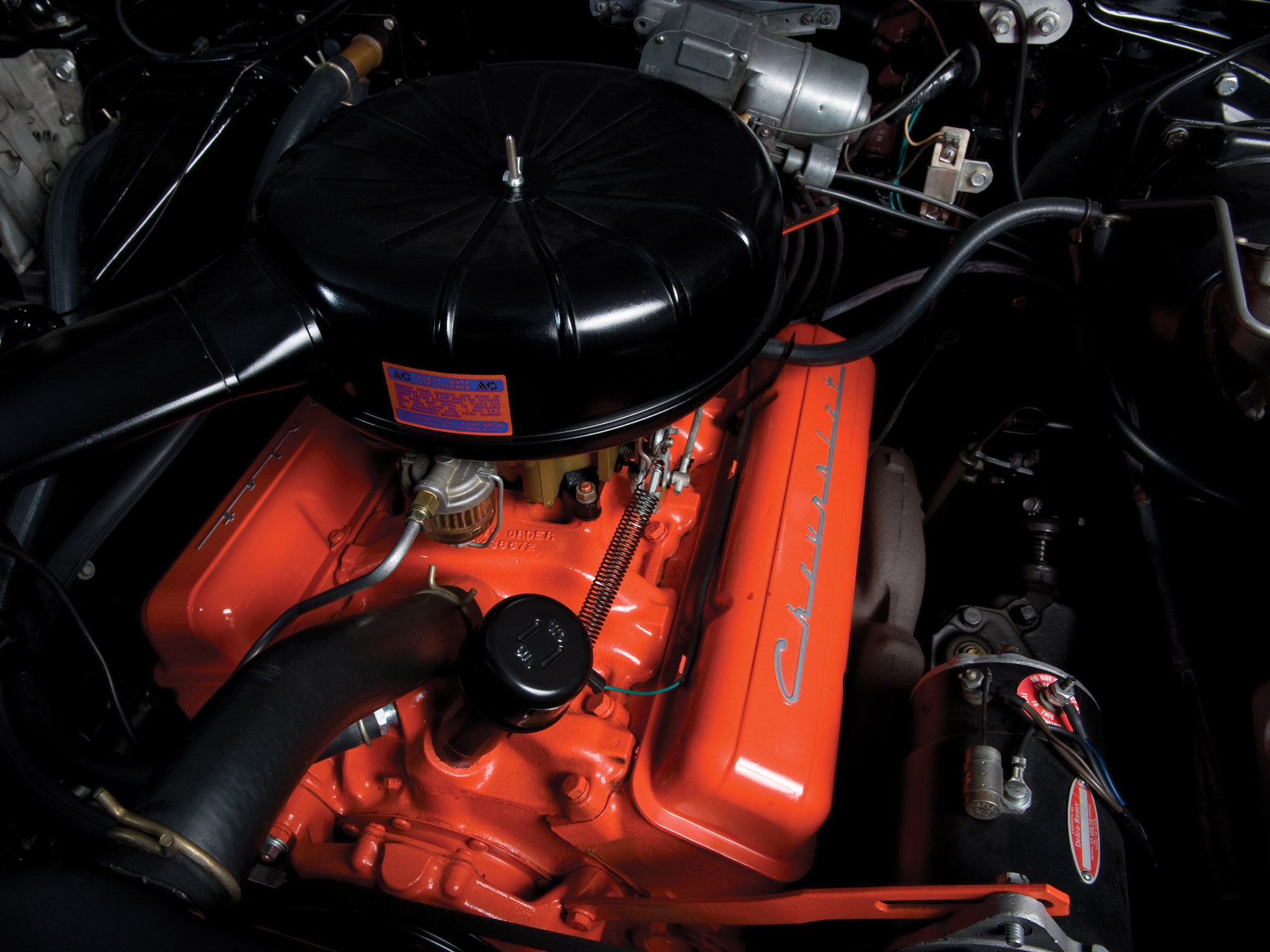
The 1957 Chevrolet offered a diverse lineup of engine options ranging from the economical Blue Flame inline-six to the revolutionary 283 cubic-inch small-block V8, which included the pioneering Ramjet fuel-injection system producing one horsepower per cubic inch. This powertrain versatility allowed buyers to tailor their vehicles for daily driving, heavy-duty utility, or high-performance drag racing and stock car competition.
Introduction to the 1957 Chevrolet Powertrain Lineup
The 1957 model year represents a high-water mark in American automotive history, largely due to the iconic styling and groundbreaking mechanical engineering introduced by General Motors. At the heart of this legacy is the engine bay of the 1957 Chevrolet—often referred to as the Tri-Five Chevy along with the 1955 and 1956 models. Buyers in 1957 were not limited to a single one-size-fits-all power source. Instead, Chevrolet provided an expansive menu of inline-six and V8 engine options, displacement sizes, carburetion setups, and output ratings.
Understanding these configurations requires looking past modern restomod modifications to examine how these engines rolled off the assembly lines in Flint, Michigan, and various assembly plants across the United States. Whether a buyer sought frugal fuel economy for a fleet vehicle or record-setting velocity for the track, the 1957 Chevrolet catalog provided a factory-engineered solution. This overview examines every major engine option available for the 1957 Chevrolet passenger car line, detailing their mechanical specifications, induction types, power ratings, and historical significance.
The Foundation: Blue Flame Inline-Six Engines
While the V8 engines capture the majority of automotive enthusiast attention, the inline-six cylinder engines served as the reliable, high-volume backbone of Chevrolet's passenger car production in 1957. Known historically as the "Stovebolt" or "Blue Flame" engines, these powerplants traced their architectural roots back to earlier decades but received crucial updates to meet the demands of heavier, more modern car bodies.
235.5 Cubic-Inch "Blue Flame 140"
The standard powerplant for most base-model 1957 Chevrolets—including sedans, utility sedans, and station wagons—was the 235.5 cubic-inch (3.8-liter) Thrift-King or Blue Flame inline-six. When paired with the standard three-speed manual transmission, this engine was designated the "Blue Flame 140" and produced 140 horsepower at 4,200 rpm, utilizing a single-barrel Rochester carburetor and a compression ratio of 8.25:1.
When ordered with the optional Powerglide automatic transmission, the engine specifications shifted slightly. Powerglide-equipped cars received hydraulic valve lifters rather than solid lifters, a change that required a higher compression ratio (8.50:1) to maintain performance, resulting in a minor output bump to 150 horsepower. These inline-six engines featured full-pressure lubrication, a significant engineering advancement introduced in 1953 that greatly increased bearing life and overall engine durability compared to earlier splash-lubricated designs.
The Small-Block V8 Revolution
The introduction of the 265 cubic-inch small-block V8 in 1955 completely transformed Chevrolet’s brand identity, shifting it from a conservative builder of economy cars to a dominant force in performance. For the 1957 model year, engineers bored out the engine block to create the legendary 283 cubic-inch V8, establishing a displacement that would become an American performance icon for decades.
265 Cubic-Inch V8 (The Economy V8)
Though the 283 was the star of the show, Chevrolet carried over a version of the original 265 cubic-inch V8 as an entry-level V8 option, frequently marketed as the "Trade Wind" V8 in station wagons and trucks, or simply as the base V8 for passenger cars early in the model year. Displacing 265 cubic inches with a 3.75-inch bore and 3.00-inch stroke, this engine featured a two-barrel Rochester carburetor, a compression ratio of 8.5:1, and a modest output of 162 horsepower. It provided budget-conscious buyers with the smoothness and prestige of a V8 without the higher cost of the larger 283 displacement.
283 Cubic-Inch V8: Two-Barrel and Four-Barrel Configurations
The primary V8 powerplant for 1957 was the newly enlarged 283 cubic-inch engine, achieved by increasing the cylinder bore from 3.75 inches to 3.875 inches while retaining the 3.00-inch stroke of the 265.
- Standard 283 (2-Barrel): Equipped with a single two-barrel carburetor and an 8.5:1 compression ratio, this configuration produced 185 horsepower. It served as a smooth, responsive upgrade for drivers transitioning from inline-sixes.
- Super Turbo Fire 283 (4-Barrel): By adding a four-barrel Rochester or Carter carburetor and bumping the compression ratio to 9.5:1, output increased to 220 horsepower at 4,800 rpm. This was the quintessential mid-tier performance engine, popular in Bel Air hardtops and convertibles.
High-Performance and Dual-Quad V8 Options
For enthusiasts demanding race-track capability straight from the showroom floor, Chevrolet offered dual-carburetor and high-compression mechanical-lifter variants of the 283. These engines turned the 1957 Chevrolet into a formidable competitor in NASCAR and NHRA drag racing events.
Dual Four-Barrel "Super Turbo Fire" (245 HP and 270 HP)
To extract even more power from the 283 architecture, Chevrolet offered a dual-quaduretor setup utilizing two four-barrel carburetors mounted on an aluminum intake manifold.
- 245 Horsepower Version: Featuring hydraulic valve lifters and a 9.5:1 compression ratio, this milder dual-quad setup delivered broad torque and excellent street driveability while producing 245 horsepower.
- 270 Horsepower Version: Designed for serious high-performance use, this version incorporated high-lift mechanical (solid) valve lifters, a more aggressive camshaft, dual valve springs, and a 9.5:1 compression ratio. Revving freely past 5,000 rpm, it pushed 270 horsepower—nearly one horsepower per cubic inch, a major engineering milestone for a naturally aspirated production engine.
Fuel-Injected 283 Options: The Ramjet Breakthrough
Perhaps the most technologically significant engine option for the 1957 Chevrolet was the introduction of the Rochester Ramjet mechanical fuel-injection system. Developed by GM’s Rochester Products division in collaboration with Zora Arkus-Duntov and the Chevrolet engineering team, this system bypassed traditional carburetors by metering pressurized fuel directly into the intake ports.
250 Horsepower (Hydraulic Lifters)
The standard-output fuel-injected 283 utilized hydraulic valve lifters and a 9.5:1 compression ratio, yielding an even 250 horsepower. This setup provided exceptional throttle response, smooth idle characteristics, and immunity to fuel starvation during hard cornering or steep acceleration, making it an advanced cruiser option.
283 Horsepower (Mechanical Lifters)
The pinnacle of 1957 Chevrolet engineering was the fuel-injected 283 producing an advertised 283 horsepower—achieving the elusive milestone of exactly one horsepower per cubic inch. This engine utilized solid mechanical valve lifters, a high-performance camshaft, and a 10.5:1 compression ratio (the highest offered that year). While plagued by some initial reliability issues in early field service due to fuel vaporization and mechanical complexity, the fuel-injected 283 remains one of the most sought-after collector car specifications in automotive history.
| Engine Displacement | Induction Type | Valve Lifters | Compression Ratio | Horsepower Rating | Primary Application |
|---|---|---|---|---|---|
| 235.5 cu. in. I6 | 1-Barrel Carburetor | Solid / Hydraulic | 8.25:1 / 8.50:1 | 140 HP / 150 HP | Base Sedans & Wagons |
| 265.0 cu. in. V8 | 2-Barrel Carburetor | Hydraulic | 8.50:1 | 162 HP | Economy V8 Option |
| 283.0 cu. in. V8 | 2-Barrel Carburetor | Hydraulic | 8.50:1 | 185 HP | Standard Passenger V8 |
| 283.0 cu. in. V8 | 4-Barrel Carburetor | Hydraulic | 9.50:1 | 220 HP | Bel Air & Mid-Tier Performance |
| 283.0 cu. in. V8 | Dual 4-Barrel Carburetors | Hydraulic | 9.50:1 | 245 HP | High-Performance Street |
| 283.0 cu. in. V8 | Dual 4-Barrel Carburetors | Mechanical | 9.50:1 | 270 HP | Track & Drag Racing |
| 283.0 cu. in. V8 | Rochester Fuel Injection | Hydraulic | 9.50:1 | 250 HP | Advanced Street Injection |
| 283.0 cu. in. V8 | Rochester Fuel Injection | Mechanical | 10.5:1 | 283 HP | Flagship High-Performance |
Transmission Pairings and Drivetrain Integration
The performance and drivability of these 1957 engine options were heavily dictated by the transmissions available at the time. Buyers could select from three distinct transmission types, each pairing differently with the available engines.
Three-Speed Manual Transmission
The standard gearbox across all models was a heavy-duty three-speed manual transmission featuring synchromesh on second and third gears, operated via a column-mounted "three-on-the-tree" linkage. While durable, this transmission lacked synchronization in first gear, requiring the vehicle to come to a complete stop before shifting into low gear. It was most commonly paired with the inline-six and base V8 engines.
Powerglide Automatic Transmission
Chevrolet’s two-speed Powerglide automatic transmission was a popular upgrade for buyers prioritizing ease of operation. Utilizing a torque converter combined with a planetary gearset, the Powerglide offered smooth, clutchless driving. However, because it only featured two forward speeds, cars equipped with the Powerglide—particularly the inline-six and smaller V8 models—suffered in acceleration compared to manual or overdrive equivalents, though high-output V8s mitigated this drawback through sheer torque.
Overdrive and Close-Ratio Options
For long-distance cruising and improved fuel economy, Chevrolet offered a Touch-O-Matic overdrive unit bolted behind the three-speed manual transmission. Additionally, a heavy-duty three-speed manual with close ratios was available for racing applications. While a true four-speed manual transmission was not introduced by Chevrolet until the 1958 model year, the 1957 drivetrain lineup provided sufficient flexibility for almost any driving requirement.
Frequently Asked Questions
What was the most powerful engine available in a 1957 Chevrolet?
The most powerful factory engines were the 283 cubic-inch V8 equipped with dual four-barrel carburetors and mechanical lifters (producing 270 horsepower) and the Rochester fuel-injected 283 with a 10.5:1 compression ratio (producing 283 horsepower). Both achieved an impressive specific output for their era.
How can you distinguish a 283 engine from a 265 engine in a 1957 Chevy?
Externally, the 265 and 283 engine blocks look almost identical because they share the same external dimensions and deck heights. The primary method of verification is checking the engine code stamped on the pad located on the front passenger-side deck of the block just ahead of the cylinder head, or measuring the cylinder bore diameter during a teardown.
Were fuel-injected 1957 Chevys common?
No. The Rochester Ramjet fuel-injection system was an expensive, complex, and cutting-edge option for 1957. Due to its high cost (often exceeding $500) and the lack of trained mechanics capable of servicing mechanical fuel injection outside major metropolitan areas, relatively few units were built, making original fuel-injected 1957 Chevrolets extremely rare today.
Can a standard 235 inline-six be upgraded for better performance?
Yes. Enthusiasts frequently upgrade the 235 Blue Flame engine using aftermarket split exhaust headers, multi-carburetor intake manifolds (such as dual or triple side-draft or down-draft carb setups), and upgraded ignition systems to improve breathing and responsiveness while retaining the classic vintage inline-six appearance.
What fuel octane is required to run a high-compression 1957 Chevrolet V8?
High-performance 1957 V8 engines—specifically the 270 hp dual-quad and 283 hp fuel-injected variants—feature compression ratios of 9.5:1 and 10.5:1, respectively. Modern unleaded regular gasoline (87 octane) can cause severe engine knock and pre-ignition in these motors. Owners typically need to use high-octane fuel (91–93 octane) or add lead substitutes/octane boosters to prevent internal engine damage.
Practical Recommendations for Collectors and Restorers
When evaluating or restoring a 1957 Chevrolet, verifying the engine code stamped on the block pad is the most critical step in determining authenticity and market value. Many vehicles have had their original powerplants replaced over the decades with later small-block iterations, such as 327 or 350 cubic-inch engines. Matching-numbers engines—particularly original 270 hp or fuel-injected configurations—drastically increase vehicle valuation. Prioritize thorough mechanical inspection of mechanical fuel-injection units or dual-quad linkages, as these components require specialized knowledge and precise calibration to operate reliably.