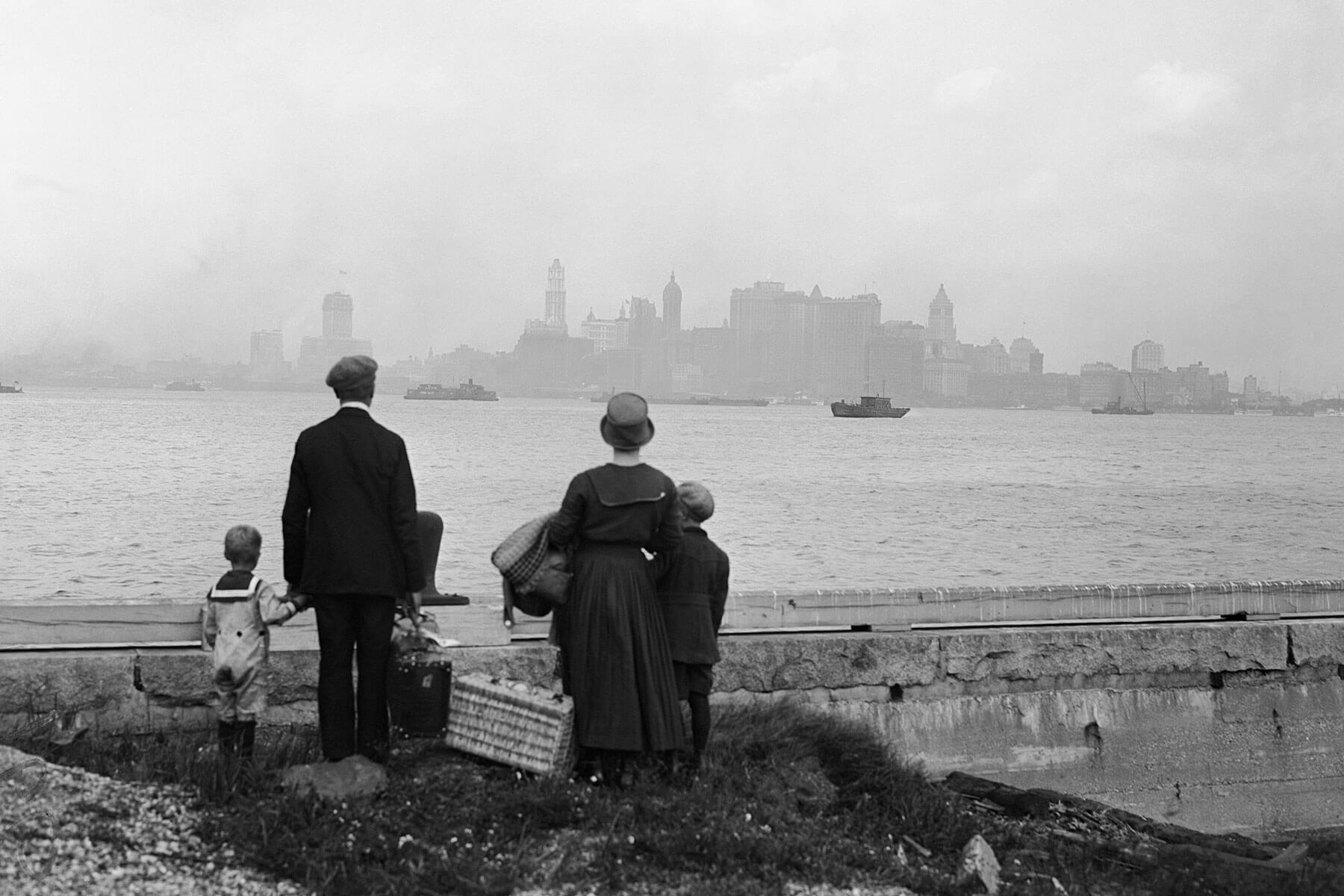
The 1923 Ellis Island scene depicting the arrival of Cara Dutton and her family features a mix of meticulous historical set design and minor dramatic liberties. While the overall visual atmosphere, architectural backdrop, and registration procedures accurately reflect immigration processing in the early 1920s, specific details regarding passenger queues, legal status, and processing logic contain intentional historical compression for narrative purposes.
Understanding the Historical Context of Ellis Island in 1923
To evaluate the accuracy of any cinematic depiction of Ellis Island, one must first examine the operational and legislative realities of the facility in 1923. By the early 1920s, the peak years of mass European migration—which saw thousands of arrivals daily in the first decade of the century—had changed significantly due to sweeping legislative shifts and post-World War I geopolitics.
The passage of the Emergency Quota Act of 1921 established strict numerical limits on immigration based on national origins, capping arrivals from specific countries and fundamentally altering how the station operated. When fictional or historical characters step off ships at Ellis Island in 1923, they are entering a station under intense bureaucratic strain, shifting from an institution designed primarily for rapid processing and medical exclusion to one defined by strict mathematical gatekeeping.
Consequently, the physical environment captured in period dramas must account for both the iconic red-brick architecture of the main building and the quieter, more anxious atmosphere brought on by quota restrictions. Understanding this transition is essential for separating authentic historical texture from television set dressing.
Architectural and Environmental Set Design Accuracy
The visual representation of Ellis Island relies heavily on the iconic architecture of the Main Building, specifically the Registry Room (also known as the Great Hall) with its vaulted Gustavino tile ceiling. Production design for period dramas depicting this era generally invests heavily in recreating the vast, echoing scale of the Great Hall, complete with the metal railings that divided immigrants into various queues based on their manifest numbers and suspected medical conditions.
| Feature / Element | 1923 Era Reality | Cinematic Portrayal in Period Dramas | Accuracy Assessment |
|---|---|---|---|
| Registry Room Layout | Metal pipe barriers organizing crowds into winding lines beneath massive arched windows. | Recreated using soundstages or digital extensions mirroring the historic Great Hall. | High: Visually faithful to archival photographs from the early 1920s. |
| Clothing and Luggage | Wool coats, flat caps, headscarves, and battered wooden trunks or wicker baskets. | Costuming reflects working-class attire of post-WWI Europe and America. | Moderate to High: Period-accurate fabrics, though often cleaner than authentic travel-worn clothing. |
| Crowd Density | Moderately controlled due to the 1921 Quota Act slowing arrivals compared to 1907 peaks. | Frequently portrayed as overwhelmingly dense and chaotic for dramatic tension. | Moderate: Exaggerated for emotional impact; actual 1923 processing was more regulated by quotas. |
| Medical Inspections | Rapid "six-second medical exam" at the top of the stairs, looking for trachoma, lameness, and breathing issues. | Dramatized physical examinations and chalk markings on coats. | High: Captures the notorious chalk marking system and rapid-fire screening process. |
The attention to detail regarding clothing, baggage, and architectural geometry provides a strong foundation of verisimilitude. However, television productions often amplify crowd density and noise to heighten the disorientation experienced by characters who are unfamiliar with the American immigration apparatus.
Bureaucratic Procedures: Manifests, Interrogations, and Quotas
Beyond the physical look of the hall, the administrative reality of 1923 immigration processing involved rigorous documentation. Every steamship passenger's name, age, occupation, final destination, and amount of money in possession was recorded on detailed ship manifests before arrival.
In historical reality, inspectors cross-referenced these manifests line by line during primary inspection. If a passenger's paperwork matched and they posed no medical threat, the process took hours rather than days. However, the 1923 setting introduces specific narrative friction regarding quotas:
- Nationality Quotas: The 1921 Act (and the even stricter Johnson-Reed Act of 1924) restricted immigration to 3 percent of the foreign-born population of each nationality residing in the United States as of the 1910 census.
- Detention and Deportation: Characters arriving from regions that had exhausted their annual country quota faced immediate temporary detention or risk of exclusion, a dramatic reality that scripted shows utilize for narrative conflict.
- Financial Thresholds: Immigrants were required to prove they would not become a public charge, necessitating visible funds or a pre-arranged sponsor with verifiable financial stability.
While the administrative steps shown on screen—such as answering questions from registry clerks and translators—are structurally sound, television narratives occasionally gloss over the complex mathematical tracking of national quotas to keep the pacing brisk.
Medical Screening Protocols and the "Chalk Mark" Mythos
Medical examinations were the most feared part of the Ellis Island experience, and cinematic adaptations frequently lean heavily into these rituals. Inspectors stationed at the head of the stairs leading into the Registry Room observed immigrants for physical ailments, limps, shortness of breath, and signs of mental distress.
The use of chalk marks to designate suspected medical issues—such as "H" for heart conditions, "X" for mental defects, or "Ct" for trachoma—is a well-documented historical practice. However, popular media sometimes sensationalizes these markings into permanent stigmas rather than administrative shorthand used by medical examiners to route individuals to secondary physical inspection lines.
The 1923 timeline aligns with a period when medical standards had become highly formalized. Doctors trained to spot infectious diseases within seconds were a fixture of the Great Hall. The depiction of these screenings in period media generally holds up to historical scrutiny, capturing the anxiety and impersonal nature of early 20th-century public health protocols at the border.
Frequently Asked Questions
Did American citizens or domestic travelers pass through Ellis Island in 1923?
No. Ellis Island was exclusively a station for incoming foreign immigrants and steerage passengers. First- and second-class passengers often underwent a cursory inspection on board the ship and bypassed Ellis Island entirely, unless they exhibited severe medical symptoms or legal inadmissibility. Domestic travelers moved through standard train stations and ports without federal immigration oversight.
How accurate are the costumes worn by immigrants in 1923 scenes?
Costume departments for major historical dramas typically rely on extensive archival photography from the Library of Congress and Lewis Hine collections. Wool suits, durable work trousers, heavy overcoats, and modest dresses reflect the everyday wear of European laborers and families in the early 1920s.
Why would established American characters need to visit Ellis Island?
In dramatic narratives, established citizens or long-term residents often visit Ellis Island to sponsor, rescue, or secure the release of newly arrived relatives who have been detained for medical reasons, lack of funds, or quota complications. Historically, sponsors frequently traveled to the station to post bonds or provide affidavits verifying they would support the arriving individual.
Did everyone entering through Ellis Island face detention?
No. The vast majority of immigrants—roughly 80 to 85 percent—passed through primary inspection in a matter of hours and were cleared to board ferries bound for Manhattan or New Jersey railway terminals. Only those flagged for medical or legal review were sent to the dormitories or hospital facilities for secondary questioning.
How did the 1921 Emergency Quota Act change Ellis Island by 1923?
The quota system drastically reduced the daily volume of arrivals compared to the pre-World War I era. Instead of processing 5,000 to 10,000 people daily, the station managed tightly controlled numbers dictated by monthly and yearly nationality limits, shifting Ellis Island's function from an open gateway to a restrictive bureaucratic filter.
Conclusion and Verification Summary
The depiction of Ellis Island in 1923 successfully captures the imposing architecture, medical screening anxiety, and bureaucratic machinery of post-World War I American immigration. While dramatic compression occasionally accelerates paperwork verification or amplifies crowd confusion for narrative impact, the foundational elements—from the Great Hall queues to chalk-marked medical inspections—remain faithful to historical records of the era. Viewers examining these scenes can trust the broad environmental and procedural authenticity, even as individual character storylines are heightened for dramatic engagement.