The 19th century—spanning from January 1, 1801, to December 31, 1900—was a transformative epoch defined by rapid industrialization, sweeping geopolitical revolutions, unprecedented scientific breakthroughs, and massive demographic shifts. Often referred to as the long nineteenth century, this period bridged the gap between early modern agrarian societies and the complex, interconnected global landscape of the modern era. Understanding the foundational milestones of this century provides vital context for contemporary political systems, economic models, and social structures.
1. The Napoleonic Wars and the Congress of Vienna (1803–1815)
The Napoleonic Wars radically destabilized the traditional monarchies of Europe, spreading revolutionary concepts of nationalism, civil law, and constitutional government across the continent. Following the ultimate defeat of Napoleon Bonaparte, European powers convened at the Congress of Vienna in 1814 and 1815. Orchestrated by statesmen such as Klemens von Metternich, the congress sought to restore a balance of power and suppress revolutionary fervor.
While the resulting Concert of Europe maintained relative peace among major powers for decades, it also suppressed legitimate demands for democratic representation and national self-determination, setting the stage for future uprisings across the continent.
2. The Rise of the Industrial Revolution and Mechanized Production (Circa 1800–1850s)
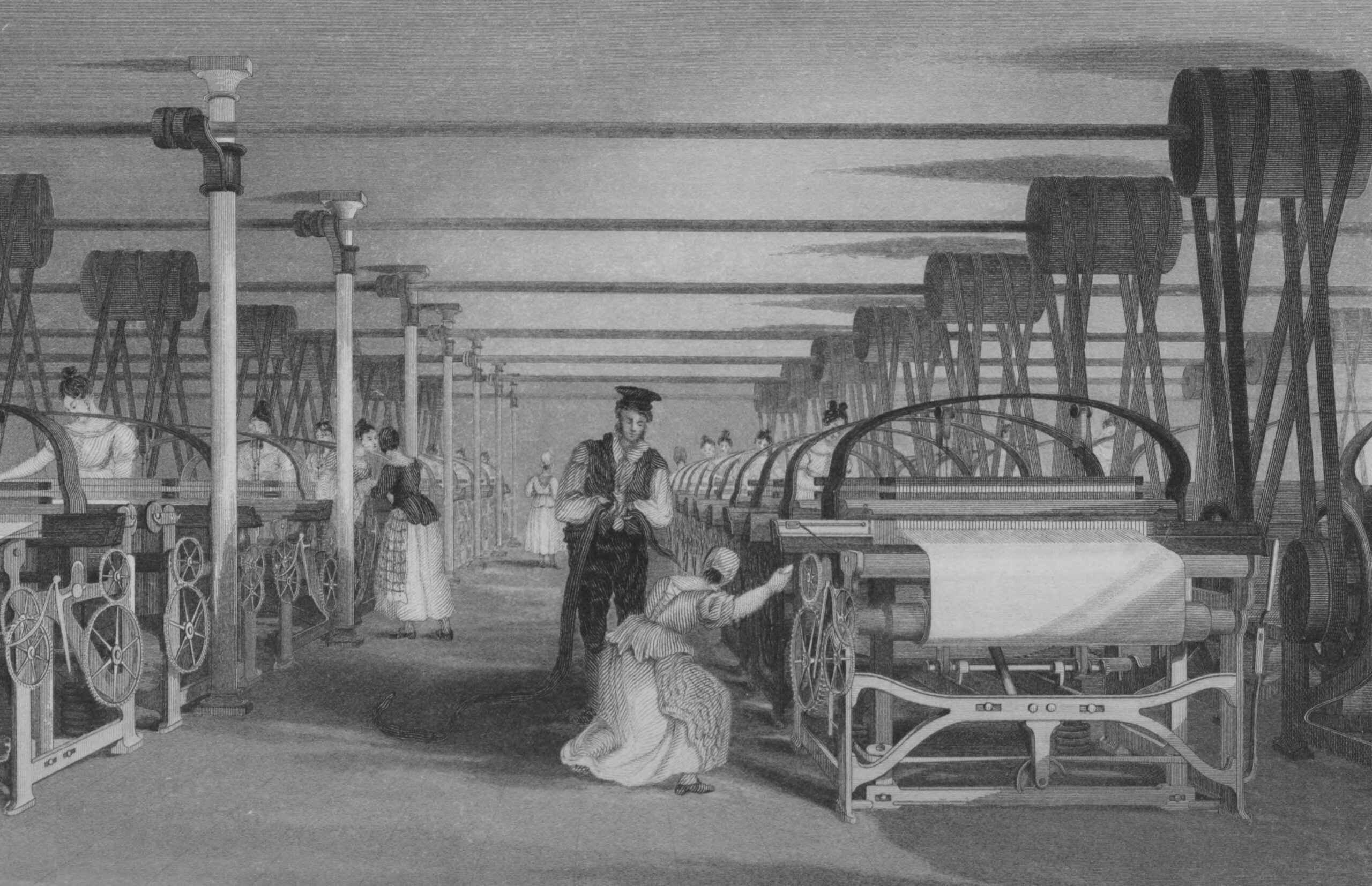
Originating in Great Britain before spreading across Western Europe and North America, the Industrial Revolution fundamentally replaced muscle and water power with steam and machine power. The widespread adoption of James Watt’s steam engine revolutionized manufacturing, transforming cottage industries into centralized factory systems.
This shift created profound economic growth, increased urbanization, and generated entirely new social classes: the industrial bourgeoisie and the urban proletariat. However, it also sparked severe social challenges, including grueling factory labor, unsafe working conditions, and widespread urban pollution.
3. The Abolition of the Transatlantic Slave Trade and Slavery (1807–1888)
A momentous moral and political shift occurred during the 19th century as organized abolitionist movements dismantled legal human bondage across the Western world. Great Britain banned the transatlantic slave trade in 1807 and abolished slavery across most of its empire in 1833.
The movement reached a climax in the United States with the American Civil War and the subsequent ratification of the Thirteenth Amendment in 1865. Brazil became the final major Western nation to abolish the institution entirely in 1888, closing a dark chapter of institutionalized human exploitation while grappling with the long-term legacies of racial inequality.
4. The Latin American Wars of Independence (1808–1826)
Inspired by the American and French Revolutions, and catalyzed by Napoleon’s invasion of Spain, Spanish American colonies fought protracted wars for independence. Key military commanders such as Simón Bolívar and José de San Martín led decisive campaigns that liberated vast territories from Spanish colonial rule.
New republics—including Gran Colombia, Argentina, Chile, Peru, and Mexico—emerged from the conflict. Despite gaining political sovereignty, these young nations faced severe economic instability, regional fragmentation, and persistent political authoritarianism throughout the remainder of the century.
5. The Invention and Expansion of the Railway Network (1825)
The launch of the Stockton and Darlington Railway in England in 1825 inaugurated the railway age, instantly shrinking geographical distances and accelerating economic integration. Railways facilitated the rapid transport of raw materials, manufactured goods, and human labor across vast continental interiors.
In North America, the completion of the First Transcontinental Railroad in 1869 physically united the Atlantic and Pacific coasts, transforming domestic markets and accelerating westward expansion at the profound expense of indigenous populations.
6. The European Revolutions of 1848 ("The Spring of Nations")
In 1848, a historic wave of sweeping revolutionary upheavals erupted across Europe, stretching from France and the German states to the Austrian Empire and Italy. Driven by a volatile mix of economic hardship, liberal aspirations, and emerging nationalist identities, protestors demanded democratic reforms, freedom of the press, and constitutional governance.
Although most of these uprisings were ultimately suppressed by conservative military forces, the Revolutions of 1848 permanently fractured the old dynastic order and proved that popular political mobilization could no longer be permanently ignored.
7. The Publication of On the Origin of Species (1859)
Charles Darwin published On the Origin of Species in 1859, introducing the scientific theory of evolution by natural selection. This monumental work challenged long-held religious and philosophical orthodoxies regarding the creation of life and humanity's place within the natural world.
Darwin’s discoveries triggered intense intellectual debates across biology, theology, and philosophy, laying the empirical foundations for modern life sciences and permanently altering humanity's understanding of its own biological history.
8. The American Civil War and Preservation of the Union (1861–1865)
The American Civil War was a catastrophic internal conflict fought between the federal Union and the breakaway Confederate States of America, which had seceded over the existential issue of slavery. Claiming over 600,000 lives, the war resolved the fundamental constitutional question of state sovereignty versus federal authority.
The Union victory preserved the United States as a single nation and resulted in the Emancipation Proclamation, destroying the legal foundation of chattel slavery and initiating the complex, contested Reconstruction era.
9. The Unification of Italy (Risorgimento, 1861)
The Risorgimento, or resurgence, culminated in 1861 with the formal proclamation of the Kingdom of Italy under King Victor Emmanuel II. Through a combination of diplomatic maneuvering by figures like the Count of Cavour and military campaigns led by revolutionary icon Giuseppe Garibaldi, the historically fragmented Italian peninsula was unified into a single sovereign nation-state.
This geopolitical milestone demonstrated the immense potency of 19th-century nationalism as a force capable of redrawing the map of Europe.
10. The Emancipation of the Serfs in Russia (1861)
Tsar Alexander II issued the Emancipation Manifesto of 1861, freeing more than 23 million privately owned serfs across the Russian Empire. This monumental legal reform aimed to modernize Russia's backward agrarian economy and preempt violent peasant uprisings.
However, the complex redemption payments required from newly freed peasants created deep-seated rural poverty, heavy debt burdens, and lingering social unrest that ultimately fueled the radical political movements of the early 20th century.
11. The Unification of Germany (1871)
Following the decisive victory of the Kingdom of Prussia and its German allies in the Franco-Prussian War, the German Empire was proclaimed at the Palace of Versailles in January 1871. Engineered by Chancellor Otto von Bismarck, this unification welded disparate German states into a formidable industrial and military superpower in the heart of Europe.
The emergence of a unified Germany fundamentally disrupted the traditional European balance of power, creating an economic and military titan that would dominate continental affairs for decades.
12. The Meiji Restoration in Japan (1868)
The Meiji Restoration marked the end of the Tokugawa shogunate and the return of practical imperial rule under Emperor Meiji in 1868. Recognizing the existential threat posed by Western imperialism, Japan embarked on a radical, state-directed program of modernization, industrialization, and militarism under the slogan Fukoku Kyōhei ("Enrich the Country, Strengthen the Army").
Within a few decades, Japan transformed from an isolated feudal society into a modern industrial powerhouse capable of defeating both China and Russia in subsequent wars.
13. The Invention of the Telephone and Electrical Grids (1876–1880s)
The late 19th century witnessed an explosion of telecommunications and electrical engineering that modernized daily life. Alexander Graham Bell patented the telephone in 1876, revolutionizing human communication by enabling instant long-distance voice transmission.
Shortly thereafter, inventors such as Thomas Edison and Nikola Tesla developed practical incandescent lighting, centralized electrical generation stations, and alternating current (AC) power grids. These innovations illuminated urban centers, extended human productivity past daylight hours, and laid the groundwork for modern electronic infrastructure.
14. The Scramble for Africa (1881–1914)
The Scramble for Africa was the rapid colonization, annexation, and division of African territory by European powers during the New Imperialism period. Formalized at the Berlin Conference of 1884–1885, European nations carved up the continent with little regard for indigenous ethnic, linguistic, or political boundaries.
Driven by the demand for raw materials, new markets, and nationalist prestige, this aggressive expansion subjected millions of Africans to brutal economic exploitation, systemic violence, and cultural disruption while sowing the seeds of modern geopolitical conflicts.
15. The Rise of Modern Mass Political Movements and Socialism (Late 19th Century)
As industrialization concentrated massive urban workforces into factories, labor unions and socialist political parties gained immense traction. Karl Marx and Friedrich Engels published The Communist Manifesto in 1848, but Marxist ideology and labor syndicalism flourished organizationally in the late 19th century with the founding of organizations like the Second International in 1889.
Workers organized mass strikes and demanded the eight-hour workday, universal suffrage, and social safety nets, successfully forcing governments to expand political enfranchisement and regulate corporate abuses.
16. The First Modern Olympic Games (1896)
Driven by the vision of French educator Pierre de Coubertin, the revival of the Olympic Games took place in Athens, Greece, in 1896. This event marked the birth of modern international sports culture, designed to promote global peace, cross-cultural understanding, and physical education.
The revival reflected the late 19th-century obsession with internationalism, bodily discipline, and national prestige, evolving rapidly into one of the most widely watched cultural institutions in human history.
17. The Discovery of X-Rays and Radioactivity (1895–1898)
Scientific inquiry underwent a radical paradigm shift at the close of the century with the discovery of invisible radiation. In 1895, Wilhelm Röntgen discovered X-rays, revolutionizing medical diagnosis.
Shortly thereafter, Marie and Pierre Curie isolated polonium and radium, pioneering the study of radioactivity. These groundbreaking discoveries upended classical Newtonian physics, revealing that atoms were not indivisible entities and opening the door to the atomic age of the 20th century.
18. The First Sino-Japanese War (1894–1895)
Fought primarily over influence in Korea, the First Sino-Japanese War exposed the severe structural decay of the Qing Dynasty in China and demonstrated the shocking efficiency of Meiji Japan’s military modernization.
Japan’s decisive victory forced China to cede Taiwan and sign the humiliating Treaty of Shimonoseki. This conflict signaled a historic shift in East Asian hegemony, wherein an Asian nation successfully adopted Western industrial and military methods to defeat a traditional regional empire.
19. The Boxer Rebellion and the Decline of the Qing Dynasty (1899–1901)
The Boxer Rebellion was an anti-foreign, anti-imperialist, and anti-Christian uprising staged in northern China by the Militia United in Righteousness (the "Boxers"). Frustrated by foreign economic exploitation, territorial concessions, and Christian missionary encroachment, the rebels besieged foreign legations in Beijing.
An international coalition of eight nations intervened militarily to crush the rebellion, imposing severe indemnities on China. This catastrophe accelerated the terminal collapse of the Qing Dynasty, paving the way for the Chinese Revolution of 1911.
Comparative Overview of Major 19th-Century Transformations
| Domain | Key Milestone / Event | Primary Global Impact |
|---|---|---|
| Industry & Infrastructure | Invention of Railways & Steam Engines | Accelerated mass production, transformed global trade routes, and enabled rapid urbanization. |
| Geopolitics & Empire | The Scramble for Africa & Meiji Restoration | Reshaped global power dynamics, subjugated vast territories, and modernized East Asian governance. |
| Civil Rights & Labor | Abolition of Slavery & Rise of Socialism | Dismantled legal human bondage and established modern labor protections and political enfranchisement. |
| Science & Medicine | Darwin’s Evolution & Discovery of X-Rays | Upended classical biology and physics, creating the foundations for modern scientific inquiry. |
Frequently Asked Questions
Why is the 19th century often called the "Long Nineteenth Century"?
Historians, notably Eric Hobsbawm, refer to the period from 1789 to 1914 as the "long nineteenth century" because it represents a coherent historical cycle defined by the rise of industrial capitalism, bourgeois society, and European global hegemony, beginning with the French Revolution and ending abruptly with the outbreak of World War I.
How did the Industrial Revolution alter global demographics?
The Industrial Revolution triggered massive rural-to-urban migration as millions of agricultural workers moved to factory-heavy cities. This demographic shift caused unprecedented urban population growth, housing shortages, and the development of modern municipal sanitation and public health systems.
What role did nationalism play in 19th-century conflicts?
Nationalism acted as both a unifying and destructive force. It successfully unified fractured populations into powerful nation-states like Italy and Germany, but it also fueled imperialistic competition, ethnic tensions within multi-ethnic empires, and intense rivalries that culminated in global warfare.
How did scientific discoveries in the 19th century impact religion?
Scientific milestones, particularly Charles Darwin’s theory of evolution and breakthroughs in geology and physics, challenged literal interpretations of religious texts. This fostered a growing cultural tension between traditional religious faith and empirical, secular scientific rationalism.
Strategic Next Actions for Historical Research
To deepen your exploration of this era, examine primary source documents such as political manifestos, parliamentary inquiry reports on factory labor, and colonial treaties. Investigating local archives or digital repositories like the Internet Archive and Google Arts & Culture offers direct access to 19th-century periodicals, maps, and artifacts, providing a nuanced understanding of how historical actors experienced these world-shaping events.