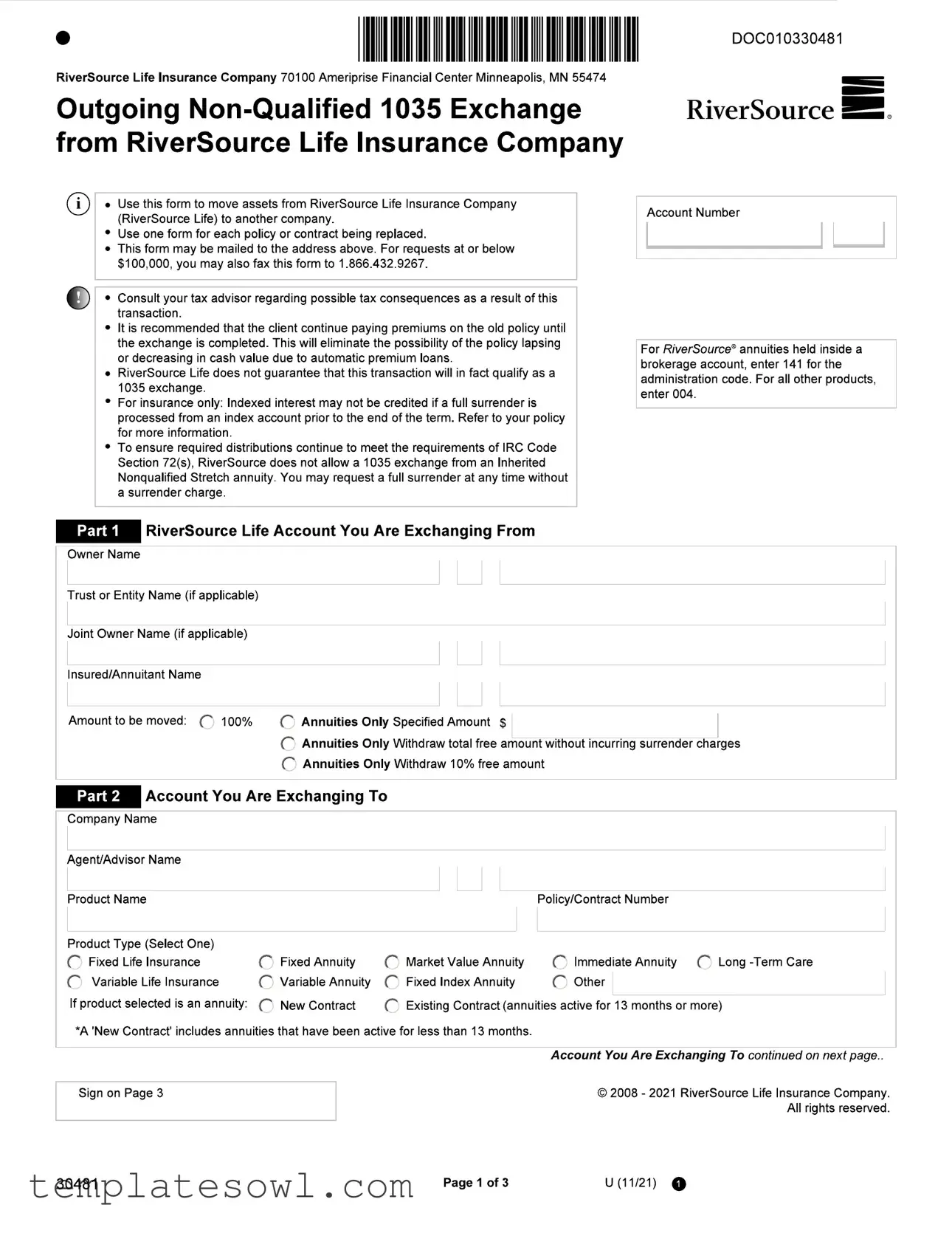
Executing a tax-free 1035 exchange from an existing cash-value life insurance policy into a dedicated long-term care solution allows policyholders to redirect accumulated capital toward escalating healthcare expenses without triggering immediate income tax liabilities. This specialized financial maneuver leverages Internal Revenue Code Section 1035, permitting the transfer of policy values directly between insurance carriers while preserving the tax-deferred status of accumulated gains, ultimately providing vital protection against the high costs of extended medical and custodial care.
Understanding the Mechanics of Section 1035 Exchanges
Internal Revenue Code Section 1035 establishes rules under which certain life insurance, endowment, and annuity contracts can be exchanged for alternative contracts without creating a taxable event for the policyholder. When applied to long-term care (LTC) planning, this provision enables individuals who no longer require a large death benefit—or who find their current life insurance premiums unsustainable—to repurpose their accumulated cash value.
The primary advantage is tax efficiency. If a policyholder simply surrendered a life insurance policy for its cash value, any amount received in excess of the policy's cost basis (the total premiums paid minus any previous distributions) would be treated as ordinary income and taxed accordingly in the year of the surrender. By utilizing a direct 1035 exchange into a qualifying long-term care contract or an asset-based hybrid product, that tax liability is deferred, allowing 100% of the cash value to transition to the new product.
However, the statutory requirements are strict. The exchange must be executed as a direct, carrier-to-carrier transfer. At no point may the policyholder take constructive receipt of the funds; if a check is issued directly to the owner, the transaction loses its 1035 status, becomes a taxable surrender, and may trigger substantial ordinary income taxes. Furthermore, the IRS mandates specific product pathways for these exchanges, meaning careful coordination between the relinquishing and receiving insurance companies is mandatory from the outset.
Qualifying Product Pathways for the Exchange
Not all insurance products can be freely exchanged into one another under Section 1035. The tax code outlines specific allowable directions, creating distinct pathways for transitioning life insurance cash values into long-term care coverage.
- Relinquishing Contract (Cash-Value Life Insurance Policy)
- Direct Carrier-to-Carrier Transfer (IRC Section 1035)
- Receiving Contract Options
- Standalone Long-Term Care Insurance
- Asset-Based / Hybrid Life + LTC
- Qualifying Annuity with LTC Rider
1. Life Insurance to Standalone Long-Term Care Insurance
While historically more complex, regulatory updates and specific legislative frameworks have clarified pathways to move funds from life insurance into standalone indemnity or reimbursement LTC policies. However, many traditional standalone LTC carriers do not accept 1035 exchanges directly because they are structured as term-like or pure health insurance contracts rather than cash-value accumulation vehicles.
2. Life Insurance to Asset-Based (Hybrid) Long-Term Care Policies
This is the most common and operationally streamlined pathway. Asset-based products—often structured as universal life insurance policies with robust long-term care riders or linked-benefit contracts—are specifically designed to accept 1035 exchanges from older life insurance policies. These hybrid products serve a dual purpose: if you need long-term care, the pool of money accelerates to pay for care; if you pass away without needing care, a tax-free death benefit is paid to your beneficiaries.
3. Life Insurance to Annuities with Long-Term Care Riders
Another viable route involves exchanging a life insurance policy for a deferred or immediate annuity that features an integrated long-term care rider or a qualifying chronic illness rider. While Section 1035 allows life-to-annuity exchanges tax-free, the reverse (annuity to life insurance) is prohibited. This pathway allows the cash value to grow within an annuity framework while securing dedicated benefits for potential future health events.
Step-by-Step Execution Process
Executing a 1035 exchange requires precise administrative coordination. Deviating from the required sequence can result in processing delays, rejected applications, or inadvertent tax penalties.
- Evaluate Existing Coverage and Cost Basis: Obtain an official in-force illustration and a statement of cost basis from your current life insurance carrier. Determine whether the cash value significantly exceeds your total premium payments, as this dictates your potential tax exposure if the exchange is botched.
- Select the Receiving Product and Carrier: Work with a licensed financial professional to identify a qualifying hybrid or long-term care product that aligns with your health profile, financial goals, and premium budget. Complete formal underwriting for the new policy before initiating the exchange paperwork.
- Submit the 1035 Exchange Paperwork: Complete the receiving carrier’s application alongside their specific Section 1035 exchange form. You will need to explicitly state the policy number, the exact amount to be transferred (full or partial exchange), and contact details for the relinquishing company.
- Coordinate the Direct Transfer: The receiving company submits a formal transfer request to your current insurer. Your current insurer processes the request, liquidates the policy, and issues a direct check or wire transfer to the new company, accompanied by a cost-basis tracking statement.
- Verify Completion and Basis Carryover: Once the funds are received, the new carrier issues a confirmation statement. Ensure that the historical cost basis has successfully transferred to the new policy, as this figure determines the tax status of any future withdrawals or benefits.
Comparing Life Insurance Surrender vs. 1035 Exchange to LTC
| Feature | Direct Surrender & Repurchase | Section 1035 Exchange |
|---|---|---|
| Tax Treatment | Gains are treated as ordinary income in the year of surrender. | Gains transfer tax-free, preserving capital for the new policy. |
| Capital Preservation | Reduced by immediate tax liability; less money goes toward LTC. | 100% of eligible cash value moves directly into the new product. |
| Underwriting Requirements | Requires separate underwriting for the new LTC or hybrid policy. | Requires underwriting for the new policy; exchange is contingent on approval. |
| Administrative Complexity | Low immediate paperwork; high financial friction due to taxes. | Moderate to high paperwork; requires precise carrier coordination. |
| Product Flexibility | Allows purchase of any standalone or hybrid LTC solution freely. | Restricted by IRS statutory rules governing allowable exchange directions. |
Key Financial, Tax, and Underwriting Considerations
Before initiating a 1035 exchange to fund long-term care, policyholders must carefully weigh several structural implications that affect long-term financial security.
Tax Implications and Partial Exchanges
If you execute a full 1035 exchange, the transfer is entirely tax-free. However, if you execute a partial exchange—where a portion of the cash value is withdrawn in cash while the remainder is transferred—the IRS applies "serializer" rules. Under these rules, any cash withdrawn or left behind up to the amount of the gain is treated as a taxable distribution rather than a tax-free return of principal.
Underwriting Hurdles
Qualifying for long-term care benefits or hybrid policies is medically rigorous. Unlike a simple cash-value transfer, the receiving carrier must approve your health status. If you have experienced significant health declines since purchasing your original life insurance policy, you may be rated up, charged higher premiums, or denied coverage entirely. It is critical to secure underwriting approval before surrendering or binding the exchange on your existing policy.
Surrender Charges and Vesting Schedules
Older life insurance policies often carry surrender charge schedules that decline over a period of years (typically 5 to 15 years from policy inception). Exchanging a policy during the active surrender charge window will incur severe penalty fees from the relinquishing carrier, which can drastically diminish the cash value transferred to the new long-term care solution. Always verify that your current policy has passed its surrender charge period or calculate whether the long-term benefit of the LTC coverage outweighs the short-term penalty cost.
Common Mistakes to Avoid
Navigating insurance contracts and tax codes introduces several pitfalls that can cost policyholders thousands of dollars or compromise their insurance coverage.
- Triggering a Constructive Receipt: Never request that the relinquishing company send the cash value check directly to you. If the funds touch your personal bank account, the IRS views the transaction as a taxable surrender, instantly destroying the 1035 tax shelter.
- Failing to Verify Cost Basis Transfer: Ensure the receiving carrier correctly logs your historical cost basis. If the basis is lost or reset to zero during the transfer, future distributions or policy liquidations could be subjected to double taxation or incorrect reporting.
- Exchanging Out of a Guarantees-Only Policy: Some older whole life or universal life policies feature exceptionally favorable, outdated guarantees (such as high guaranteed interest rates or secondary guarantees). Exchanging these away for a modern hybrid product requires careful quantitative analysis to ensure you are not trading away a superior underlying financial asset.
- Dropping Existing Coverage Prematurely: Do not cancel your old life insurance policy until the new long-term care or hybrid policy has been formally approved, issued, and funded. Premature cancellation can leave you entirely uninsured if underwriting issues arise mid-process.
Frequently Asked Questions
Can I exchange a term life insurance policy for long-term care insurance via a 1035 exchange?
No. Term life insurance policies do not build cash value. Because Section 1035 requires a cash value or accumulation fund to execute the tax-free transfer, term policies cannot be used in a 1035 exchange. The strategy is restricted exclusively to permanent life insurance policies, such as whole life, universal life, or variable life.
What happens to my original life death benefit after a 1035 exchange?
Your original death benefit is completely terminated when the life insurance policy is surrendered for the exchange. However, if you exchange into an asset-based hybrid product, the new policy typically provides a restructured death benefit alongside the long-term care benefits, ensuring your beneficiaries still receive financial support if long-term care is never required.
Are there limits on how much cash value I can transfer?
The IRS does not place a monetary cap on the amount you can transfer via a 1035 exchange. However, the receiving carrier may impose internal maximum limits on single-premium deposits or hybrid policy funding based on your age, gender, and underwriting classification.
Can I do a partial 1035 exchange to keep a small life insurance policy active?
Yes, partial 1035 exchanges are legally permitted under IRS Revenue Procedure 2011-38. You can split your cash value, transferring a portion into an LTC vehicle while leaving the remainder in the original life insurance policy. However, these transactions are subject to strict IRS monitoring regarding gain allocation and are more heavily scrutinized during processing.
Next Steps and Professional Guidance
Executing a 1035 exchange from life insurance to long-term care requires balancing complex tax regulations, insurance underwriting standards, and personal estate planning goals. Because individual financial situations, policy cost bases, and health profiles vary widely, consult with a fee-only financial planner, certified public accountant (CPA), or an independent insurance specialist licensed in your jurisdiction before initiating any transfer paperwork. Request comprehensive in-force ledger illustrations from your current provider and alternative product quotes to model both the tax outcomes and the long-term care benefit projections accurately.