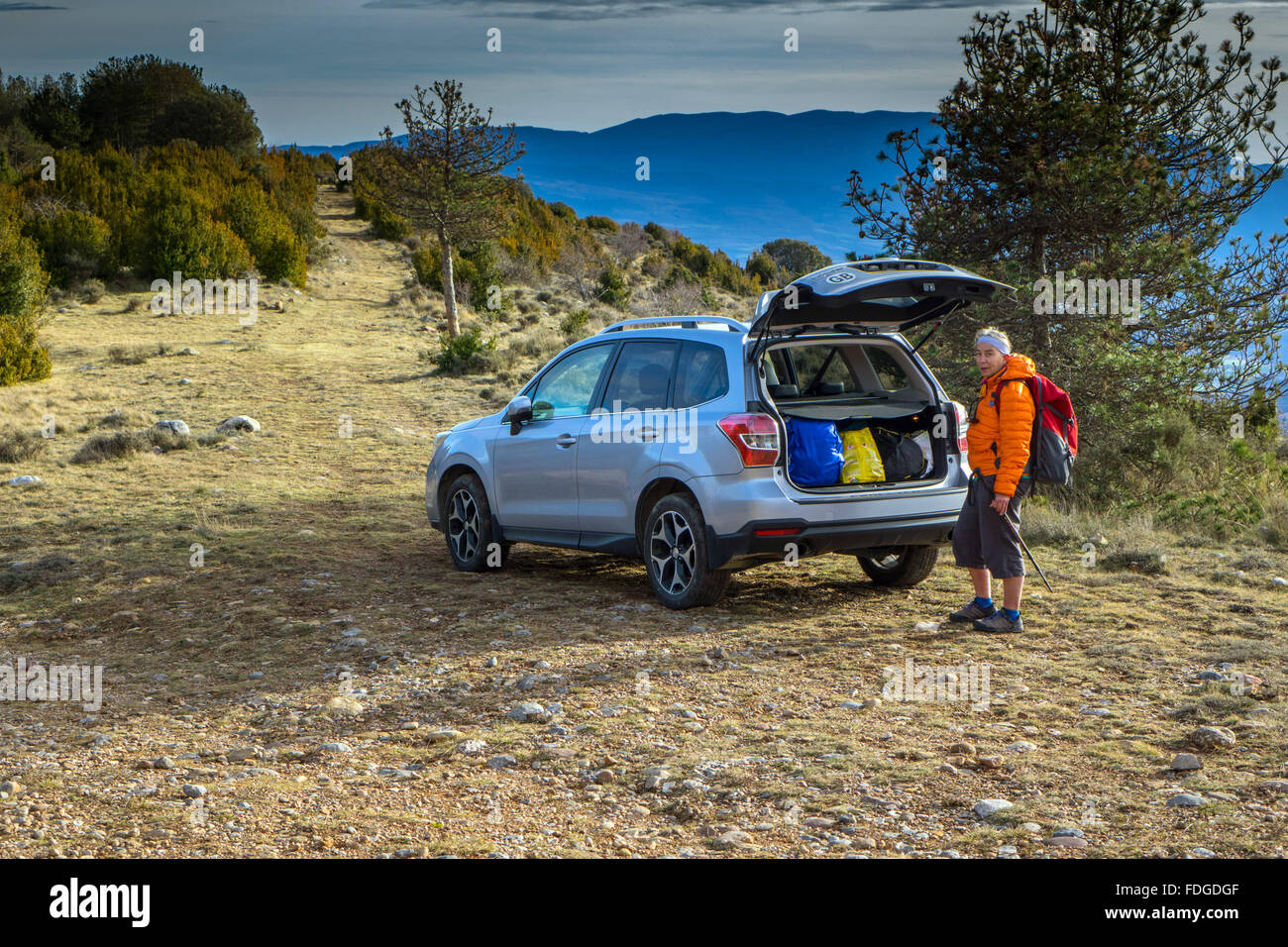
Subaru’s reputation for sure-footed handling stems largely from its distinctive approach to vehicle dynamics, which relies heavily on a symmetrical layout paired with permanent traction systems rather than traditional part-time configurations. While many motorists use the term "four-wheel drive" interchangeably with all-wheel drive, Subaru's engineering philosophy centers on a specialized Symmetrical All-Wheel Drive architecture that continuously distributes power to all four wheels. Understanding how these mechanical and electronic systems operate requires looking past standard marketing labels to examine the engineering choices, real-world traction benefits, and mechanical limitations that define the brand.
1. The Core Definition: Symmetrical All-Wheel Drive vs. Traditional 4WD
To understand Subaru vehicles, one must first clarify the terminology. While the everyday driver often searches for "Subaru 4 wheel drive cars," the manufacturer almost exclusively equips its modern lineup with Symmetrical All-Wheel Drive (AWD). Unlike traditional part-time four-wheel-drive (4WD) systems found in heavy-duty trucks—which typically operate in rear-wheel drive until the driver manually engages a transfer case for slippery conditions—Subaru's system is engaged continuously.
The term "symmetrical" refers to the layout of the drivetrain. The longitudinal engine layout sits in a straight line down the center of the vehicle, matching a symmetrically designed drivetrain layout that runs from the transmission straight back to the rear differential. This creates optimal balance and equal weight distribution across the left and right sides of the car. This balanced layout minimizes rotational torque steer and helps the tires maintain consistent grip during acceleration and cornering across both dry asphalt and low-traction surfaces.
2. Variations of the System Based on Transmission Type
Not all Subaru AWD systems function identically. The exact mechanical or electronic setup depends heavily on whether the vehicle is equipped with a manual transmission, a traditional automatic, or a Lineartronic Continuously Variable Transmission (CVT).
- Continuous AWD (Manual Transmission): Vehicles paired with a manual transmission utilize a viscous-coupling limited-slip center differential. Under normal driving conditions, power is split 50/50 front-to-rear. If wheel slippage occurs, the viscous fluid heats up and thickens, transferring more torque to the wheels with better traction.
- Active Torque Split AWD (Automatic/CVT): Most modern Subarus using a CVT feature an electronically managed transfer clutch. A computer continuously monitors wheel speed, throttle position, and acceleration, actively shifting power between the front and rear axles in real time.
- VTD (Variable Torque Distribution): Found in higher-performance or turbocharged models, this planetary gear type center differential usually splits power with a rear-wheel bias (typically 45/55 front-to-rear), providing a sportier driving dynamic while maintaining maximum traction.
3. Low Center of Gravity via the Boxer Engine
The effectiveness of Subaru's traction system is heavily dependent on the engine configuration. Almost every Subaru vehicle utilizes a Boxer engine, where the pistons move horizontally outward from a central crankshaft rather than vertically or at an angle.
This horizontal layout creates a very low profile. When mounted in the engine bay, the Boxer engine sits lower to the ground than traditional inline-four or V6 engines. Combined with the low-slung symmetrical drivetrain, this significantly lowers the vehicle’s center of gravity. When navigating snow-covered roads or cornering sharply in adverse weather, this low center of gravity works in tandem with the all-wheel-drive system to reduce body roll and keep the tires firmly planted against the road surface.
4. Active Torque Vectoring and Stability Control Integration
Mechanical grip is only part of the equation in modern vehicles. Subaru integrates its traction-management hardware with sophisticated electronic stability control software. Active Torque Vectoring, which is standard or available on many models, helps eliminate understeer during aggressive cornering.
When the vehicle senses it is pushing wide on a turn, the system automatically applies a subtle amount of braking force to the inside front wheel while sending more power to the outside wheel. This yaw control works seamlessly with the Symmetrical AWD system, ensuring that power is not just sent to all four wheels, but specifically directed to the wheels that can use it most effectively to maintain the driver's intended line.
5. X-Mode for Advanced Off-Road and Low-Traction Conditions
For drivers tackling deep snow, mud, steep inclines, or loose gravel, many modern Subaru SUVs (such as the Forester, Outback, and Crosstrek) feature X-Mode. When activated at low speeds, X-Mode takes over engine output, transmission ratios, AWD clutch engagement, and the Vehicle Dynamics Control (VDC) system to optimize traction.
X-Mode integrates Hill Descent Control, which automatically maintains a constant, safe vehicle speed when creeping down steep, slippery slopes. By managing engine braking and individual wheel braking, the driver can focus entirely on steering rather than modulating the brake pedal on icy or loose surfaces. Dual-function X-Mode variants offer specific settings for "Snow/Dirt" and "Deep Snow/Mud," allowing the system to allow controlled wheel slip to clear mud or snow from the tire treads.
6. Fuel Efficiency Trade-offs of Permanent AWD
A common concern among prospective buyers is the fuel economy penalty associated with driving all four wheels constantly. Traditional part-time 4WD vehicles often suffer from poor fuel economy because driving four heavy wheels introduces continuous mechanical drag.
Subaru has mitigated this disadvantage through continuous engineering refinements of its Lineartronic CVT and lightweight engine materials. While a permanent AWD system does consume slightly more fuel than a comparable front-wheel-drive sedan, modern Subarus achieve competitive EPA fuel economy ratings. For example, compact models like the Impreza and Crosstrek regularly achieve high highway fuel economy figures, proving that permanent traction does not automatically demand excessive fuel consumption.
7. Tire Maintenance and Critical Tread Depth Requirements
Because Subaru’s Symmetrical AWD system constantly transfers power across all four wheels, it requires strict adherence to tire maintenance. Uneven tire wear can place continuous strain on the center differential or transfer clutch, potentially leading to expensive mechanical failure.
- The Quarter-Inch Rule: All four tires must have matching tread depths, typically within a quarter-inch of each other (or within 2/32 of an inch).
- Full Replacement: If a single tire suffers an unrepairable puncture and the remaining three tires have significant wear, vehicle owners often must replace all four tires simultaneously to prevent differential damage.
- Regular Rotation: Rotating tires every 5,000 to 6,000 miles is essential to ensure even wear across the front and rear axles.
8. Misconceptions Regarding Off-Road Capability
While Subaru vehicles are exceptionally capable in inclement weather, deep snow, and light-to-moderate unpaved trails, it is vital to distinguish them from heavy-duty off-road vehicles. Subarus are unibody passenger cars and crossovers, not body-on-frame trucks with low-range transfer cases.
Vehicles like the Outback Wilderness have increased ground clearance (often 8.7 to 9.5 inches) and protective skid plates, making them remarkably proficient over rough terrain. However, they lack the low-range gearing required for extreme rock crawling or deep mud bogs. Recognizing these mechanical boundaries prevents drivers from overestimating their vehicle's capabilities in extreme backcountry environments.
9. Comparison of Subaru AWD Systems Across Popular Models
Different models serve different driving needs, utilizing distinct iterations of the core technology. The table below outlines how various vehicle classes implement traction management:
| Model Category | Primary System Type | Typical Torque Split | Notable Traction Features |
|---|---|---|---|
| Compact Cars (Impreza) | Active Torque Split AWD | Variable (Front-bias) | Vehicle Dynamics Control, Traction Control |
| Crossover SUVs (Forester, Crosstrek) | Active Torque Split AWD | Variable (Front-bias) | Standard X-Mode, SI-Drive performance management |
| Midsize SUVs (Outback, Ascent) | Active Torque Split AWD | Variable (Front-bias) | Dual-Function X-Mode, Hill Descent Control |
| Performance (WRX) | Continuous AWD (Manual) or VTD (CVT) | 50/50 or Rear-bias | Sport-tuned suspension, Active Torque Vectoring |
10. Safety Ratings and Real-World Weather Performance
The ultimate validation of Subaru's traction engineering lies in its performance during severe weather events. By maintaining power delivery to all four wheels at all times, the system reduces the likelihood of sudden loss of traction during unexpected hydroplaning or ice patches.
Insurance Institute for Highway Safety (IIHS) evaluations and federal crash tests consistently award Subaru models high marks, aided by the stability of the AWD system combined with advanced driver-assist technologies like EyeSight Driver Assist. This system pairs adaptive cruise control and pre-collision braking with the mechanical agility of the drivetrain, creating a comprehensive safety net for everyday driving conditions.
| Feature | Subaru Symmetrical AWD | Traditional Part-Time 4WD | Front-Wheel Drive (FWD) |
|---|---|---|---|
| Operation | Full-time, automatic | Manual engagement required | Front wheels only |
| Best Use | Rain, snow, light trails, dry pavement | Deep mud, sand, heavy rocks | Dry or mildly wet pavement |
| Fuel Impact | Moderate | High | Lowest |
| Driver Input | None (fully automatic) | Manual lever/switch | None |
Frequently Asked Questions
Do Subaru cars have true 4-wheel drive?
No. Subaru vehicles utilize Symmetrical All-Wheel Drive (AWD) rather than traditional part-time four-wheel drive (4WD). While both systems send power to all four wheels, AWD operates continuously without driver intervention and is designed primarily for all-weather road handling, light off-roading, and slippery conditions, whereas traditional 4WD uses low-range gearing intended for heavy off-road use.
Can I mix different tire brands or tread depths on a Subaru?
No. Mixing tires with different tread depths, brands, or sizes can cause the center differential to overheat and wear out prematurely due to differences in wheel rotation speeds. It is crucial to maintain matching tires across all four positions and replace them as a set when necessary.
Are Subarus good in deep snow?
Yes. Thanks to high ground clearance on models like the Forester, Outback, and Crosstrek, combined with permanent power delivery and electronic features like X-Mode, Subarus perform exceptionally well in deep snow compared to standard front-wheel-drive or rear-wheel-drive passenger vehicles.
Do Subaru AWD systems require special maintenance?
The AWD system itself generally does not require frequent maintenance beyond standard transmission and differential fluid inspections outlined in the owner's manual. However, strict adherence to tire rotation and replacement schedules is mandatory to protect the drivetrain.
Can a Subaru tow trailers with its AWD system?
Yes, many Subaru models are equipped for towing. Models like the Outback and Ascent feature robust towing capacities, and the AWD system helps maintain stability when pulling trailers on wet or slippery boat ramps and highways. Always check the specific manufacturer towing limits for your exact trim level.