Navigating the financial and legal requirements of obtaining an SR-22 certificate can feel overwhelming, especially when you are already dealing with the aftermath of a major driving violation, a DUI, or a license suspension. An SR-22 is not an insurance policy itself, but rather a document or endorsement—often called a Certificate of Financial Responsibility—that your auto insurance company files with your state department of motor vehicles (DMV) to prove that you carry the minimum liability coverage required by law. Understanding how these filings affect your premiums, what to expect from providers, and how to secure the best rates is essential for getting back on the road legally and affordably.
Understanding the SR-22 Requirement and Its Purpose
An SR-22 is a mandatory filing ordered by a court or state department of motor vehicles to monitor high-risk drivers. It serves as an official guarantee to the state that your auto insurance policy will not be canceled, terminated, or allowed to lapse without the insurance company immediately notifying the authorities. Because this places an added administrative and legal liability on the insurer, finding and maintaining this coverage requires specific knowledge of how insurance markets operate for drivers with blemishes on their driving records.
Why Do Drivers Need an SR-22?
States typically require an SR-22 after a driver has committed serious traffic offenses or accumulated an excessive number of points on their motor vehicle record. Common triggers include:
- Driving under the influence (DUI) or driving while intoxicated (DWI).
- Driving without valid auto insurance or being involved in an accident while uninsured.
- Accumulating too many traffic violations or speeding tickets within a short timeframe.
- Reckless driving charges or vehicular manslaughter convictions.
- Having a driver's license suspended or revoked for administrative reasons.
When a state mandates an SR-22, you cannot legally drive until your insurance provider files the document and the state processes it. Failing to maintain this coverage results in immediate re-suspension of your driver's license and vehicle registration.
The Difference Between an SR-22 and Standard Insurance
Many motorists mistakenly believe that an SR-22 is a specialized type of comprehensive auto insurance policy. In reality, it is a simple endorsement added to a standard liability or full-coverage policy.
Standard insurance policies protect you against financial loss in the event of an accident. An SR-22 simply layers a reporting obligation onto that policy. Because insurance companies view drivers who need an SR-22 as statistically higher risks, they adjust their underwriting guidelines accordingly, resulting in higher premiums compared to standard, clean-record drivers.
Types of SR-22 Filings: Operator vs. Owner Policies
Depending on whether you own a vehicle, your insurance agent will need to write a specific type of SR-22 policy. Selecting the correct category is vital to ensure you remain legally compliant without paying for unnecessary coverage.
Owner SR-22 Insurance
If you own a registered vehicle and drive it regularly, you will purchase a standard owner's auto insurance policy with an SR-22 endorsement attached. This covers any vehicle listed on the policy and protects you while driving your own car. It provides liability coverage for bodily injury and property damage you may cause to others, and can be extended to include collision and comprehensive coverage for your own vehicle.
Non-Owner SR-22 Insurance
If you do not own a car but frequently borrow vehicles, drive company cars, or rent automobiles, you will need a non-owner SR-22 policy. This provides secondary liability coverage when you drive a vehicle owned by someone else. Non-owner policies are typically much cheaper than owner policies because they do not tie coverage to a specific physical asset, reducing the insurer's risk exposure.
Operator-Only SR-22 Insurance
Similar to a non-owner policy, an operator certificate is designed for individuals who drive vehicles they do not own. It ensures that you meet state financial responsibility laws regardless of which non-owned vehicle you are operating at the time of an incident.
Financial Impact and Cost Expectations of SR-22 Quotes
Securing quotes for an SR-22 policy requires anticipating increased expenses. The cost of the filing itself is usually nominal—typically a one-time processing fee ranging from $15 to $50 charged by the insurance company. However, the true financial impact lies in the elevated insurance premiums that accompany high-risk status.
Factors Influencing Your SR-22 Quote
Insurance underwriters evaluate multiple risk factors when generating an SR-22 quote. Understanding these variables can help you manage and eventually lower your ongoing costs:
- The Underlying Violation: A DUI conviction carries significantly higher rate hikes than a paperwork violation or minor speeding infraction.
- State Regulations: Insurance markets and minimum liability limits vary widely by state, directly influencing baseline pricing.
- Driving History: Past accidents, prior lapses in coverage, and other moving violations compound the rate increase.
- Credit History: In most states, insurers use credit-based insurance scores to predict the likelihood of future claims.
- Vehicle Make and Model: Expensive, high-performance vehicles cost more to insure, compounding the high-risk multiplier.
Estimated Rate Comparisons for High-Risk Drivers
To understand how an SR-22 and its triggering violation affect monthly out-of-pocket expenses, review the following comparative breakdown of average market impacts:
| Violation Type | Average Premium Increase | Typical Filing Fee | Duration Requirement |
|---|---|---|---|
| First-Time Speeding Infraction | 15% – 30% | N/A (No SR-22) | Varies |
| At-Fault Accident with Property Damage | 40% – 60% | $15 – $50 (If required) | 1 to 3 Years |
| Driving Without Insurance Lapse | 50% – 80% | $15 – $50 | 3 Years |
| Driving Under the Influence (DUI) | 80% – 150%+ | $15 – $50 | 3 to 5 Years (State-dependent) |
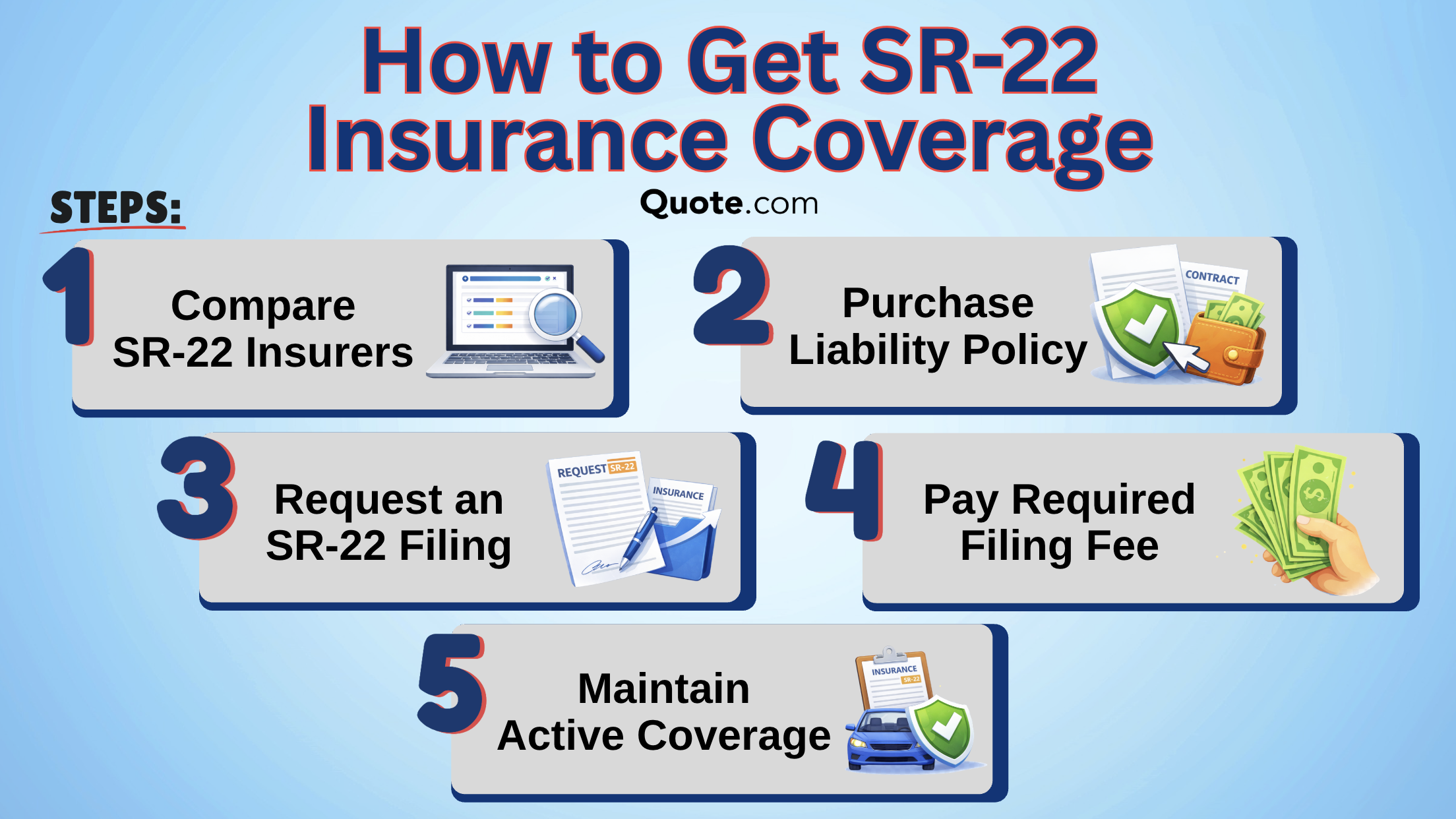
How to Shop for and Compare SR-22 Quotes
Shopping for SR-22 quotes requires a strategic approach. Not all insurance companies offer SR-22 filings, and some mainstream carriers drop policyholders whose records include serious infractions. Knowing how to navigate the market ensures you find affordable, reliable coverage.
Step 1: Gather Your Documentation and Record Details
Before requesting quotes, obtain a certified copy of your driving record from your state's motor vehicle department. Knowing the exact dates of violations, case numbers, and court requirements prevents miscommunications with insurance agents and ensures your quotes are accurate from the start.
Step 2: Target Insurers That Specialize in High-Risk Drivers
Reach out to national and regional carriers that explicitly accommodate high-risk drivers. Companies like Progressive, Geico, and Allstate often handle SR-22 filings, as do specialized non-standard carriers. Be transparent about your record during the initial consultation to avoid having a policy quoted and subsequently canceled during underwriting verification.
Step 3: Request Quotes for Both Owner and Non-Owner Policies
If you do not currently own a car, always ask for a non-owner SR-22 quote first. This can save you hundreds or even thousands of dollars annually compared to buying a traditional owner policy when you have no vehicle to insure.
Step 4: Maximize Available Discounts
Even with a high-risk record, you may still qualify for various insurance discounts. Inquire about:
- Paperless billing and automatic payment setups.
- Paying your annual or six-month premium in full.
- Completing a state-approved defensive driving course.
- Bundling renters or homeowners insurance if applicable.
Common Mistakes to Avoid When Managing an SR-22
Maintaining an SR-22 requires strict adherence to administrative timelines and payment schedules. Minor oversights can reset your mandatory filing period or result in severe legal penalties.
Allowing a Policy Lapse
The single most dangerous mistake a driver can make is missing an insurance payment. If your policy lapses for even a single day, your insurance company is legally obligated to file an SR-26 form with the state, notifying them that your coverage has terminated. This triggers an immediate, automatic re-suspension of your driver's license and restarts your mandatory SR-22 timeline from day one.
Failing to Notify the DMV of Address Changes
Moving to a new address—especially across state lines—complicates SR-22 compliance. If you move, your insurance company must update your filing to reflect your new state's specific financial responsibility laws. Always coordinate with your insurer and the DMV immediately upon relocating.
Canceling the SR-22 Too Early
States generally require drivers to maintain an SR-22 continuously for a set period, typically between one and five years depending on the offense. Always verify your exact discharge date in writing with your state's department of motor vehicles before asking your insurance company to remove the SR-22 endorsement. Removing it prematurely invalidates your driving privileges.
Frequently Asked Questions About SR-22 Quotes
How long do I need to keep an SR-22 on my insurance policy?
The duration of your SR-22 requirement is determined by state law and the severity of the offense that triggered it. In most jurisdictions, the standard requirement is three consecutive years, though serious offenses like repeat DUIs may require five years or more of uninterrupted filing.
Can I get an SR-22 quote if I do not own a car?
Yes. You can purchase a non-owner SR-22 insurance policy. This provides liability coverage when you drive vehicles belonging to other people and fulfills state legal requirements without requiring you to register a vehicle in your name.
Does my insurance rate go down automatically after the SR-22 period ends?
Insurance rates do not always drop automatically once your SR-22 requirement expires. While the surcharge for the filing itself will disappear, your underlying driving record still influences your rates until the points from the infraction age off your record entirely. Contact your agent to review your rates once your filing period concludes.
Will my current insurance company drop me if I need an SR-22?
Some standard insurance carriers do not offer SR-22 filings or choose not to renew policies for drivers who have accumulated major violations. If your current insurer refuses to file the document, you will need to shop for a new policy with a carrier that specializes in high-risk drivers.
Are SR-22 filings expensive to process?
The insurance company's fee for filing the SR-22 form with the state is relatively inexpensive, typically ranging from $15 to $50. However, the overall cost of your auto insurance policy will increase significantly due to the high-risk classification associated with the underlying driving infraction.
Next Steps and Action Plan
To secure an SR-22 policy efficiently, start by requesting a copy of your official driving record from your state's DMV. Contact multiple high-risk insurance providers to compare quotes, making sure to specify whether you need an owner or non-owner policy. Once you select a provider, verify that they submit the electronic filing directly to the state promptly. Finally, set up automatic monthly payments to eliminate the risk of accidental policy lapses, ensuring your path to restoring full driving privileges remains uninterrupted.