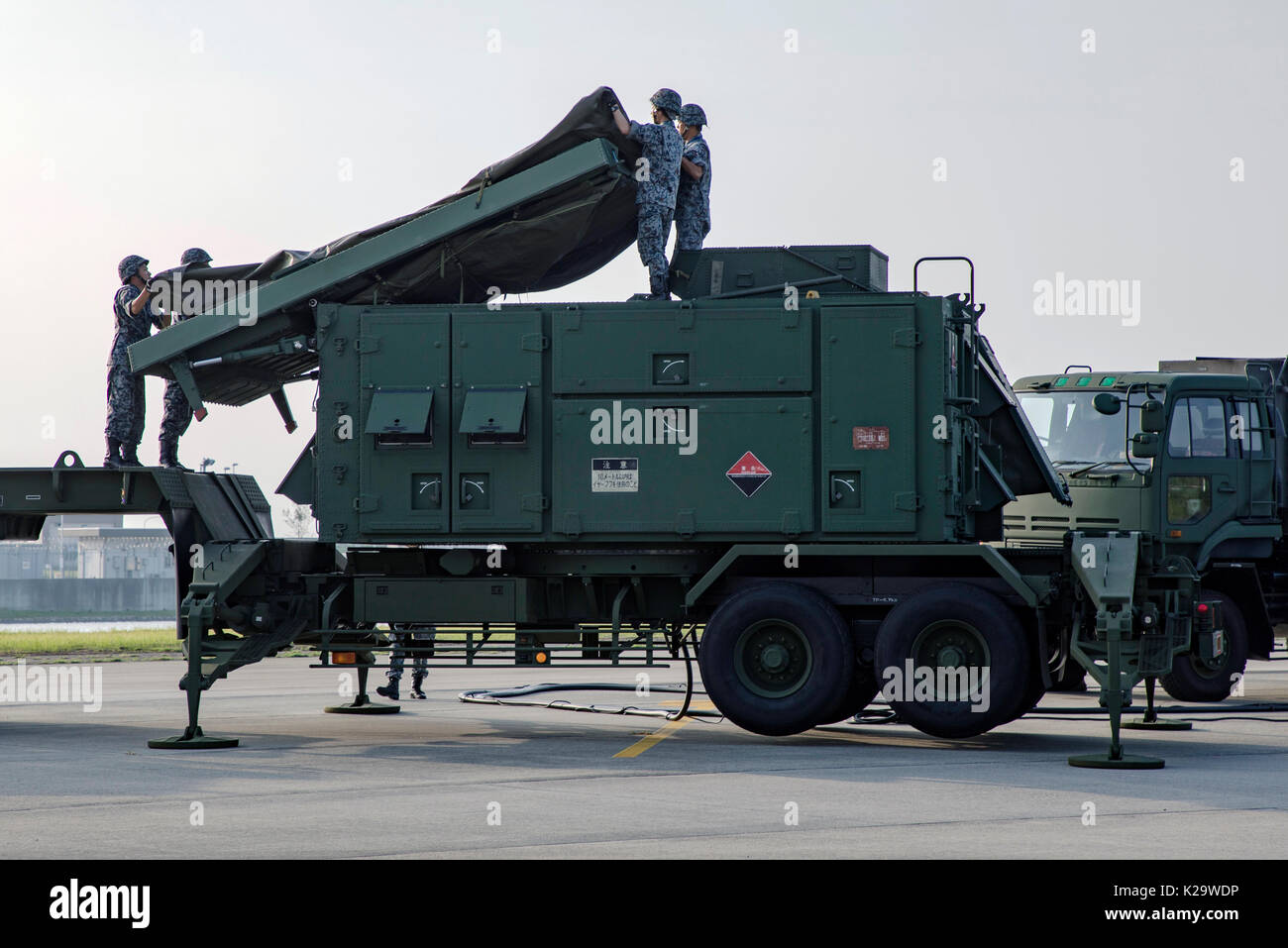
The AN/MPQ-65 is a high-performance, C-band passive electronically scanned array (PESA) radar that serves as the primary sensor for the MIM-104 Patriot Missile System. It provides critical functions including volume search, target detection, classification, tracking, and missile guidance. As of 2026, it remains the backbone of global Integrated Air and Missile Defense (IAMD), facilitating the transition toward next-generation 360-degree sensing capabilities.
The Evolution of the Patriot Radar: From MPQ-53 to MPQ-65
To understand the AN/MPQ-65, one must first look at its predecessor, the AN/MPQ-53. For decades, the MPQ-53 was the gold standard for tactical air defense. However, as the threat landscape evolved to include stealthier cruise missiles, high-velocity tactical ballistic missiles (TBMs), and sophisticated electronic countermeasures, the United States Army and Raytheon developed the AN/MPQ-65 upgrade.
The transition to the "65" designation represented a significant hardware and software overhaul. While the external appearance of the radar—a large rectangular phased array mounted on an M860 semi-trailer—remained largely the same, the internal components were revolutionized. The primary driver for the MPQ-65 was the need to support the PAC-3 (Patriot Advanced Capability-3) missile, which required higher precision and more data-rich environment processing than earlier versions.
In 2026, the AN/MPQ-65 continues to be modernized via the Post-Deployment Build (PDB) software increments. These updates allow the hardware to process more complex signal returns, effectively "seeing" through the digital noise generated by modern electronic warfare (EW) suites.
Technical Specifications and Functional Capabilities
The AN/MPQ-65 is a multi-function radar, meaning it performs tasks that traditionally required several different radar units. This consolidation is achieved through the use of phased-array technology, where the beam is steered electronically rather than by physically rotating the antenna.
Frequency and Bandwidth
The system operates in the C-band (4 to 8 GHz). This frequency range is a strategic "sweet spot" for long-range air defense. It provides a better resolution than the lower-frequency S-band radars used for broad surveillance, allowing for more precise tracking of small targets. Conversely, it offers better atmospheric penetration and longer range than the higher-frequency X-band radars often used for terminal engagement.
Tracking and Engagement
The radar utilizes a Passive Electronically Scanned Array (PESA). Unlike Active Electronically Scanned Arrays (AESA) that have thousands of small transmit/receive modules, the PESA uses a single powerful transmitter (typically a Traveling Wave Tube or TWT) and distributes that energy through a phase-shifter network.
Key functional capabilities include:
- Target Discrimination: The ability to distinguish between a lethal warhead and debris or decoys.
- Track-Via-Missile (TVM): A unique guidance method where the radar tracks the target and the missile simultaneously. The missile's on-board seeker "looks" at the target and sends data back to the ground radar, which then calculates the final interception commands.
- Sector Search: While the radar can scan a wide area, it is optimized for a 120-degree sector. In 2026, this remains a primary operational constraint compared to newer 360-degree systems.
Comparative Analysis: AN/MPQ-65 vs. Legacy and Successor Systems
As the defense industry moves toward the Lower Tier Air and Missile Defense Sensor (LTAMDS), the AN/MPQ-65 occupies a middle ground in terms of technology and capability. The following table highlights the progression of these systems.
| Feature | AN/MPQ-53 (Legacy) | AN/MPQ-65 (Current Standard) | LTAMDS (Successor/Emerging) |
|---|---|---|---|
| Technology | PESA (Passive Array) | PESA (Enhanced) | AESA (Active Array) |
| Primary Band | C-Band | C-Band | Gallium Nitride (GaN) Based |
| Detection Angle | 120-Degree Sector | 120-Degree Sector | 360-Degree Coverage |
| Target Capacity | Moderate | High (Multi-Target) | Extreme (Swarm Focus) |
| Clutter Rejection | Basic | Advanced Digital Processing | AI-Enhanced Filtering |
| Maintenance | High (Mechanical parts) | Improved Modular Design | Highly Modular (Line Replaceable) |
The Power of Digital Signal Processing
The "Implications" of the MPQ-65 often center on its signal processing. By 2026, the radar has integrated more powerful commercial off-the-shelf (COTS) processors. This allows the system to run algorithms that can identify the "micro-Doppler" signatures of drone rotors. In an era where small Unmanned Aerial Vehicles (UAVs) pose a significant threat to high-value assets, the MPQ-65’s ability to differentiate a bird from a loitering munition is a critical survival factor for the battery.
Operational Implications and the 2026 Threat Environment
The deployment of the AN/MPQ-65 is not merely a technical choice but a strategic one. In the current geopolitical climate, the radar faces several specific challenges that define its operational use.
The Challenge of Hypersonics
While the AN/MPQ-65 was primarily designed to counter traditional ballistic and cruise missiles, the rise of hypersonic glide vehicles (HGVs) has forced a shift in how the radar is utilized. Because HGVs fly at high speeds but at lower altitudes than standard ballistic missiles, the "radar horizon" becomes a limiting factor. To counter this, MPQ-65 units are increasingly networked into a "Sensor Net" where data from space-based assets and other ground-based radars are fused to give the Patriot battery more reaction time.
Electronic Warfare (EW) and Survivability
In 2026, the electromagnetic spectrum is a contested domain. The AN/MPQ-65 employs sophisticated frequency-hopping techniques to avoid jamming. Because it is a high-power emitter, it acts as a "beacon" for anti-radiation missiles (ARMs). Operational doctrine now emphasizes "emissions control" (EMCON) and the use of decoy emitters to protect the actual radar unit from being targeted by enemy SEAD (Suppression of Enemy Air Defenses) operations.
Mobility and Deployment
The MPQ-65 is designed for "shoot and scoot" tactics. In 2026, the speed at which a Patriot battery can teardown, move, and set up again is a primary metric of its effectiveness. The radar's integration with the M860 trailer allows it to be transported by C-17 aircraft, making it a rapidly deployable asset for global contingencies. However, the requirement for a level site and the physical footprint of the radar and its supporting Power Plant (EPP) remains a logistical hurdle compared to smaller, modern AESA systems.
Global Distribution and Interoperability
The AN/MPQ-65 is used by over a dozen nations, including many NATO members, Saudi Arabia, Japan, and Taiwan. This wide distribution creates a significant advantage: interoperability.
Under the "Integrated Battle Command System" (IBCS) framework, an AN/MPQ-65 owned by one nation can, in theory, provide tracking data to a launcher owned by another. This "any sensor, best shooter" concept is the holy grail of modern missile defense. In 2026, the MPQ-65 serves as a reliable, known quantity in this complex data-sharing network. It provides a stabilized data stream that newer, more experimental systems use as a baseline for calibration.
Maintenance, Sustainment, and Lifecycle Costs
Maintaining a phased-array radar of this magnitude is a massive financial and technical undertaking. The sustainment of the AN/MPQ-65 in 2026 focuses on three main areas:
- Traveling Wave Tube (TWT) Management: The central power source of the radar is a vacuum tube device that has a finite lifespan. Logistics chains are optimized to ensure that these rare and expensive components are available globally.
- Software PDB-8.1 and Beyond: Much like a modern smartphone, the radar's hardware is only as good as its software. Ongoing "Post-Deployment Builds" are required to keep the system compatible with new missile variants like the PAC-3 MSE (Missile Segment Enhancement).
- Environmental Adaptation: Operating in the desert (high heat/sand) versus the Pacific (high humidity/salt) requires different maintenance cycles. The MPQ-65 has been ruggedized over decades, but the cooling systems for the massive amount of electronics remain a point of frequent maintenance.
Frequently Asked Questions
Does the AN/MPQ-65 provide 360-degree coverage?
No. The AN/MPQ-65 is a fixed-panel phased-array radar that typically covers a 120-degree sector. While the trailer can be physically rotated to point in a different direction, it cannot scan 360 degrees simultaneously. This is the primary reason the U.S. Army is transitioning to the LTAMDS system, which features smaller side panels for full-circle coverage.
What is the maximum range of the AN/MPQ-65?
While the exact range is classified and depends on the target's Radar Cross Section (RCS), the radar is generally effective at detecting high-altitude targets at ranges exceeding 150 kilometers. For smaller, low-flying targets like cruise missiles, the range is significantly reduced due to the curvature of the earth and terrain masking.
Can the AN/MPQ-65 track multiple targets at once?
Yes. One of the defining features of phased-array technology is the ability to "interleave" tasks. The radar can scan for new targets while simultaneously maintaining "quality tracks" on dozens of confirmed threats and providing guidance commands to multiple interceptors in the air.
How does weather affect the radar's performance?
Because the MPQ-65 operates in the C-band, it is relatively resistant to "rain clutter" compared to higher-frequency radars. However, extreme weather can still degrade performance. The system includes advanced weather-mapping algorithms that allow operators to filter out atmospheric noise while maintaining a lock on solid targets.
Is the AN/MPQ-65 being phased out in 2026?
The process has begun, but "phased out" is a strong term. While the U.S. Army is actively fielding the LTAMDS to replace the MPQ-65 in "first-to-fight" units, the sheer number of MPQ-65 units in global service means it will likely remain operational well into the 2030s. Most units are currently undergoing modernization rather than retirement.
Practical Recommendations for 2026 Operations
For defense planners and technical operators, the focus on the AN/MPQ-65 should remain on data integration. The radar is no longer an island; its value in 2026 is tripled when it is integrated into a multi-domain architecture.
- Prioritize Software Parity: Ensure that all units in a theater are running the same PDB (Post-Deployment Build) version to avoid data-sharing lag.
- Invest in Passive Sensors: Supplement the MPQ-65 with passive optical or infrared sensors. Since the radar must emit to see, having a passive "backup" allows the battery to maintain situational awareness without giving away its position.
- Focus on Training: The complexity of the MPQ-65’s ECCM (Electronic Counter-Countermeasures) suite requires highly trained operators. Simulation-based training that mimics the 2026 EW environment is essential for maintaining a high "probability of kill" (Pk).
The AN/MPQ-65 is a testament to the longevity of well-designed military hardware. Through a series of iterative upgrades, a system designed in the late 20th century remains a viable and lethal component of modern defense, proving that in the world of radar, processing power and signal clarity are just as important as the raw energy of the beam.