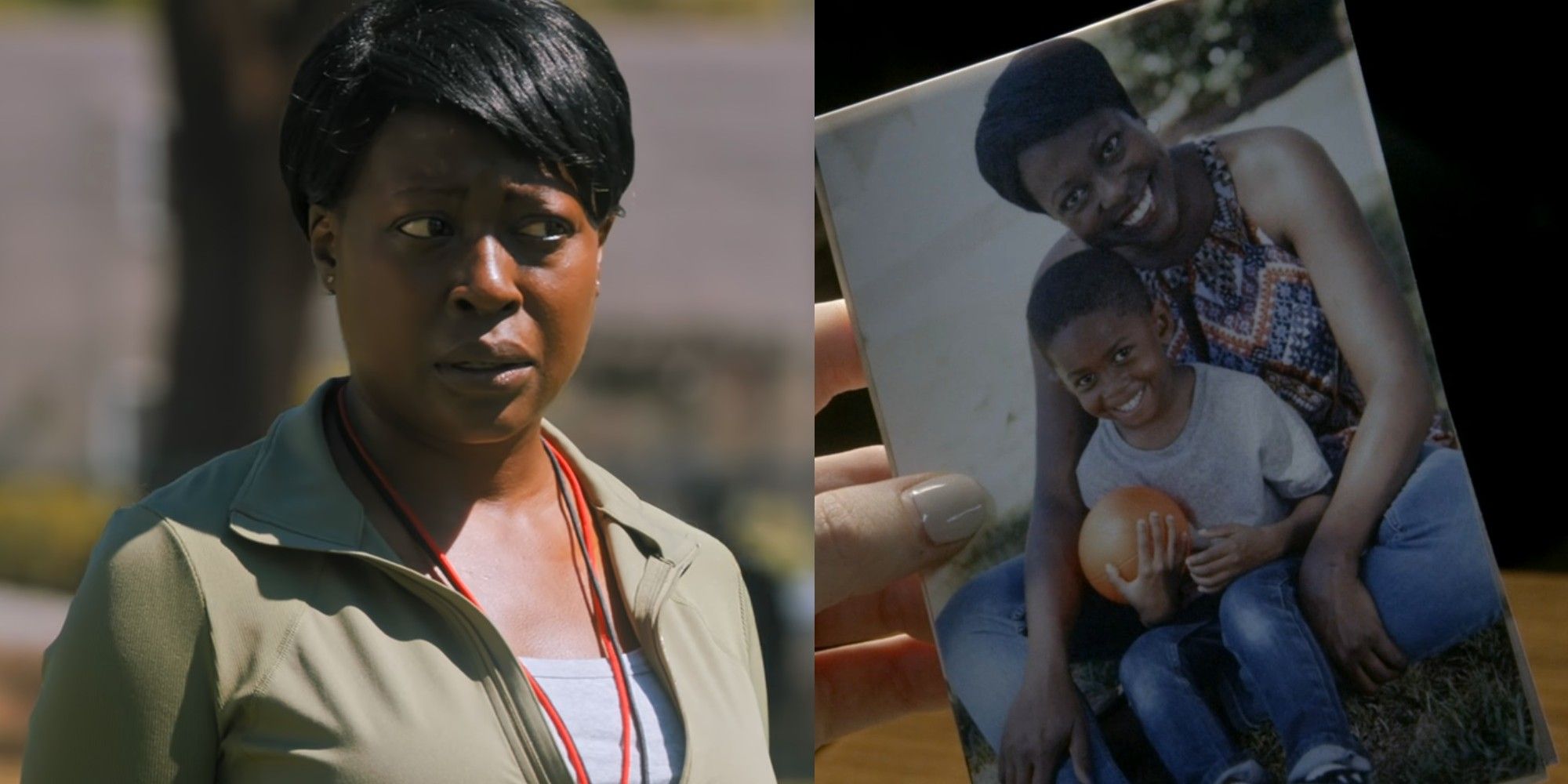
In the first season of Netflix’s The Lincoln Lawyer, the mystery of who killed Jerry Vincent is solved when Mickey Haller discovers that Judge Mary Holder orchestrated the murder. She hired a former client and "fixer" named McSweeney to kill Jerry after he discovered her lucrative scheme of taking bribes to rig jury selections.
The death of Jerry Vincent serves as the catalyst for the entire first season. Jerry, a prominent defense attorney and former colleague of Mickey Haller, is gunned down in a parking garage in the opening episode. This event forces Mickey out of a year-long hiatus and back into the courtroom, as he inherits Jerry’s entire legal practice—including the high-profile murder trial of tech mogul Trevor Elliott. Understanding the layers of this murder mystery requires looking closely at the corruption within the Los Angeles judicial system and the specific clues Jerry left behind.
The Catalyst: The Murder in the Parking Garage
The series begins with a brutal act of violence that sets the stakes for Mickey Haller’s return to law. Jerry Vincent is shown leaving his office late at night, heading toward his car in a dimly lit parking structure. Before he can leave, he is confronted and shot dead. The killer steals Jerry’s laptop, which contains sensitive files on his current cases, suggesting that the motive was related to his legal work.
When Mickey Haller is summoned by Judge Mary Holder shortly after the murder, he learns that Jerry bequeathed his entire practice to him in the event of his death. This "gift" is both a professional lifeline for Mickey, who has been recovering from surgery and subsequent pill addiction, and a dangerous burden. The LAPD, led by Detective Raymond Griggs, immediately treats Mickey as a person of interest or, at the very least, a potential next target.
The mystery of Jerry’s death is intrinsically linked to the "Trevor Elliott Case." Trevor, a billionaire video game developer, is accused of murdering his wife and her lover. Jerry was representing Trevor at the time of his death, and the pressure of this high-stakes trial is initially seen as the primary reason someone might want Jerry out of the way.
The Trevor Elliott Connection: A Red Herring?
For much of the season, viewers and Mickey himself are led to believe that Trevor Elliott might be responsible for Jerry’s death. Trevor is depicted as cold, calculating, and desperate to avoid prison. The theory is simple: Jerry may have found out something incriminating about Trevor, or perhaps Jerry was failing to win the case, prompting Trevor to "replace" his counsel.
However, as Mickey digs deeper into Jerry’s files, he realizes that Jerry’s concerns weren't necessarily about Trevor’s guilt or innocence. Instead, Jerry was preoccupied with the jury. He had spent an unusual amount of money on a jury consultant and seemed fixated on a specific juror. This realization shifts the focus of the investigation from the defendant to the mechanics of the trial itself.
Mickey eventually discovers that Trevor Elliott did indeed have a secret—he was guilty of the murders he was charged with—but he wasn't the one who ordered the hit on Jerry Vincent. Trevor’s involvement was a separate layer of criminality that complicated Mickey’s search for the truth.
The Turning Point: The Bug and the "Ghost" Juror
The investigation into Jerry’s death takes a technical turn when Mickey discovers his Lincoln Town Car has been bugged. This indicates that whoever killed Jerry was still monitoring his practice to see if Mickey would uncover the same secrets Jerry did.
The breakthrough occurs when Mickey and his investigator, Cisco, look into the jury selection for the Elliott trial. They find evidence of a "ghost" juror—Juror Number 7. This juror was not who they claimed to be; the real person assigned to that slot had been bribed or intimidated to stay away, and a ringer was put in their place to ensure a "not guilty" verdict for Trevor Elliott.
Mickey realizes that Jerry Vincent had discovered this jury-rigging scheme. Jerry wasn't killed because of Trevor’s personal secrets, but because he had uncovered a systemic rot within the courthouse. The person running the scheme couldn't afford for an honest lawyer like Jerry (or eventually Mickey) to blow the whistle to the Department of Justice.
The Reveal: Judge Mary Holder’s Motivation
The climax of the season reveals that the mastermind was Judge Mary Holder, the very person who assigned Jerry’s practice to Mickey. As the presiding judge of the court, she had the power and access to manipulate jury pools and influence which cases went to which courtrooms.
Why Did She Do It?
Judge Holder’s motivation was purely financial. She had established a sophisticated bribery ring where wealthy defendants could pay for a guaranteed "not guilty" verdict through rigged juries. Jerry Vincent had stumbled upon the evidence of this corruption while preparing for the Trevor Elliott trial. When Jerry threatened to go to the authorities or refused to play along, Holder decided he was a liability that needed to be eliminated.
The Executioner: McSweeney
Judge Holder did not pull the trigger herself. She utilized a "fixer" named McSweeney (often referred to as the man with the brass knuckles or the "Laker fan" based on his attire). McSweeney was a former client of Jerry’s, which gave him a degree of familiarity with Jerry’s habits and locations. Holder used her knowledge of the legal system to find a desperate individual capable of murder to do her dirty work.
| Key Entity | Role in the Murder Mystery | Outcome by Season Finale |
|---|---|---|
| Jerry Vincent | The Victim; Mickey's predecessor | Murdered in Episode 1; case solved by Mickey. |
| Judge Mary Holder | The Mastermind; Presiding Judge | Arrested by the FBI after Mickey's sting operation. |
| McSweeney | The Hitman; the "Fixer" | Died during a confrontation/pursuit with police. |
| Trevor Elliott | The Red Herring; Wealthy Defendant | Acquitted of murder, but later killed by a vigilante. |
| Detective Griggs | Lead Investigator | Collaborated with Mickey to bring down the Judge. |
How Mickey Haller Solved the Case
Mickey’s realization came through a combination of legal intuition and attention to detail. He noticed that Judge Holder was overly helpful in some ways while being strangely restrictive in others. The "magic trick" of the season—a theme Mickey often references—involved looking at what the "magician" (the Judge) was doing with her other hand.
- The Paper Trail: Mickey found discrepancies in the jury summons records that only someone with administrative access to the court system could have altered.
- The Bug in the Car: Mickey used the bug to feed false information, leading the killer into a trap. By pretending he had found the "smoking gun" evidence in a specific location, Mickey forced Holder and McSweeney to move, revealing their hand.
- The Confrontation: In the final episode, Mickey confronts Judge Holder in her chambers. He lays out the entire scheme: how she used her position to rig juries, how Jerry found out, and how she hired McSweeney to kill him. Mickey reveals that he has been wearing a wire and that the FBI has been listening to the entire conversation.
The capture of Judge Holder was a major victory for Mickey, but it also highlighted the extreme danger he faced by taking over Jerry Vincent’s life. It proved that the "Lincoln Lawyer" was not just a clever defense attorney, but a formidable investigator of the system itself.
The Aftermath of the Investigation
The fallout from Jerry Vincent’s murder and Judge Holder’s arrest sent shockwaves through the Los Angeles legal community. For Mickey, it provided a sense of closure regarding his friend’s death, but it also cemented his reputation as a target for those who prefer the shadows of the law.
The resolution of the case also cleared Mickey’s name with the LAPD. Detective Griggs, who spent much of the season shadowing Mickey, eventually became an ally of sorts, recognizing that Mickey was genuinely trying to seek justice for Jerry rather than covering up his own involvement.
Furthermore, the exposure of the jury-rigging scheme called into question every verdict delivered in Judge Holder’s court over the preceding years. This created a massive legal mess for the city but established Mickey Haller as a defender of the integrity of the law, even when that law is being subverted by those at the very top.
Common Misconceptions About the Murder
Because The Lincoln Lawyer Season 1 involves multiple overlapping plots, viewers often confuse the motives of different characters. It is important to distinguish between the two primary crimes of the season:
- The Murder of Lara Elliott and Jan Rilz: This was committed by Trevor Elliott because his wife was planning to leave him and take half of his company assets.
- The Murder of Jerry Vincent: This was committed by McSweeney on the orders of Judge Mary Holder to protect her bribery ring.
While Trevor Elliott benefited from the jury-rigging (which Jerry had discovered), he was not the one who ordered Jerry’s death. In fact, Trevor was likely unaware of the full extent of Judge Holder’s corruption until he was approached to pay for the "ghost" juror.
Comparison to the Source Material
For readers of Michael Connelly's novels, the identity of the killer remains consistent with the book The Brass Verdict. However, the show updates the setting and some of the character dynamics to fit the 2020s landscape. In the book, the corruption is equally systemic, focusing on the "brass verdict"—a term referring to a verdict that is bought and paid for rather than earned through evidence. The 2026 perspective on the series highlights how these themes of institutional corruption remain a staple of the legal thriller genre, resonating with audiences' concerns about transparency in the justice system.
Frequently Asked Questions
Did Trevor Elliott know who killed Jerry Vincent?
Trevor Elliott was aware that "arrangements" were being made to ensure his acquittal, but there is no definitive evidence in the show that he knew the specific identity of the person who killed Jerry. He was more concerned with the outcome of his trial than the collateral damage required to achieve it.
Why didn't the killer take the laptop immediately?
The killer did take Jerry’s laptop from his car. This was a key piece of evidence because it contained Jerry’s notes on the jury selection discrepancies. Judge Holder needed that laptop to see exactly how much Jerry had documented before he was silenced.
What happened to the "Ghost Juror" (Juror No. 7)?
Once the scheme was uncovered, Juror No. 7 fled. Mickey’s investigation revealed that the individual was part of a larger network used by Holder to infiltrate trials. The exposure of this juror was the "thread" Mickey pulled to unravel Holder's entire operation.
Is Judge Mary Holder based on a real person?
No, Judge Mary Holder is a fictional character created for the story. However, her character represents the real-world fear of judicial corruption and the abuse of power within high-level administrative positions in the legal system.
How did Mickey Haller prove Judge Holder was involved?
Mickey used a "sting" operation. He confronted her while wearing a wire and provided enough specific details about the bribery and the murder that her defensive reactions and admissions served as evidence for the FBI agents who were monitoring the conversation.
Final Recommendation
If you are following the narrative arc of The Lincoln Lawyer, understanding the death of Jerry Vincent is essential for appreciating Mickey Haller's character development. The mystery underscores the theme that in the world of criminal defense, the most dangerous enemies are often not the criminals in the dock, but the officials behind the bench. For those looking to dive deeper into Mickey’s world, watching Season 2 and beyond will show how the repercussions of the Jerry Vincent case continue to influence Mickey's approach to "The Lincoln Life" and his cautious relationship with the LAPD and the judiciary.