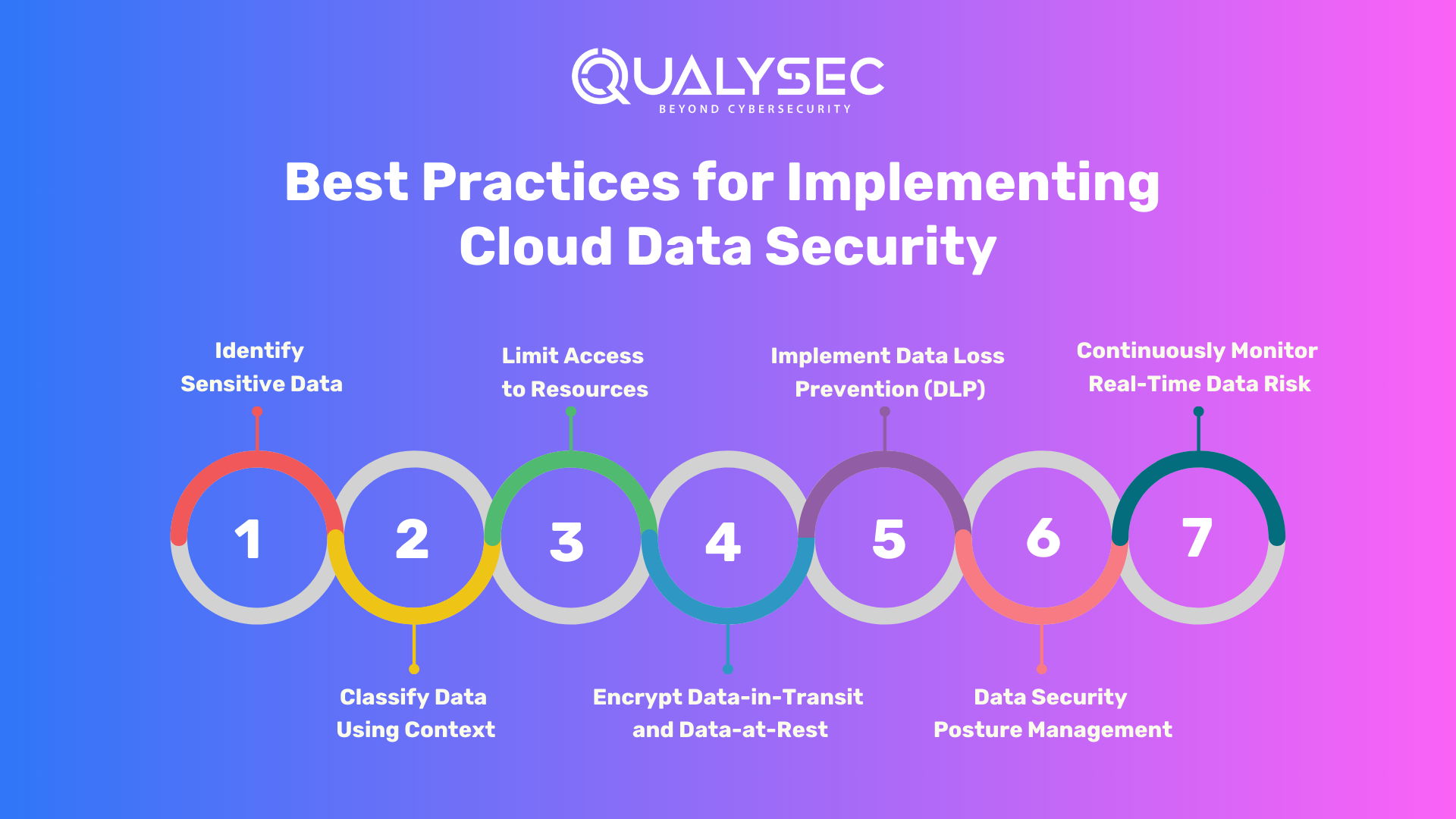
Enhancing cloud data security requires a multi-layered defense strategy combining identity and access management, robust encryption standards, continuous monitoring, and strict compliance automation. Organizations must shift away from perimeter-based perimeters toward a Zero Trust architecture to protect sensitive data across distributed cloud environments.
As organizations increasingly migrate workloads, applications, and sensitive databases to multi-cloud and hybrid infrastructures, traditional security perimeters have effectively dissolved. Data no longer resides exclusively behind physical corporate firewalls; instead, it traverses complex, highly distributed environments managed by third-party cloud service providers (CSPs). Enhancing cloud data security is therefore no longer an optional IT checkbox—it is a core business imperative that dictates organizational resilience, regulatory compliance, and customer trust.
Achieving a high standard of data security in the cloud requires an architectural paradigm shift. Organizations must move past reactive patching and perimeter defenses toward proactive, identity-centric, and data-centric security models. This comprehensive guide explores the structural components, technical requirements, implementation steps, and operational best practices necessary to successfully secure data in cloud environments.
1. Understanding the Shared Responsibility Model
Before implementing any technical controls, security architects and system administrators must thoroughly understand the foundational division of labor governing cloud platforms: the Shared Responsibility Model.
Division of Security Duties
Major cloud service providers—such as Amazon Web Services (AWS), Microsoft Azure, and Google Cloud Platform (GCP)—operate under a shared responsibility framework. While the CSP assumes responsibility for the security of the cloud, the customer remains entirely responsible for security in the cloud.
- Cloud Provider Responsibility: The CSP secures the underlying global infrastructure. This includes physical data centers, host hardware, storage infrastructure, network facilities, and the virtualization layer (hypervisors).
- Customer Responsibility: The customer retains full accountability for everything built on or stored within the cloud. This includes operating system configurations, network traffic protection, identity and access management (IAM), client- and server-side data encryption, application security, and firewall configurations.
Misunderstanding this division is the leading cause of cloud data breaches. Assuming that storing data in an enterprise cloud automatically secures it leaves organizations vulnerable to misconfigured storage buckets, exposed administrative ports, and unencrypted databases.
2. Implementing a Zero Trust Architecture (ZTA)
Traditional security models relied on the concept of a trusted internal network and an untrusted external network. Once a user or device authenticated at the perimeter, they were largely trusted internally. In cloud computing, this model fails because cloud endpoints are decentralized and remote. Enhancing cloud data security demands the adoption of a Zero Trust Architecture.
Core Pillars of Zero Trust
Zero Trust operates on a single foundational principle: "Never trust, always verify." Every access request, regardless of its origin, must be fully authenticated, authorized, and encrypted before access is granted.
- Verify Explicitly: Always authenticate and authorize based on all available data points, including user identity, location, device health, service or workload context, data classification, and anomalies.
- Use Least Privilege Access: Limit user access with Just-In-Time (JIT) and Just-Enough-Access (JEA) models. Restrict user permissions with Risk-Based Adaptive Policies to protect both data and productivity.
- Assume Breach: Minimize blast radius by segmenting access by network, user, devices, and application awareness. Encrypt all data end-to-end and use analytics to gain visibility, drive threat detection, and continuously improve defenses.
By enforcing continuous validation, organizations prevent lateral movement by malicious actors who manage to compromise a single low-level user account or virtual machine.
3. Data Encryption Standards and Key Management
Data security at rest, in transit, and in use forms the bedrock of a resilient cloud data strategy. Even if an attacker manages to breach cloud storage barriers, properly encrypted data remains unreadable and useless without the corresponding cryptographic keys.
Protecting Data at Rest, in Transit, and in Use
- Data at Rest: All databases, object storage buckets (such as Amazon S3 or Azure Blob Storage), and block storage volumes must be encrypted using strong cryptographic algorithms like AES-256.
- Data in Transit: Data moving between user endpoints and cloud applications, as well as traffic moving between microservices within the cloud environment, must be secured using modern transport protocols such as TLS 1.3.
- Data in Use: Emerging technologies focus on confidential computing, which encrypts data while it is being processed in memory using hardware-based Trusted Execution Environments (TEEs), preventing hypervisor-level or physical host inspection.
Key Management Best Practices
Encryption is only as secure as the management of the underlying cryptographic keys. Organizations should leverage dedicated Key Management Services (KMS) or Hardware Security Modules (HSMs) provided by CSPs or independent vendors.
- Implement the Bring Your Own Key (BYOK) or Hold Your Own Key (HYOK) methodology to maintain absolute ownership over encryption keys.
- Enforce automated key rotation schedules (e.g., rotating keys annually or after any suspected security incident).
- Strictly decouple key storage from the data storage location to prevent a single compromised resource from exposing both the encrypted assets and the keys required to unlock them.
4. Identity and Access Management (IAM) and Governance
Identity is the new security perimeter. As enterprise boundaries dissolve into remote workforces and cloud-native applications, securing human and machine identities is critical for preventing unauthorized data exposure.
Strengthening IAM Controls
- Multi-Factor Authentication (MFA): Mandate phishing-resistant MFA (such as FIDO2-compliant security keys or hardware tokens) for all human users, administrators, and developers accessing cloud consoles or APIs.
- Identity Federation and Single Sign-On (SSO): Integrate cloud environments with centralized enterprise identity providers (IdPs) via protocols like SAML 2.0 or OpenID Connect. This ensures rapid offboarding and centralized permission auditing.
- Securing Machine Identities: Applications, microservices, and scripts often require credentials to communicate with cloud APIs. Avoid hardcoding API keys or secrets in source code. Instead, utilize secure vault services and short-lived tokens generated dynamically.
5. Cloud Security Posture Management (CSPM) and Monitoring
Cloud environments are dynamic; infrastructure scales up and down automatically via code, increasing the likelihood of human error or configuration drift. Continuous monitoring and automated governance are essential to maintain security health.
Utilizing CSPM Tools
Cloud Security Posture Management tools continuously scan cloud resources against security benchmarks, compliance frameworks, and organizational policies. They automatically detect:
- Publicly exposed storage buckets or database clusters.
- Over-permissioned IAM roles and unused administrative accounts.
- Missing security patches on virtual machine images.
- Unencrypted volumes or inactive logging services.
Security Information and Event Management (SIEM)
Integrating cloud infrastructure logs (such as AWS CloudTrail, Azure Activity Logs, and GCP Audit Logs) into a centralized SIEM or Extended Detection and Response (XDR) platform provides real-time visibility. Security operations teams can build automated playbooks to detect anomalous behavior—such as sudden data exfiltration patterns or unusual administrative log-ins from foreign jurisdictions—and trigger automated remediation workflows.
Comparative Analysis of Cloud Security Frameworks
To establish a defensible cloud data strategy, organizations frequently map their security controls to established industry frameworks and standards. The table below compares four widely recognized frameworks used in cloud data security engineering.
| Framework / Standard | Primary Focus | Best Suited For | Key Operational Strength |
|---|---|---|---|
| CIS Controls | Actionable defensive cyber safeguards | All enterprise environments | Prioritized, step-by-step mitigation guidance |
| NIST SP 800-53 | Security and privacy controls for federal info systems | Government contractors and large enterprises | Exhaustive, granular control taxonomy |
| ISO/IEC 27001 | Information security management systems (ISMS) | Global enterprises seeking certification | Formalized continuous improvement lifecycle |
| SOC 2 Type II | Trust services criteria (security, availability, privacy) | SaaS and cloud service providers | Independent third-party operational validation |
Step-by-Step Implementation Roadmap for Cloud Data Security
Transitioning an enterprise cloud environment from a vulnerable state to a hardened posture requires a methodical, prioritized approach. Organizations should execute the following phases sequentially.
- Phase 1: Discovery & Inventory
- Phase 2: Identity Hardening & MFA
- Phase 3: Data Classification & Encryption
- Phase 4: Continuous Monitoring & CSPM Integration
- Phase 5: Incident Response & Disaster Recovery
Phase 1: Discovery and Asset Inventory
- Conduct a comprehensive audit across all multi-cloud accounts to identify shadow IT, unmanaged databases, and orphaned storage resources.
- Catalog all data assets and apply data classification tags (e.g., Public, Internal, Confidential, Restricted).
Phase 2: Identity and Access Hardening
- Audit existing IAM users, service accounts, and roles, immediately revoking dormant or over-privileged credentials.
- Enforce enterprise-wide multi-factor authentication and migrate authentication flows to centralized identity providers.
Phase 3: Encryption and Key Management Deployment
- Enable default encryption at rest across all cloud storage buckets, block volumes, and managed database instances.
- Establish enterprise key management policies, defining strict access boundaries and automated rotation parameters.
Phase 4: Security Posture Management and Monitoring
- Deploy CSPM tooling to achieve real-time visibility and configuration drift detection.
- Centralize log ingestion into a SIEM platform and configure alerts for high-risk security events.
Phase 5: Incident Response and Disaster Recovery
- Develop and test a cloud-specific Incident Response (IR) plan that accounts for shared responsibility coordination with CSP support teams.
- Implement immutable, off-site data backups to protect critical assets against ransomware attacks and accidental deletion.
Common Pitfalls and Troubleshooting
Even with advanced tooling, organizations frequently encounter specific roadblocks during cloud data security implementation. Recognizing these pitfalls helps prevent security failures.
- Over-Reliance on Default Settings: Cloud providers offer easy-to-use defaults, but these are often designed for maximum out-of-the-box convenience rather than strict security. Always review and harden default network rules and storage permissions.
- Neglecting API Security: APIs represent the primary interface for cloud management and modern applications. Failing to rate-limit, authenticate, or monitor API calls exposes core data layers to injection attacks and credential stuffing.
- Poor Secrets Management: Embedding database credentials, SSH keys, or access tokens in GitHub repositories or container images is a frequent vector for automated cloud breaches. Utilize dedicated secret manager applications.
- Ignoring Compliance Drift: Security is not a one-time project. Configurations change as developers push new code daily. Manual reviews are insufficient; security must be integrated directly into the CI/CD pipeline (DevSecOps).
Disclaimer: Cloud security requirements vary significantly depending on industry-specific regulations (such as HIPAA, PCI-DSS, or GDPR) and geographical jurisdictions. Organizations should consult certified legal and compliance professionals to ensure their technical implementations meet all applicable legal statutes.
Frequently Asked Questions
What is the most common cause of cloud data breaches?
Misconfiguration of cloud storage resources and overly permissive Identity and Access Management (IAM) permissions represent the vast majority of cloud data breaches. Simple administrative oversight—such as leaving an object storage bucket set to public read/write access—frequently exposes millions of sensitive records without requiring sophisticated hacking techniques.
How does cloud data security differ from traditional on-premises security?
Traditional security relies heavily on physical perimeters, hardware firewalls, and isolated internal networks. Cloud data security operates in a shared responsibility model where infrastructure is distributed, virtualized, and accessed primarily via external internet connections and APIs. Consequently, identity, encryption, and software-defined microsegmentation replace physical network boundaries.
What is DevSecOps, and why is it important for cloud security?
DevSecOps integrates security practices into every phase of the software development lifecycle (SDLC), from initial code commit to production deployment. In cloud environments where infrastructure is provisioned programmatically via code, DevSecOps ensures that security checks and misconfiguration scans occur automatically before updates reach the live environment.
Are cloud service providers responsible for data backup and recovery?
Generally, no. While cloud providers guarantee high availability and physical redundancy of their underlying hardware infrastructure, the customer is almost entirely responsible for backing up their own data, application states, and databases to protect against accidental deletion, software corruption, or ransomware attacks.