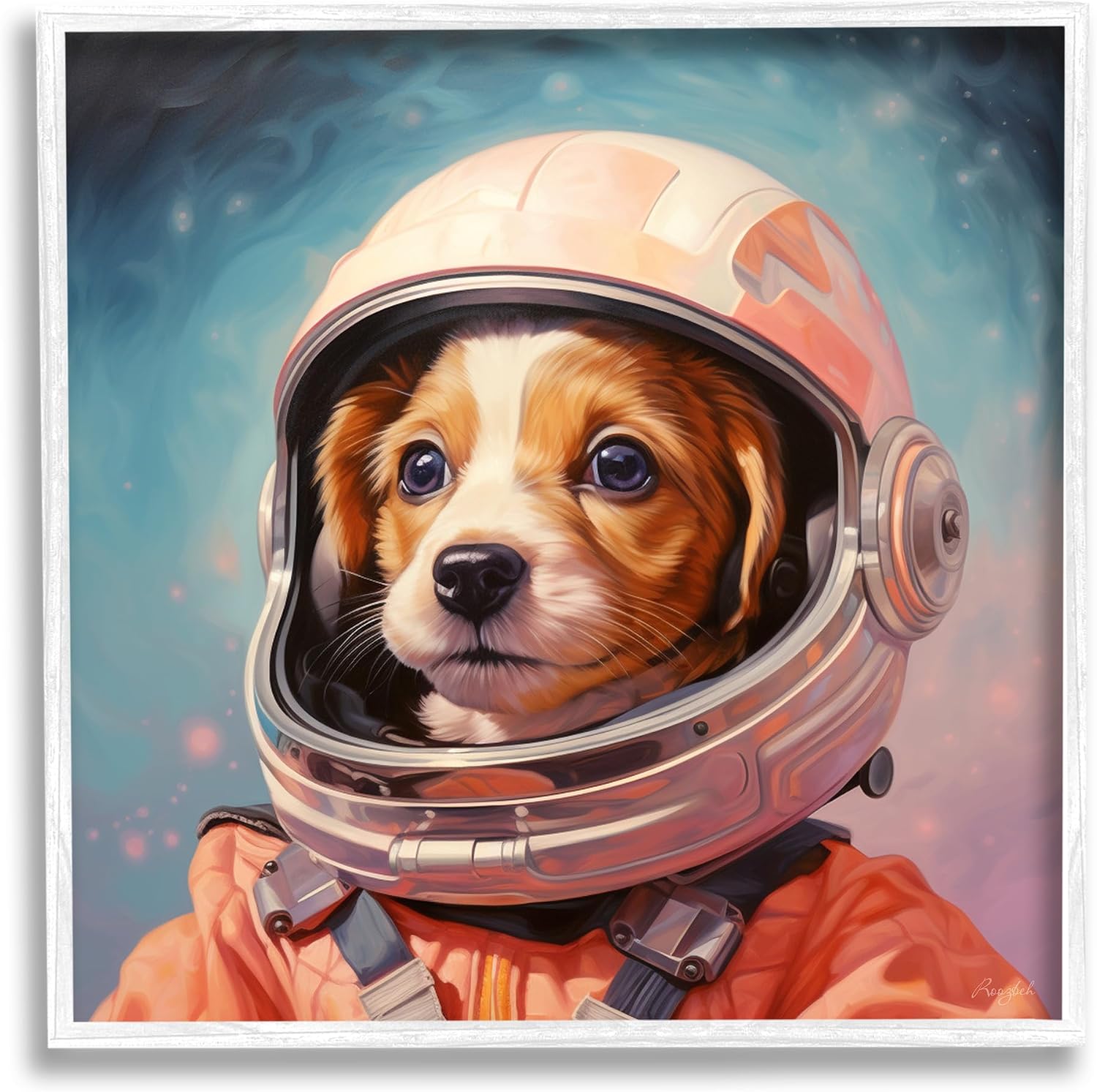
As of 2026, no human astronaut has ever shared a space mission with a pet dog, though dogs were the first Earthlings to orbit the planet. Early Soviet missions used "canine cosmonauts" to test life-support viability. Future long-duration missions to Mars may reconsider canine companions for psychological support and biological research.
The image of an astronaut floating alongside a loyal canine companion is a staple of science fiction, yet the reality of "astronauts with dogs in space" is rooted in a complex history of Cold War experimentation and rigorous biological science. While we have not yet reached the era of "space pets" on the International Space Station (ISS) or the Lunar Gateway, the relationship between dogs and space exploration remains a cornerstone of aerospace medicine. To understand the feasibility of a human and a dog cohabitating in a zero-gravity environment, one must examine the historical precedent, the physiological hurdles, and the evolving ethics of animal spaceflight.
The Pioneers: The Era of the Soviet Canine Cosmonauts
Before humans ever donned a spacesuit, dogs were the primary test subjects for high-altitude and orbital flight. In the 1950s and 1960s, the Soviet Union selected stray dogs—specifically females for their calmer temperaments and easier waste-management suit designs—to undergo grueling training for the Sputnik program.
The Legacy of Laika and Sputnik 2
In November 1957, a stray named Laika became the first living creature to orbit the Earth. Her mission, Sputnik 2, was a one-way journey designed to prove that a living organism could survive the launch into orbit and the subsequent weightlessness. While Laika's journey provided critical data on heart rate and respiration under extreme stress, it also ignited an international debate on the ethics of using animals in space research. Her mission proved that the biological systems of a mammal could function in microgravity, paving the way for Yuri Gagarin's flight just four years later.
Belka and Strelka: The First Survivors
Following Laika, the Soviet Union launched Belka and Strelka aboard Sputnik 5 in August 1960. Unlike Laika, these dogs returned safely to Earth. Their success was a turning point in history, demonstrating that life-support systems could sustain complex organisms and return them through the harrowing process of atmospheric re-entry. Strelka later had puppies, one of whom, Pushinka, was gifted to President John F. Kennedy, symbolizing a brief moment of "space diplomacy" during the height of the Cold War.
Physiological Challenges for Dogs in Microgravity
If a modern astronaut were to take a dog into space in 2026, the biological challenges would be significant. Dogs, like humans, are highly sensitive to the shifts in gravity that occur during ascent and orbital insertion.
The Vestibular System and Spatial Disorientation
A dog’s sense of balance is governed by the vestibular system in the inner ear. In microgravity, the "up and down" signals provided by gravity disappear, leading to what is known as Space Adaptation Syndrome (SAS). While humans can communicate their nausea and dizziness, a dog in space would likely suffer from severe disorientation and motion sickness without the ability to understand the cause. This disorientation affects their ability to move; dogs rely on four-legged stability, and in zero-G, their instinctual "righting reflex" (the ability to land on their feet) becomes counterproductive, often leading to frantic, uncontrolled paddling motions.
Cardiovascular and Musculoskeletal Atrophy
Long-duration spaceflight causes fluid shifts toward the head and a decrease in bone density and muscle mass. In a canine companion, these effects would be pronounced. Without specialized resistive exercise equipment—similar to the treadmills and weight-lifting machines used by human astronauts—a dog's legs would quickly lose the strength required to support its weight upon returning to Earth's gravity. Furthermore, the radiation environment beyond Earth’s magnetic field poses a higher risk to smaller animals with faster metabolic rates, potentially leading to accelerated cellular damage.
Technical Logistics of Canine Life Support
Supporting a dog in a space habitat involves more than just bringing extra food. The engineering requirements for "pet-friendly" spacecraft are extensive and currently outside the scope of standard mission architectures.
Waste Management and Hygiene
One of the most difficult hurdles is waste management. Human astronauts use high-tech suction toilets, but a dog requires a completely different approach. Early Soviet dogs wore specialized suits with collection bags, but these were prone to leakage and caused skin irritation. In a closed-loop life support system, such as those used on the ISS, any escaped biological waste can clog air filtration systems and pose a significant biohazard.
Atmospheric Regulation
Dogs pant to regulate their body temperature. In microgravity, there is no natural convection, meaning the warm, moist air a dog exhales would stay in a "bubble" around its face unless there is constant, forceful mechanical ventilation. Without proper airflow, a dog could potentially suffocate on its own exhaled carbon dioxide, even in a room full of oxygen.
| Requirement | Human Solution | Potential Canine Solution (2026 Projections) |
|---|---|---|
| Waste Disposal | Vacuum-suction toilets | Absorbent pressurized harnesses or suction pads |
| Exercise | 2.5 hours of daily resistive training | Motorized underwater treadmills (contained) or EMS |
| Feeding | Rehydratable pouches/straws | Specialized nutrient-dense pastes or timed dispensers |
| Orientation | Visual cues and handrails | Padded cabin walls and magnetic traction boots |
| Psychological | Video calls and hobbies | Human interaction and sensory stimulation toys |
The Psychological Case for Dogs on Long-Duration Missions
As space agencies like NASA and private entities like SpaceX look toward Mars, the psychological well-being of the crew has become a primary concern. Isolation, confinement, and the "Earth-out-of-view" phenomenon are significant stressors for human astronauts.
Mitigating Loneliness and Stress
On Earth, the "pet effect" is well-documented: interacting with dogs lowers cortisol levels and increases oxytocin. On a three-year mission to Mars, a canine companion could serve as a vital emotional anchor. Dogs provide non-judgmental companionship and a sense of routine, which could help maintain the mental health of a small crew living in cramped quarters.
Sensory Benefits
The sterile, metallic environment of a spacecraft lacks the sensory richness of Earth. The presence of a dog—the sound of its breathing, the texture of its fur, and its enthusiastic responses—could provide the "sensory grounding" necessary to prevent the cognitive decline associated with extreme isolation. However, this must be balanced against the stress the dog itself would experience; an animal cannot consent to the risks of spaceflight, leading to a significant ethical barrier.
Private Spaceflight and the 2026 Outlook
The landscape of space exploration has shifted from purely government-funded programs to a robust commercial sector. By 2026, companies like Blue Origin and SpaceX have normalized suborbital and orbital tourism. This brings up the question: will the wealthy space tourists of the future be able to bring their pets?
Current safety protocols for commercial flight remain rigid. The risk of an animal interfering with critical controls or becoming a projectile during high-G maneuvers (launch and landing) makes "pet passengers" unlikely in the immediate future. However, there are ongoing discussions in the aerospace community regarding "biological payload" certifications that could eventually allow for specially trained service animals to accompany humans into orbit. These animals would require a level of training far exceeding that of a standard service dog, including desensitization to high-decibel noise and centrifuge training to handle G-loads.
Legal and Ethical Frameworks
The use of animals in space is governed by the Committee on Space Research (COSPAR) and various national animal welfare acts. As of 2026, the ethical consensus remains that animals should only be sent into space if the scientific objectives cannot be met through other means.
- Informed Consent: Unlike humans, dogs cannot understand the risks of radiation, launch failure, or permanent physiological changes.
- Safety and Rescue: There are currently no protocols for evacuating an animal during a space emergency. In the event of a depressurization or fire, life-saving measures are prioritized for human crew members.
- Post-Mission Care: The long-term effects of microgravity on canine health are not fully understood. Any dog returning from a long-duration mission would likely require lifelong medical monitoring and rehabilitation.
Frequently Asked Questions
Can a dog bark in space?
Yes, a dog can bark in space as long as there is a pressurized atmosphere to carry the sound waves. Inside a spacecraft, the air is kept at a pressure similar to sea level on Earth, so sound travels normally. However, the acoustics of a small, metallic cabin might make the bark sound much louder and more echo-prone than on Earth.
Did any dogs die in space during the early missions?
Yes. The most famous case is Laika, who died a few hours into her flight aboard Sputnik 2 due to overheating and stress. Several other Soviet dogs died during failed launches or re-entry accidents before the successful return of Belka and Strelka in 1960. These tragedies led to significant improvements in spacecraft thermal control and escape systems.
Would a dog float or walk in a space station?
In a microgravity environment like the ISS, a dog would float. Because dogs rely on the friction between their paws and the floor to move, they would find themselves unable to "walk" in the traditional sense. They would likely struggle and "paddle" in the air until they bumped into a wall. If a dog were to live on a station, the walls would need to be covered in soft, grippy materials to allow the animal to propel itself without injury.
Are there "space suits" for dogs today?
While there are no operational space suits for pet dogs in 2026, historical prototypes exist. These suits were pressurized and featured acrylic helmets. Modern designs would likely focus on wearable "cooling vests" and waste-collection harnesses rather than full EVA (Extra-Vehicular Activity) suits, as there is currently no scientific or practical reason for a dog to perform a spacewalk.
Next Actions for Space Enthusiasts
If you are interested in the intersection of animal biology and space exploration, the best next step is to research the NASA Biological & Physical Sciences (BPS) division. They provide updated reports on how various model organisms—from fruit flies to rodents—react to the space environment. While we may not see a "Golden Retriever on the Moon" by the end of the decade, the data gathered from these smaller biological studies is the foundation upon which future canine spaceflight would be built. Understanding the effects of space on mammalian DNA is the first step toward safely bringing our best friends into the final frontier.