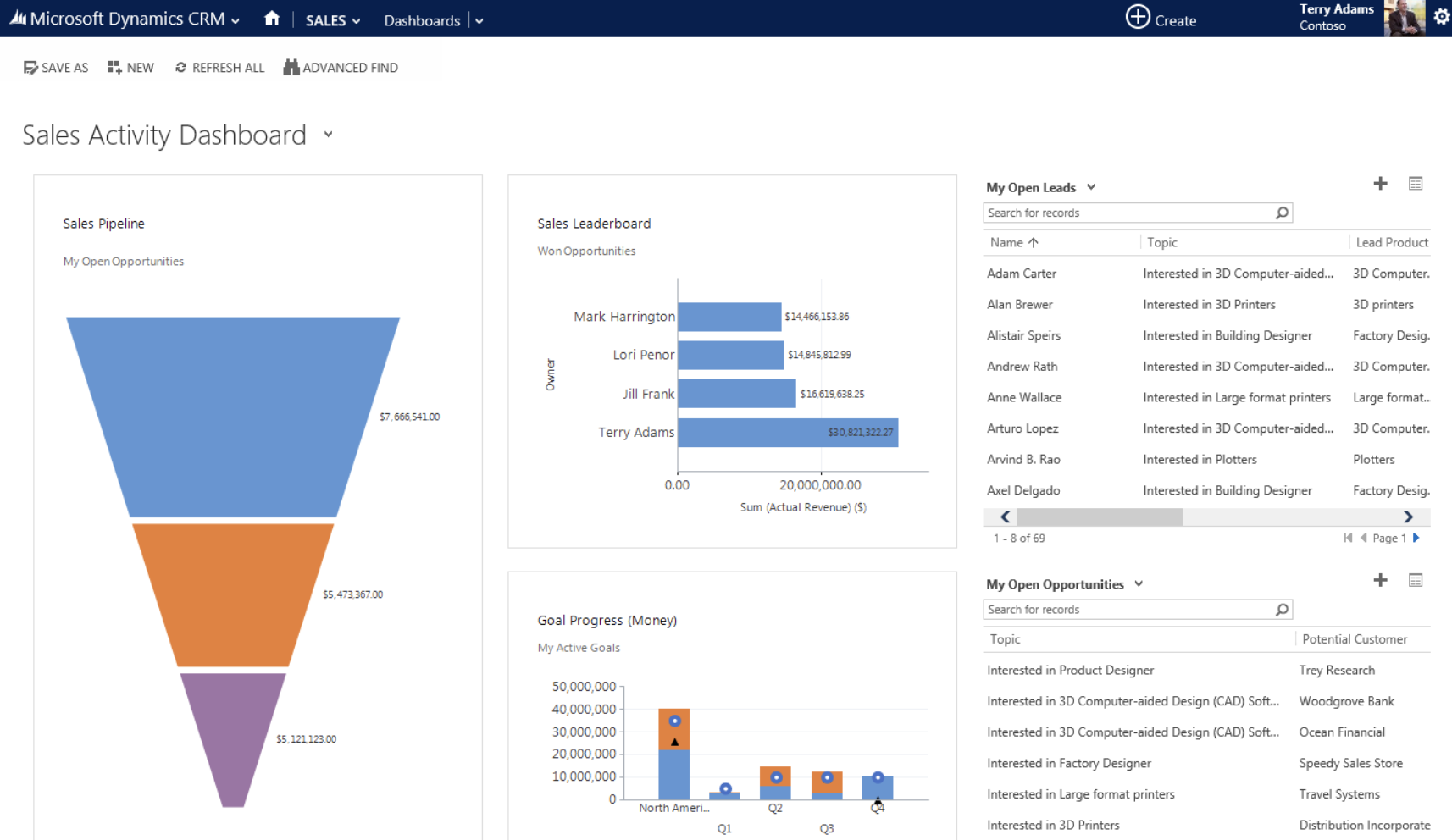
Selecting the right Customer Relationship Management (CRM) platform is a strategic decision that shapes how an organization interacts with its customer base, manages sales pipelines, and interprets data. Astute CRM software serves as a specialized tool within this landscape, designed to unify customer engagement, service interactions, and data analytics. As of 2026, the challenge for business leaders is not merely selecting a software package, but determining which architecture aligns with their unique operational requirements, scaling needs, and integration demands.
Navigating the choice between Astute CRM and broader enterprise alternatives requires a thorough examination of core functionalities. This guide provides a framework for evaluating Astute, understanding its technical application, and determining when its specific feature set meets your business objectives. By focusing on data synchronization, user-defined workflows, and long-term maintenance, organizations can move beyond marketing claims to make evidence-based software selections.
Understanding the Scope of Astute CRM
Astute CRM is characterized by its focus on high-touch engagement and specialized service-oriented workflows. Unlike generalist CRM platforms that prioritize high-volume lead management for marketing teams, Astute often emphasizes the depth of the customer profile. This includes the integration of omnichannel touchpoints—such as voice, digital messaging, and self-service portals—into a single interface.
For organizations evaluating this platform, it is critical to distinguish between its core competencies and the broader CRM market. The software acts as a "source of truth" for customer interactions, prioritizing data consistency. In an environment where customer journeys are increasingly fragmented across mobile, social, and web channels, Astute attempts to minimize friction by ensuring that service agents have access to the same historical data as sales representatives.
Core Prerequisites for Implementation
Before adopting a specialized CRM, your organization must satisfy several technical and operational prerequisites. Rushing into a deployment without these foundations often leads to "data silos," where the software is present but fails to provide value due to poor data hygiene.
1. Data Sanitization and Migration
CRM software is only as effective as the data imported into it. Before migrating to Astute, your IT team must conduct an audit of existing databases. This involves identifying duplicate customer profiles, merging inconsistent contact information, and establishing a master record format. Without this, the CRM will inherit existing fragmentation, negating the benefits of a unified interface.
2. Stakeholder Workflow Mapping
A common failure in CRM deployment is the attempt to force existing, inefficient processes into new software. Map your current workflows for lead acquisition, service ticket resolution, and post-sale retention. Identify where "bottlenecks" occur and determine if Astute’s native automation features can resolve them or if custom development is required.
3. Integration Infrastructure
Most businesses operate with a "tech stack" consisting of ERP, marketing automation, and email platforms. Verify the API (Application Programming Interface) capabilities of your existing tools. If your essential legacy software does not communicate well with Astute, you will face high maintenance costs for custom middleware or manual data entry requirements.
Comparing CRM Architectures: A Practical Framework
Choosing between Astute and other market competitors requires a comparative approach focused on features rather than branding. The following table illustrates the typical trade-offs found when evaluating specialized CRM solutions against general-purpose enterprise platforms.
| Feature Area | Astute-Style Specialized CRM | General-Purpose Enterprise CRM |
|---|---|---|
| Primary Focus | Deep customer service and engagement | Broad sales pipeline and activity tracking |
| Ease of Customization | High, but requires specialized expertise | Modular, but can become "bloated" |
| Implementation Time | Moderate to Long | Rapid to Moderate |
| Data Architecture | Integrated service-to-sales focus | Sales-to-service expansion |
| Typical Cost Basis | Feature-heavy licensing + implementation | Per-seat licensing + module add-ons |
The Strategy of Navigating Choice
The process of choosing a CRM is fundamentally a risk management exercise. Organizations often over-invest in feature-rich platforms that exceed their operational maturity. When navigating your choice, follow this systematic approach:
Phase 1: Requirements Gathering
Avoid selecting software based on a checklist of "nice-to-have" features. Instead, list the "deal-breakers"—the three to five workflows that, if broken, would cause significant financial or reputational harm. If the CRM cannot perform these natively, it is not a suitable choice, regardless of its secondary features.
Phase 2: Sandbox Evaluation
Never rely solely on a vendor-led demonstration. Insist on a sandbox environment or a "Proof of Concept" (PoC) where your internal team can test the software with your own data samples. Pay close attention to the interface speed, the ease of generating reports, and the accessibility of the administrative console.
Phase 3: The Total Cost of Ownership (TCO) Calculation
The license fee is rarely the final cost. Factor in the following:
- Administrative Overhead: The salary requirements for a dedicated CRM administrator or power user.
- Third-Party Integration Fees: Costs for connectors or custom API development.
- Scalability Costs: How the price per user changes as your company grows, and the cost of increasing storage capacity for historical customer data.
- Training and Onboarding: The internal cost of downtime while staff learns the new system.
Managing Common Implementation Pitfalls
Even with the best software, implementation can fail due to cultural and technical misalignment. By anticipating these hurdles, your organization can pivot effectively.
Over-Customization
A common mistake is "over-engineering" the platform. Users often demand custom fields or unique workflows for every edge case. This leads to a complex user interface that is difficult to support and expensive to upgrade. Maintain a policy of using "out-of-the-box" functionality as much as possible, reserving customization only for essential, high-impact business processes.
Ignoring Change Management
Software is a tool, not a solution for process failure. If your sales or service teams have low adoption rates, it is rarely the software's fault. It is usually the result of a lack of clear communication regarding the benefits of the new system. Create an internal champion group—super-users who are involved in the selection process—to drive peer-to-peer training and adoption.
Neglecting Data Security and Compliance
In 2026, the regulatory landscape regarding data privacy is stricter than ever. Before finalizing your choice, verify that the CRM provider meets regional compliance standards (such as GDPR, CCPA, or industry-specific mandates). Ensure the platform supports granular user permissions, audit logs for all data changes, and encrypted data transport/storage.
Frequently Asked Questions (FAQ)
How does Astute CRM handle multi-channel customer interactions?
Astute manages multi-channel interactions by centralizing data from voice, email, chat, and social media into a single profile. This prevents "context switching," allowing agents to see the full history of a customer regardless of which channel they used to initiate contact, which reduces response times and improves resolution accuracy.
Is specialized CRM software more secure than broad enterprise platforms?
Security is not inherently determined by the size or breadth of the software. Both specialized and large-scale platforms can be secure if they adhere to modern standards like SOC 2 compliance. When evaluating security, look for providers that offer independent audit reports and clear documentation regarding data encryption and transit protocols.
When is the right time to transition from a spreadsheet to a CRM?
You should transition when your team begins to experience "data drift"—where customer information is siloed in individual employee machines, sales follow-ups are being missed due to manual tracking, or you lack a centralized view of customer profitability. If these symptoms appear, your business has likely outgrown manual methods.
How do I measure the success of a new CRM implementation?
Measure success through adoption metrics and process efficiency rather than vague "satisfaction" scores. Key indicators include the reduction in time-to-resolution for support tickets, the percentage of leads that reach a "qualified" status, and the accuracy of sales forecasting compared to historical data.
Can Astute CRM be integrated with legacy ERP systems?
Yes, most modern CRM platforms, including Astute, provide robust APIs to connect with ERP systems. However, the complexity depends on the age and architecture of your legacy system. Always involve your IT security and infrastructure team early in the discovery phase to determine if a middleware solution (such as an iPaaS) is necessary to bridge the gap.
Next Actions for Decision-Makers
To move forward, finalize your "must-have" list based on the criteria discussed. If you have not yet conducted a formal internal audit of your customer data workflows, make that your immediate priority. Once the audit is complete, select two or three vendors for a side-by-side comparison. Request a sandbox demonstration tailored to a specific, challenging scenario unique to your business.
Remember that the goal is not to buy the most powerful tool on the market, but the one that your team will actually use. A well-implemented, simpler CRM will almost always outperform a sophisticated, underutilized system.