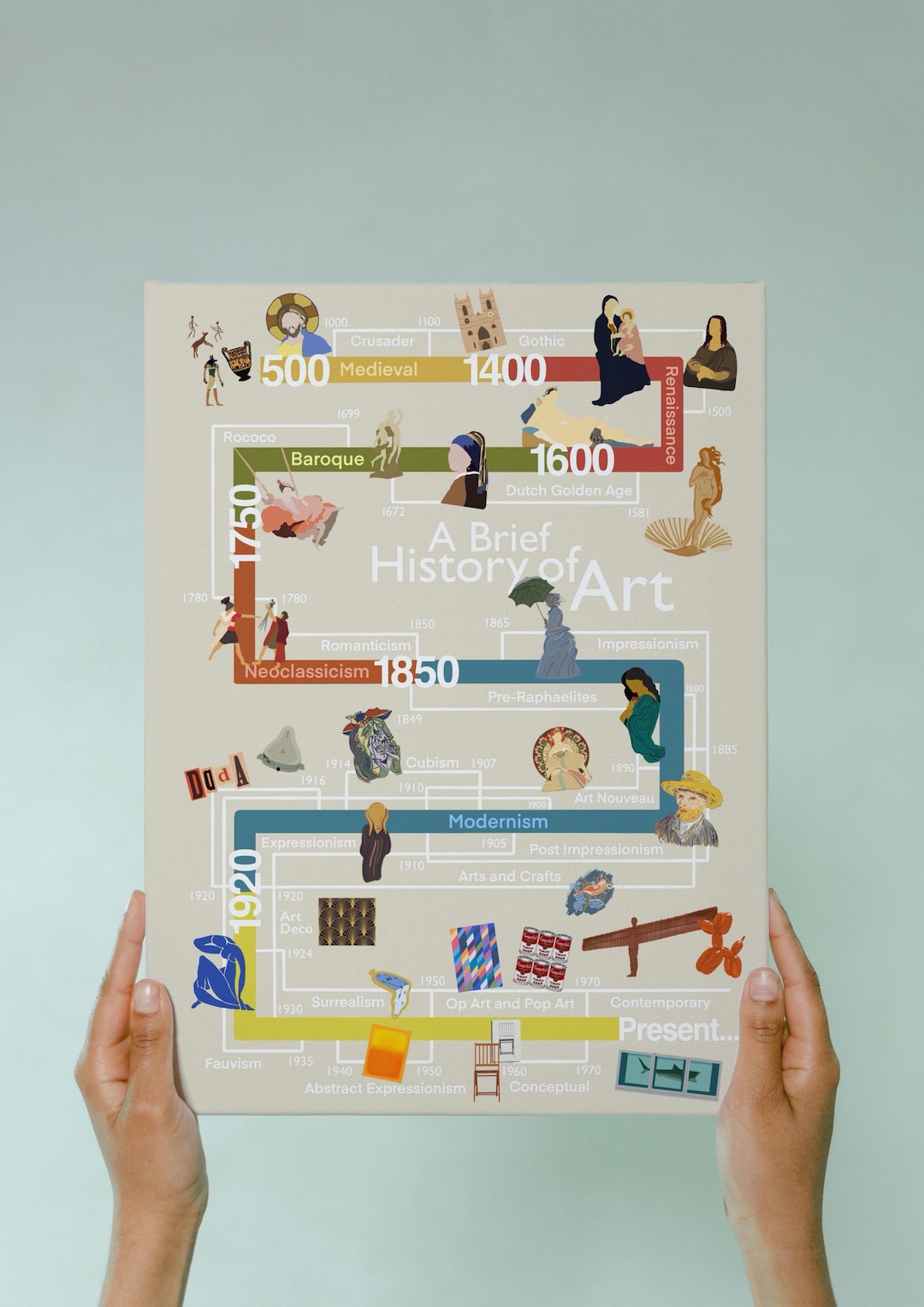
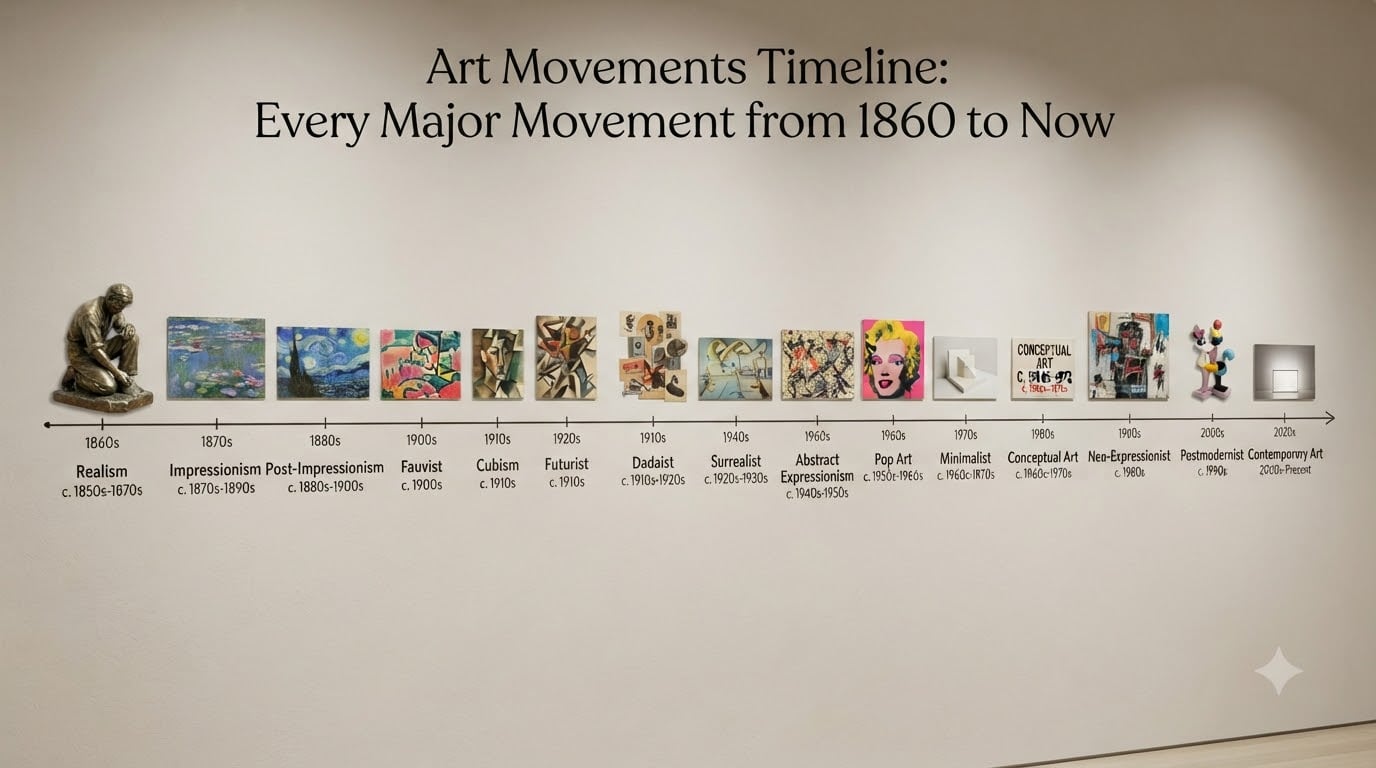
Artist movements represent the sequential evolution of human perception, technique, and philosophy, where each era typically responds to or rejects the conventions of its predecessor. From the mathematical discovery of linear perspective in the Renaissance to the algorithmic complexity of 2026’s generative digital landscapes, these movements serve as a chronological roadmap of creative and technological progress.
The Architecture of Change: How Art Movements Evolve
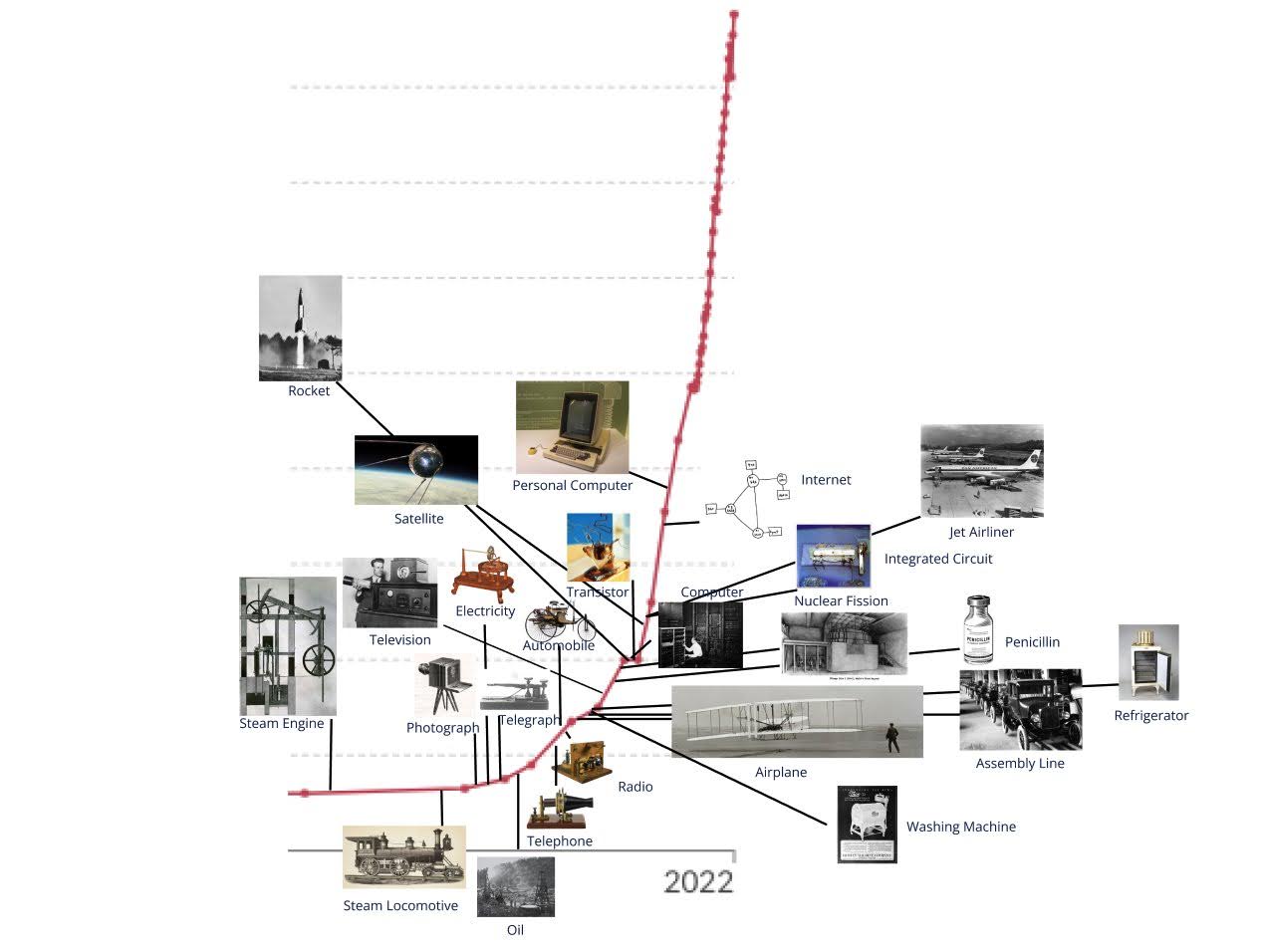
An art movement is rarely a coincidence; it is a structured response to the social, political, and technological environment of its time. Innovation in art often mirrors breakthroughs in other fields. For instance, the development of portable oil paint tubes in the 19th century was as critical to the birth of Impressionism as the philosophical shift toward capturing light. By 2026, we view these movements not as isolated bubbles of creativity, but as a continuous "innovation stack" where one layer of technical achievement enables the next.
To understand the timeline of innovation, one must look at the "catalyst" for each shift. Some movements are driven by technological displacement, such as when photography forced painters to move away from realism and toward abstraction. Others are driven by ideological rebellion, such as the Dadaists' rejection of logic following the horrors of World War I. This systemic progression ensures that art is never static; it is a living dialogue between the past and the possibilities of the future.
The Renaissance and the Birth of Modern Realism (1400–1600)
The Renaissance (meaning "rebirth") was the first major period where "innovation" became a formalized goal of the artist. Before this era, medieval art was largely symbolic and two-dimensional. The innovation of the Renaissance was the application of scientific principles to the canvas.
Linear Perspective and Geometry
Filippo Brunelleschi’s development of linear perspective around 1415 changed the course of Western art. By using a single vanishing point, artists could create the illusion of three-dimensional space on a flat surface. This was not just an aesthetic choice; it was a mathematical one. Leonardo da Vinci further refined this with sfumato, a technique of blending colors so subtly that the transition between colors and tones is imperceptible, mimicking the way the human eye perceives depth and atmosphere.
The Shift to Oil Media
Technologically, the move from tempera (pigment mixed with egg yolk) to oil paint allowed for longer working times and greater transparency. This enabled the "High Renaissance" masters to layer glazes, creating a luminosity and realism that was previously impossible. This era established the artist as an intellectual and an innovator, rather than just a craftsman.
Baroque to Neoclassicism: The Power of Light and Logic (1600–1850)
As the Renaissance reached its peak, the Baroque movement emerged, prioritizing emotion and drama over the calm balance of the previous century.
Tenebrism and Chiaroscuro
The primary innovation of the Baroque period, led by figures like Caravaggio, was tenebrism—the use of extreme contrasts between light and dark. This "spotlight" effect created a psychological intensity that engaged the viewer directly. It was a precursor to modern cinematic lighting, demonstrating how artists could manipulate human emotion through the control of light.
The Enlightenment and Neoclassicism
By the late 18th century, the pendulum swung back toward order. Neoclassicism emerged as a rejection of the perceived superficiality of the Rococo style. Innovation here was found in the "return to the source"—a rigorous study of Classical Greek and Roman proportions. This movement coincided with the Enlightenment, where logic, clarity, and moral virtue were the primary objectives of both science and art.
The Industrial Revolution and the Rise of Modernism (1850–1900)
The mid-19th century marks the most significant turning point in the history of artistic innovation. The Industrial Revolution introduced the camera, which could capture reality more accurately than any painter. This "threat" forced artists to redefine their purpose.
Realism and the Social Lens
Realism, led by Gustave Courbet, innovated by shifting the subject matter. Instead of painting gods or kings, artists began painting the working class and everyday life. This was a radical democratization of art, asserting that the mundane was worthy of monumental scale.
Impressionism: The Science of Light
Impressionism was arguably the first "modern" movement. Its innovation was rooted in the physics of light. Artists like Claude Monet and Pierre-Auguste Renoir moved their studios outdoors (en plein air). They realized that color is not a fixed property of an object but a result of how light reflects off it at a specific moment. Their use of "broken color"—short, thick strokes of paint that blend in the viewer's eye rather than on the palette—was a precursor to the pixels used in digital screens today.
The 20th Century: The Explosion of Abstraction (1900–1960)
The 20th century saw more innovation in 50 years than the previous 500. As the world became faster and more fractured, art followed suit.
Cubism and the Multi-Perspective
Pablo Picasso and Georges Braque introduced Cubism, which rejected the single vanishing point of the Renaissance. Instead, they depicted objects from multiple viewpoints simultaneously. This was a direct parallel to the burgeoning scientific understanding of a non-linear universe and Einstein's theories of relativity. It was an innovation of "seeing" rather than "depicting."
Surrealism and the Subconscious
Influenced by Sigmund Freud’s work in psychoanalysis, Surrealists like Salvador Dalí and René Magritte sought to innovate by mapping the human mind. Their "innovation" was the use of dream logic and automatism—creating art without conscious thought—to bypass the ego and reach the subconscious.
Abstract Expressionism and the Physicality of Paint
Post-World War II, the center of the art world shifted from Paris to New York. Jackson Pollock’s "drip" paintings (Action Painting) changed the definition of art from the result on the canvas to the action of the artist. This movement innovated by removing the "subject" entirely, focusing instead on texture, gesture, and scale.
The Digital and Contemporary Era: Innovation in 2026
By 2026, the definition of an artist movement has expanded to include biological and digital interfaces. The timeline of innovation has moved from the brush to the byte.
Pop Art to Minimalism
Pop Art (Andy Warhol) innovated by blurring the line between "high art" and commercial mass production. Minimalism followed by stripping art down to its essential geometric forms, questioning the necessity of the artist’s hand entirely.
The Post-Internet and AI Revolution
In the current landscape of 2026, the most significant movement is Synthetic Realism—the integration of Artificial Intelligence and human curation. This movement innovates through "prompt engineering" and generative adversarial networks (GANs), where the artist acts as a director of algorithms.
Furthermore, the "Bio-Art" movement has gained traction, using living tissues and genetic sequences as the medium. These contemporary movements continue the tradition of using the most advanced tools of the age to explore the human condition.
Summary Table: Key Artist Movements and Innovations
The following table outlines the progression of major movements and the specific technical or conceptual innovations they introduced to the world.
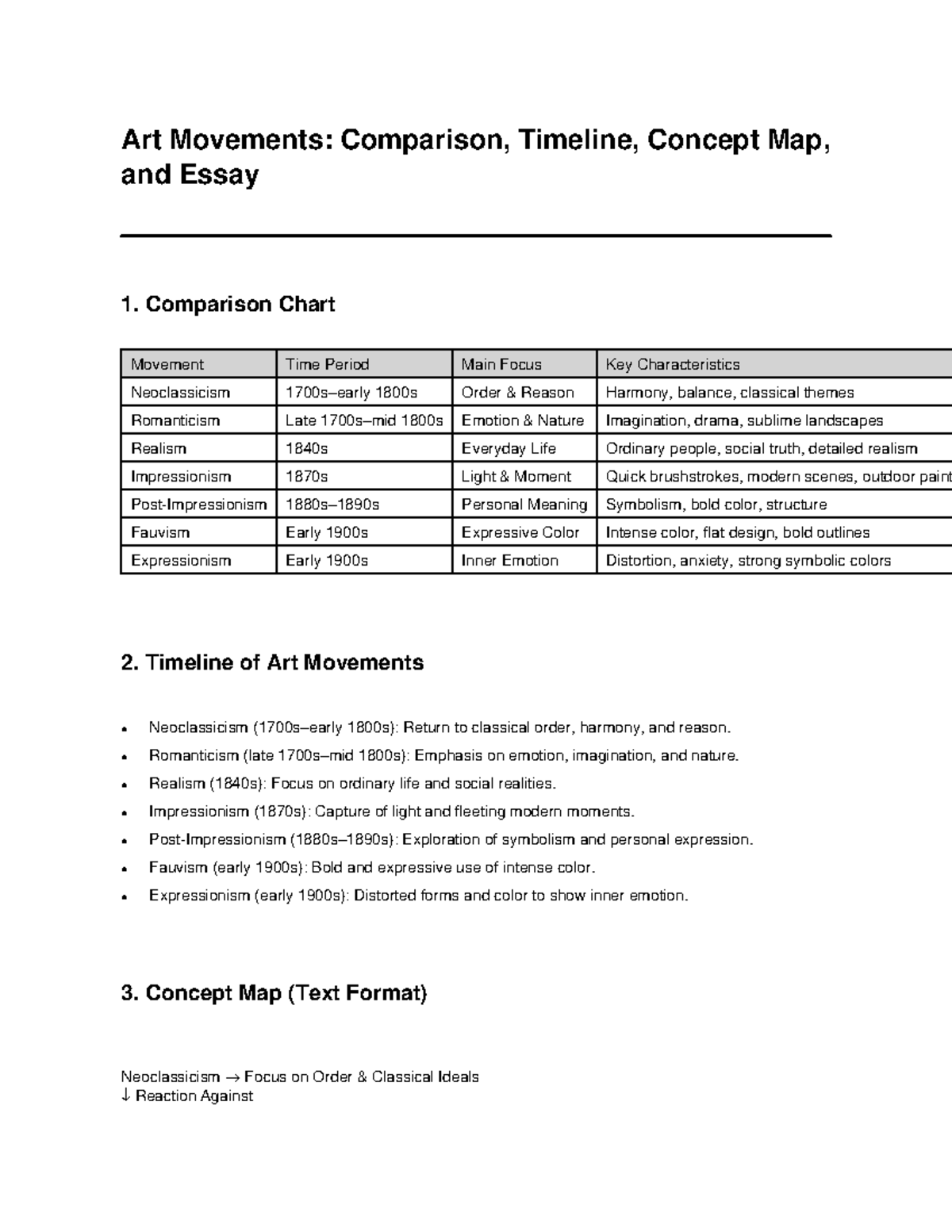
| Movement | Approximate Era | Primary Innovation | Key Figures |
|---|---|---|---|
| Renaissance | 1400–1600 | Linear perspective; Oil paint layering | Da Vinci, Michelangelo |
| Baroque | 1600–1750 | Tenebrism (dramatic lighting) | Caravaggio, Rembrandt |
| Neoclassicism | 1750–1850 | Return to classical logic and structure | Jacques-Louis David |
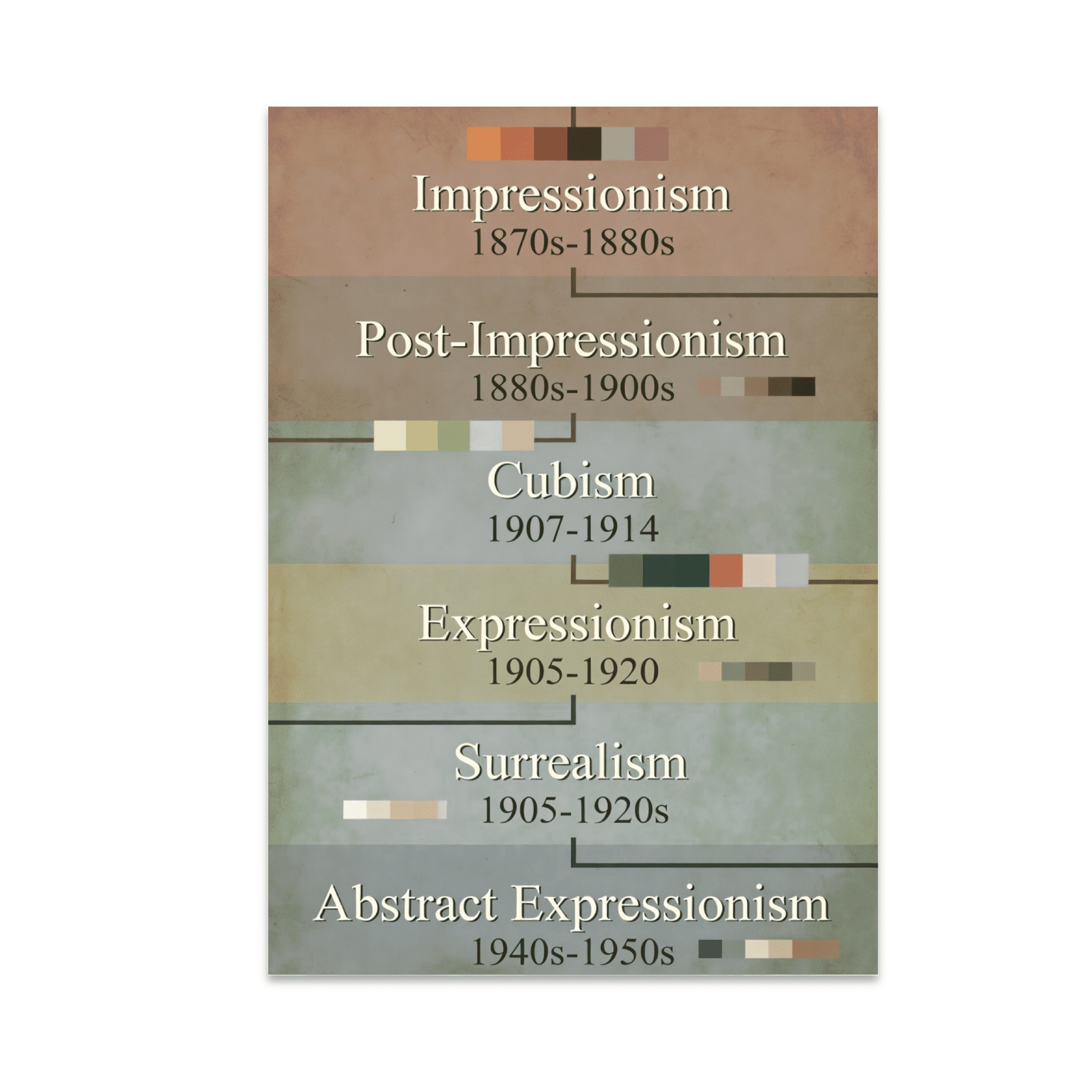
| Impressionism | 1860–1890 | Plein air painting; Optical color mixing | Monet, Degas, Renoir |
| Cubism | 1907–1920 | Fragmentation; Multiple perspectives | Picasso, Braque |
| Surrealism | 1924–1950 | Automatism; Subconscious imagery | Dalí, Magritte, Kahlo |
| Abstract Expressionism | 1940–1960 | Action painting; Non-objective form | Pollock, Rothko |
| Pop Art | 1950–1970 | Mass production; Commercial imagery | Warhol, Lichtenstein |
| Synthetic Realism | 2020–2026+ | AI-collaboration; Generative algorithms | Refik Anadol, various AI collectives |
Frequently Asked Questions
What determines the start of a new art movement?
A new art movement typically begins when a group of artists shares a common philosophy or style that consciously breaks away from the dominant trends of the time. This is often documented in a "manifesto," a written declaration of the group's intentions. Social upheaval, technological breakthroughs (like the invention of the camera or the internet), and shifts in patronage also act as triggers for these transitions.
Why do some art movements seem to overlap?
History is rarely linear. Multiple movements often coexist because different regions or groups of artists react to the same social stimuli in different ways. For example, while the Impressionists were exploring light in France, the Pre-Raphaelites in England were looking back to medieval techniques. In 2026, we see a massive overlap between traditional physical art and digital-first movements because the "art world" is now a global, interconnected network.
How has technology changed the "innovation" in art?
Technology provides new tools that expand what is possible. In the 15th century, technology was the chemistry of oil paint; in the 19th, it was the portable paint tube and the camera; today, in 2026, it is the GPU and the neural network. Each technological leap allows artists to ask new questions: "Can I paint light?" "Can I paint a feeling?" "Can an algorithm be creative?"
Which movement had the biggest impact on modern art?
While subjective, many historians point to Impressionism as the most significant catalyst for modernism. By breaking the requirement that art must look like a "window into the world," Impressionism opened the door for Cubism, Abstraction, and eventually the conceptual art of the 21st century. It shifted the focus from the object being painted to the process of seeing.
Is the era of art movements over in the digital age?
Some argue that because information moves so fast now, we no longer have distinct "movements" that last decades. Instead, we have "micro-movements" that trend and evolve over months or years. However, the underlying principle remains the same: artists are still grouping together (often in digital communities) to innovate and challenge the status quo.
Expert Guidance: Navigating Art Innovation
To truly understand the timeline of artist movements, one should look beyond the aesthetic and investigate the "Why" behind the style. If you are a student or a collector in 2026, the best way to grasp these innovations is to view them in chronological order at institutions like the Metropolitan Museum of Art or the Tate Modern.
When studying a specific movement, ask:
- What was the dominant technology of that year?
- What was the artist rebelling against?
- How did this movement change the way we perceive reality?
By answering these questions, you move from being a passive observer to an active participant in the ongoing dialogue of art history. Whether you are exploring the physical brushwork of the 1800s or the generative code of the 2020s, remember that every movement was once a radical innovation that pushed the boundaries of the human experience.