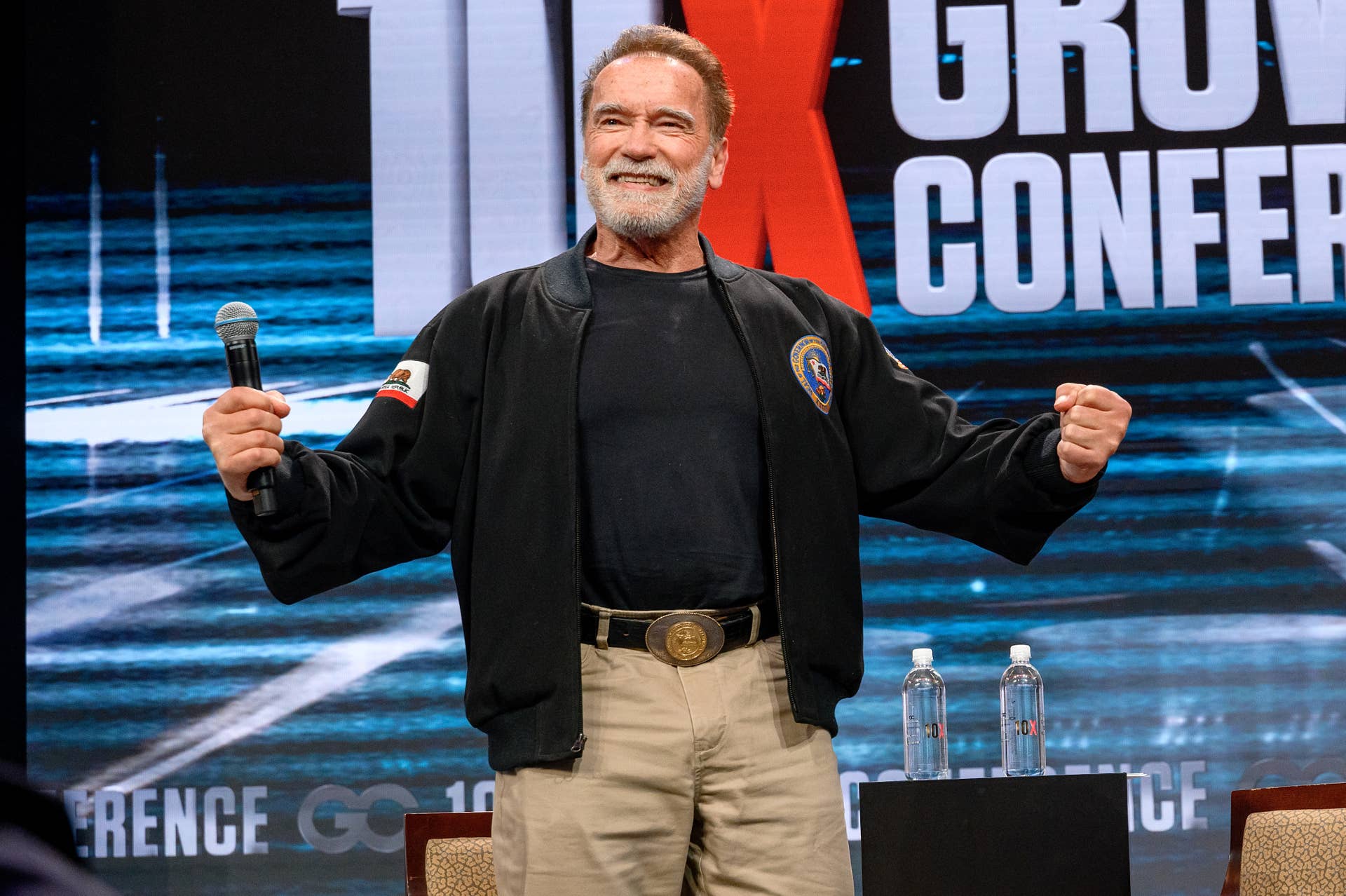
Arnold Schwarzenegger is a native speaker of German—specifically the Styrian dialect of Austrian German—and is professionally fluent in English. While his thick accent was initially considered a barrier to his acting career, it eventually became his most recognizable trademark. As of 2026, he continues to use both languages in his advocacy, entertainment, and public speaking roles.
The Linguistic Foundation: Native Austrian German
Arnold Schwarzenegger’s journey with language begins in the small village of Thal, Austria. To understand his unique linguistic profile, one must first understand the specific variety of German he speaks as his mother tongue. Schwarzenegger does not merely speak "German"; he is a native speaker of the Styrian dialect (Steirisch).
Styrian is a sub-dialect of the Southern Austro-Bavarian group. For those unfamiliar with the linguistic landscape of Central Europe, Austrian German differs significantly from the "Standard German" (Hochdeutsch) spoken in northern Germany. The Styrian dialect is characterized by its melodic intonation, specific vowel shifts, and a tendency to soften consonants. To a speaker from Berlin or Hamburg, Schwarzenegger’s native dialect often sounds rural, earthy, and distinctly "country."
Even after decades in the United States, when Schwarzenegger returns to his roots or speaks with fellow Austrians, his Styrian accent remains profoundly intact. However, linguists have noted that his German has undergone a process of "Anglicization." Because he has lived in an English-dominant environment since 1968, he occasionally uses English syntax or "loanwords" when speaking German—a common phenomenon known as first-language attrition or linguistic interference.
The Struggle for English Proficiency (1968–1975)
When Arnold Schwarzenegger arrived in the United States in 1968 at the age of 21, his English was rudimentary at best. He moved to California under the tutelage of Joe Weider to pursue bodybuilding, but the language barrier was his most significant non-physical hurdle. During this period, Schwarzenegger was not the confident orator we see in 2026; he was a young man who relied heavily on immersion and intensive study.
To bridge the gap, Schwarzenegger enrolled in English classes at Santa Monica College and worked with several accent coaches. His early years were defined by a rigorous "immersion-only" policy. He famously avoided spending too much time with German-speaking friends in Los Angeles because he wanted to force his brain to think in English.
The most telling example of his early linguistic struggles is the 1970 film Hercules in New York. Schwarzenegger’s accent was so thick and his grasp of English phonetics so unrefined at the time that the producers chose to dub his entire performance with a generic American voice. It is a jarring experience for modern viewers to watch the legendary "Austrian Oak" on screen while hearing a mid-Atlantic American accent coming out of his mouth. This experience fueled his determination to master the language, not necessarily to lose his accent, but to gain the clarity and nuance required for high-level performance.
Turning a Liability into a Global Brand
By the late 1970s and early 1980s, Schwarzenegger’s English had improved significantly, but the thick accent remained. In the traditional Hollywood of that era, a heavy foreign accent usually relegated an actor to villainous roles or "the muscle" with very few lines. However, Schwarzenegger and his advisors recognized a unique opportunity.
The breakthrough came with The Terminator (1984). Director James Cameron realized that Schwarzenegger’s precise, slightly mechanical, and heavily accented delivery was perfect for a cybernetic organism. The accent provided a sense of "otherness" that was both intimidating and memorable. This role transformed his linguistic "weakness" into a "Unique Selling Proposition" (USP).
The Mechanics of the "Arnold Voice"
Linguistically, the Schwarzenegger accent is a fascinating study. It features:
- Rhoticity and Vowel Length: He often elongates vowels in a way that mimics Austrian speech patterns.
- Consonant Hardening: He frequently swaps "v" sounds for "f" or "w" sounds, and "th" sounds often become "d" or "z" sounds (e.g., "Think" becoming "Zink").
- Staccato Cadence: His English often follows the rhythmic pacing of German, leading to his iconic, punchy delivery of catchphrases.
By leaning into these traits, Schwarzenegger created a linguistic brand that is among the most parodied and recognized in the world. As we look back from the perspective of 2026, it is clear that his refusal to fully "neutralize" his accent was one of the most successful branding decisions in the history of entertainment.
Why Schwarzenegger Doesn't Dub His Own Movies in German
One of the most persistent and interesting facts about Arnold Schwarzenegger’s language skills is that he does not provide his own voice for the German-dubbed versions of his films. To an English speaker, this seems counterintuitive—why wouldn't a native speaker voice their own roles?
The reason is rooted in regional sociolinguistics. In the German-speaking world, Schwarzenegger’s Styrian accent is perceived as "rural" or "peasant-like." In the 1980s and 90s, German dubbing studios felt that having a "Terminator" or a "Conan" who sounded like a farmer from the Austrian mountains would diminish the character’s perceived toughness and authority.
Instead, the late Thomas Danneberg became the definitive German voice of Schwarzenegger. Danneberg provided a deep, gravelly, and "accent-free" Standard German voice that aligned with the Hollywood action-hero archetype. While Schwarzenegger is perfectly capable of speaking Standard German, his natural inflection is so tied to his Styrian identity that it felt "wrong" to German audiences accustomed to the polished voices of dubbed cinema.
Linguistic Evolution in Politics and Advocacy
When Schwarzenegger entered politics as the Governor of California (2003–2011), his language skills underwent another transformation. He had to move beyond action-movie one-liners and engage with complex policy, legislation, and public persuasion.
His rhetorical style as "The Governator" was a masterclass in using linguistic simplicity to project strength. He often used sports and bodybuilding metaphors, which worked well with his established persona. More importantly, his accent served as a constant reminder of his "immigrant success story," a narrative that resonated deeply with the California electorate.
In his later years, particularly through his climate change activism and his "State of the Union" style videos on social media (continuing through 2026), Schwarzenegger has refined his English even further. He uses a "global English" style—direct, clear, and stripped of unnecessary jargon—which makes his messages highly transmissible across different cultures and languages.
Comparison of Arnold’s Primary Languages
The following table breaks down the characteristics of Schwarzenegger's proficiency and usage across his two primary languages as of 2026.
| Feature | Austrian German (Native) | American English (Fluent) |
|---|---|---|
| Dialect/Variant | Styrian (Steirisch) | West Coast / Californian Inflection |
| Primary Use | Personal, Family, Regional Diplomacy | Professional, Political, Public Life |
| Linguistic Purity | Moderate (Influenced by Anglicisms) | High (Vast vocabulary, specific accent) |
| Public Perception | "Rural" and "Traditional" | "Iconic" and "Authoritative" |
| Self-Dubbing | No (Due to regional accent) | Yes (Original recordings) |
| Grammar Accuracy | Native (Occasional modern slips) | High (Despite the phonetic accent) |
The Impact of Language on His Legacy
Schwarzenegger’s language skills are a testament to the power of adaptation. He didn't just learn a language; he learned how to navigate the cultural nuances of that language to achieve specific goals.
In his 2023 book Be Useful: Seven Tools for Life and his subsequent seminars leading into 2026, he often discusses the importance of communication. He argues that his accent was a "filter" that forced him to be more precise with his words. Because he knew people might struggle with his pronunciation, he focused on the clarity of his ideas. This "forced simplicity" became a hallmark of his communication style, allowing him to connect with audiences ranging from Austrian villagers to American tech moguls and global policy leaders.
Common Mistakes and Misconceptions
When discussing Arnold’s language abilities, several myths frequently surface:
- Myth: He cannot speak "proper" German.
- Fact: Schwarzenegger is fully capable of speaking "Hochdeutsch" (Standard German). However, like many people with strong regional roots, his natural "home" language is his dialect.
- Myth: He kept his accent on purpose for marketing.
- Fact: While he certainly leaned into it later, the accent was not a choice in the beginning. It was the result of learning a second language late in life (after the "critical period" for accent-free acquisition). He worked extremely hard to reduce it, but eventually realized that total erasure was neither possible nor desirable.
- Myth: He has forgotten how to speak German.
- Fact: He still speaks German fluently. He frequently gives interviews to Austrian and German outlets (such as ORF) where he speaks his native tongue without hesitation, albeit with the aforementioned Americanized sentence structures.
FAQs About Arnold Schwarzenegger’s Language Skills
Does Arnold Schwarzenegger speak any other languages besides German and English?
While there have been occasional reports of him knowing bits of other languages due to his global travels, he is only professionally fluent in German and English. He has used Spanish phrases in films (like the famous "Hasta la vista, baby"), but he is not a Spanish speaker.
Is his accent "fake" or exaggerated in 2026?
By 2026, his accent is a natural part of his identity. While he may emphasize certain inflections for comedic effect or when delivering classic lines for fans, the fundamental structure of his speech is genuine. It is the result of nearly 60 years of living between two linguistic worlds.
How did he learn English so quickly in the 70s?
Schwarzenegger used a method often called "Total Immersion." He refused to read German newspapers or speak German with his roommates. He also utilized "shadowing"—repeating lines of dialogue from American television and films to master the "mouth feel" of English phonemes.
Why does he sound different in his early 70s movies?
In films like Stay Hungry (1976) and Pumping Iron (1977), you can hear a version of Arnold that is trying very hard to sound "American." As he became more successful, he stopped trying to hide the accent, which is why he sounds more "like Arnold" in his 80s films than in his mid-70s work.
Can native German speakers understand his Austrian dialect?
Yes, most German speakers can understand Styrian, though some of the more specific vocabulary might require context. It is similar to a speaker of Standard English listening to a very thick Scottish or Appalachian accent; the core language is the same, but the "flavor" is very different.
Practical Takeaway: The "Schwarzenegger Lesson" in Language Learning
For language learners, Arnold Schwarzenegger is an inspiring case study. His success demonstrates that perfect pronunciation is not a prerequisite for perfect communication.
If you are learning a new language, focus on:
- Clarity over Accent: Schwarzenegger’s goal was to be understood, not to sound like he was from Ohio.
- Identity: He kept his linguistic roots, which made him authentic. Do not be afraid to let your native "soul" shine through your second language.
- Vocabulary and Syntax: He mastered the rules of English, which allowed him to govern a state and write best-selling books, even while his sounds remained uniquely Austrian.
As we see in 2026, Schwarzenegger’s voice remains one of the most powerful tools in his arsenal—not because it is "perfect" by textbook standards, but because it is unmistakably his own.