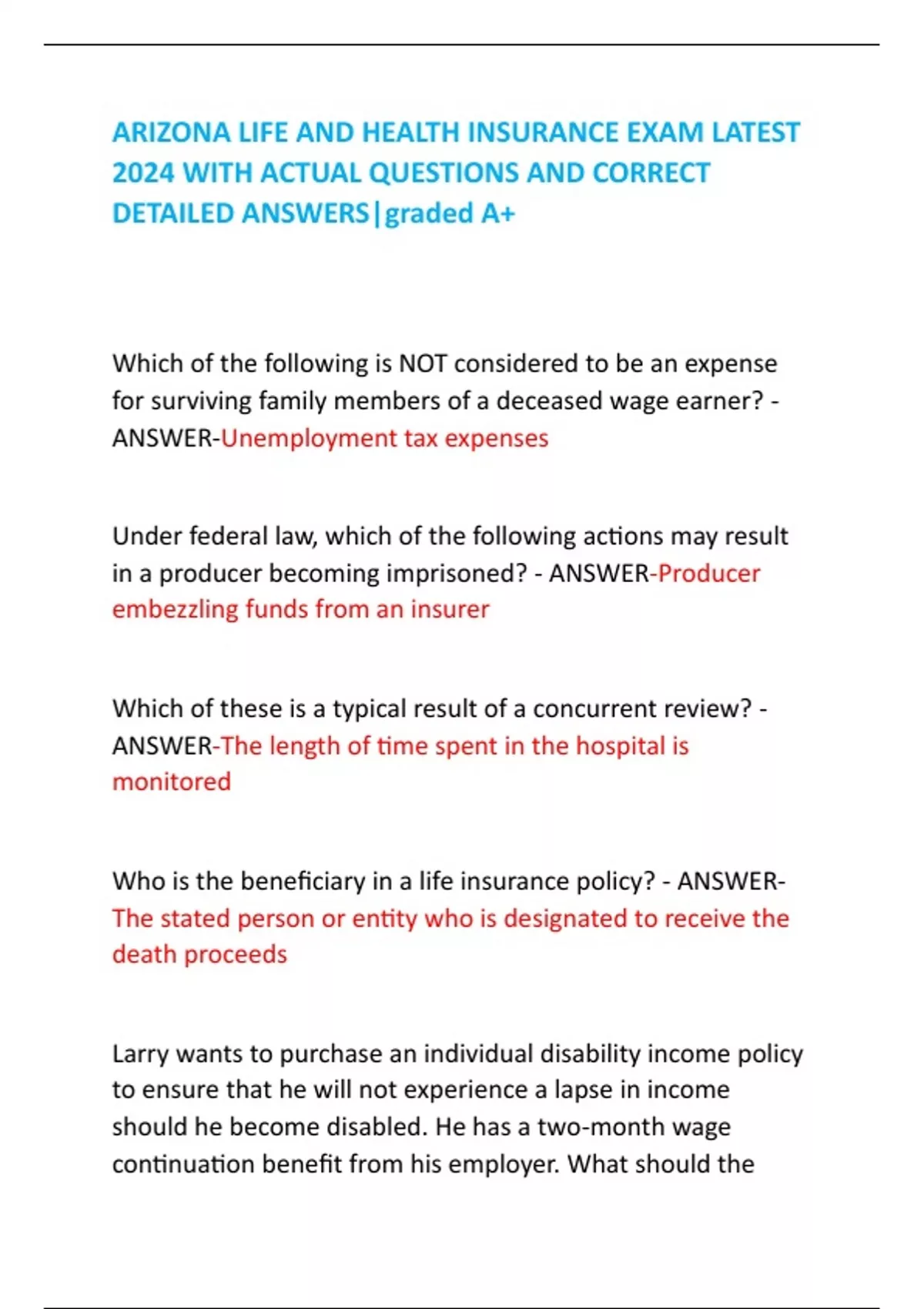
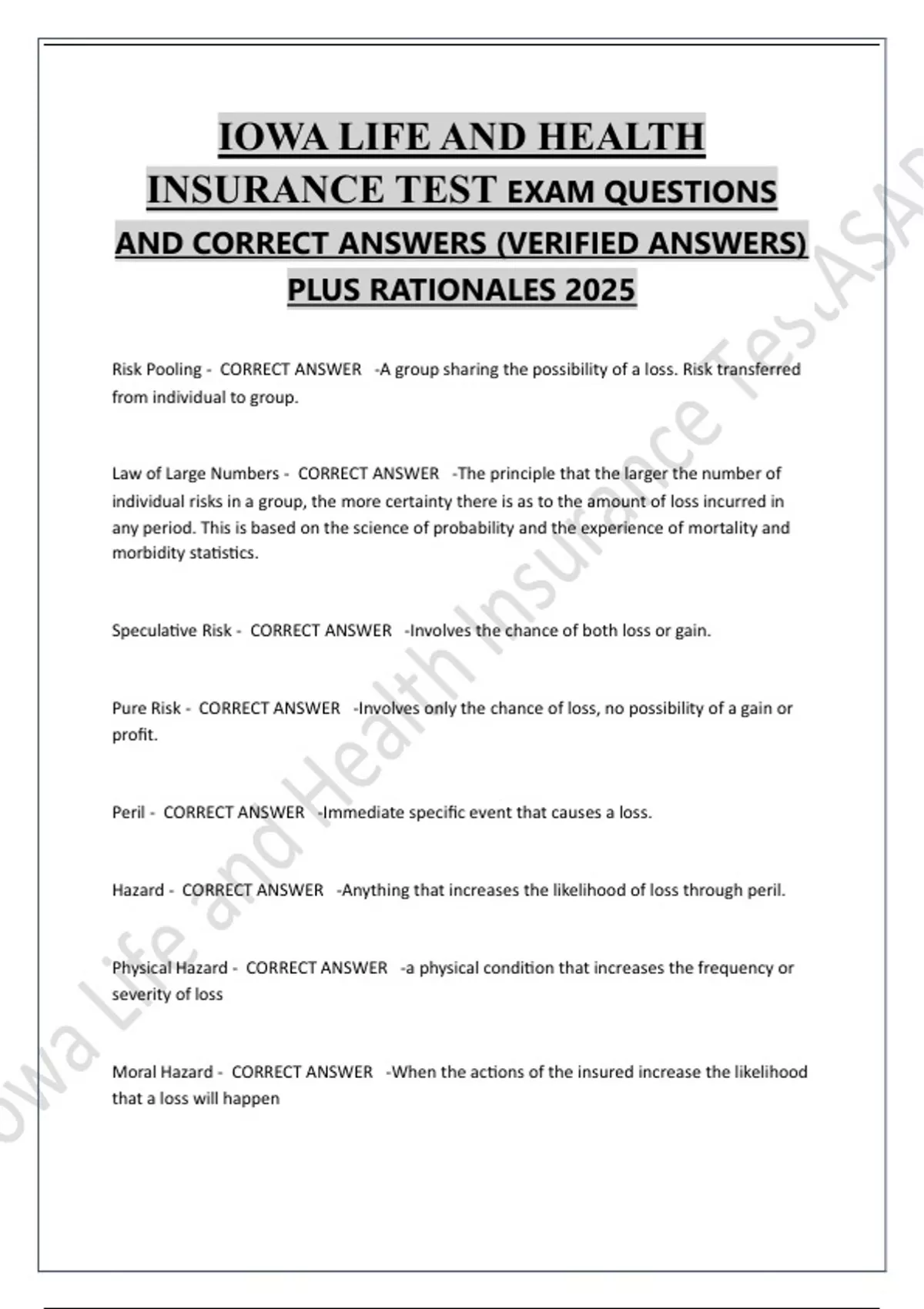
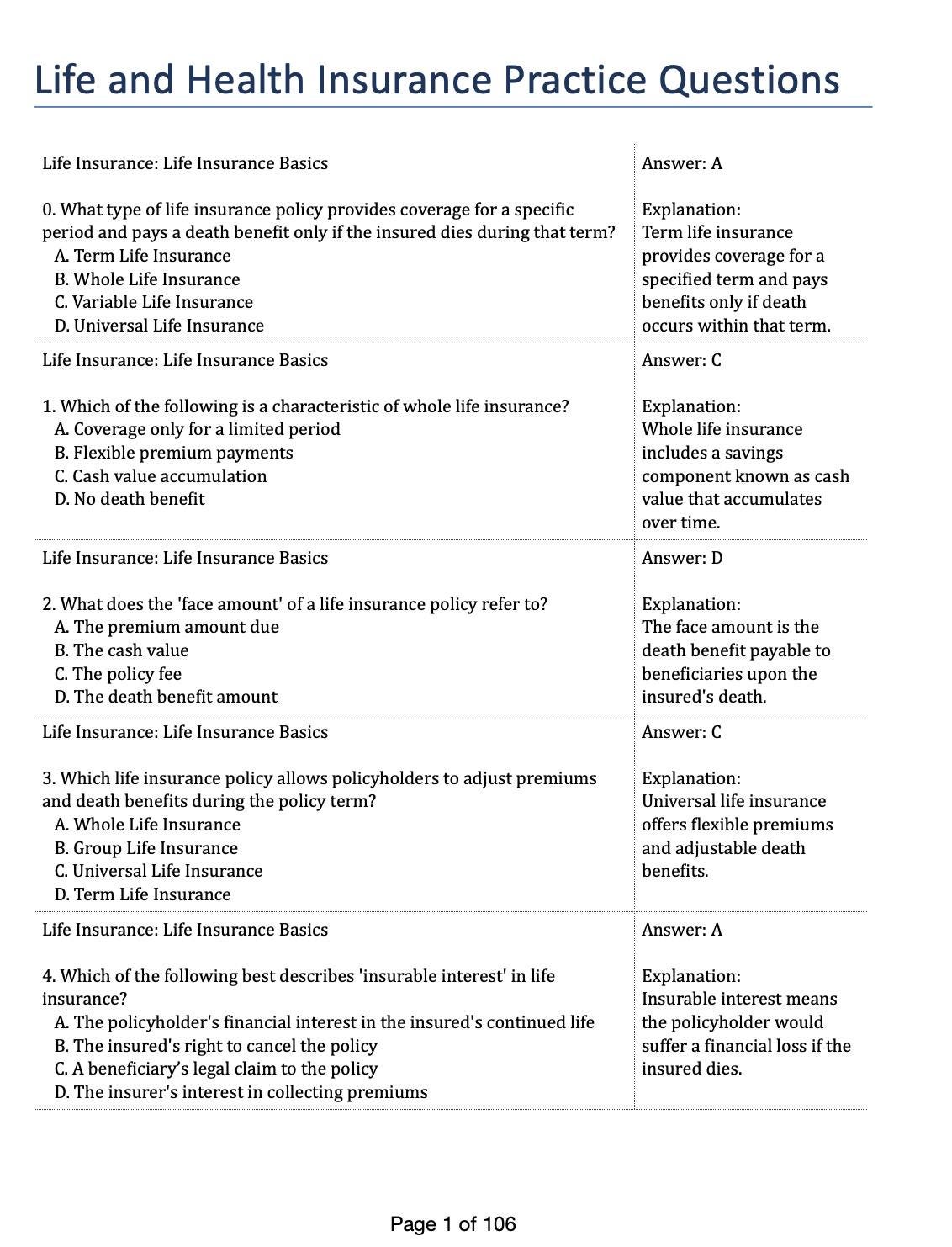
Passing the life and health insurance licensing examination is a mandatory step for any individual seeking to enter the insurance sales industry. Candidates often search for "answers to the life and health insurance test" in the hope of finding a shortcut or a leaked answer key. In reality, no such universal answer key exists because state insurance exams are generated from randomized databases, and securing or distributing these questions is illegal and professionally disqualifying. Success is achieved through a structured understanding of state-specific statutes, insurance product mechanics, and the regulatory environment governing the industry as of 2026.
The Reality of Insurance Licensing Examinations
The life and health insurance exam is a high-stakes professional assessment administered at the state level. These tests are psychometrically designed to ensure that applicants possess a baseline competence required to protect the public. Because of this, exam providers—such as Pearson VUE, PSI, or Prometric—utilize massive item banks. When you sit for your exam, the computer generates a unique set of questions for you.
Seeking "answers" is not merely an exercise in futility; it is a violation of the candidate agreement you sign before the exam. Engaging in efforts to obtain illicit test materials can result in your registration being revoked, a permanent ban from the insurance industry, and potential legal action by your state’s Department of Insurance. The only path to passing is through mastery of the core concepts, not rote memorization of supposed test questions.
Core Concepts You Must Master
While specific questions vary, the structure of the exam remains consistent across most jurisdictions. You must understand the material to handle the variety of questions you will encounter.
1. General Insurance Principles
This section covers the foundational rules that apply to all insurance contracts. You should be familiar with the following:
- Insurable Interest: Why a policyholder must have a legitimate financial interest in the life or health of the insured.
- The Law of Large Numbers: The statistical foundation of insurance that allows companies to predict losses.
- Risk Management: Understanding how individuals and businesses mitigate risk through avoidance, reduction, retention, and transfer.
2. Life Insurance Basics
You will be tested on your ability to explain different product structures to potential clients. Key areas include:
- Term Life vs. Permanent Life: Differentiating between temporary coverage and cash-value policies like Whole Life or Universal Life.
- Policy Provisions: Understanding riders, non-forfeiture options, and beneficiary designations.
- Underwriting: How medical and non-medical factors (like MIB reports and credit checks) impact premiums.
3. Health Insurance Coverage
Health insurance testing is often more technical due to the complexity of federal and state laws.
- Disability Income: Understanding the definition of total disability and how elimination periods work.
- Managed Care: The differences between HMOs (Health Maintenance Organizations) and PPOs (Preferred Provider Organizations).
- Medicare and Medicaid: Knowing the eligibility requirements and the distinctions between Medicare Parts A, B, C, and D.
Comparative Overview of Exam Topics
To organize your study time, utilize the following breakdown of typical exam weightings. Please note that these percentages can shift slightly depending on your specific state’s regulatory focus.
| Topic Area | Primary Focus | Regulatory Complexity |
|---|---|---|
| Legal Concepts | Contract Law & Agency | High |
| Life Insurance | Policies, Riders & Options | Medium |
| Health Insurance | Disability, Medical & LTC | High |
| State Regulations | Specific Statutes & Ethics | Very High |
Effective Study Strategies for 2026
Rather than searching for direct answers, utilize these proven methods to ensure you are exam-ready.
Utilize Authorized Provider Materials
State departments of insurance typically approve specific vendors for pre-licensing education. These materials are updated annually to reflect the most current state laws. Using unauthorized "cheat sheets" or outdated PDFs from forums often leads to failure because you may be studying repealed laws or obsolete tax treatments. Always verify that your textbook or online course is current for the 2026 testing cycle.
Leverage Practice Exams for Knowledge Gaps
Practice exams should be used as diagnostic tools, not as a source of "answers." If you miss a question, do not simply memorize the correct option. Instead, go back to the text and read the entire section concerning that topic. Ask yourself: "Why is the other answer incorrect?" Understanding the "distractors"—the wrong answers—is often more educational than knowing the right one.
Focus on State-Specific Regulations
A significant portion of your exam will cover state-specific ethics and regulations. This is the one area where national study guides often fall short. Visit the website of your state’s Department of Insurance to download the state-specific supplement. Laws regarding agent fiduciary duties, rebating, and replacement of policies are unique to each jurisdiction and are highly tested.
Common Pitfalls to Avoid
Many candidates fail because they treat the exam as a memory test rather than an application test. Consider these common errors:
- Over-relying on Short-term Cramming: The material is cumulative. Concepts in the early chapters (like contract law) appear in later chapters (like group health). If you skip the basics, the more advanced sections will be impossible to understand.
- Ignoring the "How" and "Why": Questions on the exam are often scenario-based. For example, instead of asking "What is an elimination period?" they will ask, "If a client has a 30-day elimination period and becomes disabled on March 1st, when do benefits begin?" If you do not understand the mechanics, you will miss the question even if you know the definition.
- Neglecting Ethics: Never underestimate the weight given to ethical questions. States prioritize protecting consumers, so you must know your legal obligations regarding disclosure, misrepresentation, and twisting.
How to Handle Exam Day Anxiety
When you arrive at the testing center, your focus should be on the process, not the content. Prepare your physical and mental state the night before.
- Read the Question Twice: Many errors occur because candidates miss a keyword like "not," "except," or "only."
- Use the Flagging Feature: If a question is particularly difficult, flag it and move on. Do not let one complex question drain your time and confidence. Often, later questions provide hints or context that help you solve earlier ones.
- Trust Your First Instinct: Unless you have a concrete reason to change an answer based on a newfound understanding of the question, your first answer is often the most accurate reflection of your studied knowledge.
Frequently Asked Questions
Is it possible to see the actual test questions before the exam?
No. Insurance licensing exams are proprietary. Any website or person claiming to provide the "actual" test questions is likely operating a scam or distributing illegally obtained intellectual property. Using such material risks your professional license.
What should I do if I fail the exam?
Do not be discouraged. Failing is common, even for experienced professionals. Request your score report, which will show you the percentage of questions you got correct in each major category. Focus your remedial study only on the weak areas identified by that report.
Do I need to memorize the entire insurance code?
No. You need to understand the principles behind the code. Focus on prohibited practices, licensing requirements, and the powers of the Insurance Commissioner. The nuances of technical legal text are less important than knowing how an agent must behave to stay in compliance.
How much time should I allocate for study?
Most successful candidates report spending between 40 and 60 hours of focused study time to feel prepared. This should include reading the course material, watching instructional videos, and completing multiple practice tests.
How are the state-specific questions different from the national questions?
National questions focus on standard concepts like how a whole life policy functions. State-specific questions focus on how your state treats those policies, including mandatory grace periods, specific consumer protection forms, and the disciplinary actions for agent misconduct.
Next Steps for Success
To pass your life and health insurance exam, start by registering for an accredited pre-licensing course specific to your state. Create a study schedule that allows you to cover one chapter per day, leaving the final week strictly for practice exams and reviewing your weak areas. Avoid the temptation to look for "leaked" questions, as they will not appear on your exam and will only waste valuable study time. Focus your energy on mastering the fundamental concepts of risk, contract law, and your state's specific regulatory requirements. With a disciplined approach and reliance on official, updated study materials, you will be well-positioned to pass on your first attempt.