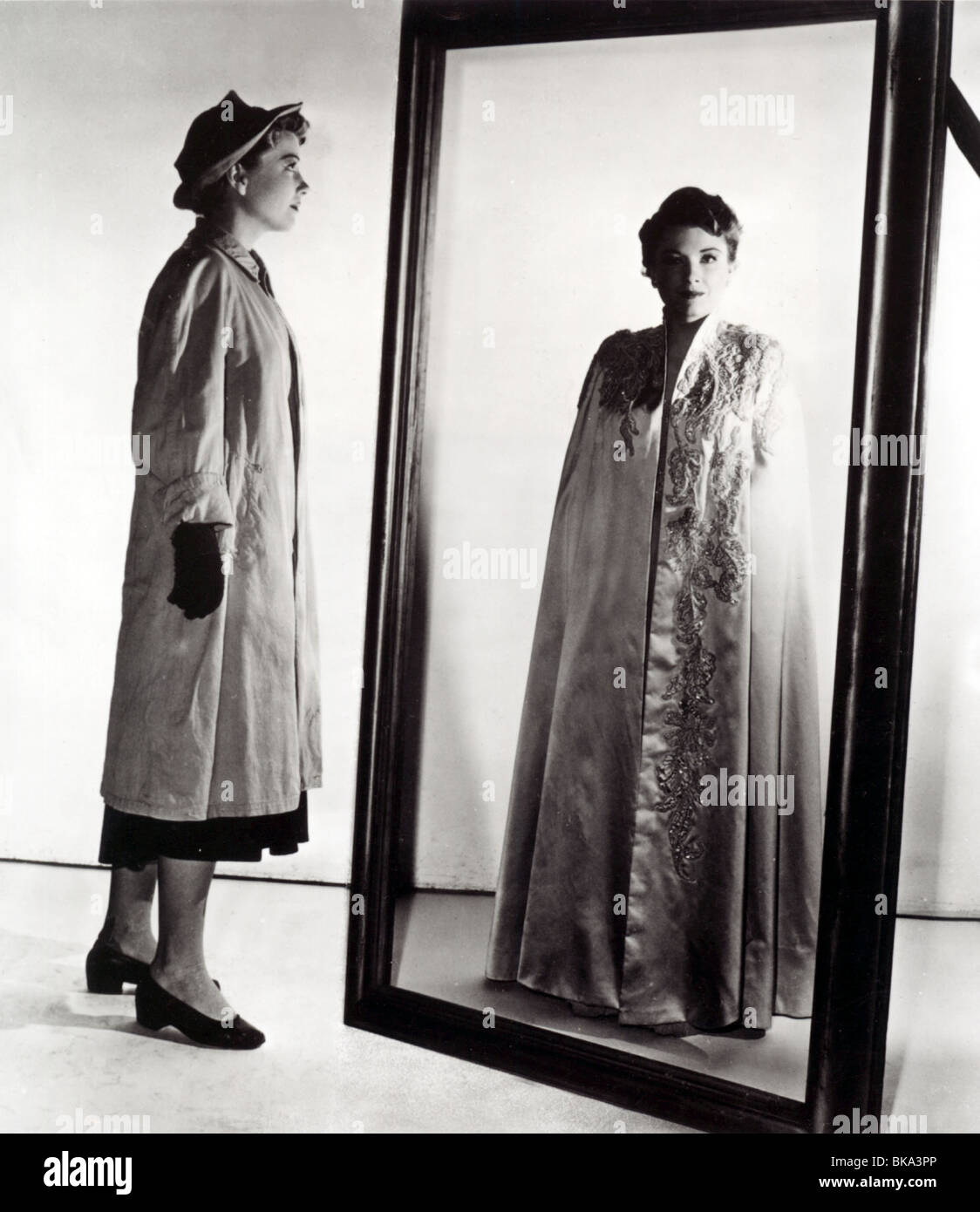
Anne Baxter’s portrayal of Eve Harrington in the 1950 masterpiece All About Eve remains a definitive benchmark for cinematic villainy and the "performance within a performance." As the titular character, Baxter navigates a complex psychological arc, transforming from a seemingly naive sycophant into a cold-blooded usurper of Broadway royalty.
The Architectural Precision of Eve Harrington
In the landscape of 1950s cinema, few characters required as much technical precision as Eve Harrington. While Bette Davis’s Margo Channing is the emotional volcano of the film, Anne Baxter’s Eve is the tectonic plate shifting beneath her. To understand Baxter’s performance, one must look at how she manages the audience's perception. For the first third of the film, the viewer is led to believe Eve is exactly who she claims to be: a tragic, starstruck orphan of the theater.
Baxter’s brilliance lies in her restraint. She utilizes a soft, breathy vocal tone and a perpetual "downturned" physical posture to project humility. This was a deliberate choice by Baxter and director Joseph L. Mankiewicz to ensure that when the mask finally slips, the impact is visceral. Unlike many villains who signal their intentions to the audience via asides or sinister looks, Baxter plays Eve as a woman who is always acting, even when she is alone.
The role was originally intended for Jeanne Crain, but Crain’s pregnancy led to Baxter’s casting. This change was fortuitous; Baxter possessed a specific type of "Midwestern mask" that made her eventual reveal as a manipulative social climber from Wisconsin far more effective. In the context of 2026 film studies, Baxter’s performance is frequently analyzed alongside modern "strivers" in cinema, yet it remains the gold standard for the "ingénue with a switchblade."
The Performance Within a Performance
The technical depth of Anne Baxter’s work in All About Eve is most evident in the scenes where Eve is performing for the other characters. In the early sequences at the Curran Theater, Baxter’s Eve is a master of "active listening." She doesn't just stand in the shadows; she inhabits them with a hungry intensity that Margo Channing mistakes for devotion.
The Subtle Metamorphosis
As the narrative progresses, Baxter’s physical presence shifts. Notice the evolution of her wardrobe and hair. In the beginning, she is draped in oversized, drab trench coats and simple hats. As she gains Margo’s trust and begins to infiltrate her life, her clothing becomes more structured, mirroring Margo’s own style. By the time she reaches the infamous Sarah Siddons Award ceremony, she is the image of polished, high-society elegance.
Baxter’s use of her eyes is a critical component of this metamorphosis. In the presence of Margo or Bill Sampson (Gary Merrill), her gaze is often lowered or wide with feigned wonder. However, in her private confrontations with Addison DeWitt (George Sanders), her eyes become hard and calculating. This duality is what makes the performance so enduring; Baxter isn't playing one character, she is playing a character who is playing three others.
The Rivalry: Margo Channing vs. Eve Harrington
The heart of the film is the generational and psychological war between Margo and Eve. Bette Davis provides the theatrical fire, but Anne Baxter provides the ice. The dynamic is a study in contrasting acting styles: Davis is expressive and grand, while Baxter is internalized and precise.
This contrast serves a narrative purpose. Margo is a woman whose life is an open book—she is loud, insecure, and fiercely honest. Eve is a closed vault. Baxter’s ability to remain "unreadable" for long stretches of the film creates a sense of unease in the viewer. We know something is wrong before the characters do, simply because Baxter makes Eve’s "goodness" feel slightly too perfect, a fraction too rehearsed.
One of the most pivotal scenes for Baxter is the "furred creature" monologue delivered by Margo, where Eve’s betrayal is finally laid bare. Baxter’s reaction is not one of guilt, but of cold calculation. She realizes the game is up and immediately pivots to her next move. This lack of a "moral epiphany" was groundbreaking for a female character in 1950, and Baxter leaned into the character’s sociopathic tendencies without ever making her a caricature.
The 1951 Academy Awards Controversy
No discussion of Anne Baxter in All About Eve is complete without addressing the 23rd Academy Awards. The film received a record-breaking 14 nominations, a feat not matched until Titanic and La La Land. However, the category placement of the actresses remains a point of historical contention.
Originally, 20th Century Fox intended to campaign Bette Davis for Best Actress and Anne Baxter for Best Supporting Actress. Baxter, however, insisted on being submitted in the Lead category. Her argument was technically sound: the film is titled All About Eve, and she has more screen time than Davis. The studio relented, and both women were nominated for Best Actress.
This decision is widely believed to have caused a "vote split" among Academy members who loved the film but couldn't decide which performance was superior. Consequently, both Davis and Baxter lost the Oscar to Judy Holliday for Born Yesterday. While Baxter’s move was seen by some as an act of "Eve Harrington-esque" ambition in real life, it reflected her genuine belief in the weight and importance of the role she had crafted.
| Feature | Margo Channing (Bette Davis) | Eve Harrington (Anne Baxter) |
|---|---|---|
| Primary Motivation | Fear of aging and losing relevance | Insatiable ambition and social mobility |
| Acting Style | Grand, expressive, "Old Hollywood" | Internalized, precise, manipulative |
| Social Standing | Established Broadway Royalty | Disenfranchised outsider (self-made) |
| Core Vulnerability | Insecurity regarding her partner Bill | The truth about her past in Wisconsin |
| Outcome | Personal happiness/retirement | Professional success/spiritual isolation |
Critical Reception and Technical Legacy
Upon its release, Baxter’s performance was hailed for its "serpentine grace." Critics noted that while Davis had the "showier" role, Baxter had the more difficult one. She had to be convincing enough as a "fan" to justify the other characters' trust, yet transparent enough that the audience would eventually feel the sting of her betrayal.
From a technical standpoint, Baxter’s performance is a masterclass in subtext. In every scene, there is a difference between what Eve is saying and what she is doing. For example, when she "graciously" offers to understudy for Margo, Baxter plays the line with such humility that Margo feels guilty for being suspicious. However, Baxter’s subtle positioning in the frame—standing just slightly closer to the director than Margo—tells the real story.
In the decades following the film's release, Eve Harrington has become a cultural archetype. The "Eve Harrington" trope appears in everything from The Devil Wears Prada to Showgirls. Anne Baxter’s performance is the source code for this trope. She proved that a villain doesn't need to snarl or wear a black hat; they can be the girl next door with a soft voice and a tragic story.
Comparative Analysis with Other Baxter Roles
To appreciate the range Baxter brought to All About Eve, one should compare it to her Oscar-winning role as Sophie MacDonald in The Razor’s Edge (1946). In that film, she played a woman spiraling into alcoholism and tragedy with raw, heartbreaking vulnerability. It was the antithesis of the controlled, calculating Eve.
Later, in The Ten Commandments (1956), Baxter played Nefretiri with a campy, theatrical flair that was appropriate for a Cecil B. DeMille epic. The contrast between Nefretiri’s over-the-top declarations and Eve Harrington’s quiet whispers demonstrates Baxter’s versatility. However, it is Eve that remains her most complex and enduring contribution to the arts. She managed to take a character that could have been a one-dimensional "bad girl" and turned her into a profound study of the American obsession with success at any cost.
Frequently Asked Questions
Did Anne Baxter and Bette Davis get along during filming?
Despite the on-screen rivalry and the Academy Award category dispute, Davis and Baxter maintained a professional relationship. Davis was known to be demanding but respected Baxter’s talent. The tension often cited by biographers was more about the competitive nature of the studio system and the Oscar race than a personal feud on set. In later years, Davis commented that Baxter’s insistence on the Lead Actress category was a mistake, but she didn't harbor a lifelong grudge.
Why did Anne Baxter insist on the Best Actress category?
Baxter felt that her role was the titular character and the engine of the plot. Given that she is in nearly every scene and the narrative is structured around her ascent, she believed her performance qualified as a lead. From a purely technical standpoint, she was correct; however, from a strategic standpoint, it likely cost both her and Davis the award.
What happened to Anne Baxter’s career after All About Eve?
Following the success of All About Eve, Baxter continued to be a major star throughout the 1950s. She starred in Alfred Hitchcock’s I Confess (1953) and the aforementioned The Ten Commandments (1956). In the 1960s and 70s, she transitioned into television and stage work, famously playing Margo Channing (the role Bette Davis played) in the Broadway musical adaptation Applause. This was a full-circle moment that Baxter deeply enjoyed.
How does the ending of the film reflect on Eve’s character?
The film ends with a young girl named Phoebe sneaking into Eve’s apartment, mimicking Eve’s own entrance into Margo’s life. Baxter’s reaction in the final moments—exhausted but resigned—suggests that Eve realizes she has created a cycle she cannot stop. The "Eve" of today will be replaced by the "Phoebe" of tomorrow. It is a cynical but powerful commentary on the nature of fame.
Was Anne Baxter the first choice for Eve Harrington?
No, the role was originally offered to Jeanne Crain. After Crain had to drop out due to pregnancy, Donna Reed was briefly considered before the role ultimately went to Baxter. Many film historians believe Baxter’s specific brand of "intellectual" acting was a better fit for Mankiewicz’s sharp, literate dialogue than the other actresses considered.
Practical Recommendations for Modern Viewers
For those studying Anne Baxter’s performance today, it is highly recommended to watch the film twice. On the first viewing, watch it as the other characters do—see if you can spot the moment you personally stop trusting Eve. On the second viewing, watch only Anne Baxter’s face when she is not the primary focus of the scene. Her "background acting" is where the true character of Eve Harrington lives.
For students of acting, Baxter’s performance is a textbook example of how to use breath control and eye-line to project a false persona. Notice how she rarely blinks when Eve is "sincere," a classic trait of a high-functioning manipulator. This level of detail is why, even in 2026, All About Eve is mandatory viewing in film schools worldwide.