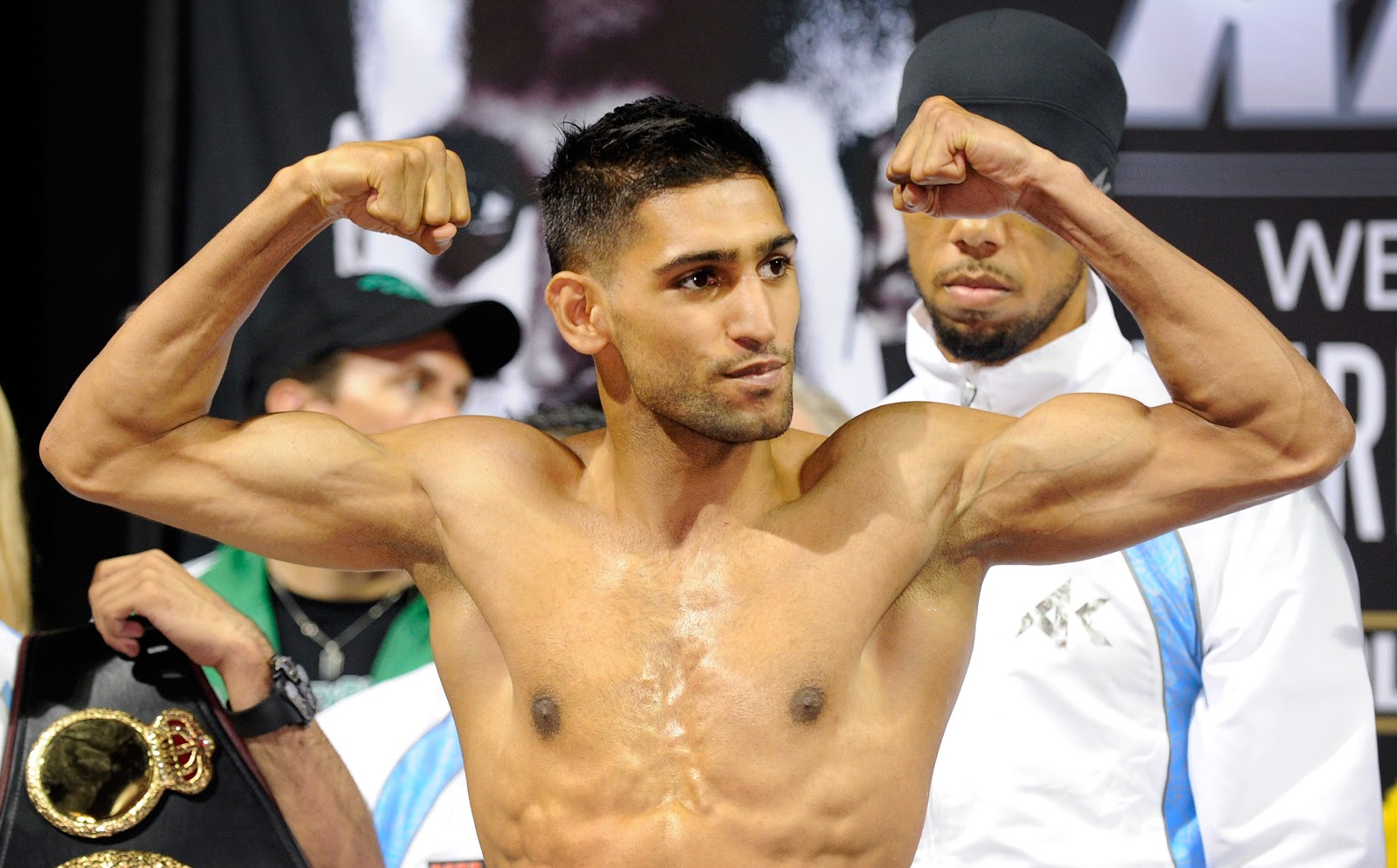
Amir Khan concluded his professional boxing career with a record of 34 wins and 6 losses, including 21 victories by way of knockout. While the raw statistics reflect a world-class athlete, the context of his record reveals a fighter who consistently sought the highest level of competition, often jumping multiple weight classes to face generational talents, resulting in a career defined by both brilliant technical displays and high-risk vulnerabilities.
To understand Amir Khan’s boxing record, one must look beyond the win-loss column. His career is a case study in the "high-reward, high-risk" philosophy of modern prize fighting. From his emergence as an Olympic prodigy to his retirement following a long-awaited domestic grudge match, Khan’s trajectory was rarely linear. In the landscape of 2026, sports historians view his record as a testament to the "anyone, anywhere" era of boxing, where a fighter's legacy is weighed as much by the caliber of their opposition as by the zeros on their record.
The Amateur Foundation and Rapid Professional Rise
The context of Khan's professional record begins in 2004 at the Athens Olympics. At just 17 years old, Khan captured a Silver Medal, becoming a household name in the United Kingdom overnight. This amateur success dictated the early "shaping" of his professional record. When he turned pro in 2005 under the promotion of Frank Warren, the expectations were monumental.
His early record (1-18) was a masterclass in prospect building, characterized by high-speed combinations and a level of hand speed that few in the lightweight division could track. However, the first major "contextual" shift in his record occurred in September 2008.
The Breidis Prescott Wake-Up Call
Khan entered the ring against Breidis Prescott with an unblemished 18-0 record. Within 54 seconds, he was knocked out. This loss is perhaps the most significant in his career context because it didn't end his trajectory; it forced a total reinvention. Khan moved his training camp to Los Angeles to work with Freddie Roach at the Wild Card Gym. This transition led to the most successful period of his career, proving that his record was resilient enough to survive a catastrophic early setback.
The Peak Years: Light-Welterweight Dominance (140 lbs)
Between 2009 and 2011, Amir Khan was arguably the best light-welterweight in the world. This is the "Golden Era" of his boxing record, where he secured his status as a unified world champion.
Victory Over Andreas Kotelnik
In July 2009, Khan moved up to 140 pounds to challenge WBA champion Andreas Kotelnik. His performance was a tactical clinic, utilizing lateral movement and a stiff jab to win a unanimous decision. This victory proved that Khan could translate his speed into a higher weight class and handle the power of established champions.
The Marcos Maidana War
If one fight defines the "heart" within Khan's record, it is his 2010 defense against Marcos Maidana. Maidana was a feared puncher with a terrifying knockout ratio. Khan dropped Maidana early with a body shot, but the later rounds saw Khan surviving a brutal onslaught. Winning by unanimous decision, Khan silenced critics who questioned his "chin" and his ability to weather a storm. This win remains the crown jewel of his technical and physical resume.
Unification Against Zab Judah
In July 2011, Khan knocked out Zab Judah to add the IBF title to his WBA belt. At this point, his record stood at 26-1. He was a top-five Pound-for-Pound (P4P) entrant, and his record reflected a fighter who had successfully unified a talent-rich division.
Statistical Breakdown of Amir Khan’s Career
To better visualize the progression and quality of Khan's opposition, the following table breaks down his record by key phases and the status of his opponents.
| Career Phase | Record in Phase | Key Opponents | Significance |
|---|---|---|---|
| The Prospect Era (2005–2008) | 18–1 | Mario Kindelan (Amateur), Breidis Prescott | Rapid rise followed by a shocking KO loss that forced a change in training. |
| The Championship Peak (2009–2011) | 8–0 | Marcos Maidana, Zab Judah, Paulie Malignaggi | Unified WBA & IBF Light-Welterweight titles; considered top P4P talent. |
| The Transitional Years (2012–2015) | 5–2 | Danny Garcia, Lamont Peterson, Devon Alexander | Lost titles in controversial and definitive fashions; moved to welterweight. |
| The Megafight/Risk Era (2016–2019) | 3–2 | Canelo Alvarez, Terence Crawford | Jumped weight classes for massive pay-per-views; suffered heavy KO losses. |
| The Final Chapter (2022) | 0–1 | Kell Brook | Long-awaited domestic grudge match ending in a TKO loss and retirement. |
Contextualizing the Losses: A Pattern of Ambition
A record of 34-6 is often scrutinized more for the "6" than the "34." However, in Khan’s case, the losses provide a window into his tactical flaws and his immense bravery. Unlike many modern fighters who protect their undefeated records, Khan frequently accepted "danger" fights where he was the betting underdog.
- Lamont Peterson (2011): A split decision loss in Peterson's hometown. The fight was marred by refereeing controversies and Peterson later testing positive for synthetic testosterone, though the result stood.
- Danny Garcia (2012): Khan was winning the fight comfortably until he was caught by a blind left hook. This loss highlighted the recurring theme in Khan's record: he was often the better boxer but remained vulnerable to a single, high-leverage power shot.
- Canelo Alvarez (2016): Khan jumped two weight classes to fight the much larger Canelo at a catchweight of 155 lbs. For five rounds, Khan’s speed troubled the Mexican superstar. In the sixth, Canelo landed a devastating overhand right. While a loss on the record, this fight is viewed by fans as a testament to Khan’s willingness to take extreme risks for greatness.
- Terence Crawford (2019): Facing one of the greatest P4P fighters of the generation, Khan was stopped in the sixth round following an accidental low blow that led to a controversial corner stoppage.
The "Chin" Narrative vs. Defensive Statistics
Throughout his career, the "glass chin" narrative followed Khan. However, Compubox data and historical analysis offer a more nuanced view. Khan’s vulnerability wasn't necessarily a lack of physical durability, but rather a tactical lapse in "resetting" after throwing combinations.
His record shows that when he followed a strict defensive game plan (as seen in the Devon Alexander and Luis Collazo fights), he was almost untouchable. His losses typically occurred when his offensive instincts overrode his defensive responsibilities, leading to him being caught "between" punches. His hand speed was so superior that it often created a false sense of security, leading him into trades that favored the heavier punchers he eventually faced.
The Domestic Rivalry and Retirement
For over a decade, the British public clamored for a fight between Amir Khan and Kell Brook. By the time it finally happened in February 2022, both men were past their athletic primes. The context of this final loss (TKO Round 6) is one of a "closing of a chapter."
Khan’s record ended with a defeat to his fiercest rival, but by 2026, the sting of that loss has faded, replaced by an appreciation for his overall body of work. He retired shortly after the Brook fight, acknowledging that his reflexes—the primary engine of his success—had finally slowed.
Legacy in the 2026 Boxing Landscape
In 2026, Amir Khan's record is viewed as a bridge between the traditional boxing era and the modern "entertainment" era. He was one of the first fighters to truly leverage a massive social media following alongside legitimate world-title credentials.
His record is categorized by:
- Elite Speed: Frequently cited by trainers as having the fastest hands in the history of the 140lb division.
- Global Appeal: Competing in the UK, USA, and the Middle East, bringing boxing to new markets.
- High Opposition Quality: Of his six losses, four came against fighters who were either current or future Hall of Famers (Canelo, Crawford, Garcia, and arguably Brook).
Frequently Asked Questions
What was Amir Khan's peak weight class?
Amir Khan was most effective at light-welterweight (140 lbs). This is where he held unified WBA and IBF world titles and secured his most impressive victories, including those over Marcos Maidana and Zab Judah. His attempts to move up to welterweight (147 lbs) and middleweight (155 lbs catchweight) met with mixed results, as he often lacked the punch resistance to compete with the natural power of larger men.
Did Amir Khan ever win a world title?
Yes, Amir Khan was a multi-time world champion. He first won the WBA light-welterweight title in 2009 against Andreas Kotelnik. He later unified the division by winning the IBF title from Zab Judah in 2011. He also held the WBC Silver welterweight title during his career.
Who was the toughest opponent on Amir Khan's record?
While Canelo Alvarez was the largest and most physically imposing, many boxing analysts consider Terence Crawford or Danny Garcia as his toughest tactical challenges. However, in terms of sheer physical toll, the 2010 fight against Marcos Maidana is widely cited as the most grueling encounter of his career.
Why did Amir Khan lose to Kell Brook at the end of his career?
The loss to Kell Brook in 2022 was primarily due to age and the accumulated wear of a long career. Khan’s style relied almost entirely on elite reflexes and foot speed. By age 35, those attributes had declined. Brook, whose style was more timing-based and relied on heavy-handed accuracy, was able to catch Khan more easily than he would have in their respective primes.
What is Amir Khan's knockout percentage?
Amir Khan finished his career with a 61.76% knockout percentage (21 KOs in 34 wins). While not known as a "one-punch" knockout artist in the vein of a heavyweight, his stoppages usually came through "accumulation"—overwhelming opponents with such high-volume speed that they could no longer defend themselves.
Final Recommendation for Boxing Students
To truly appreciate Amir Khan's record, one should study the Khan vs. Maidana fight for heart and the Khan vs. Alexander fight for technical brilliance. His career serves as a reminder that in boxing, greatness is often found in the willingness to fail on the biggest stage. For those analyzing sports legacies in 2026, Khan remains a primary example of why a fighter's value is not solely defined by an undefeated record, but by the excitement and caliber of the journey they provided to the fans.