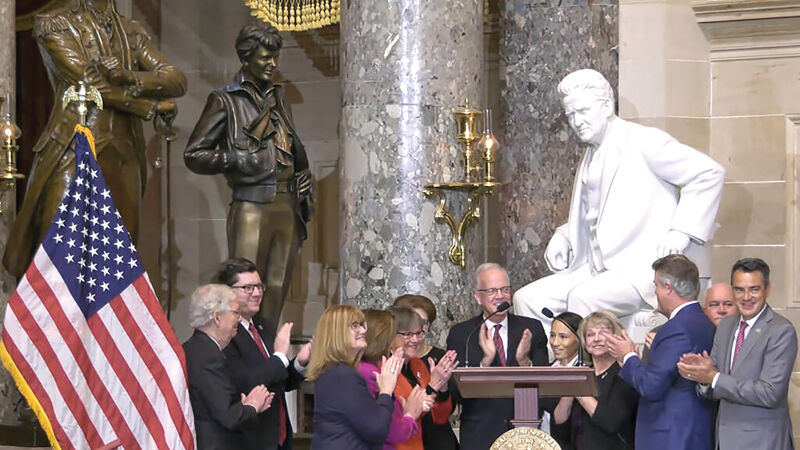
The bronze statue of Amelia Earhart was officially installed in the National Statuary Hall Collection at the United States Capitol on July 27, 2022. Representing the state of Kansas, the seven-foot-tall monument honors the legendary aviator’s contributions to flight and women’s equality, replacing a previous statue of Senator John James Ingalls.
The Long Journey to the National Statuary Hall
The arrival of Amelia Earhart’s likeness in the U.S. Capitol was the culmination of a decades-long effort by the state of Kansas to update its representation in the National Statuary Hall Collection. Each state is entitled to two statues in the Capitol, depicting deceased individuals who were illustrious for their historic renown or distinguished civic or military services. For over a century, Kansas was represented by George Washington Glick and John James Ingalls.
The transition began in 1999 when the Kansas State Legislature approved a resolution to replace both of its existing statues. The first change occurred in 2003, when a statue of Dwight D. Eisenhower replaced George Washington Glick. However, the process for the second statue—intended to be Earhart—faced significant bureaucratic and fundraising hurdles that spanned more than twenty years.
The Amelia Earhart Statue Selection Committee and the Atchison-based Amelia Earhart Foundation spearheaded the project. Because federal law requires that the costs for replacing statues (including the carving, transportation, and installation) be covered by the state or private donations rather than federal funds, the foundation had to raise the necessary capital through private contributions. By the time the bronze was cast and ready for its 2022 unveiling, it had become a symbol not just of Earhart’s legacy, but of Kansan persistence.
Artistic Vision: The Lundeen Sculpture
The statue is a masterwork of bronze casting created by brothers George and Mark Lundeen at their studio in Loveland, Colorado. Standing seven feet tall atop a granite pedestal, the figure depicts Earhart in her prime, capturing the spirit of "The Queen of the Air" as she might have appeared before one of her historic transatlantic flights.
Technical Details and Design Choices
The Lundeens chose to portray Earhart in her signature flying attire rather than formal wear. This decision was intentional, aiming to emphasize her role as a working professional and a pioneer in a male-dominated field.
- The Attire: She is depicted wearing a leather flight jacket, a scarf windswept around her neck, and high-waisted trousers tucked into sturdy boots. This ensemble reflects the practical needs of early 20th-century aviation.
- The Pose: Unlike many of the more rigid, neoclassical statues in the Capitol, Earhart is shown in a dynamic, forward-leaning stance. Her expression is one of focused determination, looking toward the horizon.
- The Scarf: A subtle yet vital detail is the movement captured in her scarf. It serves as a visual metaphor for the wind and the high-altitude environments that Earhart conquered.
- Material and Casting: The statue is cast in bronze, a material chosen for its durability and its ability to hold fine detail over centuries of display. The patina was carefully applied to highlight the textures of the leather jacket and the folds of her clothing.
The Sculptors' Legacy
George and Mark Lundeen are renowned for their ability to capture human emotion in bronze. Their work on the Earhart statue involved extensive research into historical photographs and film footage to ensure the proportions and likeness were accurate. The goal was to create a piece that felt approachable yet heroic—a balance that mirrors Earhart’s own public persona.
Historical Significance of Amelia Earhart
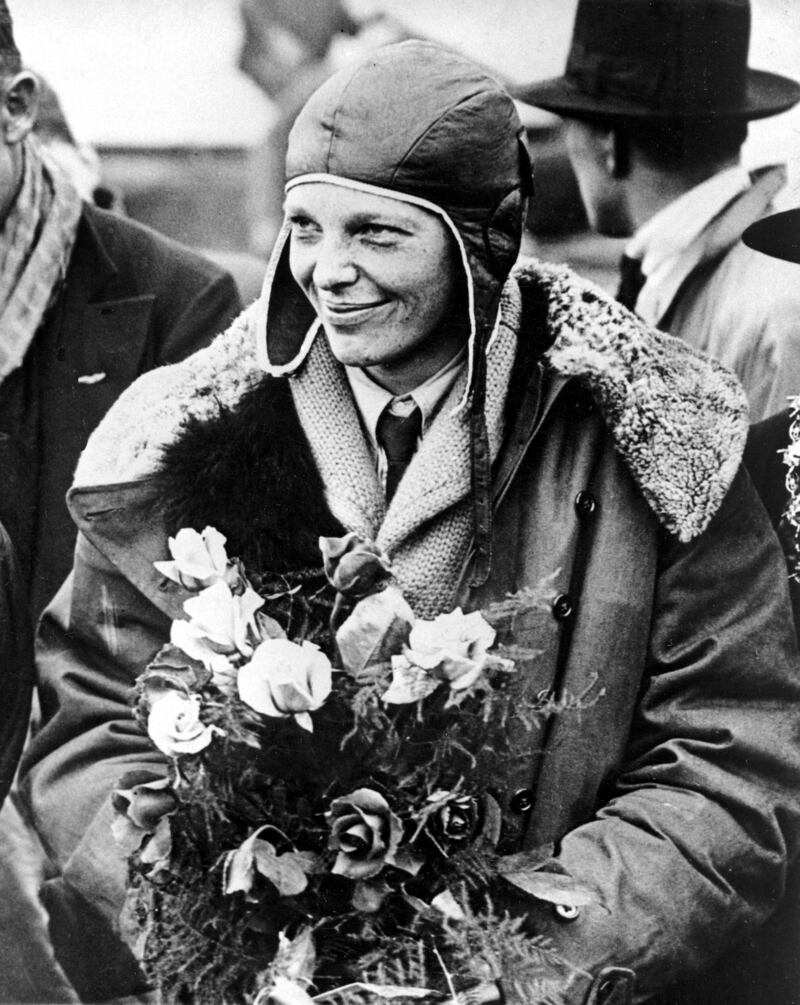
Amelia Earhart’s selection for the Capitol collection is a testament to her enduring impact on American history. Born in Atchison, Kansas, in 1897, Earhart did more than just fly planes; she challenged the social constraints of her era.
Aviation Milestones
Earhart’s career was defined by a series of "firsts." In 1928, she became the first woman to fly across the Atlantic Ocean as a passenger, but she was unsatisfied with being mere "baggage." In 1932, she silenced critics by becoming the first woman (and the second person after Charles Lindbergh) to fly solo across the Atlantic. This feat earned her the Distinguished Flying Cross from the U.S. Congress.
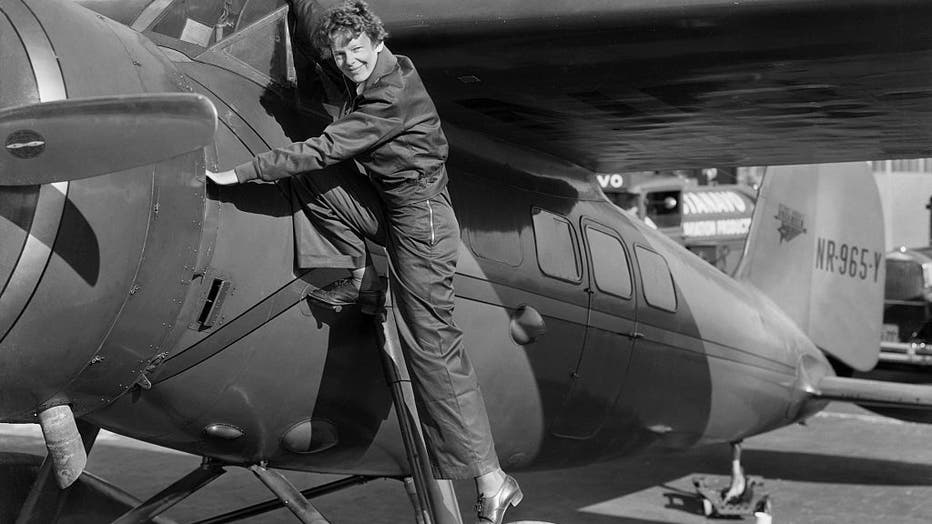
She followed this with the first solo flight from Honolulu to Oakland, California, in 1935. Her technical skill as a pilot was matched by her mechanical understanding of the aircraft she flew, often working closely with engineers to push the limits of aeronautical technology.
Advocacy for Women in Flight
Beyond her solo records, Earhart was a pivotal figure in organizing the Ninety-Nines, an international organization for female pilots. She served as its first president and used her platform to advocate for women’s commercial aviation careers. In 1926, she famously stated, "Women must try to do things as men have tried. When they fail, their failure must be but a challenge to others."
By placing her statue in the Capitol, the state of Kansas acknowledges that Earhart’s primary contribution to the Union was her role as an ambassador of American courage and an architect of modern gender equality.
Representation of Women in the U.S. Capitol
The installation of the Amelia Earhart statue in 2022 marked a significant shift in the demographic representation of the National Statuary Hall Collection. For much of the 20th century, the collection was almost entirely composed of men.
Breaking the Bronze Ceiling
At the time of Earhart’s installation, she was one of only a small number of women represented in the 100-statue collection. Other notable women include:
- Rosa Parks: Although not part of the state-submitted Statuary Hall Collection (her statue was commissioned by Congress), she holds a prominent place in the Capitol.
- Mary McLeod Bethune: Representing Florida, her statue was also installed in 2022, shortly before Earhart’s.
- Frances E. Willard: The first woman included in the collection, representing Illinois (installed in 1905).
- Helen Keller: Representing Alabama (installed in 2009).
The movement to replace older statues of figures whose historical relevance has faded (or whose actions no longer reflect modern values) with figures like Earhart is part of a broader effort to ensure the Capitol’s art reflects the full breadth of the American experience.
Visiting the Statue: 2026 Guidelines
As of 2026, the Amelia Earhart statue remains one of the most frequently visited pieces in the National Statuary Hall. Because the collection is spread throughout several areas of the Capitol building, visitors should plan their route accordingly.
Location and Access
The statue is located within the National Statuary Hall, the semicircular room south of the Rotunda. This area was formerly the Hall of the House of Representatives and is known for its unique acoustics and historical grandeur.
To see the statue, visitors must book a tour through the U.S. Capitol Visitor Center (CVC).
- Reservations: It is highly recommended to book tours at least several weeks in advance via the official visit-the-capitol website.
- Security: All visitors must pass through a security screening at the CVC entrance, located beneath the East Front plaza at First Street and East Capitol Street.
- Prohibited Items: Large bags, liquids (including water), and sharp objects are not permitted.
- Photography: Photography is generally allowed for personal use in the Statuary Hall, though flash photography may be restricted to preserve the artwork.
Kansas Representation Comparison
The following table compares the current and former statues representing the state of Kansas in the U.S. Capitol.
| Feature | Current Statue 1 | Current Statue 2 | Former Statue (Replaced) |
|---|---|---|---|
| Subject | Amelia Earhart | Dwight D. Eisenhower | John James Ingalls |
| Installation Year | 2022 | 2003 | 1905 |
| Material | Bronze | Bronze | Marble |
| Primary Achievement | Aviation & Women's Rights | Military & 34th President | U.S. Senator |
| Sculptor | George & Mark Lundeen | Jim Brothers | Charles Henry Niehaus |
| Location | National Statuary Hall | Capitol Rotunda | Removed (Returned to KS) |
The Enduring Legacy of the Earhart Statue
The presence of Amelia Earhart in the Capitol serves as a permanent reminder of the "Kansas spirit"—a combination of rugged individualism and a desire to reach for the impossible. For students and tourists visiting in 2026, the statue provides a tangible connection to the Golden Age of Flight.
The statue does not focus on her mysterious disappearance in 1937 during her attempt to circumnavigate the globe. Instead, it focuses on her life. It stands as a rejection of the idea that her story ended over the Pacific; rather, it suggests that her story continues through every person inspired by her bravery. The Lundeens’ bronze work ensures that her stride remains forward, her eyes remain on the horizon, and her place in the American story is secured in the very heart of the nation's democracy.
Frequently Asked Questions
Why did it take so long to install the Amelia Earhart statue?
The process took over 20 years primarily due to the requirements for private funding. The Kansas State Legislature authorized the replacement in 1999, but the Amelia Earhart Foundation had to raise the necessary funds for the sculpture, pedestal, and transportation without using federal tax dollars. Additionally, the selection of the artists and the federal approval process for the statue’s design and placement added several years to the timeline.
Which statue did Amelia Earhart replace?
Earhart replaced the statue of John James Ingalls, a Republican politician who represented Kansas in the U.S. Senate from 1873 to 1891. Ingalls was known for his oratory skills and for coining the phrase "Ad Astra per Aspera" (To the stars through difficulties), which became the Kansas state motto. His statue was returned to the state of Kansas and is now housed in the Kansas State Capitol or local museums.
Who were the sculptors of the Earhart statue?
The statue was created by George and Mark Lundeen. The brothers are highly respected sculptors based in Loveland, Colorado. They are known for their realistic style and have created several other high-profile bronze works, including statues of prominent athletes and historical figures found in stadiums and public squares across the United States.
Can I see the statue without a guided tour?
Generally, no. Access to the National Statuary Hall is restricted to visitors who are part of a sanctioned tour or those who have an appointment with a Congressional office. However, the Capitol Visitor Center offers "Statue Highlights" tours that focus specifically on the art within the collection, which is an excellent way to see Earhart and learn about the other figures in the hall.
What is the significance of her clothing in the statue?
The sculptors chose to depict Earhart in her flight gear—trousers, a leather jacket, and a scarf—to emphasize her identity as a pioneer and a professional pilot. This was a deliberate departure from traditional 19th-century statues that often portrayed women in flowing gowns or allegorical robes. Her clothing signifies the practical, barrier-breaking nature of her life’s work.
Final Recommendation for Visitors
If you are visiting the U.S. Capitol in 2026, prioritize a visit to the National Statuary Hall specifically to see the Earhart bronze. To get the most out of the experience, read a brief biography of her 1932 solo transatlantic flight before your tour. Seeing the statue in person, you will notice the incredible detail in the bronze that photos often miss—such as the texture of the "leather" and the determined glint in her eyes. It remains one of the most inspiring and modern additions to the Capitol’s historic art collection.