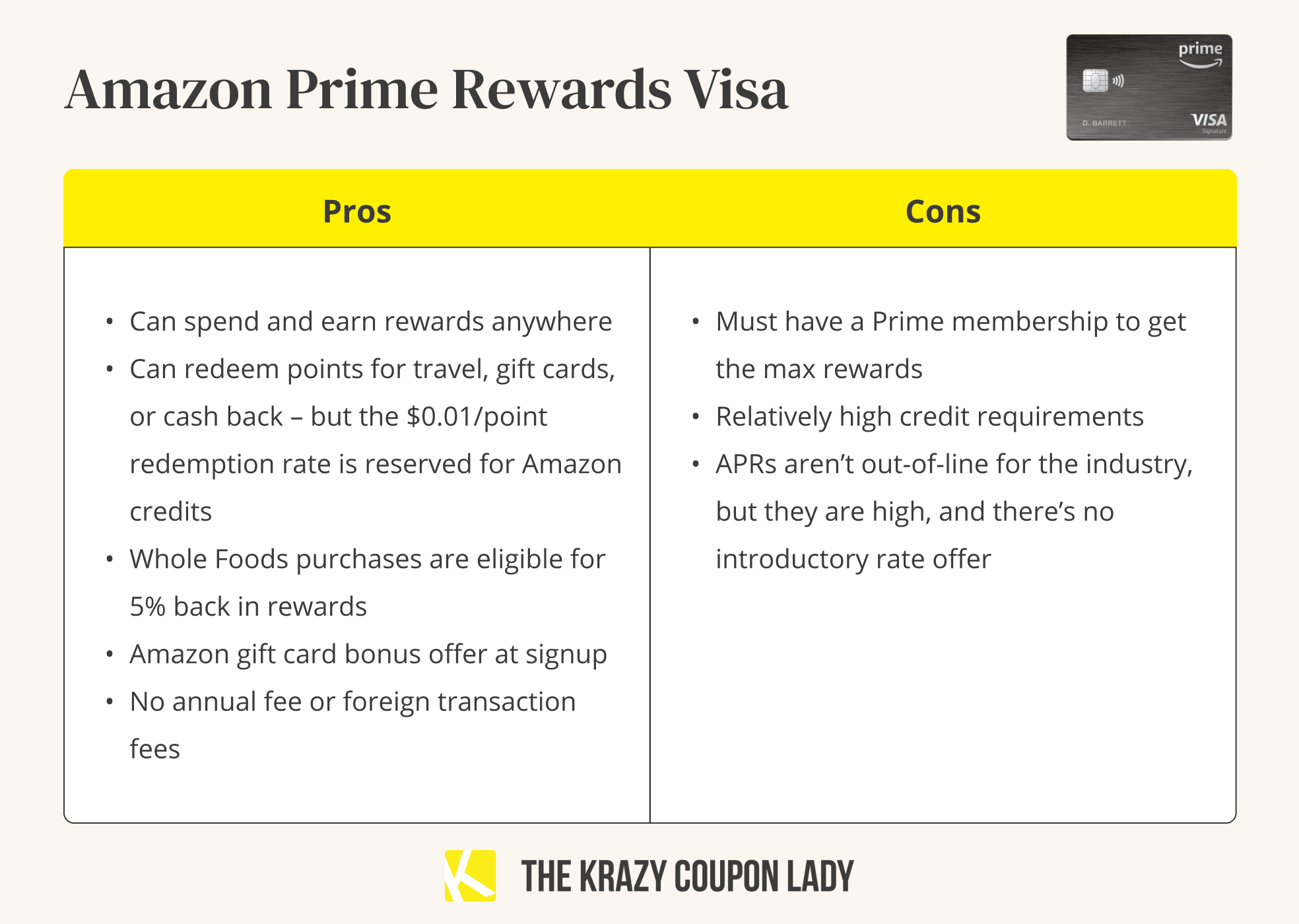
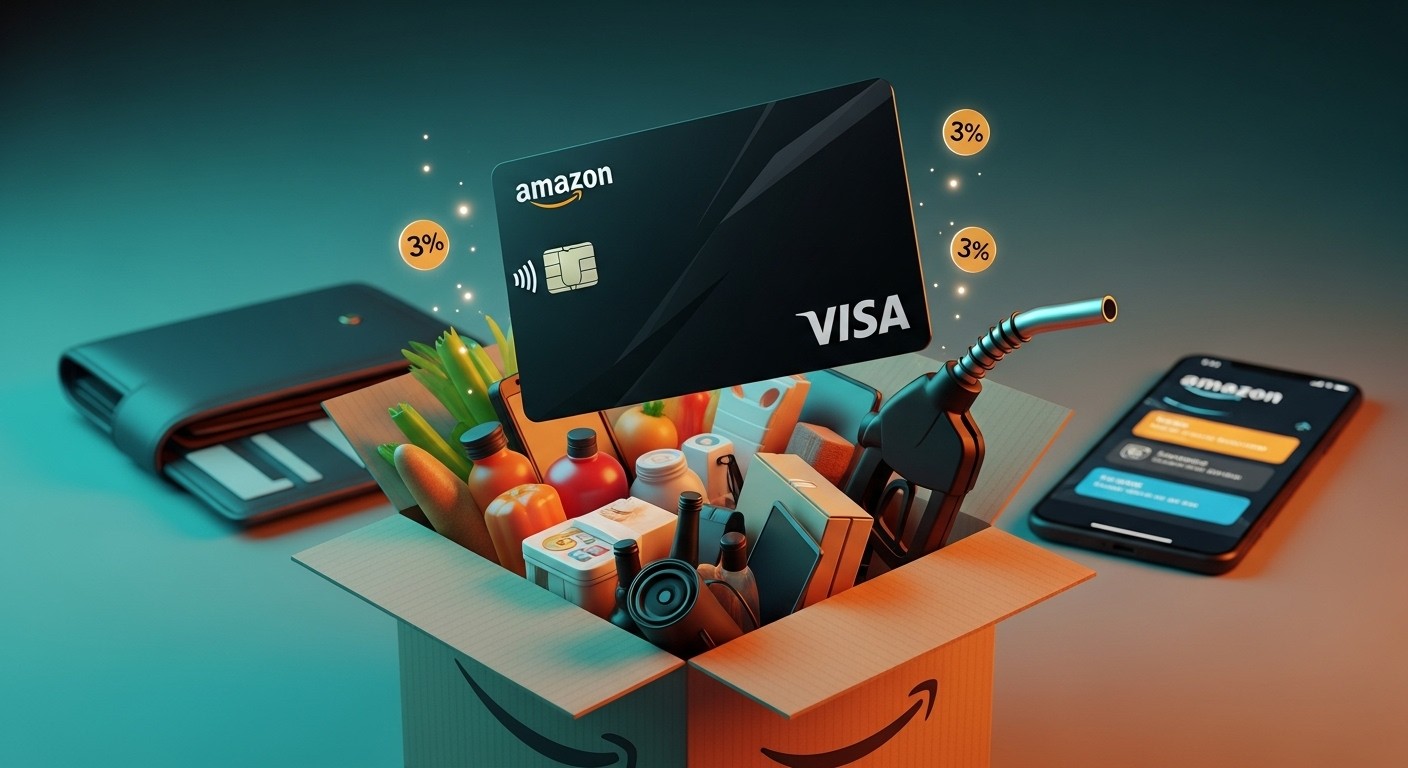
The Amazon Visa and Amazon Prime Visa remain some of the most competitive retail rewards cards on the market in 2026. For frequent Amazon and Whole Foods shoppers, the Prime version offers an industry-leading 5% back on eligible purchases with no annual fee. While non-Prime members receive a reduced 3% rate, both cards provide versatile redemption options and significant travel benefits rarely found in store-branded credit cards.
Distinguishing Between the Amazon Prime Visa and the Amazon Visa
Before applying, it is essential to understand that Amazon and its lending partner, JPMorgan Chase, offer two distinct versions of this card. The version you receive is determined entirely by your Amazon Prime membership status.
The Amazon Prime Visa
This is the "flagship" version of the card. To qualify for it and maintain its benefits, you must have an active Amazon Prime subscription. As of 2026, the cost of Prime is a significant factor in the card's overall value proposition. If you are already paying for Prime for the shipping and streaming benefits, this card effectively has no additional annual fee. It offers the maximum 5% back on Amazon.com, Whole Foods Market, Amazon Fresh, and Chase Travel purchases.
The Amazon Visa
For those who do not have a Prime membership, the standard Amazon Visa is the default option. While it loses the 5% tier, it still offers a respectable 3% back on Amazon and Whole Foods purchases. Because it carries no annual fee regardless of membership status, it serves as a low-pressure entry point for casual shoppers who want to earn rewards on their Amazon spending without committing to the yearly Prime membership cost.
If you cancel your Prime membership while holding the Prime Visa, your card will automatically be downgraded to the standard Amazon Visa, and your rewards rate for Amazon purchases will drop from 5% to 3%. Conversely, if you upgrade to Prime, your existing Amazon Visa can be upgraded to the Prime version.
Reward Structure and Earning Potential
The earning potential of these cards is structured to reward ecosystem loyalty while still functioning as a viable everyday "wallet" card. The rewards are issued as Amazon Rewards points, where 100 points equal $1.00 in value.
Tiered Cash Back Breakdown
- 5% Back (Prime Visa) / 3% Back (Amazon Visa): This applies to all purchases made at Amazon.com, Whole Foods Market (including physical stores and online delivery), and Amazon Fresh. In recent years, this tier was expanded to include bookings made through the Chase Travel portal, making the card a surprisingly strong tool for vacation planning.
- 2% Back: This "everyday" tier covers gas stations, restaurants, and local transit. The transit category is broad, typically encompassing rideshares (like Uber and Lyft), subways, passenger trains, and buses.
- 1% Back: This is the baseline rate for all other purchases where Visa is accepted.
Unlimited Rewards and No Expiration
Unlike some rotating category cards that cap your 5% earnings at a certain dollar amount per quarter, the Amazon Visa cards offer unlimited rewards. Whether you spend $500 or $50,000 at Amazon in a year, you will continue to earn at your designated percentage. Furthermore, points do not expire as long as your account remains open and active.
Understanding the Redemption Process
One of the greatest strengths of the Amazon Visa ecosystem is the flexibility of its rewards. While many retail cards force you to redeem points only at their specific store, Chase allows for multiple exit strategies for your earned points.
1. Shop with Points at Amazon.com
The most seamless way to use your points is during the Amazon checkout process. You can apply your points balance directly to your order total. While convenient, this method has a minor mathematical drawback: when you pay for an Amazon order with points, you do not earn new points on that transaction.
2. Cash Back and Statement Credits
Through the Chase mobile app or website, you can redeem your points for cash back deposited into a linked bank account or as a statement credit to reduce your card balance. This is generally the most "profitable" way to use rewards. By paying for your Amazon purchases with the card (earning 5%) and then using your points as a statement credit later, you maximize your total return.
3. Gift Cards and Travel
Points can also be redeemed for gift cards from hundreds of non-Amazon brands or used to book flights, hotels, and car rentals through the Chase Travel portal. The redemption value remains constant at 1 cent per point for these options.
| Feature | Amazon Prime Visa | Amazon Visa (Non-Prime) |
|---|---|---|
| Annual Fee | $0 (Requires Prime Membership) | $0 |
| Amazon & Whole Foods | 5% Back | 3% Back |
| Chase Travel | 5% Back | 3% Back |
| Gas, Dining, Transit | 2% Back | 2% Back |
| All Other Purchases | 1% Back | 1% Back |
| Foreign Transaction Fee | $0 | $0 |
| Issuer | JPMorgan Chase | JPMorgan Chase |
| Network | Visa Signature | Visa Signature / Visa Platinum |
Fees, Interest Rates, and the Fine Print
As a co-branded card issued by Chase, the Amazon Visa follows standard credit card pricing models. While it lacks an annual fee, users should be aware of the interest structure and potential penalties.
APR and Interest Charges
The Amazon Visa typically carries a variable APR that fluctuates based on the Prime Rate. Historically, this APR ranges from the mid-teens to the high twenties depending on the cardholder's creditworthiness. Because the rewards are significant, it is highly recommended to pay the balance in full each month. If you carry a balance, the interest charges will quickly outweigh the 5% or 3% cash back you earned.
Zero Foreign Transaction Fees
A standout feature of both Amazon Visa cards is the lack of foreign transaction fees. Most "no-annual-fee" cards charge a 3% fee on purchases made outside the United States. The Amazon Visa is a rare exception, making it an excellent card for international travel, especially since it is a Visa and widely accepted globally.
Amazon Equal Pay and Financing
For large purchases on Amazon.com (typically $50 or more), cardholders can sometimes choose "0% Promo APR" financing for a set number of months instead of earning rewards. While this can be helpful for budgeting a large electronics purchase, you must choose between the financing and the cash back; you cannot get both on the same transaction.
Comparison with Other Retail and Cash Back Cards
To determine if the Amazon Visa is the right choice in 2026, it must be measured against its primary competitors.
vs. The Target Circle Card
Target’s credit card offers a flat 5% discount at the register for Target purchases. The main difference is that Target's benefit is an immediate discount, whereas Amazon’s is a reward point system. However, the Target card is often limited to use at Target (unless you have the rarer Mastercard version), whereas the Amazon Visa is a full-service credit card usable anywhere.
vs. Flat-Rate Cash Back Cards
Cards like the Wells Fargo Active Cash or Citi Double Cash offer a flat 2% back on all purchases. If you spend less than $3,000 a year at Amazon, you might actually be better off with a flat 2% card that earns more on your non-Amazon spending (1% vs. 2%). However, for the dedicated Amazon shopper, the 5% tier on the Prime Visa is difficult for any flat-rate card to beat.
vs. The American Express Blue Cash Everyday
The Amex Blue Cash Everyday offers 3% back on U.S. online retail purchases (up to a cap). While this includes Amazon, it is capped annually, whereas the Amazon Visa is unlimited. The Amazon Visa also wins on Whole Foods spending, where the Amex card may only earn 3% (at supermarkets) or 1%.
Application Requirements and Credit Score Needs
The Amazon Visa is an unsecured credit card issued by Chase, which generally maintains higher standards for approval than "store-only" cards (like those issued by Synchrony or Comenity).
- Credit Score: Most successful applicants have a "Good" to "Excellent" credit score, typically 670 or higher.
- Income Verification: Chase will require proof of stable income to determine your credit limit.
- The 5/24 Rule: Although Chase has become slightly more flexible with co-branded cards in recent years, the "5/24 Rule" generally applies. If you have opened five or more credit cards from any issuer in the past 24 months, your application may be automatically declined.
- Instant Approval: One of the perks of the Amazon application process is the possibility of instant approval. If approved, the card is often automatically added to your Amazon wallet, allowing you to begin using a portion of your credit limit immediately before the physical card arrives.
Additional Cardholder Benefits and Protections
Because the Amazon Prime Visa is a Visa Signature card, it comes with a suite of protections that many users overlook. These benefits provide a safety net for both purchases and travel.
Purchase Protections
- Extended Warranty Protection: Adds up to one additional year to the manufacturer’s warranty on eligible items purchased with the card.
- Purchase Protection: Covers new purchases for 120 days against damage or theft (up to $500 per claim).
Travel Benefits
- Baggage Delay Insurance: Reimburses you for essential purchases like toiletries and clothing if your baggage is delayed by more than six hours.
- Travel Accident Insurance: Provides accidental death or dismemberment coverage when you pay for your air, bus, train, or cruise transportation with the card.
- Secondary Auto Rental Coverage: Provides reimbursement for damage due to collision or theft for most rental cars in the U.S. and abroad.
Common Pitfalls and Troubleshooting
While the card is straightforward, there are a few areas where cardholders often run into trouble:
- Missing the 5% Tier: Users sometimes fail to realize that the 5% rate is tied to the Prime account. If your card is linked to an Amazon account that doesn't have Prime (even if you have a separate Prime account), you will only earn 3%. Ensure the card is associated with the primary Prime-holding account.
- The "Shop with Points" Trap: As mentioned earlier, using points at checkout prevents you from earning new points on that purchase. For maximum efficiency, always pay with the card and redeem points as a statement credit.
- High APR: Because this is a rewards card, the interest rate is higher than a "low-interest" card. Carrying a balance even for two months can completely negate a whole year's worth of 5% cash back.
Final Verdict: Is the Amazon Visa Right for You?
In 2026, the Amazon Visa continues to be a top-tier financial tool, but its value is highly subjective based on your shopping habits.
You should get this card if:
- You are an existing Amazon Prime member who spends at least $2,000 annually across Amazon, Whole Foods, and Amazon Fresh.
- You want a "no-annual-fee" card that you can take abroad without paying foreign transaction fees.
- You prefer a simple, automated rewards system that doesn't require activating categories.
You should skip this card if:
- You do not shop at Amazon or Whole Foods frequently enough to justify the Prime membership or the specialized rewards.
- You are working on building your credit and may not meet Chase’s stricter approval requirements.
- You tend to carry a monthly balance, in which case a card with a lower APR would be more cost-effective.
For the vast majority of Prime members, the Amazon Prime Visa is an essential "set-it-and-forget-it" card. It offers a level of return on household spending that few other cards can match, backed by the robust security and features of the Chase/Visa Signature network.
Frequently Asked Questions
Does the Amazon Visa have an annual fee? No, the Amazon Visa does not have a formal annual fee. However, to access the 5% rewards tier, you must pay for an Amazon Prime membership. The standard Amazon Visa (3% back) has no annual fee and no membership requirement.
Can I use the Amazon Visa anywhere? Yes. The Amazon Visa is a standard credit card issued on the Visa network. It is accepted at millions of merchants worldwide, wherever Visa is taken. You are not restricted to using it only on Amazon.com.
What is the minimum credit score for the Amazon Prime Visa? While Chase does not publish a specific minimum, a credit score of 670 or higher (Good to Excellent) is generally recommended for the best chance of approval. Applicants with scores in the low 600s may find it difficult to be approved for this specific card.
Are Whole Foods purchases included in the 5% back? Yes. Purchases made at physical Whole Foods Market locations, as well as online orders through Whole Foods via Amazon, earn the full 5% back for Prime members and 3% for non-Prime members.
How do I see my Amazon rewards points? You can view your points balance on the Amazon website under "Your Account" > "Amazon Rewards Visa Card," or through the Chase mobile app and website under your credit card account details.