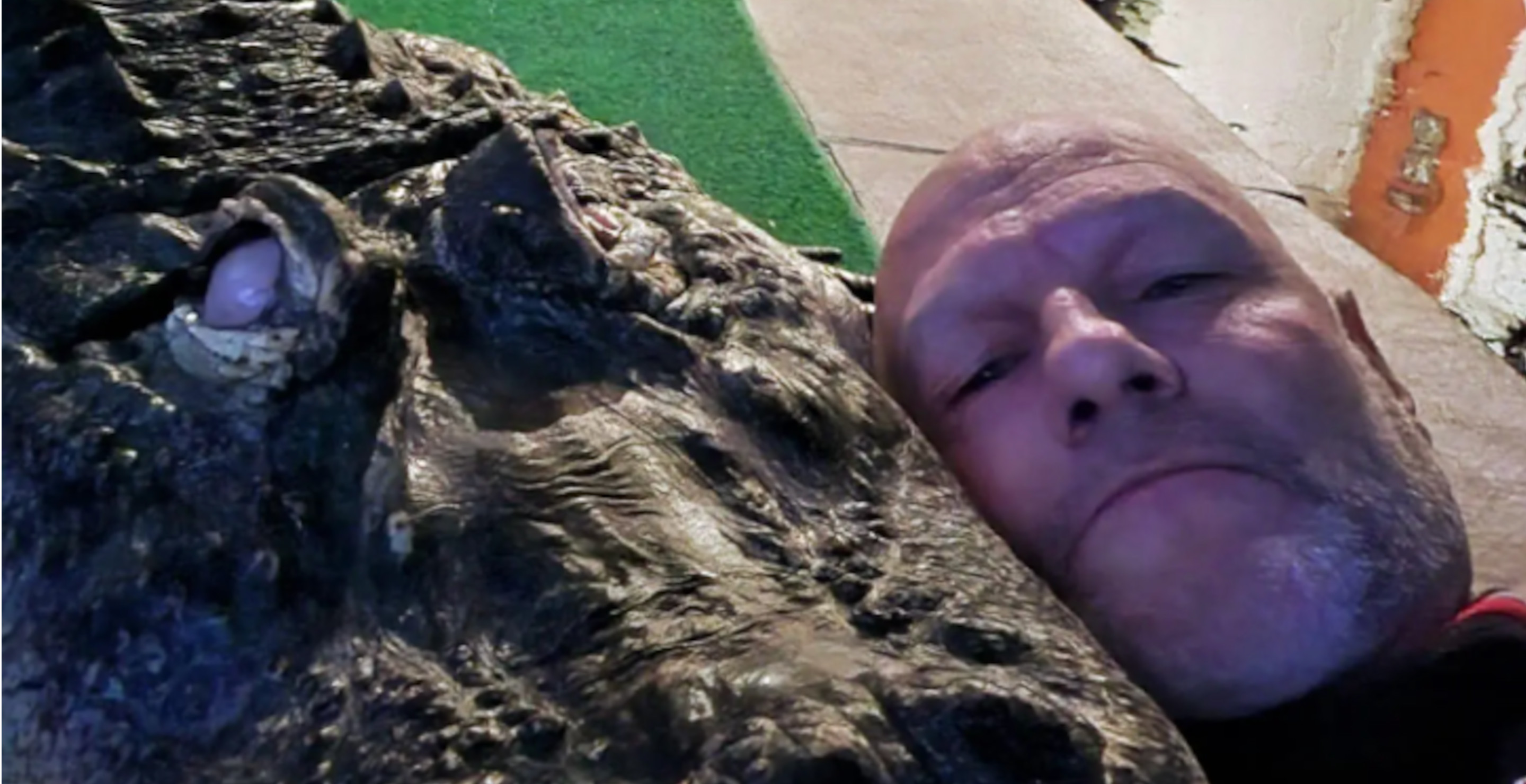
When an alligator is placed on its back, it typically enters a state of tonic immobility, a temporary, involuntary trance-like condition where the animal becomes unresponsive to external stimuli. While it appears calm or "asleep," this is actually a physiological response to stress or physical manipulation, frequently utilized by researchers for safe medical examinations.
The Science of Tonic Immobility in Crocodilians
Tonic immobility (TI) is a phenomenon observed across various species, including sharks, chickens, and many reptiles. In the context of the American alligator (Alligator mississippiensis), placing the animal in a supine position—resting on its dorsal scales with its belly exposed—triggers a neurological "override." This state can last anywhere from a few minutes to over half an hour, depending on the individual alligator’s stress levels and the surrounding environment.
The Physiological Mechanism
As of 2026, herpetologists characterize tonic immobility not as a form of relaxation, but as a specialized unconditioned reflex. When the alligator is flipped, the change in orientation affects its vestibular system and pressure receptors. This leads to a sudden drop in heart rate (bradycardia) and a shift in muscle tone.
The animal remains conscious during this period; its eyes may remain open, and it can still track movement. However, the motor neurons responsible for righting the body are temporarily inhibited. This is often described as a "fear-induced" state, though in controlled research settings, it serves as a non-chemical method of restraint that reduces the need for heavy sedatives, which can be taxing on a reptile's slow metabolism.
Evolutionary Context
Why would a prehistoric apex predator have such a "glitch" in its system? Biologists suggest that TI may be a last-resort defense mechanism. In the wild, if a predator—or a larger, dominant alligator—manages to flip a smaller individual, "playing dead" might discourage further aggression or provide a momentary window for escape once the captor relaxes its grip. However, because adult alligators have few natural predators, this reflex is more often a byproduct of their complex nervous system rather than a primary survival strategy.
Why Researchers Place Alligators on Their Backs
In the field of herpetology and wildlife management, the supine position is a standard protocol for several essential tasks. Handling a multi-hundred-pound animal with powerful jaws and a crushing bite force requires precise control. Flipping the alligator safely allows professionals to access the more vulnerable ventral (belly) side without the risk of the animal thrashing.
Medical and Biological Examinations
By 2026, standardized veterinary protocols for crocodilians emphasize the use of TI for the following procedures:
- Blood Collection: The most common site for drawing blood in an alligator is the spinal vein or the dorsal sinus. While these are on the back, flipping the animal first to induce the trance state makes the subsequent repositioning much safer for the handler.
- Ultrasounds and Radiographs: To check for egg production (gravid status) or to examine internal organs, the soft belly must be accessible. The tonic state ensures the animal remains still enough for high-quality imaging.
- Sexing the Animal: Alligators do not have external genitalia. To determine the sex, a researcher must perform a cloacal exam. This is significantly safer when the alligator is immobilized on its back.
- Tagging and Measuring: For long-term population studies, researchers attach PIT tags (Passive Integrated Transponders) or scute-notch the tail. A calm animal allows for more accurate data collection.
Reducing Chemical Dependency
Before the widespread understanding of tonic immobility, researchers often relied heavily on paralytics like gallamine or sedatives. However, reptiles recover very slowly from anesthesia. Utilizing the "alligator on its back" technique allows for "quick-in, quick-out" data collection, ensuring the animal can be released back into its habitat with full motor function and no lingering chemical impairment.
The Mechanics of the "Death Roll" vs. Static Supine Positions
It is vital to distinguish between an alligator being placed on its back and the dynamic movement known as the death roll. While both involve the alligator being belly-up, their biological functions are opposites.
- The Death Roll: This is an active, high-energy predatory maneuver. The alligator clamps its jaws onto prey and spins its entire body along its longitudinal axis. This creates massive torque to tear off pieces of meat or to drown the prey. During a death roll, the alligator is in total control of its movement.
- Static Supine (Tonic Immobility): This is a passive, low-energy state. The animal is stationary. If an alligator is forced onto its back and held there briefly, the "spinning" instinct is suppressed by the TI reflex.
Comparison of Physiological States
| Feature | Tonic Immobility | Death Roll | Cold Stunning |
|---|---|---|---|
| Trigger | Physical inversion/Restraint | Feeding or Defense | Extreme drop in water temp |
| Heart Rate | Decreased (Bradycardia) | Significantly Increased | Extremely Low |
| Muscle Tone | Flaccid or Rigidly Still | Explosive and Powerful | Lethargic/Rigid |
| Purpose | Stress response/Handling | Prey subdual | Survival/Dormancy |
| Duration | 2 – 30 minutes | Seconds to Minutes | Days to Weeks |
Natural Causes of an Alligator Landing on Its Back
Finding an alligator on its back in the wild without human intervention is rare and usually indicates a significant problem. Because their center of gravity is low and their dorsal osteoderms (bony plates) are heavy, they naturally stabilize in an upright position.
Territorial Combat
During the mating season (typically April through June), large males engage in violent territorial disputes. These fights involve ramming, biting, and rolling. A smaller or weaker alligator may be flipped onto its back during the struggle. While they are capable of righting themselves using their powerful muscular tails, an injured or exhausted alligator may remain on its back for an extended period, making it vulnerable to heat exhaustion or drowning if its snout is submerged.
Cold Stunning and "Icing In"
As observed in the fluctuating climate patterns leading up to 2026, extreme cold snaps in regions like North Carolina or Texas can lead to "cold stunning." While alligators typically use a "snorkeling" posture—sticking their nose above the ice to breathe while their body remains vertical or horizontal—extreme turbulence or ice shifts can occasionally leave an alligator in a compromised position. If the water is cold enough, their metabolic rate drops so low that they may lack the energy to flip back over.
Disease and Toxicity
Neurological distress caused by environmental toxins (such as red tide or certain cyanobacteria blooms) can interfere with an alligator's balance and righting reflex. An alligator found floating on its back or side in the wild is often a sign of a localized environmental crisis or a severe internal infection.
Encountering an Upside-Down Alligator: Safety and Procedures
If you encounter an alligator on its back in a backyard, canal, or golf course, it is a situation that requires professional intervention. Do not assume the animal is dead or "tame" because it is in a state of tonic immobility.
The Danger of Sudden Recovery
Tonic immobility can end as abruptly as it begins. A sudden loud noise, a change in light, or a physical touch can "snap" the alligator out of its trance. When this happens, the animal usually experiences a surge of adrenaline and may strike out defensively.
Steps for Proper Reporting
- Maintain Distance: Stay at least 30 feet away. Even if the alligator looks incapacitated, it can move faster than a human can react once it rights itself.
- Observe the Snout: If the alligator is in water and on its back, check if the nostrils are above the water line. Do not attempt to move the animal yourself.
- Contact Wildlife Authorities: In 2026, most state agencies (such as Florida's FWC or Louisiana's LDWF) have dedicated "Nuisance Alligator" hotlines. Inform them specifically that the animal is in an "abnormal orientation" or "supine," as this may indicate a sick animal that needs biological testing.
- Keep Pets Away: Small animals may trigger a predatory response if the alligator recovers suddenly, or they may be harmed if the alligator is suffering from a contagious disease.
Anatomical Limitations and the Righting Reflex
The physical anatomy of an alligator makes being on its back a significant physical burden. The lungs of an alligator are located dorsally (closer to the back). When the animal is flipped, the weight of its internal organs—including the heavy liver and digestive tract—presses down on the lungs.
Respiratory Stress
While in tonic immobility, the alligator’s breathing becomes shallow. This is one of the reasons why professional handlers limit the time an alligator is kept on its back. Prolonged supine positioning can lead to respiratory acidosis, where carbon dioxide builds up in the blood. For large, heavy alligators (10 feet or longer), the sheer weight of their own body can make breathing difficult when inverted.
The Use of the Tail
To flip back over, an alligator doesn't just use its legs; it uses its tail as a counterweight. By whipping the tail in one direction, the alligator generates the centrifugal force needed to roll its heavy body back onto its belly. If an alligator is in a confined space or is missing part of its tail, its ability to right itself is severely compromised.
FAQs
Is the alligator "happy" or "calm" when on its back?
No. While it appears calm, physiological markers such as elevated cortisol (stress hormone) levels suggest the animal is in a state of high stress. Tonic immobility is a survival reflex, not a state of relaxation.
Can alligators get stuck on their backs like turtles?
Generally, no. Unlike some species of heavy-shelled tortoises, alligators have extremely powerful axial muscles and a flexible spine. Unless the alligator is severely injured, sick, or trapped in a narrow crevice, it can almost always flip itself back over.
Why do "gator wrestlers" use this technique?
In "gator wrestling" shows, flipping the alligator is a "crowd-pleaser" because it makes the animal look mesmerized. While it demonstrates the handler's knowledge of crocodilian biology, it is largely a display of tonic immobility. Modern ethical standards in 2026 discourage this practice for pure entertainment due to the stress it causes the animal.
Does this work on crocodiles, too?
Yes, tonic immobility can be induced in crocodiles, caimans, and gharials. However, crocodiles are generally more aggressive and may have a shorter TI duration than American alligators. They often require more precise manipulation to enter the state.
Can an alligator drown while on its back?
Yes. If an alligator is in the water and enters tonic immobility (perhaps due to a fight or human interference) and its nostrils are submerged, it can drown. They do not have an automatic "breath-holding" reflex that functions indefinitely while in a trance state.
Recommendation for 2026
If you are a student of herpetology or a resident in a crocodilian-dense area, the most important takeaway is that an alligator on its back is a stressed animal. Whether the state was induced by a researcher for a life-saving medical procedure or by a territorial rival in the wild, the animal is in a vulnerable but volatile condition.
For property owners, if you find a supine alligator, treat it as a medical or safety emergency. Contact your local wildlife commission immediately and provide a clear description of the animal's behavior. Never attempt to "test" the animal's responsiveness by throwing objects or approaching it, as the "awakening" from tonic immobility is often explosive and unpredictable.