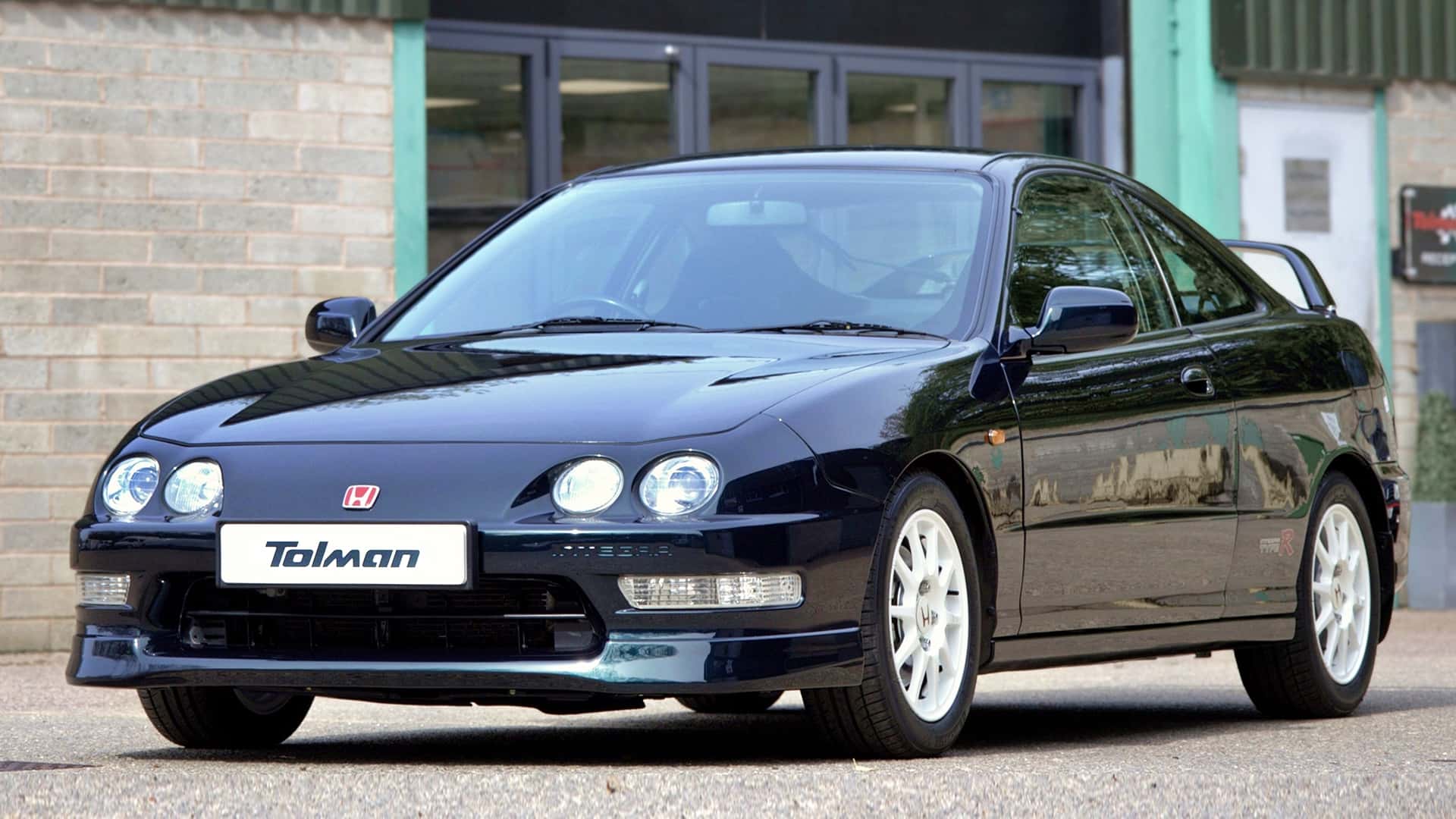
The Acura/Honda Integra is a defining pillar of the sport-compact segment, bridging the gap between daily-driver reliability and track-ready performance. Since its 1986 debut, the model has evolved through five distinct generations, moving from pop-up headlights and B-series engines to the high-tech, 320-horsepower turbocharged Type S models of 2026.
The Genesis of a Legend: First Generation (1986–1989)
The Integra arrived in 1986 as a foundational model for the launch of Acura, Honda's luxury division in North America. Known in Japan as the Quint Integra, it was designed to offer a more sophisticated driving experience than the Civic while maintaining the brand's reputation for efficiency.
Engineering and Powertrains
The first-generation (chassis codes DA1–DA3) was revolutionary for its time because it featured a DOHC (Double Overhead Cam) 1.6-liter four-cylinder engine across all trim levels. While most competitors in the mid-80s were still utilizing SOHC designs for their economy cars, the Integra’s engine (the D16A1 in the US) produced 113 to 118 horsepower. This high-revving nature became a hallmark of the Integra identity.
Design and Body Styles
Available as a three-door liftback and a five-door sedan, the Gen 1 Integra featured sleek, aerodynamic styling highlighted by pop-up headlights—a signature 1980s design trait. The interior was driver-centric, emphasizing visibility and ergonomics. Though it shared some DNA with the Honda Civic, the Integra utilized a more rigid chassis and a sport-tuned suspension that provided superior handling characteristics.
Refining the Formula: Second Generation (1990–1993)
The second-generation Integra (DA5–DA9, DB1–DB2) is often cited as the era where the model truly found its soul. This generation saw the introduction of some of Honda’s most iconic technologies, most notably VTEC (Variable Valve Timing and Lift Electronic Control).
The Rise of VTEC and the GS-R
In 1992, Acura introduced the GS-R (Grand Sport Racing) trim to the North American market. It featured the 1.7-liter B17A1 engine, the first VTEC engine sold in the United States. This technology allowed the engine to switch to a more aggressive cam profile at high RPMs, effectively providing two different engine characters: fuel-efficient at low speeds and high-performance at high speeds.
Chassis and Suspension
The Gen 2 moved to a fully independent double-wishbone suspension at all four corners. This setup, derived from Honda’s Formula 1 experience, offered precise camber control and a lower hood line, significantly improving mechanical grip and steering feel compared to the MacPherson strut designs used by rivals.
The Golden Era: Third Generation (1994–2001)
The third-generation Integra (DC1–DC4, DB6–DB9) is widely considered the pinnacle of the nameplate’s history. It was during this period that the Integra cemented its status as a cult classic and a dominant force in the "tuner" subculture.
The Face of the Integra
This generation is famous for its "spider-eye" or "bug-eye" quad-headlight front fascia. While this look was standard in most markets, the Japanese Domestic Market (JDM) eventually reverted to a long, horizontal headlight design. Today, many enthusiasts perform "JDM front-end conversions" on their North American models to emulate the sleek Japanese aesthetic.
The DC2 Type R: A Front-Wheel Drive Masterpiece
The 1997–2001 Integra Type R (DC2) is frequently ranked as one of the best-handling front-wheel-drive cars ever produced. Acura engineers didn't just add power; they fundamentally re-engineered the car:
- Chassis Strengthening: Extra spot welds and thicker metal in key areas increased torsional rigidity.
- Weight Reduction: Engineers removed sound deadening, deleted the air conditioning (optionally), and even used thinner glass to shave weight.
- The B18C5 Engine: A hand-built 1.8-liter engine featuring factory-polished intake ports, producing 195 horsepower and an 8,400 RPM redline.
- Helical Limited-Slip Differential (LSD): This allowed the car to pull through corners under power with minimal understeer.
The RSX Era: Fourth Generation (2002–2006)
In 2002, Acura rebranded the Integra as the RSX in North America to align with its new alphanumeric naming convention, though it remained the "Integra" (DC5) in Japan and other markets. This generation represented a massive shift in engineering philosophy.
Transition to the K-Series
The fourth generation retired the legendary B-series engine in favor of the K-series. The K20 engine featured i-VTEC, which added "Intelligent" variable timing to the intake cam. The RSX Type-S produced 201 to 210 horsepower (depending on the year) and offered a much broader torque curve than the peaky B-series engines of the past.
Suspension Controversy
The DC5 replaced the double-wishbone front suspension with MacPherson struts. This was a controversial move among purists, as it changed the car's roll center and camber gain characteristics during hard cornering. However, the stiffer chassis and more powerful engine ensured the RSX remained a formidable competitor in the sports coupe segment.
The Modern Revival: Fifth Generation (2023–Present)
After a 16-year hiatus in North America, the Integra nameplate returned for the 2023 model year. As of 2026, the fifth-generation (DE4/DE5) has successfully re-established itself as a premium sport compact that honors its heritage while embracing modern turbocharging and digital technology.
Performance and Luxury Integration
The current Integra is built on a heavily modified version of the 11th-generation Civic platform but features unique bodywork and a "liftback" design that echoes the original 1986 model.
- Base and A-Spec: Powered by a 1.5-liter turbocharged engine producing 200 horsepower. Uniquely in its segment, it continues to offer a 6-speed manual transmission with rev-matching technology.
- Integra Type S: Introduced in 2024, the Type S is the spiritual successor to the DC2 Type R. It uses a 2.0-liter turbocharged K20C1 engine producing 320 horsepower and 310 lb-ft of torque. It features a wide-body stance, Brembo brakes, and a dual-axis strut front suspension designed to eliminate torque steer.
Technical Evolution Summary
| Generation | Years | Notable Chassis | Primary Engine(s) | Key Innovation/Feature |
|---|---|---|---|---|
| 1st Gen | 1986–1989 | DA1, DA3 | 1.6L DOHC (D16) | Pop-up headlights; DOHC standard |
| 2nd Gen | 1990–1993 | DA9, DB2 | 1.8L B18 / 1.7L B17 | Introduction of VTEC (GS-R) |
| 3rd Gen | 1994–2001 | DC2, DC4 | 1.8L B18B / B18C | Type R variant; Double-wishbone |
| 4th Gen | 2002–2006 | DC5 | 2.0L K20A | K-series engine; i-VTEC |
| 5th Gen | 2023–2026+ | DE4, DE5 | 1.5L T / 2.0L T | Return of nameplate; 320hp Type S |
Why the Integra Remained a Cultural Icon
The Integra’s longevity is not just due to its specifications but its accessibility. It provided a "gatekeeper" experience to high-performance driving. The B and K-series engines were over-engineered, allowing enthusiasts to modify them to double or triple their factory power outputs with high reliability.
Furthermore, the Integra was always a "driver's car" that didn't sacrifice utility. The liftback design allowed for significant cargo space, making it one of the few vehicles that could serve as a dedicated track car on Sunday and a grocery-getter on Monday. This duality is what defined the "Golden Era" of Honda and continues to drive the design philosophy of the 2026 models.
Common Issues and Maintenance Across Generations
When looking at the Integra across decades, certain maintenance patterns emerge that potential owners and collectors should monitor.
Vintage Generations (1–3)
The primary enemy of the early Integra is rust, particularly in the rear wheel arches and rocker panels. Mechanically, the B-series engines are exceptionally robust, but they require strictly timed timing belt replacements every 60,000 to 90,000 miles. Failure to replace the belt can result in catastrophic engine damage due to the interference design of the valvetrain.
The RSX (Gen 4)
The RSX moved to a timing chain, which significantly reduced long-term maintenance costs. However, early models sometimes experienced "2nd-gear grind" in the manual transmissions, often solved by using high-quality synthetic synchromesh fluids.
The Modern Era (Gen 5)
For the 2023–2026 models, the focus shifts to direct-injection maintenance and turbocharger health. Owners should be diligent about oil change intervals to prevent carbon buildup on the intake valves—a common trait of modern turbocharged engines. The Type S, with its high-performance tires and brakes, will naturally see higher consumable costs (pads and rubber) if driven aggressively.
Frequently Asked Questions
Which Integra generation is the fastest?
The fifth-generation Integra Type S (DE5) is the fastest factory Integra ever produced. It features a 2.0L turbocharged engine delivering 320 horsepower, allowing it to reach 0-60 mph in approximately 5.1 seconds. While the DC2 Type R was famous for its handling, the modern Type S combines that handling with significantly more straight-line speed.
What is the difference between an Acura Integra and a Honda Integra?
In most cases, they are the same vehicle. Honda used the "Acura" brand in North America and Hong Kong to market the car as a premium/luxury offering. In Japan and the rest of the world, the car was sold as the Honda Integra. The differences were usually limited to badging, slight trim variations, and headlight configurations for specific regional safety laws.
Why was the fourth generation called the RSX in the US?
In the early 2000s, Acura wanted to move toward an alphanumeric naming system (like BMW or Lexus) to focus consumer attention on the "Acura" brand rather than individual model names. This led to the Integra becoming the RSX and the Legend becoming the RL. Acura eventually reversed this strategy for the Integra in 2023 due to the overwhelming "heritage value" of the original name.
Is the 2026 Integra a good car for daily driving?
Yes, the 2026 Integra is designed specifically as a "premium daily." It offers modern safety features (AcuraWatch), decent fuel economy from the 1.5L turbocharged engine, and the practicality of a five-door liftback. Even the high-performance Type S features adaptive dampers, allowing the driver to soften the ride for commutes and stiffen it for spirited driving.
Which generation is the best for tuning?
The third (DC2) and fourth (DC5) generations are widely considered the best for tuning. The third generation benefits from the massive aftermarket support for B-series engines, while the fourth generation’s K20 engine is considered one of the best platforms for high-horsepower builds, including turbocharging and "K-swaps" into other chassis.
Final Recommendations for Enthusiasts
For those looking to enter Integra ownership in 2026, your choice depends heavily on your goals. If you seek a collectible investment, a clean, low-mileage Third Generation Type R remains the gold standard, though prices have reached "blue chip" collector levels. For those who want the best balance of modern tech and raw performance, the 2024–2026 Type S provides a warranty-backed experience that rivals the engagement of the classic models. If you are a budget-conscious enthusiast, a Second Generation GS-R or a Fourth Generation RSX Type-S offers the most "smiles per dollar" in the current secondary market.
For more technical specifications and historical data, you can consult the official Acura Newsroom or the Honda Global Heritage archives.