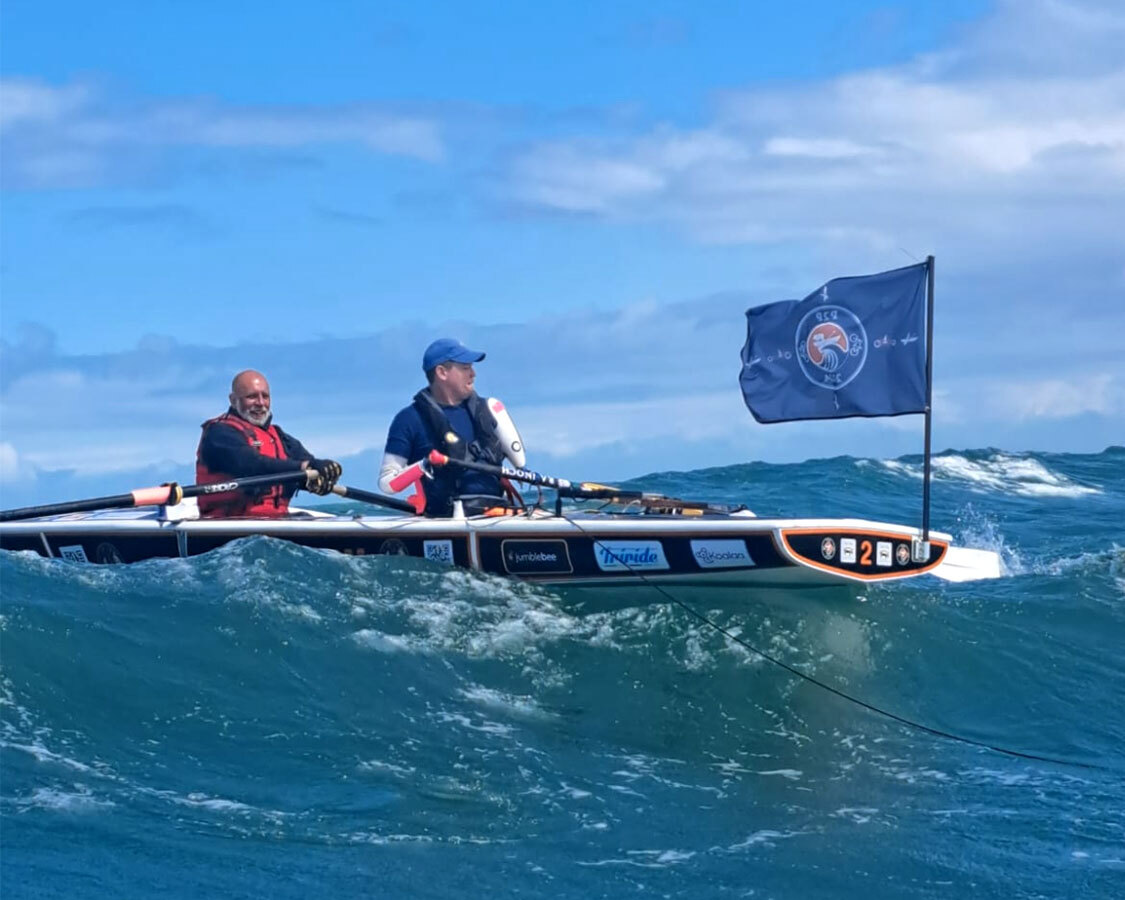
Alex Lewis, the British adventurer and double amputee who gained international recognition for his resilience after surviving a catastrophic streptococcal infection, has shifted his focus toward innovation in maritime accessibility. In 2024 and continuing through 2026, his work in the adapted sailboat challenge centers on pushing the boundaries of what is mechanically and physically possible for sailors with significant physical disabilities. His projects emphasize the development of specialized vessel modifications, inclusive navigation technology, and the promotion of extreme endurance sports as a means of rehabilitation and societal inclusion.
The Foundation of the Adapted Sailboat Challenge
The adapted sailboat challenge is not merely a hobby for Alex Lewis; it represents a rigorous intersection of engineering, human physiology, and adaptive technology. Following the life-altering events of 2013, when Lewis lost all four limbs to an aggressive bacterial infection, he sought avenues that allowed for high-level physical engagement. Sailing emerged as a primary focus because it allows individuals with limited mobility to command a complex vessel, provided the interface between human and machine is expertly reconfigured.
By 2024, the challenge had evolved from experimental sailing into a systematic effort to create accessible marine equipment that can be standardized. The goal is to strip away the "disability" factor by ensuring that the sailboat functions as an extension of the sailor's remaining physical capabilities. This involves custom-engineered control systems, seat configurations that provide stability during high-heeled maneuvers, and electronic assistance for operating sails and navigation systems in offshore conditions.
Technical Innovations in Adaptive Sailing
At the heart of the challenge is the modification of existing sailboat designs to accommodate sailors who do not have the use of traditional limbs. The technical complexity involved in these adaptations is substantial. A standard sailboat requires significant manual dexterity and core strength for winching, steering, and balancing. When a sailor requires an adaptive setup, engineers must focus on several critical areas.
Primary Modification Domains
- Tactile and Electronic Controls: Moving away from manual winches to power-assisted, push-button, or joystick-operated systems. These systems often utilize low-latency servomotors to replicate the tension feedback a sailor would typically feel in their hands.
- Stability and Positioning: Designing specialized cockpit seating that prevents unwanted movement in heavy seas, using multi-point harness systems that allow for maximum reach while maintaining center-of-gravity stability.
- Navigation Interface: Implementing voice-commanded or eye-tracking navigation software, integrated directly into the ship’s autopilot and chart plotter, allowing for precise control during long-distance transits.
- Redundancy Systems: Because mechanical failure at sea is critical for anyone, the challenge involves designing backup manual overrides that can be operated via prosthetic attachment points or modified lever systems.
The 2024-2026 Operational Timeline
During 2024, Lewis’s efforts were largely focused on testing the efficacy of these modifications in real-world scenarios. This period was characterized by "stress testing"—taking custom-fitted vessels into challenging coastal waters to identify failure points in the adaptive interfaces. This iterative process is crucial; the technology is often in a "beta" state, requiring immediate, on-the-water adjustments based on the physical constraints experienced during high-wind sailing.
As of 2026, the focus has shifted toward institutionalizing these methods. The lessons learned during the initial testing phases have led to a more robust framework for how adaptive sailboats are permitted to operate in competitive and endurance circuits. The challenge is no longer just about completing a voyage; it is about documenting the process so that others with limb loss or neurological differences can replicate these configurations.
Comparing Traditional Sailing vs. Adapted Sailing
The transition to an adapted vessel requires a fundamental reassessment of how a sailor interacts with the wind and water. The following table highlights the differences in operational requirements for standard versus adapted vessels.
| Feature | Traditional Sailing | Adapted Sailing |
|---|---|---|
| Steering | Manual tiller or wheel | Joystick, chin-controlled, or auto-pilot interface |
| Sail Handling | Manual grinding/winching | Power-assisted electric winches |
| Balance | Core strength and leg bracing | Rigid, form-fitting ergonomic seating |
| Communication | Physical signaling | Integrated digital data feedback loops |
| Complexity | Direct mechanical link | Multi-stage electro-mechanical systems |
Overcoming Barriers to Entry
One of the primary objectives of Alex Lewis's initiative is lowering the barrier to entry for the wider disability community. Historically, the cost of custom-fitting a yacht for a double or quadruple amputee has been prohibitive, often requiring specialized shipyards and aerospace-grade materials. The "challenge" in the adapted sailboat challenge is, in part, financial and logistical.
By documenting the modifications, Lewis and his team are creating a repository of "open" solutions. The aim is to demonstrate that small-scale, mid-sized sailboats can be retrofitted for a fraction of the cost of a custom-built, professional-grade racing yacht. This promotes a more inclusive marine culture where adaptive sailing is seen as a viable recreational pursuit rather than an exclusive privilege for elite athletes.
Safety Protocols and Risk Management
Sailing in an adapted capacity introduces unique risk profiles. For a person without limbs, the risk of "man overboard" situations is exponentially higher. Therefore, safety protocols are the most heavily researched component of the challenge. This involves the use of specialized personal flotation devices (PFDs) that integrate with the cockpit seating, ensuring that if the boat capsizes or the sailor is ejected, the survival system is already active.
Furthermore, the legal and insurance landscape for adaptive sailors is complex. Policies regarding insurance for adaptive vessels are often categorized under high-risk or specialized marine insurance, which can require specific evidence of technical reliability. The data collected by the project throughout 2024 and 2025 has been instrumental in advocating for more nuanced insurance standards that recognize the technological maturity of modern adaptive systems.
Frequently Asked Questions
1. Is the adapted sailboat challenge a race or a research expedition? The challenge functions as both, though the primary intent is research and development. While the competitive aspect drives performance, the core objective is to prove the reliability of adaptive technologies in extreme maritime conditions.
2. Can any sailboat be modified for this challenge? Most modern monohulls can be adapted, but the efficiency of the adaptation depends on the vessel's displacement and original layout. The goal of the project is to create a modular kit that works across a variety of mid-range sailboat sizes.
3. What is the most difficult aspect of sailing with limb loss? The most difficult element is managing the "dynamic feedback loop." In traditional sailing, you feel the wind through the lines and the tiller. In an adapted setup, that tactile feedback must be converted into visual or auditory data, or through specialized haptic interfaces.
4. How does the weather impact the 2026 operations? Safety protocols are strictly aligned with maritime weather reports. Even for highly experienced sailors like Lewis, the margin for error is minimized by adhering to precise wind-speed limitations during the testing of new hardware.
5. Are these modifications publicly available? The project aims to open-source the design philosophy. While specific custom parts are proprietary to the project's engineering partners, the schematics for standardizing the layout are shared through advocacy networks to assist other adaptive sailors.
Recommendations for Interested Participants
If you are looking to become involved in the world of adaptive sailing or are interested in the technology being pioneered by Alex Lewis, the best starting point is to connect with national maritime disability associations. These organizations often maintain databases of "accessible" marinas and local clubs that host specialized training.
For those interested specifically in the technical modifications:
- Review the Baseline Requirements: Identify which sailing functions you can safely operate manually and where you require assistance.
- Consult a Marine Engineer: Do not attempt structural modifications to a hull or cockpit without professional consultation regarding the boat's stability and weight distribution.
- Prioritize Electronic Reliability: If relying on power-assisted systems, ensure you have multiple independent battery arrays and analog backup systems.
- Documentation: Keep a detailed log of your sea trials. This not only aids in your personal growth as a sailor but provides essential data for the broader adaptive sailing community.
The journey initiated by Alex Lewis demonstrates that with the right application of engineering and sheer perseverance, the ocean is not a barrier but a gateway. As the community continues to refine these systems through 2026, the potential for wider participation in the sport of sailing continues to expand, proving that the technical "challenge" is the key to unlocking true independence on the water.